
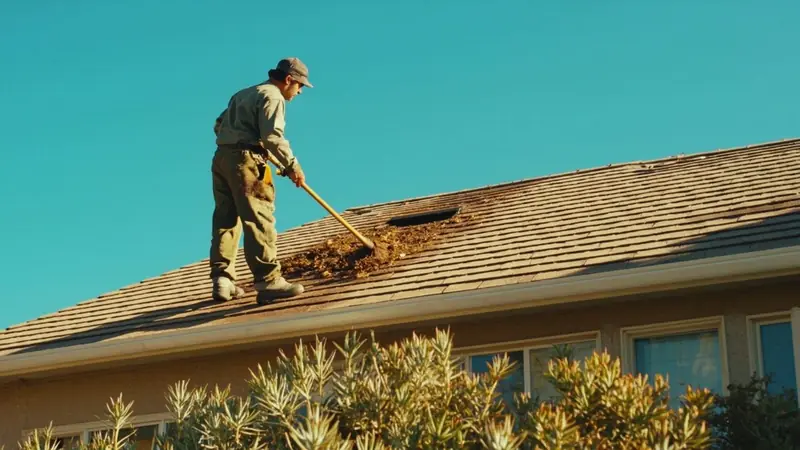
What a roof needs before storm season
Lifted shingle tabs, granules piling up at the downspout, and a gutter full of leaves are the clearest signs roof needs prep before fall rain starts. This storm season roof prep guide walks through what we check first, and why the drainage path matters most. Decking (the wood boards under the shingles) is what the rest of the roof depends on, and it is also what a clogged gutter reaches first.
Granule loss shows up as dark grit in the gutter or piled at the base of a downspout, and it means the asphalt mat underneath has started to age. A shingle tab that cracks instead of flexing when you lift it is past the point where it will hold through wind. Those are loose shingles before storms, and Santa Ana gusts in fall and winter catch that edge first and peel the course above it.
Gutters packed with debris are the condition that starts the chain we watch for every fall. Water backs up behind the drip edge (the metal edge along the roof line) instead of running off the roof. If it sits too long, that moisture weakens the wood at the roof edge until the lowest shingles lose their grip. Doing gutter cleaning before storms is what stops that chain before it reaches the decking.
Ontario gets most of its rain in a short stretch after fall, so a gutter that sat full all summer gets tested within the first few weeks once the season turns. Most of the year's rain arrives in a few winter storms, so the roof and gutters take that water in short, heavy bursts.
Watch what happens after the first heavy rain of the season. A gutter that overflows at one corner means water already found a low spot at the drip edge. If that same spot stays wet two days after the rain stops, or a stain starts forming on the fascia below it, the decking under that section is already softening. Call now, before another storm finishes the damage the last one began.
If wind already pulled shingles off the roof before you read this, storm damage roof repair is the service that applies. Getting a roof ready for storms before the season turns is less about any one repair and more about catching these small signs early. Doing roof prep for storms in fall, while the weather is still mild, means the crew is not working a wet or windy slope to fix something that could have been caught from the ground or the attic.
The CSLB License Lookup publishes the rules that govern work like this in your area.


Which type of roof is best for heavy rain, and why?
No single shingle class drains rain better, but an impact rated shingle survives the debris that heavy storms drive into it. Rain itself is not the problem on a sound roof, what gets through is wind driven debris finding a gap that was already loose.
- We walk the gutters and downspouts to clear debris and check the drip edge for backup.
- We test shingle flexibility and look for granule loss across each slope.
- We check pipe boots, vents and chimneys for sealing roof penetrations that have dried out.
- We check hip and ridge cap fastening for lifted or missing pieces.
- We flag any loose shingles before storms hit and mark them for securing.
When a tab cracks instead of bending, and granules come off in your hand, that section needs replacing rather than sealing. A deck that still feels firm underfoot, with tabs that flex and hold their granules, usually just needs the loose spots secured and the penetrations resealed.
If you are prepping ahead of a full replacement rather than a repair, an impact rated shingle is graded by a steel ball impact test, with Class 4 as the top step. The mat runs thicker and the asphalt stays flexible in cooler weather, which matters when a Santa Ana event drops temperatures fast. It weighs more per square and takes more time to install than a standard architectural shingle, which is worth asking about where hail shows up in storm fronts.
The choice comes down to how long this roof is likely to stay yours and how exposed it is to wind. A roof getting resurfaced in the near term may do fine with standard architectural shingles secured and resealed each fall. A roof going into a full tear off, especially on a rake or ridge that has already lost material before, is where the extra weight and stiffness of an impact rated product matter most. Either way, the decking underneath gets the same check before anything goes back down, since a new covering over soft wood fails the same way the old one did.
If you would rather hand this to us, see after-storm roof inspections.
Steps in a storm prep visit
Checking the roof onsite
We start at the gutters and work up to the ridge, checking flex and granule loss on the shingles, the seal around pipe boots and vents, and how the hip and ridge caps are fastened. You can watch from the yard or stand at a window upstairs. We point out any slope where tabs cracked instead of bending, and show you where granules came off in our palm. By the time we are down the ladder, the trouble spots are marked and a written quote covering any repair is in your hands.
Approving the repair
Once you approve the quote, we secure or replace the shingles that failed the flex test first, since those are what wind catches fastest. Next we handle sealing roof penetrations, with fresh sealant or a new boot where the old one dried out and cracked. If a section of decking needs attention, we open only that area and show you the wood before anything goes back down. Work pauses there until you have seen it and said go ahead, and gutters get cleared last so nothing falls back into them while we are still on the roof.
Confirming the repair
We finish with a pin moisture meter against any decking that was opened. A reading under 15 percent means it is dry enough to close back up and seal. Anything higher gets noted on the quote rather than covered over. We also recheck the slopes we flagged earlier, confirming each repaired tab holds flex and the new sealant has set around every boot. Gutters get a final walk to confirm the downspouts are running clear, and we show you the moisture reading and the cleared line before we pack up.
What roof prep needs in Ontario homes
A full re-roof, or any section replaced down to the decking, usually needs a permit. Ontario's Building Department is the city office responsible for that review. Prep work that stays above the decking, meaning gutters, sealant and loose shingles, does not carry that same requirement, so most of what is on a seasonal roof prep checklist gets handled without that wait.
Roofs from the 1945 to 1970s era run low pitch and pool debris in valleys fast. Skipping gutter cleaning before storms on one of these lets water sit against the drip edge within a single wet season.
Tile roofs from the 1980s and 1990s carry an underlayment layer under the tile that wears out on its own timeline, separate from the tile itself, which can still look fine sitting on top of failing material underneath.
Keeping branches back is why trimming trees near roofline matters most on these tile and low-slope sections, since leaf litter collects under broken tile edges where it is hardest to see from the ground.
A cap that has lost one or two fasteners looks fine until the next gust finds the gap, and then the whole ridge line is exposed at once. Checking fastening now is part of a roof storm preparation checklist.
Once a storm passes, after-storm roof inspections catch displaced tile or lifted shingles that a prep checklist alone would not show, especially on a roof with valleys or dormers that hide damage from the street.
Roofing permits inside Ontario city limits come from the City of Ontario Building Department.
How a storm prep call turns into a visit
Today visit or scheduled prep
On the call we ask whether gutters are already overflowing or a shingle is already loose on the ground, and how old the roof is. Standing water at the fascia or a section already torn loose usually means someone comes out today. A seasonal prep check with no active leak or loose material gets scheduled instead. Either way we ask what slope or side of the house you are seeing it on before setting the visit.
What the prep visit disturbs
A prep visit means we are on the roof and at the gutters. Clear vehicles and patio furniture away from where ladders go up, and keep pets inside while we are on the roof. We move nothing inside your home for this kind of visit, only ladders and tools set up outside against the fascia and eaves.
Repair work and your approval
Whether this stays a prep visit or turns into a repair depends on what the flex test and the gutter line show onsite. A cracked tab on one slope is a one spot fix, while granule loss spread across every slope points toward more roofing coming off. If a section has to come off down to the decking, access for a dump trailer and getting material to the roof face decide how that part of the job gets staged. You see the written quote before anything beyond prep starts.
What you see and decide
We show you the slope or section where granules came away in our hand, and point out which fastener or seal is open. Nothing beyond the prep checklist happens without you seeing it first, including any flashing or boot we think should be replaced. If a shingle or tile has to come off to check the decking underneath, we show you what we found before it goes back down or gets flagged for repair.
Storm Season Roof Prep Guide Questions From Ontario Homeowners
Keep sealant for pipe boots and vents ready, plus fasteners for ridge caps that work loose in wind. Clear gutters and downspouts so debris cannot back water up behind the drip edge once rain starts. Trim branches back from the roofline, since leaf litter dropped into valleys and gutters is what starts the backup that reaches the fascia and decking. None of this replaces a flex test on the shingles or a check of how the hip and ridge caps are fastened, which is where loose material starts moving first.
Buy sealant and fasteners for a prep visit, or an impact rated shingle if you are planning a replacement. An impact rated shingle is graded by a steel ball impact test, with Class 4 as the top step, and the mat runs thicker and stays flexible in cooler weather.
Replacing before storm season gives the new roof full protection against wind driven debris and Santa Ana gusts before they arrive. A roof with granule loss spread across every slope or a cracked tab that will not flex is already past the point where sealing and securing hold, and that calls for replacement now rather than waiting. A roof that still flexes and holds its granules can be secured and resealed each fall and wait for a planned replacement later.
A tarp should stay on only until a roofer can open that section and check the decking underneath it. Trapped moisture under a tarp keeps the wood wet instead of letting it dry, and a pin moisture meter reading above 20 percent on that section means the decking is already holding water. Leaving a tarp in place through more than one storm lets that moisture work into the fascia and the first course of shingles below it.
A lifted shingle tab on a shaded slope means that section stayed damp longer than sunnier slopes. Less direct sun slows drying and leaves the tab soft enough for wind to catch. Santa Ana gusts find that edge and peel the course above it the same way they would on any slope. The flex test shows whether the tab cracks or still bends, and that reading decides whether it gets secured or replaced.
Standing water behind a clogged gutter softens the fascia and the bottom edge of the decking before it softens anything else. Water that cannot run off the roof backs up behind the drip edge instead, and left long enough it works into the wood until the first course of shingles has nothing left to hold its nails. Clearing gutters and downspouts before storms stops that backup before it reaches the fascia and the decking underneath it.
A ridge tile loosens when its fasteners work free over time. Losing even one or two fasteners leaves a gap the next gust can catch. On tile roofs, the underlayment beneath the tile wears out on its own timeline, separate from the tile itself, so a ridge can look fine while the layer holding it is already failing. Checking cap fastening on every prep visit catches a loose ridge before the whole line comes free at once.
Daylight showing at a penetration in the attic means there is a gap where warm moist air can escape and condense on nearby surfaces. Clean nail shanks with no dark rings mean that area is staying dry, while rusted nail tips and dark staining on the sheathing mean moist air has been condensing on the nails through the winter months. A bright light held low and looking up catches this staining that a walk across the roof surface never shows.
Why Santa Ana winds change storm prep in Ontario
Ontario's rainy season runs from November through March, so gutters and downspouts carry most of the storm load. Keeping them clear is the best way to prep for winter storms. Clear downspouts let water drain away fast instead of backing up. That is why the prep work that matters most sits at the roof and the gutter line. Fall and winter bring the Santa Ana wind events that hit roofs here hardest, with dry gusts that catch a lifted tab or a loose ridge cap before any rain even falls. That same wind dries out old sealant around pipe boots and vents faster than a milder climate would. This is part of why a sealing check gets a look on every prep visit instead of being skipped on a roof that looks fine from the ground.
Oversight here focuses on what happens once decking is open. A section coming off down to the sheathing changes the structure rather than just the surface, which is the stage worth documenting with photos of the open deck before it gets covered again. Prep visits that stay above the decking, meaning gutters, sealant and loose shingles, do not carry that same requirement. That is why a storm season roof prep guide visit usually moves faster than a replacement does.
Roofing Services Near Ontario
If this guide leaves a question about your Ontario home, call (909) 330-4661 and a person will walk you through it.
Address:
Ontario Roofing, 4335 E Lowell St, Suite G
More Roofing Guides for Ontario Homeowners
- Insurance Claim Guide for Roof Damage
- Roof Inspection Checklist
- Roof Replacement Cost Guide 2026
- Metal vs. Shingle Roofing
- How Long Does a Roof Last
- Signs You Need a New Roof
- How to Choose a Roofing Contractor
- Roof Financing Options Explained
- Reading a Roofing Proposal Line by Line
- TPO vs. EPDM, Which Flat Roof Is Best
- Energy-Efficient Roofing Guide
- Roof Ventilation Basics
- DIY vs. Professional Roof Repair
- Understanding Roofing Estimates
- All roofing guides
- Wind Damage Roof Repair
- Roof Replacement
- Storm Damage Roof Repair
From the ground, zoom in with your phone camera or binoculars and scan each roof edge for shingles sitting at an odd angle, or granules collecting in a line below the eave. That tells you something is already loose before you call. What you cannot judge from down there is whether the decking under it has softened, or how flex and granules test on a slope you cannot reach. That part needs the visit.
Know which side or slope you saw the problem on, and whether it showed up after a specific storm or built up over the season. If you can, check how old the roof is and whether it has been re-roofed before. Note where your main shutoff is if a leak is already coming through, and whether anyone will be home to point out the spot once we arrive.