
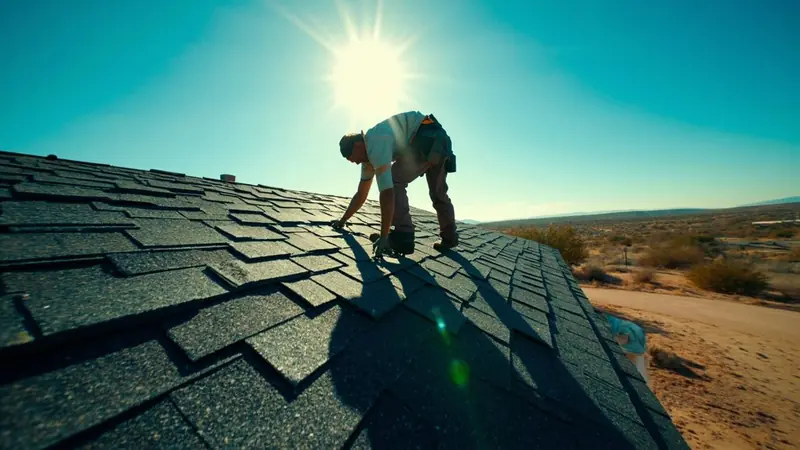
What La Verne's wind and hillside terrain do to roofs
Lordsburg sits at the center of La Verne, the original townsite platted in the late 1880s, with homes built into the 1920s and later infill added around them. Many of these roofs still rest on board sheathing instead of plywood, and some carry two or three layers of old roofing stacked on top of each other. A change of covering material in this area usually triggers a historic review, since the houses here predate most of the city's newer tract construction. Heritage Park, where some of the valley's last orange groves still grow, sits near this older core.
North La Verne Hillsides homes, built mostly in the 1980s and 1990s, sit where the foothills rise toward the San Gabriel Mountains. The city maps parts of this area in Moderate, High and Very High Fire Hazard Severity Zones. On a reroof here, ember resistant vent covers and a Class A rated covering (the top fire rating a roof covering can carry) matter more than they do closer to the valley floor. Wind driven embers can find any gap in the roof assembly during a wildfire. A composition shingle that meets that rating looks almost the same as one that does not, so the product label is what settles it.
Fall and winter bring Santa Ana wind conditions, dry gusts that work loose any shingle tab that is not sealed flat. Homes built from the 1940s through the 1970s often carry low pitch gable roofs that are hard to vent well. A roof covering on one of these ages out from underneath before it shows on the surface. Composition shingle, clay and concrete tile make up most of what sits on La Verne roofs, with metal on some homes and wood shake or slate rare enough that we see them only once in a while.
Older board sheathing in Lordsburg breathes differently than the plywood decks built after the 1980s, so the ventilation balance that works on one era can starve the other. A soffit vent that lets in enough air low on the roof keeps nail shanks dry in winter and keeps a tile or shingle roof from cupping from underneath. In the hillside tracts, that same soffit vent has to carry an ember resistant screen without losing the open area a roof needs to breathe. Either way, the attic is where that balance shows up first, long before a stain reaches the ceiling below.
How roofing calls get handled in La Verne
Every job starts with a look at what is happening on the roof, not just what caused the call. We walk the attic or the roof edge, point out what we find, such as a lifted tab or a stained rafter, and explain what it means before any work is discussed. A homeowner near the hillsides who needs a Class A rated covering under the city's fire zone map hears that up front, since it changes which product makes sense. Once the cause is clear, we lay out the choices: a repair at that one spot, or a wider replacement if the covering underneath has already aged out.
Nothing moves forward until you approve the quote in writing. That document names the repair and what has to come off the roof to reach it, so there is no guessing once work begins. On a tear off, we also walk you through what happens if the decking underneath turns out to be soft, since that is the one thing nobody can see until the old roof is off. We show you the bad boards before they go in the trailer, and that line goes into the quote before anything gets closed up.
The same approach applies to a ventilation fix. If the attic check finds nail staining or a hot, stuffy attic, we show you the soffit vents and the ridge vent together, since one without enough of the other is what ages a roof from underneath. You decide whether that gets corrected as part of the job or left for later, and either way it goes into the same written quote before anyone touches the roof. You stay part of that conversation the whole time, weighing a patch against a wider job with the roof open in front of you.
Other jobs we handle in La Verne include storm damage roof repair, tile roof installation and wind damage roof repair.
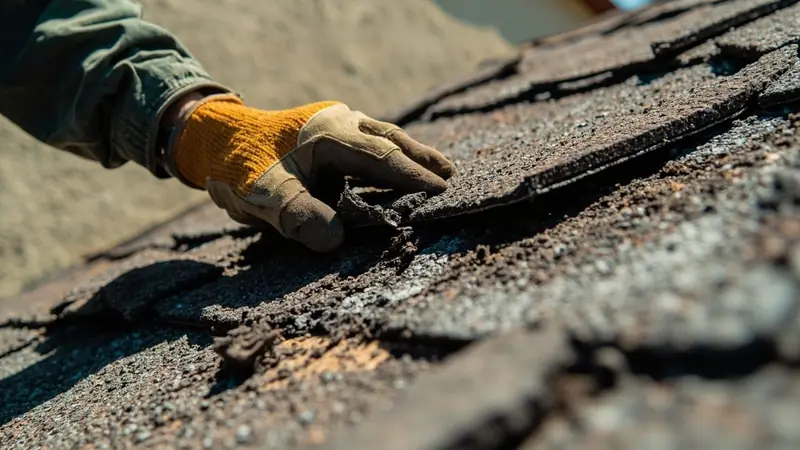
Edge and fastener check
Santa Ana gusts put the most load on rakes, hips and ridges, so we check fastener patterns there first on every La Verne roof. A tab that lifts at the corner on one of these runs is often the first place wind gets underneath the course above it. Catching that early keeps a single loose run from becoming a wider tear out after the next windstorm.
Deck firmness check
We walk the deck with fall protection and feel for give between rafters, not just look at the covering on top. A firm deck under a shingle or tile that still flexes usually means a repair. A spongy feel between rafters means the sheathing underneath has already started to delaminate. That reading is what decides whether the job stays a patch or grows into a wider tear off.
Permit awareness upfront
Residential reroofing in La Verne usually needs a permit before work starts, and the city's permit office makes that call once it knows the job. We find out early which part of the job needs that step, so it is in the quote instead of a surprise once the roof is open. A straightforward repair on an existing covering often skips that step, but a full tear off rarely does.
Winter rain readiness
La Verne gets most of its yearly rain between late fall and early spring, with February usually the wettest month. That narrow window is why we check flashing and valleys before the rain picks up rather than after a stain shows up on the ceiling. A dry attic in October does not tell you the roof is ready for a wet February.
Roofing work we handle across La Verne
Residential work covers repairs, replacements and new installs on shingle and tile roofs across La Verne homes. A repair fixes a leak or storm damage at one spot, such as a torn ridge cap or a cracked boot around a vent pipe. A replacement or a new install turns on what the deck looks like once the old covering comes off, and whether the covering underneath has already aged past patching.
An emergency call is different again, since the roof is already open to the weather and the first job is stopping water from getting further into the house. Timing and access set these apart too. A repair can often wait for a clear stretch of weather, a full replacement needs dry, staged days to get the deck closed back up, and an emergency gets handled the moment the call comes in, storm or not.
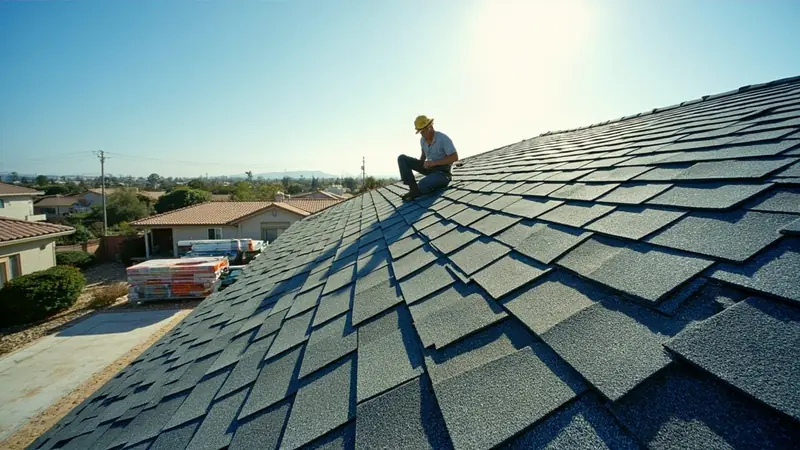
Shingle roof repairs
As a shingle roof contractor, we handle torn ridge caps, lifted tabs along a rake and valleys where two slopes meet. A lifted tab you can see from the ground often means wind has already worked under the course above it. On a 1980s or 1990s tract roof, that same tab sitting over old underlayment is where a small repair can turn into a bigger one once we see what is underneath. We check the deck before closing anything back up.
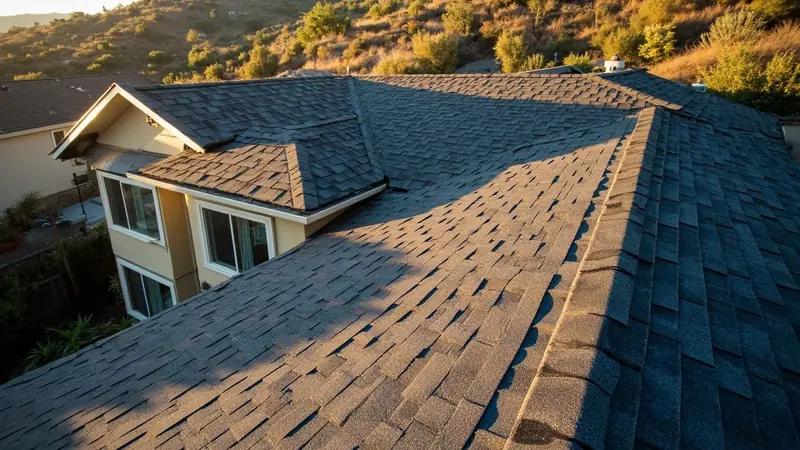
Tile and shingle replacement
As a tile roof contractor, we see the call move from repair to replacement once the deck feels spongy underfoot or the underlayment under the tile has aged past its years. A 1980s or 1990s La Verne tract home often needs that underlayment replaced even when the tile itself is still sound, since clay and concrete tile outlast the paper underneath. The install resets drip edge, starter course and flashing along with the covering, and on a hillside lot we fit a Class A rated product to meet the fire zone.
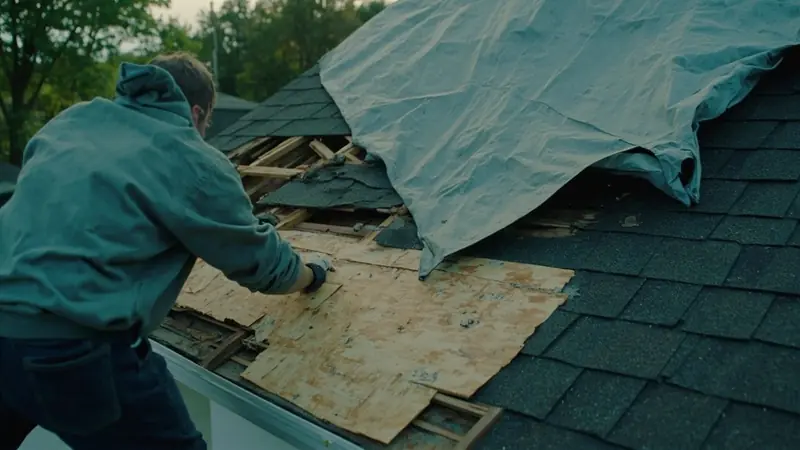
Emergency roof tarping
Before we arrive, move anything that can be damaged out from under the leak and set a bucket or container to catch what is coming through. Keep people out of any room where the ceiling is sagging or dripping near a light fixture. The first thing we check on arrival is where the water is entering, which is often uphill of the stain on the ceiling. From there we get the roof covered and dry before we talk about the rest of the job.
Common Roofing Jobs in La Verne
Pick the job that matches what you are seeing in your La Verne home. Each page explains the work and what to expect.
What roofing problems do La Verne homes have?
Most of what sends La Verne homeowners to the phone traces back to wind, age or water finding a gap that was already there. A lifted shingle tab along a rake or ridge is usually the first visible sign that a bigger problem is starting. Once wind gets under that lifted tab, it works under the course above it next.
Left through another storm, a full strip can peel back and leave bare decking taking rain straight on. Reach out now, before another windstorm exposes that open seam. A tab that still flexes is a repair. One that cracks and sheds its surface when lifted has usually aged past patching. Age and water tend to show up differently, in a stain that has nothing to do with wind at all.
Ask about after-storm roof inspections when you call from La Verne.
Wind lifted shingles
After a Santa Ana wind event, you may find a shingle or two in the yard, or notice a neighbor getting a new roof after the same storm. That usually means uplift along a rake, hip or ridge, where wind pulls hardest. Sometimes the damage reaches wider than what fell, since wind can loosen a run of shingles without a single one landing in the yard. Call once you see debris in the yard or a course that looks uneven along an edge.
Aging tile underlayment
On a 1980s or 1990s La Verne tract home, the tile itself usually outlasts the paper underlayment underneath it. That underlayment reaches the end of its service life while the tile on top still looks fine, so a leak can appear with no broken tile anywhere in sight. The fix usually means lifting and resetting the tile to replace what is underneath. A stain that shows up with no cracked tile nearby is the signal to call.
Winter storm drainage
Winter rain pushes water at gutters, valleys and yard drainage at once. A clogged gutter backs water up behind the drip edge before it reaches the ground. The overflow runs into city storm drains and the channels the San Bernardino County Flood Control District maintains. A roof leaking after rain with clear skies the next day usually means water backed up somewhere.
Granule loss from heat
Long, hot stretches of La Verne summer put asphalt shingles through repeated heat cycling, and granules start showing up in the gutter or at the downspout outlet. That loss is easy to put off since nothing is leaking yet, but bare asphalt underneath ages faster once the granules that shed UV are gone. A roof that has gone through several summers without a look is usually the one that fails first once the rain starts testing it again.
Find the sign you have, then read across to see how soon to call.
| Symptom or first sign | What is already happening | What it becomes if ignored | When to call |
|---|---|---|---|
| A lifted shingle tab | Wind gets under the course above it | A full strip peels in the next storm and the bare deck takes the rain directly | Call this week |
| A cracked pipe boot | Water runs down the vent pipe into the attic insulation | The ceiling below stains and the framing around the penetration softens | Call this week |
| Gutters packed with debris | Water backs up behind the drip edge | The fascia and the bottom edge of the decking soften until the first course has nothing | Call this week |
| Blocked soffit intake | Attic humidity climbs and the nails sweat all winter | The sheathing delaminates and the shingles cup from underneath with nothing wrong on the surface | Call this week |
What happens when a roofer comes out?
The first stop is usually the attic, since staining and signs of roof damage on the nails there often point to where the roof itself needs a closer look. We walk the roof itself as a roof estimate and inspection, then come back down to show you what we found. Having a few details ready helps: when the problem started, what changed right before it, a storm or a windy night, the rough age of the roof if you know it, and whether anyone is home when we arrive. A clear path to the attic hatch speeds things along too.
The CSLB License Lookup publishes the rules that govern work like this in your area.
Today or a booked visit
On the call, we ask what you are seeing on the roof or ceiling and when it started. If a stain keeps growing, water is pouring in, or a storm hit within the past day, expect same-day service. A slow granule buildup in the gutter or a tile that has looked the same for months fits fine into a booked visit instead. Either way, we ask enough on the phone to know which one your call needs before anyone drives out.
Before we arrive
Keep the attic hatch accessible and relocate vehicles or equipment so the ladder has room to go up. When we arrive, we ask you to point out where the stain or damage is from inside, and we walk you through what we see as we check it from the attic and the roof edge. You stay part of that first look. Pets should be kept clear of the yard and the roof access points while we work.
What we show you before leaving
Before wrapping up, we press a moisture meter against the deck's underside at the repair spot and share the reading. Under 15 percent reads dry, and that is what we want to see there. A reading that climbs past 20 percent means that patch is still holding water, and we will not close that section up until it drops. You get to see the meter and the reading yourself, not just hear that the roof is fine.
How a roofing job gets finished in La Verne
Once you call, the visit itself settles what is wrong, and that finding decides what happens next. Access is often the detail that sets the pace here, since a steep hillside lot needs staging and fall protection that a flat tract roof does not. Weather plays into timing too, since a tear off needs a dry stretch to keep the deck covered overnight. From there, the job moves in three parts: the first look that narrows down the cause, the written quote you approve before anything comes apart, and the close out that happens once the repair checks out and any required inspection has passed.
First check on arrival
The first thing we check is whether the shingle tab in question still flexes or cracks when lifted, and whether granules come away with it. A tab that flexes and holds its granules usually means the covering is still sound and the fix is local. One that cracks and sheds tells us the asphalt nearby has aged out too, which widens what the quote needs to cover before we go further.
Diagnosis and the quote
Once the cause is confirmed, we put together a written quote naming the repair and what has to come off the roof to reach it, whether that is a few courses of shingle or the full covering down to the deck. Work starts once you approve that quote. If the deck turns out to need more once it is opened, that gets confirmed with you before it goes any further.
Closing up the roof
The repaired section stays open until the moisture check we showed you earlier comes back clean. On permitted work, the city inspects before anything gets covered for good. Once that check and any required inspection are both done, we close up the flashing, set the final course and clean the yard of anything that came off the roof during the job.
Do you need a permit for roofing work in La Verne?
Most reroofing work in La Verne needs a permit, and the City of La Verne Community Development Department, Building and Safety Division is the office that reviews it. Its listing covers building, electrical, mechanical and plumbing permits, which matters on a reroof when the work also touches fan wiring or a plumbing stack boot. A small, like for like repair on an existing covering, such as resetting a few courses after wind damage, often does not need that step.
A full tear off or a change of covering material usually does. The division checks plans before work starts and inspects the job once it is underway, and the final decision on what a specific job needs sits with that office. On hillside lots in a mapped fire hazard zone, that same permit review is also where a Class A covering requirement for a reroof gets checked.
For storm resilience, the IBHS FORTIFIED standard is the playbook. Several of its upgrades cost little during a re-roof.
Attic check first
We start inside, in the attic, looking for daylight at penetrations and checking nail shanks for rust or dark staining around them. That staining means warm, moist house air has been condensing on cold nails all winter, which points to a venting problem before we ever get on the roof. From there we move to the roof itself, starting at pipe boots and vents, working toward valleys and wall intersections, and finishing on the open field where nothing stands out.
Covering class and impact rating
The covering you choose moves the job more than almost anything else. A standard architectural shingle installs faster than a thicker, impact-rated shingle, each graded by a steel ball impact test up to Class 4. That extra thickness adds weight per square, which adds installation time to load and set on a hillside roof more than on a flat one.
What stretches the schedule
A reroof runs longer when access is tight, such as a hillside lot where material has to be carried rather than loaded straight onto the roof, or when the deck underneath turns out to need boards replaced. Weather plays a part too, since an open deck needs a dry stretch to stay covered overnight. Finished work should read dry on the pin moisture meter at the deck, with no damp spots turning up where we checked.
The quarter roof rule
Once a reroof in La Verne touches about a quarter of the roof area, fire rated covering rules apply, mattering most along the northern hillside tracts mapped in a fire hazard zone. That threshold is also where a Class A rated covering, also called UL 790 Class A, moves from optional to required. A homeowner planning a partial repair on a hillside roof is worth checking against that threshold before deciding how much to open up.
Roofing Questions From La Verne Homeowners
Wind pulls hardest at rakes, hips and ridges, prying a shingle tab loose at one corner. Once that tab lifts, air pushes under the course above it, and a dry gust can work the seam wider with each cycle. Near Foothill Boulevard, a lifted tab left through another storm can peel back and expose bare decking to rain. A tab that cracks and sheds granules when lifted means the asphalt has aged past a simple repair.
Call right away if the roof shows an open seam, missing shingles, or water already coming through the ceiling. Wind damage that lifted a full run of shingles leaves bare decking taking rain directly, and that gap widens with the next storm front. Before help arrives, move items out from under the leak, set a container to catch water, and keep people clear of any sagging or dripping ceiling. On arrival, the first step is finding where water is entering, which is often uphill of the stain, then covering and drying the roof before any further work is discussed.
Water finds a gap in flashing, in aged underlayment, or behind a backed up gutter. Each path lets water move along the deck before it reaches the ceiling, so the stain often sits uphill of where the leak started. A stain that shows up with no cracked shingle or tile nearby usually points toward underlayment that has reached the end of its service life rather than storm damage.
Yes, a clogged gutter can back water up behind the drip edge before it ever reaches the ground. Near D Street, that overflow moves into city storm drains and the channels the San Bernardino County Flood Control District maintains, so a gutter clog there affects more than just the roof edge. Checking the downspout outlet for steady flow during rain and clearing leaves or granule buildup ahead of the wettest months keeps that path open. Standing water at the gutter line adds weight at the eave and keeps the drip edge wet longer than it should stay.
Granule loss after a heat wave is worth checking, since it signals the asphalt is aging from underneath. Repeated heat cycling through a La Verne summer sheds the granules that block UV, and they collect in the gutter or at the downspout outlet. Nothing is leaking at that stage, which makes it easy to put off, but bare asphalt ages faster once that protective layer is gone. A shingle that still flexes near a heavy granule scatter usually has life left, while one that cracks and sheds more when lifted has aged past a simple patch.
Call for emergency tarping right away, since a fallen tree usually opens the roof to weather fast. Move anything that can be damaged out from under the area and set a container to catch water coming through. Keep people clear of any room where the ceiling sags or drips near a light fixture, and stay off the roof yourself, since checking rafters needs fall protection. Near Wheeler Avenue, move vehicles or equipment away from where a ladder needs to go up.
Roofing Services Near La Verne
Need a roofer in La Verne? We cover La Verne from our Ontario base. Call (909) 330-4661 to check your address.
Serving La Verne, CA 91750 from our Ontario base
From the ground, you can look with binoculars or your phone's zoom for shingles out of place after a windstorm, or for an uneven run along a rake or ridge. That look tells you something changed, but it will not tell you what the deck underneath is doing. Walking the roof itself, lifting a tab or sealing flashing belongs to the visit, since that work needs fall protection on a pitched surface.