
How Chino's mixed roof ages change the job
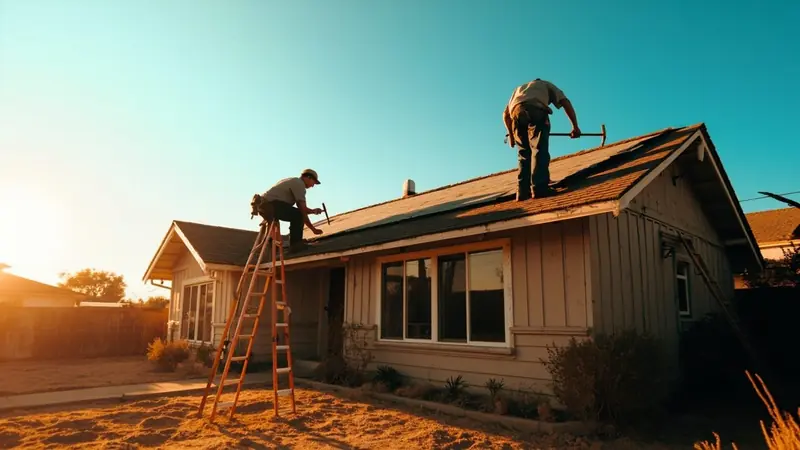
Chino's roofs split along construction lines, almost street by street. Homes built from 1945 through the 1970s carry low pitched ranch rooflines with wide eaves, set over board or early plywood sheathing. Many started out as wood shake or composition, with frieze block or eave vents cut into the fascia for attic airflow.
A good number still carry an attached low slope patio cover or carport roof. It's built with the same framing as the house, but it's rarely re-roofed on the same schedule as the main slope. That mismatch is one of the first things we look for on these roofs. A patio cover section can fail quietly behind the house without showing from the street.
Move into East Chino, built out from the late 1980s through the 2010s, and the roofs change completely. Tract homes from this era commonly carry concrete tile or composition laid over plywood or OSB decking. That's different from the board sheathing in the older ranch stock. The tile itself tends to outlast the house, but the underlayment under it does not. Service calls in East Chino center on underlayment that's reaching the end of its working life beneath tile that still looks sound. Wind lifting ridge and hip pieces that were never re-set after the original install is the other common cause.
Both eras share one pressure point: the gap between what a roof looks like from the ground and what the deck is doing underneath it. On the ranch stock, frieze block vents get painted shut or blocked by insulation over the years, which raises attic moisture against the sheathing. On tile tract homes, a cracked ridge tile or a lifted hip piece lets wind-driven rain under the field tile.
A leak inside can show up long after that starts. Chino's hot, dry summers bake the mat on older composition roofs, and the short, heavy winter rain season that follows tests every seam and penetration at once. That seasonal swing matters more than the age of the roof by itself. It's why we check the deck condition on every visit instead of judging a roof from its surface alone.
If you are weighing after-storm roof inspections for a Chino home, that page covers what the work involves.
How a roofing job runs in Chino
A roofing call in Chino usually starts with us asking what you're seeing before we talk about what you need. If water is showing on a ceiling, we want to know when it started. We also ask whether it only happens with wind from one direction. That single detail often points at a wall intersection or a boot, instead of the open field of the roof.
Chino's swing between hot, dry summers and a short, heavy winter rain season changes what a roof can hide. A roof that looked fine in August can show problems in the season's first real storm. A repair that would hold through a dry summer might not hold through a wet winter on the same roof. We say so plainly, rather than quoting one fix for every season.
Once we've looked at the roof and the attic, we lay out what we found. We explain what it means in plain terms before any decision gets made. You see the same thing we see. That might be a photo of a cracked boot, a soft spot on a plank, or granules in your hand from a shingle that's aged out. Nothing gets opened up or replaced until you've agreed to a written quote that names the work.
Where there's a choice, we give you one. A localized leak at one penetration can often be sealed and flashed without touching the rest of the roof. A deck that reads wet across a wider section usually means that part of the roof comes off instead. The choice of material or work is yours, once you understand what's underneath.
The CSLB License Lookup publishes the rules that govern work like this in your area.
Checking ridge and hip fasteners
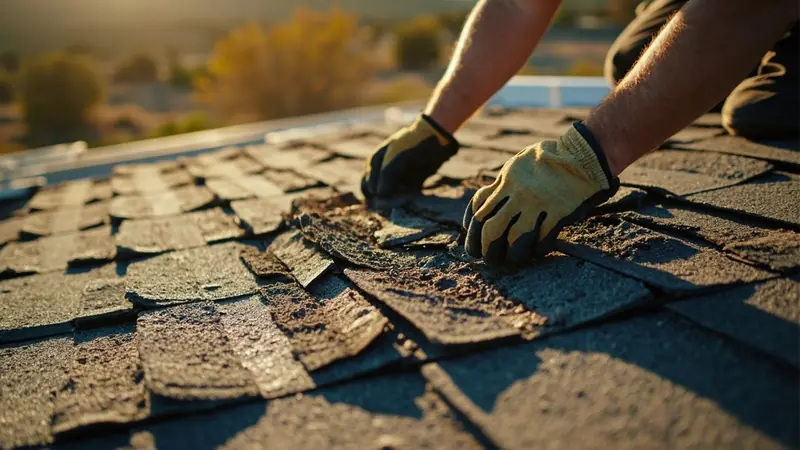
Santa Ana wind events push hard, dry gusts down through the valley in fall and winter. A hip or ridge cap with a loose fastener is usually the first piece to lift. We check those fasteners before anything else on a wind-related call, because a cap already working loose will go first in the next gust. That means catching a lifted piece before it strips a full course of shingles off the slope below it.
Lifting to check
We lift a corner of a shingle tab and watch how it behaves. A tab that flexes and keeps its granules in place is still sound. One that cracks when lifted, and sheds granules into your hand, has aged past the point of a spot repair. That one check tells us whether a leak is a flashing fix or a sign the whole slope is due for replacement, and we show you the tab either way.
Who decides on the permit
Some roofing work in Chino needs a permit, and the local building department decides which jobs qualify. We flag that early, before any quote is written, so you know going in whether an inspection is part of the job or not. That keeps the schedule and the paperwork predictable instead of a surprise partway through the work.
Why we check the downspouts
Chino's short, heavy winter rain season means gutters and downspouts must move water off the roof quickly. The weak link is getting it there. A clogged downspout or a gutter pitched the wrong way backs water up against the fascia and causes rot. We check that path on every visit, not just the shingles above it.
Roofing work we handle across Chino
Chino homes need three kinds of roofing work, and which one applies usually comes down to age and material. Most houses here carry asphalt shingle, concrete or clay tile, or a flat and low-slope section over a porch or addition, and each one fails differently. Shingle roof repair covers a boot, a flashing seam or a handful of lifted tabs.
A full replacement comes up when the deck itself is wet, or the covering has aged out across a wide area, not just one spot. Flat roof installation applies to the low-slope sections many Chino homes carry over a patio or an added room, where seams and drains matter more than the field. Emergency work is different again. It's about stopping water from moving further into the house right now, with the full roof estimate to follow once things are dry.
Shingle and tile repair
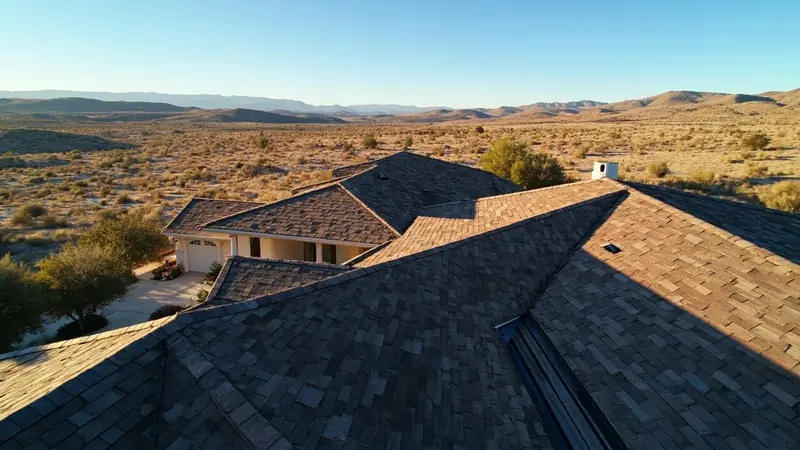
Repair calls start with a ring or a stain on the ceiling, often right after a storm. Roof leak detection on these calls starts with tracing water along the rafters, since the stain is rarely directly under the hole that let it in. On a lot of these jobs the cause is a cracked pipe boot, a lifted hip piece, or an opened seam where a wall meets the roof. On an older board-sheathed roof, that tracing matters more, because the water can travel a long way before it drips.
Full roof replacement
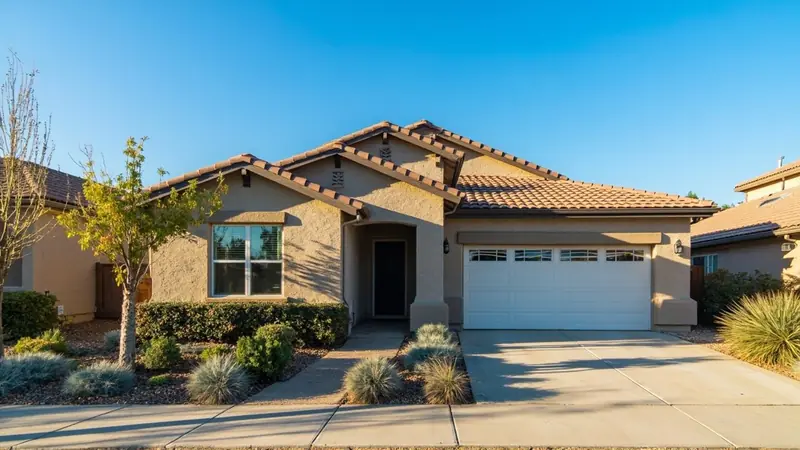
A replacement gets decided by what's underneath the covering. A deck that flexes underfoot, or a tab that cracks and sheds granules, means the repair keeps moving toward a full tear off. Most homeowners here land on an architectural laminated shingle, since the two glued layers run heavier and last longer than three tab. The published wind rating, often quoted in the 110 to 130 mph range, only holds with the correct nailing pattern and starter strip.
Storm and leak response
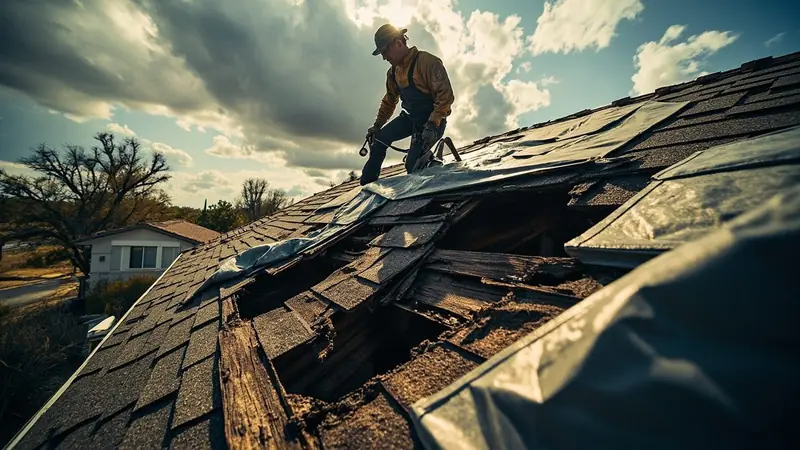
Before we get there, put a bucket under the drip and move anything underneath it out of the way. Stay off a wet or storm-damaged slope until we arrive. Once we're on site, the first thing we check is where water is tracking along the rafters and sheathing. The opening on the roof is rarely straight above the ceiling stain below it. That tells us whether we're sealing one penetration or opening a wider section to find the path.
Common Roofing Jobs in Chino
Pick the job that matches what you are seeing in your Chino home. Each page explains the work and what to expect.
- wind damage roof repair
- roof replacement
- storm damage roof repair
- roof leak repair
- emergency roof repair
- metal roof installation
Close to Chino, we also work in Chino Hills and Eastvale.
What roofing problems do Chino homes have?
Most roofing problems in Chino trace back to one of a handful of spots: a penetration, a valley, or where the roof meets a wall. A cracked pipe boot is a common starting point. Once the collar around the vent pipe splits, water runs down the pipe into the attic insulation below it instead of staying on the roof.
From there, the ceiling under that spot stains, and the framing around the penetration starts to soften the longer it sits wet. A brown ring that appears only when wind pushes rain from one side often signals a directional leak. That's the point to call rather than wait. Once a ceiling stain shows up after a storm, the moisture behind it has already reached the framing, and it gets harder to dry out the longer it sits.
Our crews work to the installation standards of the National Roofing Contractors Association.
Wind-lifted shingles and ridge caps
Fall and winter Santa Ana wind events send strong, dry gusts down through the valley, and a loose shingle tab or ridge cap is usually the first thing to go. Once a tab lifts, wind gets underneath the course above it. A full strip can peel off in the next storm. If you spot a shingle in the yard after a windy night, that's the signal to have the roof looked at before the next gust finds the same weak spot.
Aging tile underlayment
Homes built from the 1980s through the 1990s often carry concrete or clay tile over underlayment that's now reaching the end of its working life. The tile on top can look sound for years while the layer underneath it dries out and cracks. Because the tile hides it, this kind of failure usually shows up as a slow stain inside, long after the underlayment gave out. A roof tune-up on these roofs checks the underlayment.
Ventilation pulling warm air out
When a roof has more exhaust vent area at the ridge than intake area at the soffit, the ridge pulls conditioned air out of the house instead of letting fresh air move through the attic. That draws moisture up into the attic space, where it condenses on cold nail shanks and the underside of the sheathing. Over time, that moisture delaminates the sheathing from underneath, so the shingles can cup with nothing visibly wrong on the surface.
Debris packed into gutters
Leaf and debris buildup in gutters is easy to put off, especially on a roof that still looks fine from the ground. Once that debris packs in, water backs up behind the drip edge instead of moving into the downspout. Over time that softens the fascia and the first run of decking at the eave, until there's nothing solid left for the starter course of shingles to grip. A roof estimate after a dry summer is a good time to clear that out.
Find the sign you have, then read across to see how soon to call.
| Symptom or first sign | What is already happening | What it becomes if ignored | When to call |
|---|---|---|---|
| A cracked pipe boot | Water runs down the vent pipe into the attic insulation | The ceiling below stains and the framing around the penetration softens | Call this week |
| Blocked soffit intake | Attic humidity climbs and the nails sweat all winter | The sheathing delaminates and the shingles cup from underneath with nothing wrong on the surface | Call this week |
| Missing kickout flashing where a roof meets a wall | Water runs behind the siding instead of onto the shingles | The wall sheathing rots with no stain on the roof at all | Call this week |
| Gutters packed with debris | Water backs up behind the drip edge | The fascia and the bottom edge of the decking soften until the first course has nothing | Call this week |
| A pinhole at a flat roof seam | Water tracks sideways between the membrane and the insulation | A wet board loses its insulating value | Call this week |
| A lifted shingle tab | Wind gets under the course above it | A full strip peels in the next storm and the bare deck takes the rain directly | Call this week |
What happens when a roofer comes out?
The first stop on a visit is the attic. Staining and daylight at a penetration tell us where to look before anyone climbs up. Knowing the rough age of the roof, when the problem started, and whether it changed after a specific storm helps the call move faster. Make sure the attic hatch and any stained area inside are easy to reach. Once we've looked at both the attic and the surface, we walk you through what we found before talking about next steps.
After severe weather, FEMA's guidance on documentation makes the difference in how smoothly a claim goes.
Same day or a booked visit
During the phone call, we ask if water is currently coming through and how old the roof is. Active leaks typically bring a technician to your door that very day. A slow stain that's been there a while, or a routine roof estimate on an older roof, can go on the schedule for a day that works for you. Either way, those two answers are what move your call toward one or the other.
Clearing the way for us
Clear furniture or anything valuable from under a known stain before we arrive, and make sure the attic hatch is reachable. When we get there, we walk the problem with you first. Show us where the stain started, when you first noticed it, and anything that changed right before it appeared, such as a storm. A clear path to the attic saves time on a day when water is still moving.
What we check before we leave
Before we leave, we test the deck itself, holding a pin moisture meter to the plywood or boards from the attic side. A number below 15 means that board is dry and ready to close up. Above 20, and that board is still wet, and we flag it before anything closes up over it. You see the meter and the reading yourself, not just our word for it.
How a Chino roofing job gets finished
The first visit settles what's wrong and how far it reaches, and that finding decides what the next step involves. A tear off that turns up wet decking means more material comes off the truck and more goes into the dump trailer parked in the driveway, so access for that trailer gets checked on the first call too.
Once the written quote is approved, we schedule around weather. A shingle or tile job needs a dry window to get the deck closed back up the same day it's opened. Three stages carry the job from that first look to a roof that's closed up and inspected if the work required it.
Checking the deck underfoot
Once we're on the roof, we walk the deck section by section, feeling for give between the rafters. A deck that feels firm underfoot usually means the covering alone is the problem. A spongy or springy spot means the sheathing itself has delaminated or rotted. That reading decides whether the job stays a repair or turns into a tear off before we go any further.
The written quote
What we find on the roof and in the attic goes into a written quote that names the repair, or the tear off, and what has to come off to reach it. On a replacement, that quote can name the covering, such as an architectural laminated shingle, once you've picked one. You see that quote and approve it before anything gets opened or replaced. If the deck turns out worse once the old roof is off, that gets shown to you before it goes into the trailer.
Closing the roof back up
Nothing goes back together until the deck reads dry on the meter check we already walked you through. On permitted work, the job isn't closed up until the inspection tied to that permit has passed. Once both of those clear, the new covering, flashing and ventilation pieces go on. The site gets cleared of old material and fasteners before we leave.
Do you need a permit for roofing work in Chino?
Permit rules in Chino cover re-roofing and most structural repairs. The City of Chino Development Services Department, Building Division is the office that reviews that work. A straightforward spot repair, such as resealing a boot or swapping a handful of shingles, usually doesn't get the same review as a full tear off or a change in roofing material.
If your home sits in Chino Hills rather than Chino itself, the rules run through a different office. Chino Hills is a separate city with its own Community Development Department, and work there gets reviewed on its own track. That line matters along the edge of the two cities, where streets can cross jurisdictions without an obvious marker on the ground.
For permitted jobs in Chino, the inspection happens after the work is done but before everything gets sealed up. That's so the deck, flashing and fastening pattern can be seen while they're still visible. We schedule around that step rather than our own timeline, since closing a roof before that inspection means doing part of the job twice.
Other jobs we handle in Chino include metal roof installation, storm damage roof repair and tile roof installation.
Reading the attic first
We start in the attic with a bright light, looking up at the underside of the deck and the nail shanks coming through it. Clean, dry nail tips mean the roof above is doing its job. Rust rings around the nails and dark staining on the wood mean moist air has been condensing there, often with no sign of it from the roof's surface, the kind of pattern a cracked pipe boot can leave behind before a ceiling ever stains.
What decides the size of the job
The covering class you choose moves the job more than almost anything else. A standard shingle keeps the work close to what's already there, while an impact-rated product changes the fastening pattern and materials used on the same slope. On a flat section, a heavier membrane class changes what the seams and flashing details need to be. That choice is yours to make before the quote is final.
How long it takes to do right
A tear off runs longer when the deck underneath turns out wet or rotted, since that section has to be cut out and replaced before anything new goes down. Weather access matters too. Finished work should read dry across the whole deck, with hip and ridge lines running straight and no exposed fastener heads anywhere on the field. If a corner looks rushed, that's worth asking about before the crew leaves.
Summer heat on the roof
Chino's summer heat waves push roof surface temperatures well above the air temperature. That daily swing between hot afternoons and cooler nights works at every fastener and seam on the roof. Long dry spells on top of that heat dry out older asphalt shingles faster than age alone would explain. That's part of why a roof here can need attention sooner than the same roof would in a milder climate.
Roofing Questions From Chino Homeowners
Call as soon as you see a lifted or missing section of roofing, even before checking the attic. Wind events in this area push gusts hard enough to work a loose ridge cap or shingle tab free, and an open spot lets rain move straight into the deck below. Keep anything valuable out from under a known leak and stay off the slope yourself. On the call, we ask whether water is actively coming through, which decides if someone comes out the same day or the visit gets scheduled.
Stay off the roof and clear the area underneath any branch or debris that fell on it. Do not try to move a limb that is still resting on the covering, since shifting it can open the deck further. Note where the impact happened and whether water has started showing inside near that spot. That location and timing help sort out whether the deck took damage or just the surface covering, which decides what the first visit focuses on.
Inspection starts in the attic, checking for daylight at penetrations and staining on the underside of the deck before anyone goes onto the roof. From there we walk the deck itself, feeling for firm footing versus a spongy spot between rafters. A pin moisture meter reading against the sheathing from the attic side tells us whether that section is dry or holding water. Roof age and when a stain first appeared help move the visit along faster.
Clogged gutters back water up behind the drip edge instead of letting it move into the downspout. That trapped water softens the fascia and the decking at the eave over time, especially once leaves and debris pack a run tight along that stretch. Clearing leaves from a ladder set on level ground is something you can do yourself. Checking whether wind lifted a shingle course or a ridge piece during the same storm means getting onto the slope itself, and that step is a visit rather than a ladder job.
Staining on the ceiling means water has already reached the framing, not just the surface finish. Wind-driven rain from storms in this area often enters at a penetration, a valley, or where the roof meets a wall, and the opening is rarely straight above where the stain shows up inside. The longer that framing sits wet, the harder it is to dry out. Tracing the water along the rafters from the attic side is how we find the actual entry point.
Summer heat does dry out asphalt shingles faster than age alone would, and that aging shows up as granules shedding when a tab is lifted. Roof surface temperatures run well above the air temperature on hot afternoons, and the swing between that heat and cooler nights works at every fastener and seam.
Roofing Services Near Chino
Chino is part of our regular Ontario area route. Call (909) 330-4661 and we can tell you when someone can be there.
Serving Chino, CA 91709 from our Ontario base
After a wind event, you can clear leaves and small debris out of gutters yourself, working from a ladder set on level ground. That's where it stops. Checking whether a hip or ridge piece lifted, or whether wind got under a course of shingles, means getting onto the slope itself, and that's a visit.