
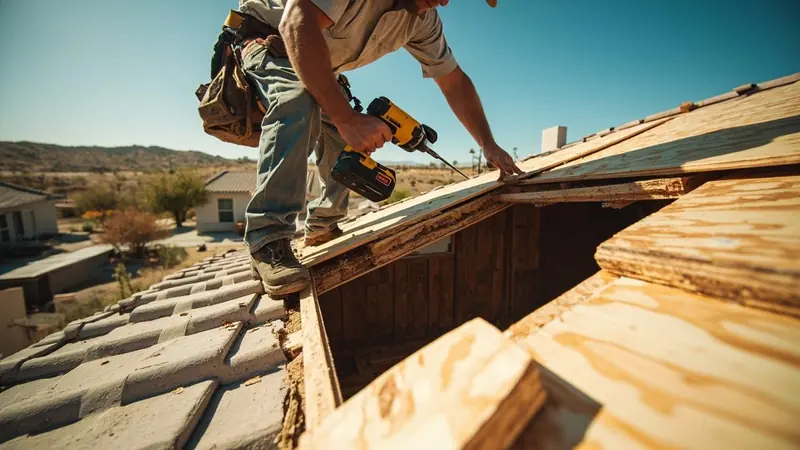
A storm or impact just opened your roof
A tree branch through the decking, wind-lifted shingles, or a break-in through the roof all leave the same problem: an opening exposed to weather. We provide emergency board-up services that close that opening with plywood and tarps the same visit, before rain or dark makes the damage worse. The board-up is a temporary measure, built to hold until the permanent repair can be scheduled and the deck opened up in daylight.
- Move everyone out of rooms under the opening and keep pets clear.
- Clear furniture and electronics from under the hole, lay down towels, and photograph the damage before anything is covered.
- Stay off the roof. Wet or broken decking gives way without warning, so call for help from the ground.
A roof caved in from storm winds usually shows as a sagging section over one room, with daylight or a wet ring visible from the attic hatch. If a tree fell through roof framing, you will see broken rafters and splintered decking around the trunk or limb. That fallen tree roof damage needs the branch assessed before any boarding starts.
A break-in through the roof leaves a cleaner edge, often with shingles pried back near a vent or skylight rather than torn by wind. Whatever the cause, a hole in my roof is the phrase most callers use on the phone. The fix starts with plywood roof boarding cut to the opening and screwed to sound framing.
San Bernardino County's Santa Ana winds hit hardest in fall and winter, snapping tree limbs and tearing loose roofing, which is why roof board up calls climb after a windy night. Winter also carries most of the year's rain into this valley, so an open roof fills with water fast once a storm band moves through. That seepage can reach insulation and drywall within a single storm night.
The point to call tonight: a lifted shingle tab lets wind get under the course above it, and in the next gust that whole strip peels back, leaving bare decking open to rain. Once decking sits exposed, every hour of rain adds weight and rot to the framing beneath it. An opening that is actively taking in water is an emergency roof situation, and boarding it before the next storm band arrives is what stops the damage from spreading.
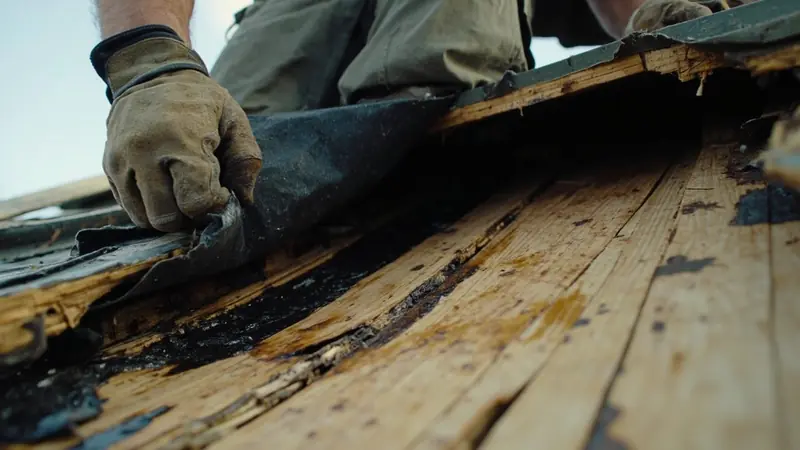
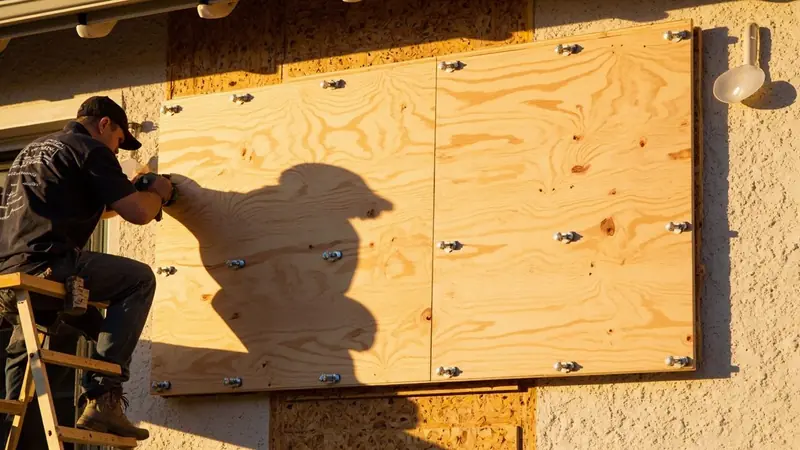
How we make the opening safe before we cover it
Safety procedures start inside. We check the attic before anyone climbs up, since a damaged deck can give way without warning from above. The attic light and nail inspection is the reading this call turns on.
We walk the attic with a light and look at the nail shanks and sheathing around the opening. Clean nail shanks and no daylight beyond the visible hole mean the board-up can go over sound decking. Rusted nail tips and dark staining spreading past the hole mean the damage reaches further than what shows outside, and the board has to extend to cover that soft section too.
A hole with solid framing around it takes a straight plywood board, cut to size and screwed into the rafters on either side. A wider break, or one where the framing itself is split, takes a tarp over roof hole stretched and battened at the edges so wind cannot get under it. When the opening is too large for one sheet, emergency roof tarping covers the whole section until full repair access is arranged.
A smaller puncture, from a branch tip or a pulled vent boot, often only needs temporary roof patching rather than a full plywood sheet. That keeps the opening small and the repair underneath simpler once the deck is checked in daylight.
A board-up usually needs both materials together. The plywood closes the structural gap, and the tarp seals its edges along with any shingles that lifted in the same event. That combination is what keeps the covering dry through the next storm band, not either material alone.
On a torn section, we work from ladders and roof jacks set on confirmed solid framing, never on the open hole itself. Once the board or tarp is set, we check every edge for lift by hand before leaving. A corner that flaps in wind is a hole that reopens by morning. If the deck beyond the opening has softened too, we mark that section so it is not boarded over without you seeing it first. A board up service like this is not a new roof, and it holds the house dry until the permanent repair is opened up in daylight.
Before any part gets replaced, ask to see each of these readings.
| Instrument | Good reading | Bad reading | What it changes |
|---|---|---|---|
| Ponding check on a low slope roof | The surface is dry and the drains are clear within about two days of rain | Standing water still sitting two days after rain | Loads the deck and works at every seam |
| Core cut sample on a low slope roof | The insulation core comes out dry through every layer and the deck under it is sound | A saturated or crushed core | The wet area is larger than the visible stain |
| Infrared scan of a low slope roof after sunset | The field cools evenly as the sun goes off it | Warm patches that hold heat after dark | Wet insulation stores heat that dry insulation has already given up |
Steps in a board-up visit
Checking the opening and deck
We start at the opening itself, measuring it and looking at the framing around the break. Then we check the attic from inside with a light, reading the nail shanks and sheathing for staining or daylight past what you can see outside. That attic reading tells us whether the damage stops at the visible hole or reaches further into the deck. You get a plain explanation of what is broken and why, in the room or at the opening, before any plywood is cut. A written quote comes out of that same visit, naming the board size and what it covers.
Boarding the opening
Once you approve the job, we isolate the section first, keeping the ladder and material off the open hole and on confirmed framing instead. Plywood goes in first, cut to size and screwed into solid rafters on both sides of the break. A tarp follows over the board and across any shingles that lifted in the same event, battened at the edges so wind cannot work underneath it. If the deck beyond the opening turns out softer than expected once we are up there, we stop and show you before extending the board over it.
Checking the seal before leaving
Before we leave, we go back into the attic with the light and check the board from underneath. No daylight at the edges and no gap where the plywood meets the old decking means the seal is holding. We show you that same view, so you can see what the covering looks like from inside, not just from the yard. That closing check is what tells us the board will hold until the permanent repair is scheduled.
What board-up work needs to meet here
Boarding a hole to stop weather intrusion counts as emergency securing, not permanent construction, so it usually goes up before any paperwork is filed. The permanent fix that follows, especially where framing or decking gets replaced, is the piece that typically draws a permit review from the City of Ontario Building Department, measured against the California Residential Code. The board itself just has to hold until that review happens.
Older low-pitch roofs from the 1945 to 1970s tract era often have worn decking already, so a board nailed only at the edges of the hole can pull loose where the plywood meets soft wood. We screw past that soft perimeter into rafters that still test firm.
Homes with concrete tile roofs from the 1980s and 1990s complicate the job further, since lifting tile to reach the hole without cracking the pieces around it takes more care than shingle work, and cracked tile becomes its own opening. Valleys and gutters on either era fill fast in a heavy storm, and runoff that pools against a fresh board edge works it loose faster than wind alone.
A storm damage board up on either roof type has to span past the broken edge of the decking, not stop at the shingle tear, or the next gust reopens the same spot. A board meant to secure a break-in opening gets handled differently. We check the surrounding frame for pry marks or forced gaps, then set the plywood with screws long enough to reach solid wood on both sides, since a board that only catches the surface layer comes off as easily as the material it replaced.
Walking a roof with a hole already in it changes where weight can go. We stay on confirmed rafters and keep the ladder anchored on solid framing, not on a board that is still settling into place.
For storm resilience, the IBHS FORTIFIED standard is the playbook. Several of its upgrades cost little during a re-roof.
What happens when you call tonight
Deciding if we come tonight
On the call we ask what is coming through the opening and whether anyone is inside that room right now. Active water or an opening large enough for entry means a visit goes out today. A smaller hole that is already covered with a tarp you placed yourself can sometimes hold until the next clear window. Either way, we talk through what you are seeing before anything is scheduled.
Clearing room to reach it
Reaching the opening from inside means going through the attic access, so clear a path to the hatch if boxes or storage sit under it. Outside, we need room for a ladder and for sheets of plywood, so move patio furniture, planters or a parked car from under the work area. Nothing in the living space below gets opened unless the deck itself has failed there too.
What decides the job size
The board-up itself is quick, but what follows depends on how material gets to the roof. A driveway or side yard wide enough for a trailer lets us stage plywood and tarp material close to the ladder. A tight lot or a locked gate means carrying sheets by hand, which adds time before the opening is even covered. You see the job in writing and approve it before anything goes up.
What you see before boarding
We walk you to the opening, or show you the attic reading if the roof itself is not safe to stand on yet, and explain what the board has to cover. Where the damage reaches past the visible hole, we point it out before any plywood goes up. You decide whether the smaller or wider board goes on, and we ask before anything gets cut or screwed into place.
Emergency Board Up Services Questions From Ontario Homeowners
A board-up after a fire closes any opening fire or venting crews left, using plywood screwed into sound framing. The same attic check applies: a light held up from inside shows whether nail shanks and sheathing stayed clean or whether staining and daylight spread past the visible hole. If the deck underneath feels soft or springy, that section gets marked before any plywood goes over it.
A board-up is a temporary covering over an opening, built from plywood and a battened tarp. It stops rain, wind, and animals from getting into the house through the hole the same day it forms. It is not a repair. The framing and decking still get checked and opened up later, in daylight, as part of the permanent fix. The board only has to hold until that review happens.
Boarding a wall opening can disturb siding at the edges if the plywood overlaps loose or cracked material. We check the surrounding frame for forced gaps or pry marks first, then set the board with screws reaching solid wood on both sides so the covering does not pull at the siding while it holds. Siding beyond that edge is left alone unless the opening reaches further than it looks, which gets pointed out before anything is covered.
Tile pieces that crack while reaching a roof opening are set aside rather than reused once they fail, since a cracked tile becomes its own opening if it goes back on. Tile lifted intact to reach the hole gets kept and matched back around the board once the plywood and tarp are in place. The goal is to keep the covering sealed without forcing cracked material back over a spot that still needs to shed water through the next storm.
Lifting tile to reach a hole can crack nearby pieces, since concrete tile breaks easily under foot traffic and prying compared with shingle material. We work the tile around the opening by hand rather than walking across it, and any piece that cracks during removal gets set aside instead of reused. That care is why tile roofs take more time to reach a hole than a shingle roof covering the same size opening.
A plywood board over a roof hole usually sits above the roofline and can be visible from the street, since it covers the opening rather than blending into the surrounding shingles or tile. The tarp batten lines add to that visibility until the permanent repair replaces the section. On a wall opening, the board sits flush with the siding plane, so it reads more like a patch from the sidewalk. Either way, the covering is built to hold.
An older built-up roof needs the board checked against a flatter deck, since water sits on a low slope instead of running off the way it does on a pitched shingle roof. A ponding check on that surface shows whether water still sits two days after rain. That means the board has to seal tighter at every seam rather than just at the hole's edges. The plywood and tarp still go on the same way, but the edges get battened harder to resist standing water pressing against them.
Boarding the roof itself does not disturb attic insulation, since the plywood and tarp go on above the deck. Insulation only gets touched if wet sections need to be checked or pulled back during the attic light inspection, and that step stops at looking, not pulling, unless the visit calls for it. If staining or daylight shows past the visible hole, that soft section gets marked so the insulation under it is not covered over without you seeing it first.
Why storm wind makes board-up urgent in Ontario
Ontario sits in a valley that catches downslope wind gusts most falls and winters, strong enough to lift whole courses of shingles and snap branches onto a roof below. Those same months carry most of the valley's rain, so an opening that would sit dry for days in summer fills within hours once a storm front moves through San Bernardino County. That timing changes how we size a board-up here. A hole opened during a dry summer heat wave can wait slightly longer for materials, since there is no rain pushing against it. The same hole in winter gets covered first and measured second. Heat also dries and curls older shingles near the opening, so the board often has to extend past tabs that look fine but crack the moment they are lifted to check.
Once the permanent repair starts, reopening that section of roof puts the work under the same review as new construction. An inspector checks that the replaced decking is sound and that the new covering ties into the existing roof correctly, not just that the hole is closed. Framing that was cut or bent during the original impact gets looked at then too, since a board only hides it, it does not fix it. That is why we note the extent of any soft decking during the board-up visit, in writing, so the record matches what gets opened later.
Emergency Board Up Service Across Ontario and Nearby Towns
Besides Ontario itself, we do emergency Board-Up service in the towns below.
Roofing Services Near Ontario
Looking for emergency Board-Up service near you in Ontario? Call (909) 330-4661 and we will confirm we cover your street.
Address:
Ontario Roofing, 4335 E Lowell St, Suite G
More Emergency Roofing Services in Ontario
Looking through the attic hatch with a flashlight is something you can do before we arrive, checking how far a stain or daylight spreads from the opening. That look stops once you would need to stand on the roof or lift decking to see more. Pulling back wet insulation, cutting into framing, or walking a damaged deck belongs to the visit, where a confirmed firm section comes first.
Know roughly where the opening sits on the roof and about how large it looks from the ground or the attic. Note when it started and what caused it, a storm, a falling branch, or a break-in. Check whether a trailer or ladder truck could reach that side of the house, and have the roof's age in mind if you know it.