
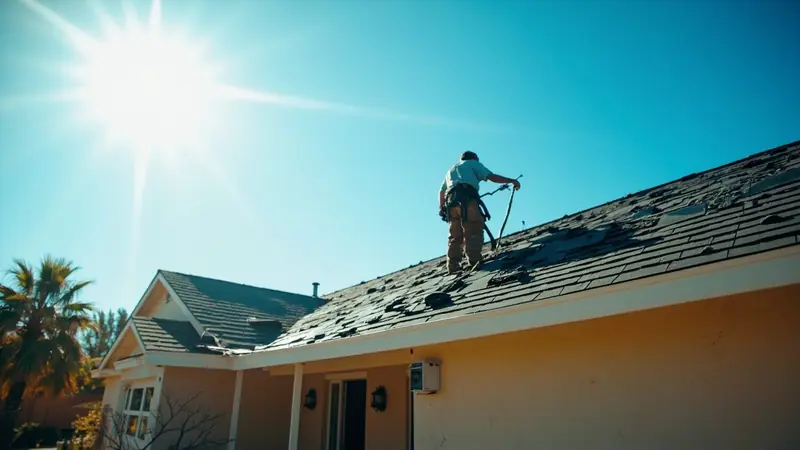
How Pomona's housing ages shape roof work
A roof fails in a way that matches the house under it. Older framing and construction styles decided the deck, the pitch and the penetrations, and all three decide what a roofer finds once the covering comes off.
Pomona's oldest housing stock, built with wood framing on raised floors over perimeter foundations, often carries board decking that was never meant to hold a modern underlayment. A tear off on one of these roofs usually exposes an older wood shingle layer and uneven boards, so the flashing at valleys and chimneys needs individual attention rather than a standard detail.
Phillips Ranch tells a different story. That hillside neighborhood was built out from the 1970s into the 1990s, and many of its homes still carry their original concrete tile or aging composition shingles over plywood decking. The tile itself can look sound for decades, but the underlayment under it is a separate material with its own service life, and in homes from that build out window it is often past that point even while the tile sits flat and unbroken.
Layered on top of both eras is the valley's climate. Summer heat works at every seam and fastener through long dry stretches. The fall and winter Santa Ana wind pattern pushes dry gusts that lift loose tabs and snap brittle tile edges. Most seasonal rainfall falls during winter within a brief stretch, putting pressure on any gap summer left untouched once storms hit. A roof that passed a dry season inspection can still leak the first wet week if a fastener or a seam was already loose.
The CSLB License Lookup publishes the rules that govern work like this in your area.
How we work on a Pomona roof
A roofer in Pomona starts by finding out what the covering is hiding before talking about options. On an older bungalow that means checking the deck before quoting repairs. A soft spot under a shingle run changes the job from a patch to a deck replacement in that one area.
We walk through what we found before any decision gets made. That includes showing the homeowner the actual spot, whether it is a cracked boot, a lifted ridge cap or a section of decking that gives underfoot, so the choice between a repair and a larger job is based on what is there.
Nothing gets opened until the homeowner says go. We write up what the visit found, name what decides the repair, such as how many old layers have to come off or how much decking needs replacing, and the homeowner signs off on that work before work starts.
For storm resilience, the IBHS FORTIFIED standard is the playbook. Several of its upgrades cost little during a re-roof.
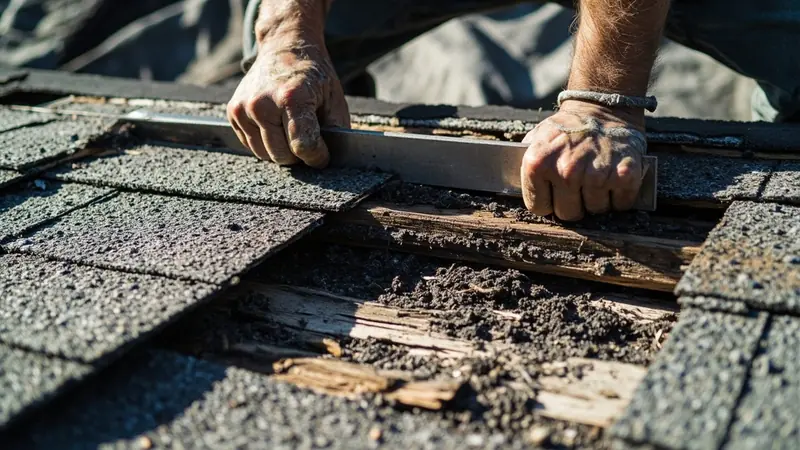
Checking soffit and ridge balance
Summer heat works at a roof for months before anything visibly fails, and an attic that cannot pull in enough air at the soffit while exhausting at the ridge runs hotter and damper than it should. We check that intake and exhaust balance on repair visits, because a new covering installed over an unbalanced attic fails the same way the old one did.
Finding moisture before tear off
A flashlight held low in the attic shows staining and daylight at penetrations that a walk on the roof never reveals. Rusted nail tips and dark rings around them mean warm house air has been condensing on the sheathing through the winter. Finding that before a tear off tells us whether the problem is the covering or the attic underneath it.
Permit signoff
The City of Pomona Building and Safety Division reviews roofing work that needs a permit, and that office makes the call on what qualifies. Knowing that ahead of a visit lets us tell a homeowner early whether their job is likely to need a permit pulled before work starts, rather than finding out partway through.
Why Heat and Wind Loosen Fasteners
Pomona's hot summers and strong Santa Ana winds stress roof fasteners over time. Older framing on homes built decades ago can shift slightly, loosening nails. That movement can rack a roof line just enough to open a seam at a wall or chimney that was tight when the house was new, so we check those joints even when the covering itself looks fine.
Roofing work we handle across Pomona
Home roofing work in Pomona splits into three kinds of visits. Repairs cover a leak, a missing shingle or a flashing failure at one spot, and they usually move fast once the cause is found. A replacement or a new install is a bigger decision, built around whether the decking underneath can be reused once the old covering is stripped. An emergency visit is about containment first, since an open roof in a storm keeps taking on water until it is covered.
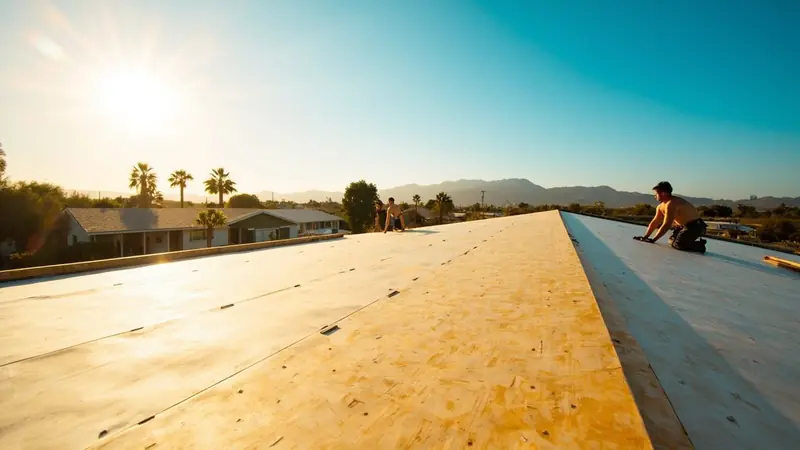
Roof repair and flashing work
Many roofing jobs start with a brown stain on the ceiling. Sometimes the leak only appears when gusts push rain from one side. That points at a split pipe boot, an open valley, failed step or counterflashing at a wall or chimney, or a missing kickout where a roof meets a wall. A directional leak that only happens with wind from one side usually means the wall flashing, not the field of the roof, is the problem.
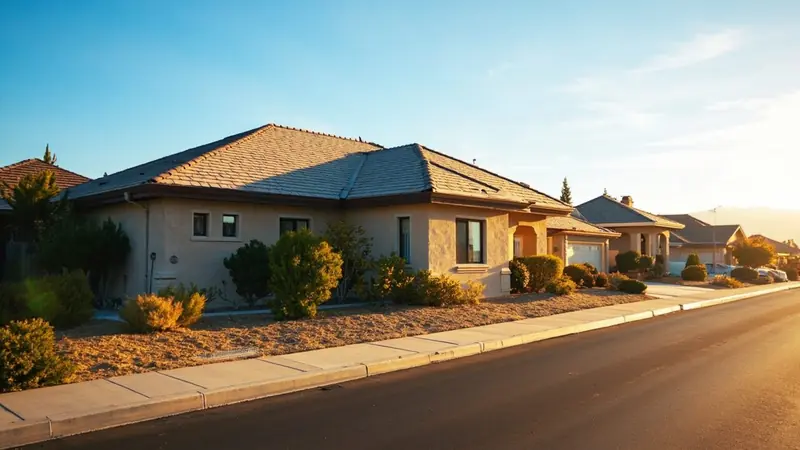
Replacement and reroofing
A roof moves from repair to replacement once the decking feels spongy underfoot or the shingles crack and shed granules when a tab is lifted. On stucco tract homes from the 1980s and 1990s, the tile often still looks sound while the underlayment under it has already aged out, so a reroof there usually means stripping to the deck rather than laying a new layer over the old one. Architectural laminated shingle is the common residential choice for the replacement covering.
Storm response and tarping
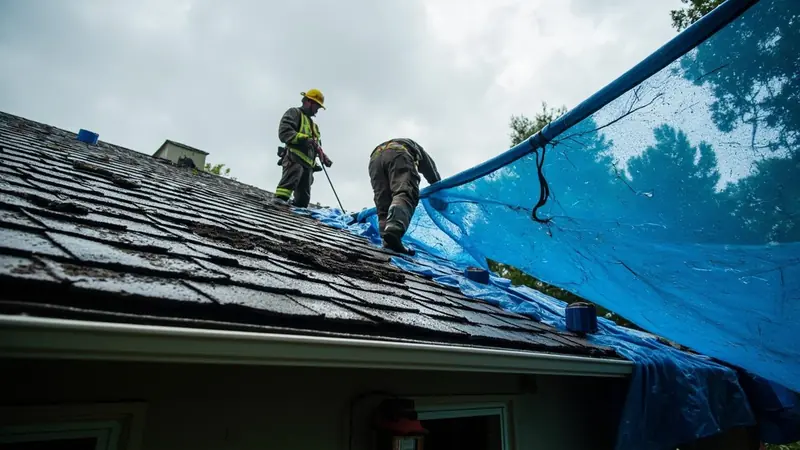
Before we arrive on an open roof, get a bucket under the drip and keep everyone out from under a sagging ceiling. A wet slope and a storm damaged deck are not safe to climb. On arrival, our priority is finding where water enters, not just where it dripped indoors. Water often travels along the decking's underside before falling. That tells us whether a tarp needs to cover one section or the whole slope.
Common Roofing Jobs in Pomona
Here is where to start if you live in Pomona. Each page covers one job from first call to finish.
- wind damage roof repair
- roof replacement
- storm damage roof repair
- roof leak repair
- emergency roof repair
- metal roof installation
Close to Pomona, we also work in Ontario and Rancho Cucamonga.
What roofing problems do Pomona homes have?
Pomona homes most often call about a leak that shows up as a ring on a ceiling or water that only comes through when wind drives rain from one direction. That symptom usually traces back to flashing: a split boot, an open valley, failed counterflashing at a wall or chimney, or a low slope section over an addition or porch where a small seam has opened.
On that low slope section, the failure often starts as a single pinhole at a seam. Moisture moves horizontally beneath the membrane instead of dripping straight through, leaving a soaked board unable to insulate properly. The decking beneath it rots well beyond the spot where the hole shows from above. By the time a stain shows up inside, the damaged area is already larger than it looks. Call once a directional leak or a ceiling stain shows up after a storm, because the deck under that seam keeps losing ground every time it rains again.
Wind lifted shingle edges
Fall and winter Santa Ana wind events push strong, dry gusts across the valley that get under loose shingle tabs and snap brittle tile edges. A tab that lifts at the rake or a hip corner lets wind work under the course above it, and the next storm can peel a full strip off bare decking. A shingle found in the yard after a windy night is worth a call before the next storm front moves through.
Old layers under Lincoln Park roofs
Older homes are often on their second or third roof over the original board decking from the 1890s through the 1940s. A tear off there regularly uncovers an old wood shingle layer, uneven boards and Craftsman or Spanish Revival details that need flashing cut and fitted by hand rather than off a standard template. Spongy decking found under one of these old layers usually means that section gets replaced.
Storms overloading roof drainage
Pomona's winter storms arrive in a short, heavy window, and street runoff that the storm drains and the regional flood control channels cannot clear fast enough backs water up at curbs and low points. On a roof, the same heavy rain finds any clogged gutter or low spot on a flat section and holds water there instead of draining it. Standing water still sitting on a roof two days after rain stops is worth a call.
Gutters left full through fall
Leaves and debris that sit in a gutter through the fall back water up behind the drip edge instead of letting it run off the roof line. Over a season or two that soaks the fascia and softens the bottom edge of the decking until the first course of shingles has nothing solid to hold its nails. Clearing gutters before the winter storm window keeps that water moving where it belongs.
Find the sign you have, then read across to see how soon to call.
| Symptom or first sign | What is already happening | What it becomes if ignored | When to call |
|---|---|---|---|
| A pinhole at a flat roof seam | Water tracks sideways between the membrane and the insulation | A wet board loses its insulating value | Call this week |
| Blocked soffit intake | Attic humidity climbs and the nails sweat all winter | The sheathing delaminates and the shingles cup from underneath with nothing wrong on the surface | Call this week |
| Gutters packed with debris | Water backs up behind the drip edge | The fascia and the bottom edge of the decking soften until the first course has nothing | Call this week |
| A cracked pipe boot | Water runs down the vent pipe into the attic insulation | The ceiling below stains and the framing around the penetration softens | Call this week |
| A lifted shingle tab | Wind gets under the course above it | A full strip peels in the next storm and the bare deck takes the rain directly | Call this week |
What happens when a roofer comes out?
A visit starts in the attic, not on the roof, because staining and daylight at the penetrations tell us where to look once we do climb up. Have the age of the roof, when the leak started and what changed right before it on hand when you call, since those answers shape where we check first. Clear access to the attic hatch and keep the area under any known leak open so nothing gets in the way.
Same day or booked visit
On the call we ask what you are seeing and whether water is actively coming through right now. Active leaking indoors or a clearly open section of roof typically brings a technician out that same day. A stain that has stopped growing or a shingle found in the yard with no active leak usually gets scheduled as a booked visit instead, since there is time to plan the access needed.
Clearing the way for the visit
Clear furniture and anything stored under the attic hatch, and move vehicles or landscaping away from where a ladder or a material drop would need to sit. When we arrive, show us the stain, the drip location or the spot in the yard where shingles turned up, and walk through when it started and what the weather was doing at the time. That walkthrough decides where the inspection starts.
What we show you before we leave
Before we pack up, we take a pin moisture meter reading against the underside of the decking in the area we worked and show you the number. Moisture levels below 15 percent indicate the decking is dry. A reading above 20 percent means that section is still holding water, and we point out exactly where that reading was taken so you can see it yourself.
From your call to finished work
A roofing job in Pomona moves in a set order once you call. The first visit settles where the water is getting in, and what the access to that area looks like decides how the rest of the visit runs. From there the job gets written down, approved, and worked, with inspection built in on anything that needed a permit.
Access is often the detail that changes the plan on site. A low slope section over a porch addition, a steep hip roof over a two story bungalow, or a tight side yard for a dump trailer all change how the crew stages the work, even before the covering itself is touched.
Finding where water enters
On a low slope section, we mark any standing water and check whether the surface and the drains are still wet two days after the last rain. That tells us whether the roof is draining the way it should or holding water at a seam that has already opened. It also rules out a simple surface issue before we start opening anything up.
Written quote and approval
Once the cause is found, we write up a quote naming the repair and what has to be opened to reach it, such as how far back decking needs to come up or how many old layers have to be removed. You read it over and approve it before anything is cut into or pulled off the roof.
Closing the roof back up
The deck stays open until the moisture reading we check at handover comes back dry. On work that needed a permit, the city inspection happens before the covering goes back down. Once both of those clear, flashing, underlayment and the final covering get closed in and the site gets cleared of debris.
Do you need a permit for roofing work in Pomona?
Most tear offs and full reroofs in Pomona need a permit. A small like for like repair at one spot often does not, though the City of Pomona Building and Safety Division reviews the work and decides which category a given job falls into. That division works under the California Residential Code, the code family that governs residential construction in the state, including roofing.
Because the specifics of what gets reviewed and when an inspection is scheduled sit with that division, the honest answer for any particular job is to ask them directly or let us flag it when we write up the job.
Other jobs we handle in Pomona include emergency board-up services, fallen tree roof damage repair and gutter installation.
Reading the deck
A roof problem is found from the inside out, starting with stain position and attic moisture before anyone climbs the slope. The walk test for deck deflection is the reading that moves a job from repair to replacement: a firm deck underfoot stays a repair, a spongy or springy feel between rafters means the sheathing has already delaminated and that section has to come out.
What changes the size of the job
Permit and disposal requirements set by the local jurisdiction change the size of a roofing job as much as the roof itself does. A job that needs a permit adds a review step before work closes up, and how many old layers have to be hauled away changes how much disposal the job requires. Fewer layers and a straightforward repair keep the job smaller. More layers, a bigger tear off, or added disposal needs move it up.
What decides timing and good work
Access, weather windows, and whether a part of the roof needs an inspection before it closes up all decide how long a job runs, more than the covering itself does. Finished shingle work should flex at the tab corner without cracking and without granules coming off in your hand. That flexibility, checked at the edge of the finished area, is the sign the covering was installed sound rather than already stressed.
Postwar ranch roofs needing a closer look
Pomona's postwar ranch tracts from the 1950s and 1960s carry low pitched gable and hip roofs, often with an original wood shake or rock surfaced covering over spaced or board decking that has since been reroofed in composition shingle. Some homes also have a low slope section over a patio or an added room, which is a different material and a different failure point from the main slope and gets checked separately.
Roofing Questions From Pomona Homeowners
Underlayment under a Phillips Ranch tile roof usually wears out long before the tile itself fails. The tile can sit flat and unbroken for decades while the material underneath it reaches the end of its service life. A roofer checks the attic for staining and daylight at penetrations before assuming the tile's good looks mean the roof underneath is sound. Call before a wet season starts if the roof has not been checked in that build out window.
Repairs on a Lincoln Park Historic District bungalow usually start with the deck. These homes sit on board decking from an earlier build era, often with an old wood shingle layer underneath once a covering comes off, so valleys and chimney flashing need to be cut and fitted by hand rather than set from a standard template. A soft or springy spot found under the covering during a walk test means that section of decking gets replaced instead of patched. The homeowner sees the exact spot before any decision is made.
Shingles lose granules near Foothill Boulevard when asphalt that has already aged loses its flexibility and sheds under wind stress. A gust lifts a loose tab, and if the asphalt underneath is brittle, granules come off in a hand that lifts the corner to check it. A sound shingle flexes at the tab corner without cracking and keeps its granules in place. Checking this in mild weather matters, since a cold shingle can crack even when it is otherwise fine, which can make a healthy roof look worse than it is.
Flashing failure is a common cause of a leak near Garey Avenue, though it is one of several that show the same symptom. A roofer traces the water path from the attic side first, since the entry point is often several feet from where the stain shows up on the ceiling.
Response speed near Pomona Valley Hospital Medical Center is set by the roof's condition, not by how close the address is to any landmark. Describe what the roof or ceiling is doing when you call, since that detail, not the street it sits on, decides how the visit gets handled.
Call as soon as the roof is open or water is actively coming through after a Pomona winter storm. Put a bucket under the drip, keep everyone clear of a sagging ceiling, and stay off a wet or storm damaged slope, since it is not safe to climb without being tied off. On arrival the first check is where water is entering the decking, not just where it dripped inside, because water travels sideways under the decking before it drops.
Yes, Santa Ana wind gusts can lift loose shingle tabs and snap brittle tile edges across the valley. These gusts arrive in the fall and winter and work under any tab that is already loose, letting wind get under the course above it. A shingle found in the yard after a windy night, or a tile edge that looks chipped, is worth a call before the next storm front moves through, since the gap underneath keeps opening with each gust.
Roofing Services Near Pomona
Need a roofer in Pomona? We cover Pomona from our Ontario base. Call (909) 330-4661 to check your address.
Serving Pomona, CA 91767 from our Ontario base
After a storm, clearing debris from a gutter you can reach from a ladder on level ground is a reasonable homeowner task. Walking the slope itself, lifting a shingle or tile to check underneath, or sealing a flashing joint is past that point, since a wet or storm damaged surface and fall risk belong to someone working tied off. Anything found past the attic hatch, including deck condition and flashing repair, belongs to the visit.