
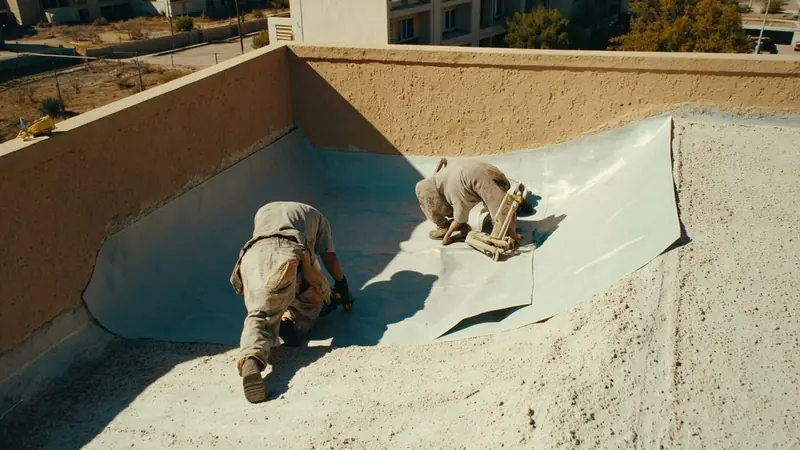
What multi-family and apartment roofing covers
Apartment roofing on a multi-unit building usually means two roof types on one structure, steep slope sections over the units and low slope sections over breezeways, carports or an added room. That mix is what sets multi-family and apartment roofing apart from a single pitched roof, since each section ages and leaks on its own schedule. A leak in apartment ceiling rarely sits right under the spot that let water in, because water travels along the rafters before it drops anywhere.
Shared roof systems carry that water sideways before it drops, so a leak over one tenant's bed can trace back to a wall two units away. A roof leaking into unit complaint from one resident can point you at the wrong section entirely, which is why the inside of the affected unit gets checked before anyone climbs up.
Debris builds up fast where several rooflines meet at valleys and wall intersections, and Ontario's fall and winter wind storms push loose leaves and branches into those spots. Once a gutter channel packs solid, water backs up behind the drip edge instead of draining off the roof. Sitting water there softens the fascia board and the bottom edge of the decking, and that strip can lose its grip on nails before a drop ever shows up inside.
On a building with many units, multiple units roof leaking along the same wall line can show up within days of each other once that softening starts. A ceiling stain that shows up during a storm and keeps spreading after the rain stops is the point to call.
Low-slope apartment roofs that hold water instead of draining it create a different problem. Moisture sitting under a membrane for days can work into wall cavities and invite mold inside a unit, especially where a low slope section sits over an occupied room. When a membrane has reached the end of its service life across several sections at once, commercial roof replacement addresses the whole run instead of patching one soft spot at a time.
The CSLB License Lookup publishes the rules that govern work like this in your area.

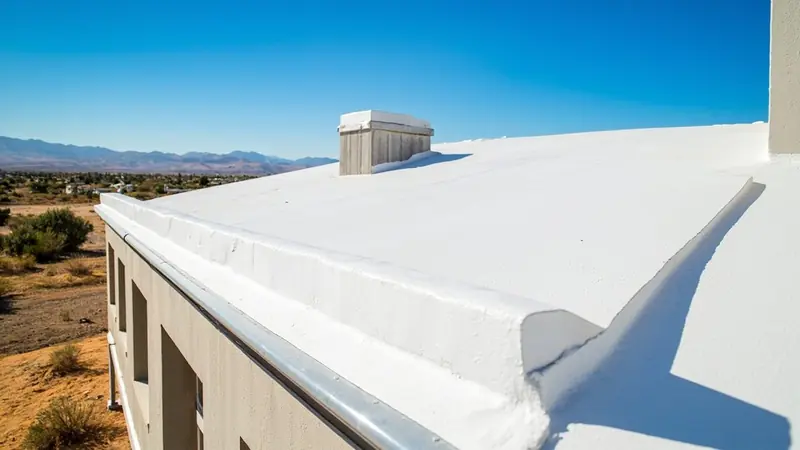
What happens during an apartment roof visit
A visit starts with tracing the stain.
- We check the stained unit's ceiling and attic access first to trace the water path.
- We check penetrations, boots and valleys before anything else, since multi-unit roof sections usually leak there first.
- We walk the low slope sections over breezeways or additions and look for standing water.
- We clear and check the drains on any low slope section.
- We mark ponding and note cut up areas like valleys, chimneys and skylights that add to the job.
The ponding check on a low slope roof decides what happens next. A section that's dry and draining within about two days of rain usually just needs the drain cleared or a seam reset. Standing water still sitting two days after rain means that area needs more than a surface patch, since the membrane isn't shedding water anymore.
For the steep slope sections, architectural laminated shingle is the usual choice on Ontario apartment and townhome buildings. Santa Ana wind gusts through fall and winter push toward a tighter nailing pattern and the matching starter strip, since the wind rating printed on any shingle only holds with both in place. Cut up roof lines, meaning valleys, dormers, chimneys and skylights across several units, change that nailing layout section by section, and that detail moves the timeline more than which shingle line gets used. A building with mostly open field roofline moves faster than one with several of those features stacked close together.
Our crews work to the installation standards of the National Roofing Contractors Association.
Pick the two options that fit your building, then ask which one makes sense for it.
| Option | The numbers a buyer weighs | Best suited to |
|---|---|---|
| Architectural laminated shingle | Two laminated layers that are glued together so it is heavier and thicker than three tab | Most steep slope roofs on a building |
| Standing seam metal | Fasteners hidden under the seam, panels clipped so they can expand and contract with temperature | Roofs meant to be kept for decades |
| EPDM rubber membrane | Black rubber sheet, seams taped or glued rather than welded | Low slope and commercial roofs |
| Impact rated shingle | Graded by a steel ball impact test where Class 4 is the top step | Hail country and exposed roofs |
Steps for your roof visit
On site assessment
We start inside the affected unit, tracing the stain toward its attic access point before anyone goes up on the roof. From there we check penetrations, valleys and low slope drains in that order, since that's where most apartment roof leaks start. On the low slope sections we look for standing water and test how firm the decking feels where staining showed up. You'll see where we're looking and what each spot tells us as we go. By the end of the visit, the cause is named and you have a written quote in hand, before anything on the roof gets opened or replaced.
Repair or replacement work
Once you approve the quote, the affected section gets dried in first so the unit underneath stays protected while work continues. On the steep slope side, that means pulling the damaged shingles and replacing the flashing or boot underneath them. On a low slope section, it means cutting out the wet membrane and insulation down to dry decking before a new patch or section goes in. Cut up areas like valleys and chimneys get resealed one joint at a time rather than all at once, so each one can be checked as it closes.
Final check before we leave
Before the new decking gets covered, a pin moisture meter needs to read under 15 percent, which is what dry decking reads. We take that reading at the spot that was wet going in and show it to you on the meter. On a low slope section, we also check that the drain is clear and the surface sheds water evenly across the patch, not just at the center. We show you that reading before closing out the visit.
What multi-family roofing needs in Ontario buildings
Multi-family roofing work that goes past a small repair usually needs a permit. The City of Ontario Building Department reviews that work under the California Residential Code, and the size of the job decides what gets submitted.
Skipping a kickout flashing where a roof section meets a wall lets water run behind the siding instead of into a gutter. The wall sheathing underneath can rot with no stain ever showing on the roof itself.
Reusing old boots and step flashing on a re-cover saves a step on the surface, but a cracked boot under a new shingle course still lets water into the attic insulation below it.
Treating every low slope section the same ignores how cut up each roofline is. Valleys, chimneys, dormers and skylights each add a seam that has to be sealed on its own, and skipping that on just one section is enough to open a leak that shows up two units over.
Roof coatings and restoration extends a low slope membrane that still tests dry, instead of pulling the sheet off a section that doesn't need it yet.
If the building also needs built-up roofing systems, that page covers what the work involves.
How this job runs for your building
Phone questions that set timing
During that phone call, we ask if water is coming through at this moment, how many units are impacted, and if a low slope area is involved. Active water inside an occupied unit usually moves someone out that day. A stain that isn't actively dripping, and shows up in a single unit, usually gets a booked visit instead. Knowing the unit count and whether the roof has a low slope section helps us answer that question faster on the phone.
What the job disturbs
Work on a low slope section usually means access across a breezeway, carport roof or shared walkway for a stretch of the visit. Clear vehicles from under a carport roof section and keep the area below any open flashing joint clear of furniture. On the steep slope side, nothing inside a unit needs to move unless the ceiling itself is opened to check for softened framing behind a stain. We'll say ahead of time if that's the plan for your unit.
What decides repair or replace
Cut up roof lines, meaning valleys, chimneys, dormers and skylights across several units, add more sealed joints than an open roofline without those features, and each one adds to the job. A single soft spot in the decking usually stays a repair. Decking that's soft across more than one section, or a low slope membrane holding water in more than one area, points toward replacing that run instead of patching it piece by piece. You will review the written quote and give approval before we open anything.
What you see and decide
We show you the stain's path on the ceiling or attic framing and point out where it ties back to the roof. You see the options for that section before any decision gets made. Nothing on a wall, ceiling or roof gets opened without your go ahead first. When old flashing, a boot or a section of decking comes out, you're shown what it looked like before it's hauled off, so you know what the quote covered.
Multi Family & Apartment Roofing Questions From Ontario Property Managers
Coverage usually turns on what caused the damage. Damage from age, such as underlayment or a membrane reaching the end of its service life, usually falls outside that coverage and gets treated as maintenance. Check your policy's language on roof coverings and common area sections, since apartment buildings often split steep slope and low slope coverage differently from a single home policy.
Estimates get built from what the roof visit finds. After checking the stained unit, penetrations, valleys, and any low slope drains, the job gets written up section by section, since a building with several roof sections rarely needs the same work everywhere. You see that written quote before anything on the roof or ceiling gets opened, and it names whether the job is a repair at one spot or a replacement across a wider run, based on what the decking and membrane checks showed.
Compare how each quote jobs the roof, not just the total line. A quote should name whether it treats the building as one open roofline or accounts for cut up sections like valleys, chimneys, dormers, and skylights, since each of those adds a sealed joint. Check whether low slope sections get a ponding check and drain clearing called out separately from the steep slope shingle work, and whether the quote names a repair at one spot versus replacing a wider run across the membrane.
What decides the size of the job is how many sections need work and how cut up the roofline is. Valleys, chimneys, dormers, and skylights each add a sealed joint to the work, and a building with several of those stacked close together takes longer than one with open field roofline.
Checking the attic hatch with a flashlight is as far as a homeowner check should go. Looking for staining or daylight around a penetration from inside the unit tells you whether water is active right now. Once the attic check shows staining or active water, the rest of the job belongs to the visit.
Estimates start with an on-site inspection, not a phone quote. A technician checks the flashing, reglet depth, and deck condition in person, then writes an itemized quote covering materials, labor, and any masonry repair needed before work begins. Nothing gets cut or sealed until you approve that written quote, and any change discovered mid-job, like hidden deck rot, gets flagged to you before the crew proceeds.
Why Ontario's roof mix changes multi-family and apartment roofing
Ontario's apartment buildings often have low-pitch roofs that need properly sloped drains to move water off during winter storms. Summers across Ontario and the rest of San Bernardino County run hot and dry with little rain, which bakes shingles and keeps a low slope membrane under heat stress for months. Winter brings most of the year's rain in a shorter window, and that's when a season of built up debris gets tested all at once. Buildings from the 1980s and 1990s often carry tile roofing where the underlayment beneath the tile is reaching the end of its service life, even though the tile looks fine from the ground. Newer master planned apartment and townhome sections built from the 2000s on use concrete tile over modern sheathing, which changes how a low slope section ties into the steep slope roofline around it.
Work like this gets looked at during framing and again at final inspection. An inspector checks that new flashing ties into the existing wall line and that soffit vents weren't covered when a low slope section got tied into the main roof. That's one reason flashing details stay open to view until that stage clears, instead of getting closed in early to save a step. On a building with several roof sections, that sequencing matters more than it would on a single house, since one covered flashing joint can hold up sign off for the whole building. Work submitted up front, covering every section involved, tends to move through review faster than one submitted section by section.
Multi Family and Apartment Roofing Across Ontario and Nearby Towns
We handle Multi-Family and apartment roofing across Ontario and in these nearby towns.
Roofing Services Near Ontario
Need Multi-Family and apartment roofing in Ontario? We cover the city and the nearby towns on the map. Call (909) 330-4661 to check your address.
Address:
Ontario Roofing, 4335 E Lowell St, Suite G
More Commercial Roofing Services in Ontario
- Commercial Roof Repair
- Commercial Roof Replacement
- Flat Roof Repair
- Commercial Roofing Contractors
- TPO Roofing Systems
- EPDM Flat Roofing
- PVC Roofing Installation
- Modified Bitumen Roofing
- Built-Up Roofing Systems
- Roof Coatings & Restoration
- Commercial Metal Roofing
- Commercial Roof Maintenance Plans
- Commercial Roof Inspections
- Industrial Roofing Services
- All commercial roofing services
- Wind Damage Roof Repair
- Storm Damage Roof Repair
- Emergency Roof Repair
Looking through the attic hatch with a flashlight for staining or daylight around a penetration is something you can check yourself, from inside the unit. That tells you whether water is active right now. It won't tell you whether the low slope section is holding water or whether the decking underneath has softened, and that's where the visit takes over, since walking a wet or storm damaged roof calls for fall protection.
Before you call, know which unit or units have the stain, when it started, and whether it only shows up during rain or stays after. Note whether a low slope section sits near that spot, and the roof's age if you have it. If water is actively coming through, know where that unit's power shutoff is.