
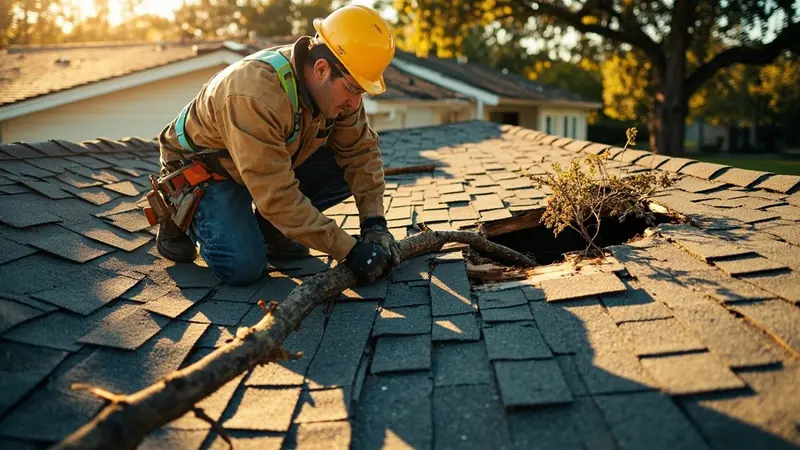
What to do if a tree falls through your roof
When a limb comes down, fallen tree roof damage repair starts with what the strike did to the frame below the shingles. The visible hole is only part of it. A tree fell on roof framing hard enough to crack rafters and split decking. The room below often shows the first signs before anyone sees it from outside.
- Get everyone out from under the sagging or broken section of ceiling.
- Shut off the circuit at the panel if water is dripping near a light or fan.
- Stay off the roof and make the call from the ground.
A broken branch across the roof is the easy part to see. The harder question is whether the roof caved in enough to need a brace before anyone walks the attic. Tree limb removal roof work has to happen first. Fallen tree removal roof clearing goes with it, before anyone can judge what's bent, cracked or torn underneath. A trunk resting on the covering hides the deck from view until it's lifted clear.
Santa Ana wind events across Ontario and San Bernardino County do two things in the same storm. They carry limbs down onto the covering, and they lift a shingle tab that a limb only grazed. Once a tab lifts, wind works under the course above it. A full strip can peel in the next storm, leaving bare decking to take rain directly. A strike that looked like one cracked shingle can turn into an open deck within days if the lifted edge isn't caught first. When the hole opens the attic to weather, emergency board-up closes it before the next front moves through.
A hole in roof decking that you can see daylight through means the frame underneath is already compromised. A ceiling that's sagging, or a rafter that looks bent at the strike point, means the same thing. Waiting on a quote only gives wind and rain more time to work at the opening. That combination is the point to call: daylight through the deck, a sagging ceiling, or a bent rafter.
We also handle storm damage roof repair across Ontario.
How we check and repair fallen tree roof damage
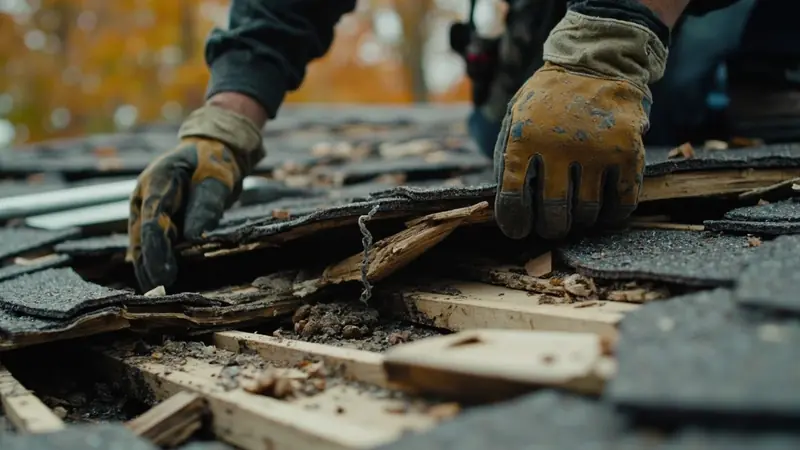
We start inside, not on the roof, since the attic shows what the strike did before anyone climbs up top. Daylight through the decking, sawdust and splinters on the insulation, and the shape of the rafter at the strike point tell us where to look first.
Then we walk the deck itself, because that's the reading this job turns on. A firm deck under the torn covering usually means a repair at that one section. A spongy or springy deck between rafters means the plywood has already pulled apart past the visible break, and the job becomes a wider roof decking replacement.
A rafter cracked straight through gets a new piece of lumber sistered alongside it, which is rafter and truss repair without pulling the whole truss. A rafter that's only bruised or scraped can sometimes stay, once we confirm it hasn't bowed along its length. When a tree crushed roof framing across more than one bay, more than one rafter usually needs sistering before new decking goes back on.
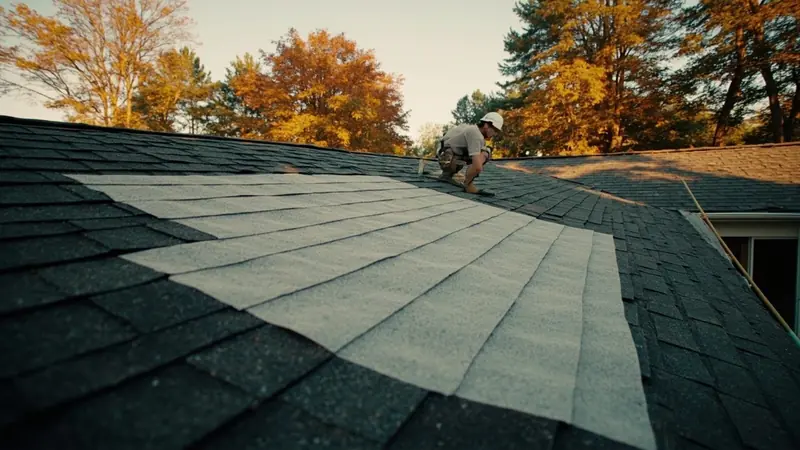
Covering type changes how far the repair spreads. A cracked concrete tile can often be swapped one for one once the furring underneath checks out. A torn asphalt shingle section usually has to come up by the course, since matching a few shingles into an existing field rarely seals the same way a full course does.
A structural roof damage assessment covers the decking, the rafters and the covering together, in writing, before any insurance cover tree damage claim goes in. We note what's broken and what's only cosmetic, and that written record is what the claim stands on.
Before any part gets replaced, ask to see each of these readings.
| Instrument | Good reading | Bad reading | What it changes |
|---|---|---|---|
| Core cut sample on a low slope roof | The insulation core comes out dry through every layer and the deck under it is sound | A saturated or crushed core | The wet area is larger than the visible stain |
| Infrared scan of a low slope roof after sunset | The field cools evenly as the sun goes off it | Warm patches that hold heat after dark | Wet insulation stores heat that dry insulation has already given up |
| Shingle flexibility and granule check | A tab lifts slightly at the corner and the granules stay put | The tab cracks when it is lifted and granules come off in your hand | The asphalt has aged out |
Steps after a tree hits your roof
Assessment on site
We start in the attic, checking the strike point for daylight, splinters and the rafter's shape, then walk the deck itself to read how it holds underfoot. You see the strike point with us, not just a writeup after the fact. That walk test tells us whether the damage stays local or spreads past the visible break. By the time we're done, we can name what's cracked, what's delaminated and what's only cosmetic, and that goes into a written quote before anything else happens.
Repair or rebuild the frame
Once the quote is approved, securing the opening comes first, so no more weather gets in while the rest of the work is scheduled. A cracked rafter gets a new piece of lumber sistered alongside it, and a section with torn decking gets that plywood cut out and replaced. We pause before the new decking closes the frame back up, so you can see the old damaged wood before it leaves the site, and you decide if anything else nearby needs a closer look.
Checking the new decking
Before the covering goes back on, we check the new decking with a pin moisture meter against its underside. A reading under 15 percent reads as dry, which is what the new deck needs to show before shingles or tile close over it again. We show you that reading and the replaced framing before it disappears under the new covering, so the last thing you see is the repair, not just the finished surface.
What tree damage repair needs in Ontario homes
Replacing cracked rafters and decking after a limb strike usually calls for a permit under the California Residential Code. The City of Ontario Building Department reviews the job once the new framing is open. That review happens before the covering goes back on, since framing is the part nobody can check once it's closed up again.
Tarping over an open hole without clearing broken decking first traps moisture against splintered plywood. Rot spreads past the original break before the covering repair even starts. Patching only the shingles visible from the yard skips the rafter underneath entirely, and a roof that looks finished can still have a cracked member holding nothing but its own weight.
Homes built in the 1945 to 1970s era carry original roof framing, often run through with wiring or ductwork in the same bay a falling limb lands in, which changes how a sistered repair gets installed around what's already there. Houses from the 2000s era use engineered framing that spreads a strike's load across more members, so the same size limb often damages a smaller area there than it does on older framing.
For storm resilience, the IBHS FORTIFIED standard is the playbook. Several of its upgrades cost little during a re-roof.
What the repair process looks like for you
Today call or scheduled visit
On the phone we ask if the limb is still on the roof, whether the hole is open to weather, and whether anyone is in the room below. A roof hole letting in rain gets a technician on site that same day. A branch resting on an intact roof with no interior damage can often wait for a scheduled visit instead. The size of the branch or trunk matters too, since a bigger piece changes what equipment we bring.
What gets disturbed during the visit
Removing a limb and opening the roof disturbs the attic insulation under the strike and, if the ceiling cracked, the drywall below it too. Clear the room under the damage and move anything stored in that part of the attic. Yard access matters as well, since the limb often has to come off before anyone reaches the roof deck, and a trailer or chipper needs a clear path to the strike side of the house.
What decides repair size
The decking underneath decides this once the limb and the torn covering come off. A firm deck under one broken rafter stays a repair at that spot. A deck that's delaminated past the strike turns into a wider roof decking replacement, and nobody can tell which one it is from the yard. You see the finding in writing, in a quote, and approve it before any decking or framing comes out.
See and decide on site
We show you the cracked rafter or the delaminated decking where it's found, not just a description of it. You see the repair options side by side before anything is cut. We ask for a go ahead before opening any more of the ceiling or roof than the strike already opened. The damaged wood comes out where you can see it, so you know what's being replaced and why.
Fallen Tree Roof Damage Repair Questions From Ontario Homeowners
Get people out from under the sagging or broken section of ceiling first. Stay off the roof, even if the branch looks small from the ground. Note whether the limb is still resting on the covering and whether rain is entering. That information is what decides whether someone comes out the same day or on a scheduled visit.
Yes, a limb strike can crack rafters, split decking and tear through shingles or concrete tile in one impact. The damage underneath often outlasts the visible mark on the covering. A branch that only grazes a shingle tab can still lift it enough for wind to work under the course above, which can peel a full strip in the next storm. The frame below the strike point needs a direct look, since a cracked rafter can hold nothing but its own weight with no outward sign.
A strike can crack rafters, split decking, and open a hole to the room below. A limb has to come off the roof before anyone can tell what's bent, cracked or torn underneath it. From there the deck gets checked for firmness, since that reading decides whether the job stays a repair at one section or becomes a wider decking replacement across more than one bay.
Responsibility for a fallen tree depends on where it stood and local property rules, which is separate from the roof repair itself. A structural roof damage assessment covering the decking, rafters and covering together gives a written record of what's broken versus cosmetic. That record exists regardless of who the tree belonged to. The roof work can move forward on its own timeline while responsibility for the tree gets sorted out between the parties involved.
No, a cracked concrete tile can often be swapped one for one once the furring underneath is checked and holds up. The tile cracking on impact doesn't automatically mean the deck below took the same hit. That's why the walk test on the deck matters more than the visible crack, since a firm deck under a cracked tile usually means a repair at that one spot. A spongy feel between rafters points to a wider problem the tile alone won't show.
Old plank sheathing can hide a crack or split better than plywood, since individual planks flex and shift differently than a continuous sheet. A strike that would show as visible give on plywood can sit less obviously on planks until the walk test is done underfoot.
Decking and rafters are the part nobody can check once the covering goes back on. The City of Ontario Building Department reviews the open framing before shingles or tile close the frame up again. A permit under the California Residential Code usually applies to this kind of rafter and decking work. Sequencing the job to leave the deck open for that look, rather than closing it the same day, is what makes that inspection possible at all.
A reading under 15 percent on the new decking reads as dry, which is what the deck needs to show before the covering goes back on. The reading is taken from the attic side with a pin moisture meter against the underside of the sheathing. That number confirms the replacement plywood isn't trapping moisture before it gets sealed in, and the reading plus the replaced framing are shown to the homeowner before the new covering hides both.
Why Santa Ana wind season changes tree damage repair here
Ontario's fall and winter Santa Ana winds bring gusts that snap brittle limbs onto older roofs. A ranch home from the 1945 to 1970s era, framed with lighter original rafters, flexes more under a trunk strike than a 2000s era home built with engineered framing, which changes whether a landing limb cracks one rafter or several. A concrete tile roof common to 1980s and 1990s stock here tends to crack tiles outright on impact, while an asphalt shingle roof from the same era tends to tear the mat instead. That changes whether the first visible sign is a shattered tile or a torn strip of shingle.
Work like this gets looked at before the covering closes back up, since decking and rafters are the part no one can check once shingles or tile go back on. The new framing and its fastening pattern get reviewed before the deck is approved for covering. That review is why we sequence a tree damage job to leave the frame open for that look, rather than closing it the same day it's opened.
Fallen Tree Roof Damage Repair Across Ontario and Nearby Towns
Fallen tree roof damage repair calls reach us from all over the Ontario area, including these towns.
Roofing Services Near Ontario
Looking for fallen tree roof damage repair near you in Ontario? Call (909) 330-4661 and we will confirm we cover your street.
Address:
Ontario Roofing, 4335 E Lowell St, Suite G
More Emergency Roofing Services in Ontario
Stay off the roof and scan it from the yard with binoculars or your phone's zoom, looking for a limb still hung above the roofline or a tab that's visibly lifted. That's as far as a homeowner should go. Cracked rafters, open decking and anything past the roof edge belongs to the visit, since climbing a storm damaged roof is how injuries happen.
Know when the limb came down and whether rain is getting in right now. If you can, note how big the branch or trunk is and whether it's still resting on the roof. Find your electrical panel in case a circuit needs to be shut off. Photos from the ground help us plan the visit.