
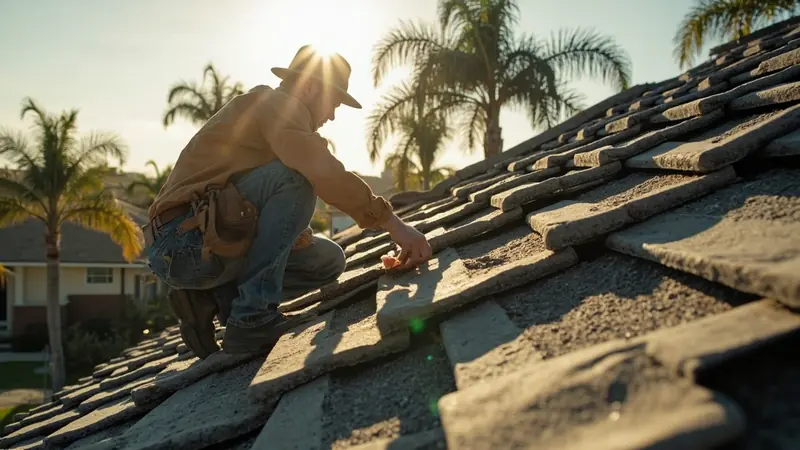
When to worry about a roof leak
A roof that dropped shingles, shed granules, or let water track across a ceiling during a storm needs checking before the next rain arrives. After-storm roof inspections tell you whether the covering and the deck underneath stayed sound, or whether wind opened a seam you cannot see from the yard. Watch for a stain that keeps spreading once the rain has stopped, not only while it falls.
Keep everyone clear of any room where the ceiling sags or drips. Move furniture and electronics away from the wet area and photograph the damage before anything is cleaned up. Stay off the roof. Wet or storm damaged decking (the wood boards under the roof) and a ladder in wind gusts are how people get hurt.
Look for shingles in the yard or caught against a fence, bare lines along a roof edge where tabs lifted, and granules collecting at a downspout outlet. Inside, a flashlight aimed at the attic sheathing can show fresh dark staining or a damp smell near a vent pipe. A ceiling ring that was not there last week usually means water already crossed the deck above it.
Wind damage assessment on a composition roof separates a few lifted tabs from a hail event that bruised the mat without breaking the surface. Roof damage after high winds often shows along one rake or ridge first, where uplift pulls hardest, while the rest of the field still looks sound from the ground. That uneven pattern is normal, and it is one reason a full check matters even when only one slope looks hit.
Checking soon after a storm, while displaced shingles and granules are still where they landed, makes it easier to separate wind damage from gradual wear that was already underway. A tab that already looked brittle before the storm breaks differently than one wind tore loose cleanly, and that difference matters for what happens next.
Santa Ana wind gusts work at the weakest point first, usually a tab that already lifted at one corner. Once air gets under that tab, it pries at the course above it, and the next storm can peel a full strip and leave bare decking (the wood boards under the roof) open to the rain. If a strip has already peeled, or a ceiling stain keeps spreading after the rain stops, that is the point to call rather than wait for the next front.
We explain storm season roof prep guide in more detail in our resources.
Our crews work to the installation standards of the National Roofing Contractors Association.
What happens during a storm damage roof inspection
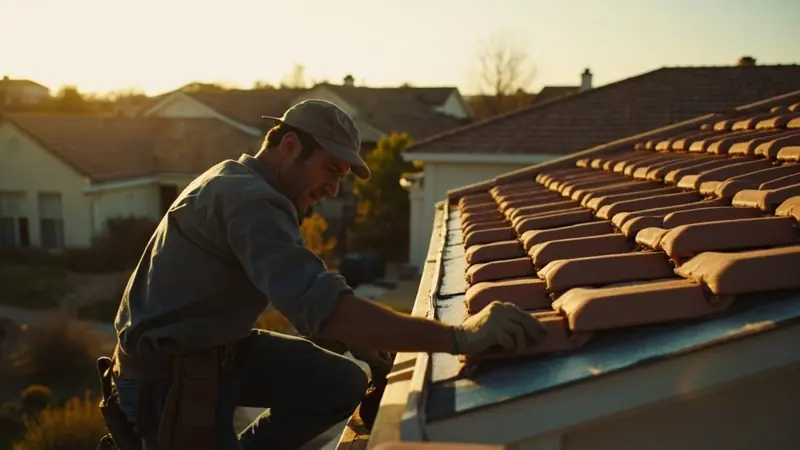
A storm damage roof inspection starts on the ground and moves inside to the attic before anyone steps on the slope. We look at what you already noticed, then work the roof in the order storms tend to loosen it.
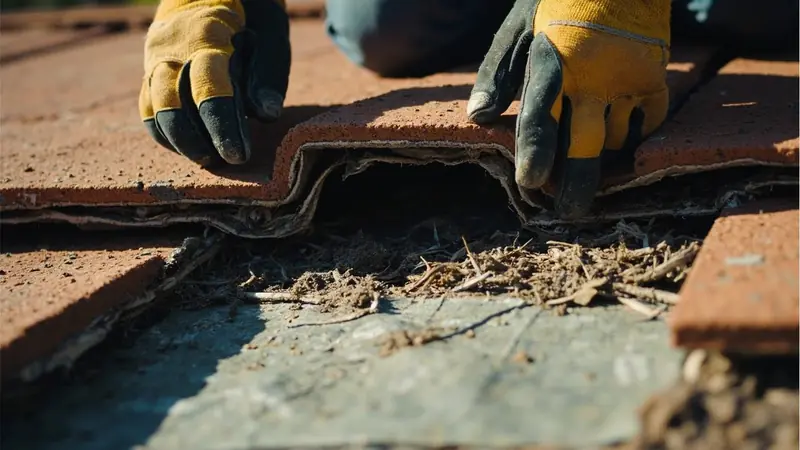
We check penetrations, pipe boots, and vent flashing (metal that seals joints on the roof) first, since wind loosens those before anything else. We follow valleys and wall intersections next, looking for lifted step flashing and pooled debris. We walk the open field last, lifting tabs to flex the shingle and check for granule loss. Inside, we check the attic for staining, daylight at penetrations, and damp insulation, using a drone roof inspection pass on steep or hard to reach slopes. We log every lifted tab, torn strip, and damaged flashing point as roof damage documentation you can use for an insurance roof inspection claim.
The shingle flexibility and granule check decides what happens next. When a lifted tab still bends without cracking and keeps its granules, a repair at that spot usually holds the water out. When the tab snaps instead of flexing and granules come away in your palm, the asphalt in that section has reached the end of its service life, and that area gets replaced rather than patched. Granule loss across a whole slope, not just at the tab you lifted, usually means the shingles are aging out everywhere, not only where the storm hit.
A tab that keeps lifting storm after storm is one reason some homeowners move to an impact-rated shingle instead of a standard architectural product when that section gets replaced. Impact-rated shingles carry a Class 4 rating, meaning the mat held up to a defined steel ball drop in testing and stays flexible rather than cracking in cold weather.
They run heavier per square and take more labor to install, which is worth weighing on a roof that keeps shedding tabs in wind. A standard architectural shingle is often enough where only one slope caught the gust. The heavier product makes more sense on a roof that faces open wind year after year.
We also handle storm damage roof repair across Ontario.
The CSLB License Lookup publishes the rules that govern work like this in your area.
Steps in the inspection visit
On site assessment
We start outside at penetrations, valleys, and wall intersections, then move to the attic and the open field, the order storms tend to loosen a roof. You see where we focus and why, since each stop tells us whether the damage sits in flashing, decking, or the shingles themselves. Once the shingle and granule check and the attic look are finished, we name the cause and put it in writing before we leave, listing what we found, where we found it, and what each repair option would involve.
Repair or replacement
Repair work starts once you approve the quote, usually with the damaged section tarped or secured first if rain is close behind the storm. Replacement of torn shingles, boots, or flashing follows at the spot the inspection marked, matched to the surrounding course so the repair does not stand out against the rest of the slope. On a section wide job, we pause before ventilation or flashing gets swapped out so you can confirm whether you want those replaced now or left as they are.
Final check
Before we leave, we check the decking with a pin moisture meter. Below 15 percent, the wood reads dry, which is what we want before new covering goes down over it. We show you that number, along with the old boots, flashing, or shingles that came out, before cleanup wraps up and the site is clear.
What this inspection needs to cover in Ontario homes
An inspection alone does not need a permit, but replacing shingles, decking, or flashing over a meaningful section of roof usually does. The City of Ontario Building Department reviews that kind of repair under the California Residential Code, and it decides where a small patch stays outside that review and where it does not.
Houses from the 1945 to 1970s era carry low-pitch roofs that already drain slowly. Skipping the valley check on one of these after a storm lets ponded water sit at a seam until it works through the underlayment (the layer under the shingles) and into the deck below it.
On 1980s to 1990s tile roofs, the underlayment hidden under the tile is often already near the end of its service life. A quick look at broken tiles alone misses underlayment that wind-driven rain has already found through a cracked piece.
A standalone roof inspection makes sense even without a storm, say once a year or after a contractor knocks on your door with no event to explain it.
Not quite your problem? Read about wind damage roof repair instead.
For storm resilience, the IBHS FORTIFIED standard is the playbook. Several of its upgrades cost little during a re-roof.
How the inspection visit works for you
Today visit or scheduled check
On the call, we ask when the wind or rain hit and what you can see from the ground, inside or out. An active drip inside the house, or a visible gap where shingles went missing, usually means we move it up and come out today. A few lost granules with no interior sign and no missing material fits a scheduled slot instead. Either way, the questions we ask on the phone decide which one fits your roof.
What the visit disturbs
An after-storm inspection works mostly outside and in the attic. Clear a path to the attic hatch and move vehicles away from the drip line before we arrive, since a ladder goes up along the eave. We may open a vent cover or shift insulation near a suspected leak to check the sheathing underneath, and we set it back in place when we move on to the next spot.
What decides the repair size
The size of this job turns on what the shingle and granule check finds, and on one choice: whether flashing, boots, and ridge vent (the vent along the peak of the roof) get replaced along with any damaged shingles, or stay in place because they tested sound. A repair confined to one slope, with flashing and boots left alone, stays smaller than a job that opens the ridge and wall intersections to replace them too. You see the quote in writing and approve it before anything comes off the roof.
What you see and decide
We show you the lifted tab or torn strip where we found it, or in photos if it sits on a slope you cannot see from the yard. You see the granule test and the attic staining side by side with what a sound section looks like, then you choose between a repair at that spot or a broader replacement before we commit to either one. Any damaged flashing we pull out gets set aside for you to look at.
After Storm Roof Inspections Questions From Ontario Homeowners
Yes, hail can bruise the asphalt mat without tearing the surface, and that damage only shows up on close inspection. We run the shingle flexibility and granule check: lifting a tab to see if it bends and keeps its granules, or cracks and sheds them in your hand. A bruised mat without a crack can still fail later even though it looks fine from the ground. Checking soon after the storm, while any loose granules are still at the downspout outlet, makes it easier to separate hail bruising from shingles that were already breaking down before the storm hit.
Contractors canvass neighborhoods after any storm whether or not your roof took damage. A call or a knock on the door tells you nothing about your own roof. Check the downspout outlet for granules and scan the roofline from the ground for missing shingles or a sagging ridge line before deciding anything needs attention. A new ceiling stain or shingles sitting in the yard is a reason to get the roof checked, separate from who called or knocked on your door that day.
A standalone check once a year catches gradual wear even without a storm to trigger it. Add a check any time wind or rain hits hard enough to drop shingles, shed granules, or leave a ceiling stain, since that kind of event can open a seam that is not visible from the yard. Houses with low-pitch roofs from the 1945 to 1970s era need the valley checked at each visit, since ponded water works through the underlayment there faster than on a steeper slope.
Storm events bring contractors through a neighborhood regardless of which roofs took damage, so the calls alone mean nothing about yours. Look at your own roof before responding to any of them. Check the downspout outlet for granules, scan the roofline from the ground for bare lines where tabs lifted, and watch for a ceiling stain that keeps spreading after rain stops. Those signs tell you whether your roof needs checking, apart from whoever keeps calling about it.
Check the yard and roofline from the ground for missing shingles, bare lines, and granules at the downspout outlet. Stay off the roof itself, since wet or storm damaged decking and a ladder in wind gusts are how people get hurt. Checking the deck and flashing up close happens on the visit.
Report it as soon as you notice it, since a fresh pattern of lifted tabs and loose granules is easier to read than one left through more rain. Photograph the roof and any interior stain before cleanup starts, and note when the wind or rain hit. Waiting lets more storms mix new wear into the same spots, making it harder to tell what the first storm did. Checking sooner keeps that pattern clear for whoever reviews the damage later.
How wind and ash change after-storm roof inspections in Ontario
Ontario sits on the valley floor, away from the foothill edge where ember exposure runs highest, but the same dry wind events that drive wildfire risk in the foothills also carry smoke, ash, and loose dust down into the valley and settle it in gutters and on the roof. After a Santa Ana wind event, that dust can sit on composition shingles and inside gutters even when the roof itself took no wind damage. Granules at the downspout outlet are not always from a lifted tab, since a gray film across a slope is often ash. We separate the two with the flexibility and granule check rather than judging by color alone. On a tile roof from the 1980s or 1990s, the same dust settles over broken tiles and hides a cracked piece until it is cleared.
Replacement work like this gets reviewed at permit stage, with attention to the deck once it is exposed, the flashing at valleys and walls, and whether ventilation balance at the ridge and soffit gets restored along with the covering. That is one reason the deck gets checked and shown to you before anything new goes down over it, since closing up a repair without that step is the kind of shortcut a later inspection has to catch. Permit review also applies when the work changes ventilation and not only the covering, so blocked soffit vents get flagged even on a roof that otherwise checks out.
After Storm Roof Inspections Across Ontario and Nearby Towns
Besides Ontario itself, we do After-Storm roof inspections in the towns below.
Roofing Services Near Ontario
Looking for After-Storm roof inspections near you in Ontario? Call (909) 330-4661 and we will confirm we cover your street.
Address:
Ontario Roofing, 4335 E Lowell St, Suite G
More Emergency Roofing Services in Ontario
From the ground, binoculars or a phone camera zoomed in can show missing shingles, a torn strip, or a sagging ridge line without anyone climbing anything. That view stops at distance and angle. It cannot tell you whether the deck underneath stayed dry or whether flashing at a valley lifted just enough to let rain in sideways. That part of the check happens on the roof itself, on the visit.
Know when the wind or rain hit and whether anything changed right after it, such as a new stain or a strip of shingles in the yard. If you know the roof's age, have it ready. Check from the ground whether what you see is ash and dust or actual shingle pieces, and know where the attic hatch is so we can get up there quickly.