

Canyon lots and hillside tracts change the job
Chino Hills grew outward from canyon cabin lots to master-planned hillside tracts, and the two eras put stress on a roof in different places. Sleepy Hollow was laid out as cabin lots in the 1920s along Carbon Canyon Road and rebuilt piecemeal after past canyon fires. Small older homes there sit under oak cover in a canyon with a long fire history, which puts more weight on roof debris and ember exposure at eaves and vents than it does on the tracts below.
Payne Ranch went up mostly in the late 1980s and 1990s as part of the city's master-planned growth. Its homes carry large tile roofs with many hips and valleys, and that cut-up shape puts most of the leak risk at the valley flashing and the laps in the underlayment under the tile. A tile roof here can look sound from the ground while the underlayment beneath it has already aged out.
Both areas sit through the same wind pattern. Fall and winter bring Santa Ana gusts that run downslope out of the canyon, and a roof with a lifted tab or a loose ridge cap gives that wind something to work at. In the canyon, oak and eucalyptus branches come down with the same gusts and add debris on top of whatever the wind has already loosened.
Summer runs hot and dry here, with little rain until late fall. That long dry stretch lets leaf litter and bark build up in valleys and against any parapet or wall before the first storm arrives. This is part of why a roof that looked fine all summer can leak the first time it rains.
After severe weather, FEMA's guidance on documentation makes the difference in how smoothly a claim goes.
How a roofing job runs in Chino Hills
A job here starts with the homeowner seeing what we see, not with a quote appearing out of nowhere. On the first visit we walk the problem area with you, point out what we found, such as a cracked pipe boot or a soft spot in the decking, and explain what it means before any options come up.
From there we lay out the choices in plain terms: a repair at that one spot, or a wider fix if the cause has spread. On a hillside lot, a gap at a roof-to-wall joint can trace back to slab or framing movement rather than the roof itself, so we say which one we are looking at before suggesting a repair.
Nothing gets opened up until you say go. Once a repair or replacement is agreed on, we write it down so you see the job in writing before work starts.
Valleys checked first
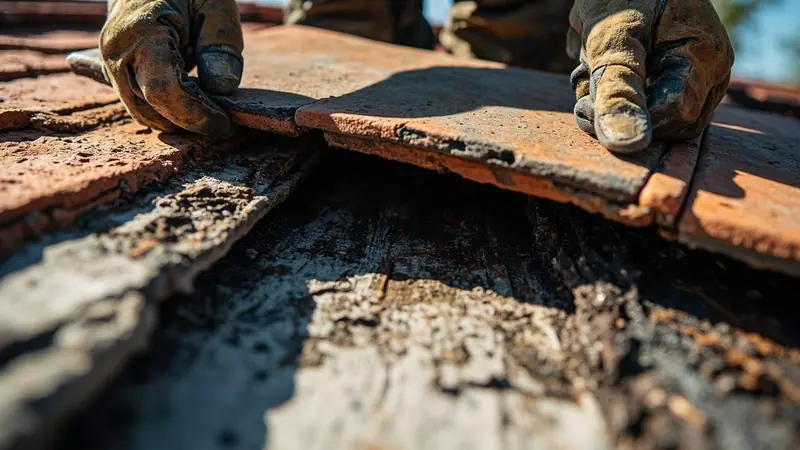
On a hillside tile roof with hips and valleys, most leaks start at the valley flashing or the underlayment laps underneath the tile. Because of that, we look at every valley and flashing line before we look anywhere else. That means a leak that seems to come from one spot often gets traced to a seam a few feet away, and the repair targets that seam instead of the tile above it.
Attic read before the roof
We hold a light low in the attic and look up at the nail shanks and the sheathing for staining or rust, which shows up before a ceiling stain ever does. No daylight at a penetration and clean nail shanks mean that section is dry. Corrosion and dark staining on the nail tips show condensation from moist air. That signals an attic problem instead of a roofing defect, shifting our advice.
Permits handled through the city
Re-roofing and most structural roof repairs in Chino Hills need a permit, and the City of Chino Hills Community Development Department, Building and Safety Division is the office that reviews it. Knowing that going in means you know whether a permit step is part of your job before any work starts. A small like-for-like patch is usually a different case, and that office is the one that decides which.
Santa Ana Wind and Roof Wear
Santa Ana wind events bring strong, dry gusts that can lift shingles and loosen tiles. These gusts can also wear down flashing and shorten a roof's lifespan. On a hillside lot that cycle can shift a slab or the framing above it over time. It can show up first as cracked stucco or a gap opening at a roof-to-wall joint, so we check whether a gap like that is new movement before treating it as a flashing failure.
Roofing work we handle across Chino Hills
Home roofing work here splits into three kinds. Repairs cover a boot, a flashing line or a section of shingles or tile that has failed in one spot. A replacement or a new install comes up once the decking or the underlayment underneath is gone. It turns on how many layers are already up there and how the roof is cut up with valleys and hips.

Roof repair and replacement
Roof repair and replacement covers the single-spot fixes: a cracked pipe boot that let water run down into the attic insulation, a lifted shingle tab along a rake, or a valley flashing lap that opened under tile. On an older cabin with smaller roof planes, even one bad boot or flashing joint can account for most of a leak without the covering around it needing to come off at all.
Tile and shingle replacement
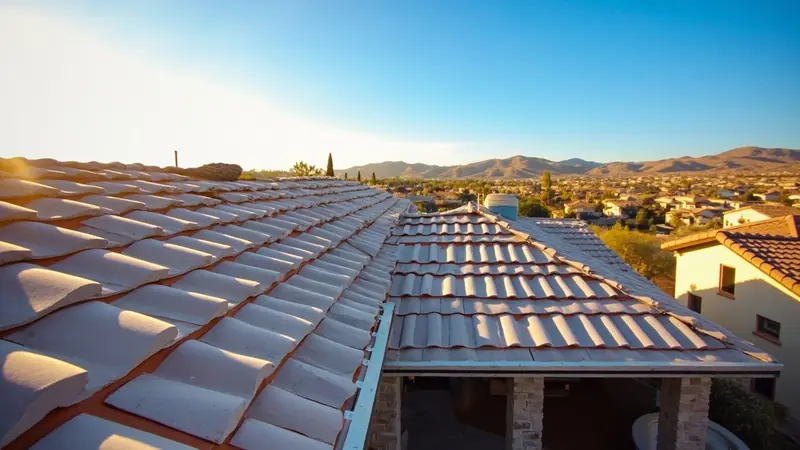
A replacement gets decided once the deck or the underlayment is checked. A spongy feel underfoot between rafters, or tabs that crack and shed granules when lifted, moves the job from repair to replacement. Most shingle roof installation work here goes in as architectural laminated shingle, heavier and thicker than standard three tab, with a wind rating that only holds with the specified nailing and starter strip.
Storm response
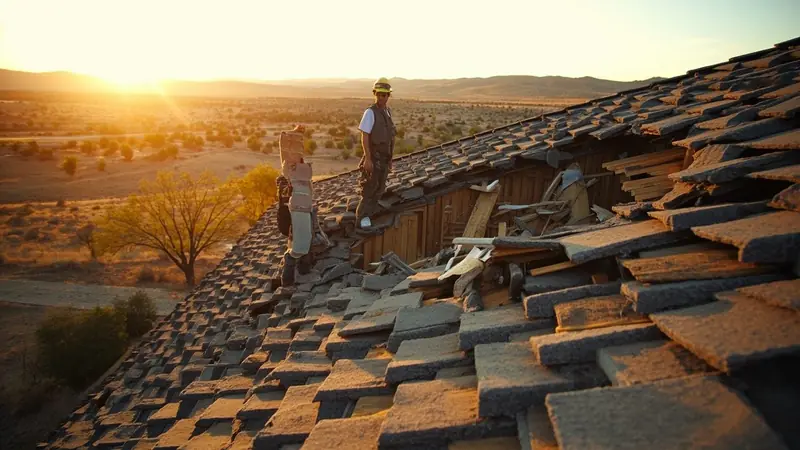
When wind or a storm opens a section of roof, shut off power to any fixture near the leak and set a bucket or an open hole at the low point so the water has one place to go, then call. The first thing we check on arrival is where the covering failed, such as a torn ridge cap or a lifted valley, so a tarp goes over the real opening and not just the spot where the stain showed up inside.
Common Roofing Jobs in Chino Hills
Pick the job that matches what you are seeing in your Chino Hills home. Each page explains the work and what to expect.
What roofing problems do Chino Hills homes have?
Chino Hills roofs fail at predictable points: valleys under tile, flashing at penetrations, and gutters that fill with canyon debris before the rain gets heavy. The common thread is that a small blockage or lifted edge rarely stays small once wind or rain works on it.
Gutters packed with oak and eucalyptus debris are the clearest case. Water backs up behind the drip edge instead of draining, and that standing water softens the fascia and the bottom edge of the decking. Once that edge has nothing firm to hold a nail, the first course of shingles or tile has nowhere to anchor. Don't wait for another storm if a gutter overflows or a fascia board feels soft. Call us right away.
Wind-lifted shingles and tile
Santa Ana gusts running downslope out of the canyon catch the edge of a loose tab or ridge cap and peel it back. A course missing along a rake or ridge, or a tile sitting out of line after a windy night, means the uplift already beat the fastening at that spot. Left alone, the next gust works the opening wider and exposes the underlayment underneath to direct rain.
Aging tile underlayment
Tile roofs built in the late 1980s and 1990s can still look sound on top while the underlayment beneath the tile has reached the end of its service life. The tile itself rarely breaks, so the first sign is often a stain inside near a valley rather than anything visible on the roof. Once the underlayment has gone brittle, lifting tile to check it is the only way to know how far it has spread.
Storm drainage backing up
Street runoff here goes into city storm drains that feed concrete-lined channels maintained by the San Bernardino County Flood Control District. On a low-slope section of roof, that same heavy winter flow can overload a drain or scupper faster than it clears, and water ponds on the roof instead of in the street. Standing water on a flat section after a storm has passed means the drain path needs a look.
Granule loss left unchecked
Shingles that have started shedding granules in the gutter or at the downspout outlet are aging out, and it is easy to put off a look because nothing is leaking yet. Once the asphalt mat is exposed, sun and wind wear it faster, and the next wind event is more likely to tear a tab rather than just lift it. A handful of granules in the yard after an ordinary windy day is worth a call before that happens.
Find the sign you have, then read across to see how soon to call.
| Symptom or first sign | What is already happening | What it becomes if ignored | When to call |
|---|---|---|---|
| Gutters packed with debris | Water backs up behind the drip edge | The fascia and the bottom edge of the decking soften until the first course has nothing | Call this week |
| Missing kickout flashing where a roof meets a wall | Water runs behind the siding instead of onto the shingles | The wall sheathing rots with no stain on the roof at all | Call this week |
| Blocked soffit intake | Attic humidity climbs and the nails sweat all winter | The sheathing delaminates and the shingles cup from underneath with nothing wrong on the surface | Call this week |
| A lifted shingle tab | Wind gets under the course above it | A full strip peels in the next storm and the bare deck takes the rain directly | Call this week |
What happens when a roofer comes out?
A first visit starts where the problem shows up inside the house, since a stain rarely sits right under the actual leak. We trace it back toward the roof side, check the spot once we are up there, and show you what we found before talking about any fix.
Knowing when the stain first appeared, whether it tracks with a storm or shows up on a dry week, and roughly how old the roof is helps the visit move faster. If possible, make sure the attic hatch and the stained area below are easy to reach, so inspection starts quickly.
Common jobs in Chino Hills include wind damage roof repair, after-storm roof inspections and asphalt shingle roofing.
Phone questions first
On the call we ask what you are seeing, such as active dripping, a stained ceiling or shingles down in the yard, and whether it is happening right now. Active water inside the house usually points toward someone coming out the same day. A stain that has not changed in a while, or shingles found after a windy night with no leak yet, usually fits a booked visit instead, since there is less urgency behind it.
Clear a path before we arrive
Clear furniture or boxes away from the stained area and leave the attic hatch reachable, since that is where the check usually starts. When we arrive, show us where the water first showed up and anything that changed right before it, such as a storm or a branch coming down. We walk that spot with you and describe what we are checking before touching anything.
A reading before we leave
Before the visit ends, we take a pin moisture meter reading against the underside of the decking near the repair and show it to you. A reading under 15 percent means that section reads dry. A reading above that means the decking is still holding water, and we say so rather than close it up anyway.
From your call to finished roof work
A roofing job here moves in three stages. The first visit settles where the problem is coming from and what has to be opened to confirm it, and what the deck looks like underneath decides the next step more than anything visible from the ground. Once that is known, the job gets written down and approved before anything comes apart. The last stage is closing the roof back up once the repaired area reads the way it should.
Locating the cause
We start by checking the covering itself for what moved or cracked, such as a lifted tab, a shifted tile or a split boot, then follow that line toward the nearest valley or penetration. That tells us whether the fault sits in one spot or has already tracked along a seam. Nothing gets opened further until that path is clear.
Quote and approval
Once the cause is found, we write up a quote naming the repair and what has to come off or open up to reach it, such as tile courses over a valley or a section of underlayment. You see that work in writing and approve it before any material comes off the roof.
Closing it back up
The repaired section stays open until the moisture reading comes back dry. On permitted work, the Building and Safety Division's inspection happens before the covering goes back on. Once that passes, flashing, underlayment and the covering go back down in order and the area is cleared of old material.
Do you need a permit for roofing work in Chino Hills?
Most re-roofing and structural repair work in Chino Hills needs a permit under the California Residential Code, and the City of Chino Hills Community Development Department, Building and Safety Division is the office that reviews it. That division handles building, plumbing, mechanical and electrical permits through the city's own online portal, which is also where a roofing permit application and its inspection get scheduled.
A small like-for-like patch, such as resetting a few displaced tiles or replacing a single boot, is usually treated differently from a full tear off or a deck replacement, and the division is the one that decides where that line falls on a given job. We tell you up front whether the job we are proposing is one that calls for a permit, so that step is not a surprise once work is already underway.
Because the Building and Safety Division reviews plumbing and mechanical work through the same portal, a roof job that also touches a vent stack or a mechanical curb can pull in more than one trade's worth of review. On a hillside lot, that is worth asking about early, since a roof-to-wall repair tied to slab or framing movement can sometimes cross into work the division wants to see before it is closed up.
The CSLB License Lookup publishes the rules that govern work like this in your area.
Reading the attic airflow
A covering that cups or ages early is sometimes an attic problem more than a roofing one. We check whether the net free area at the soffit intake roughly matches the net free area at the ridge exhaust. If exhaust ventilation exceeds intake, the ridge draws indoor air outward and pulls moisture into the decking. That later appears as nail staining and premature wear. That balance gets fixed before a new covering goes on.
Pitch and story count
A steep roof that takes staging and fall protection takes more time than a walkable low-slope roof, and a two-story house adds a step most single-story homes skip. That access decision is made before material or layout gets discussed, since it decides how the crew gets up there and how material and debris move off the roof.
What slows a job down
Access for a dump trailer, how many old layers have to come off, and whether the decking underneath turns out sound all affect how long a job runs, more than the weather usually does. Finished work reads dry on the moisture meter at the repaired section, and the flashing lines sit flush with no visible gap at the wall.
Aging tile roofs need a second look
Tile roofs built through the late 1980s and 1990s are reaching the point where the underlayment beneath the tile, not the tile itself, is the part giving out. That means a roof that looks intact from the street can still be due for underlayment work, and lifting a section of tile to check it is often the only way to know before a leak shows up inside.
Roofing Questions From Chino Hills Homeowners
A brown ring means water tracked sideways before it showed on the ceiling, not that the leak sits directly above the stain. Water often follows a rafter or a seam in the decking before it drips, so the entry point can be a few feet off from where the ring appears. On a cold night with no rain, that same ring can come from moisture condensing in the attic instead of a leak in the covering. Either way, tracing the stain back toward the roof side is how the actual source gets found.
A leak near a patio cover can trace to either the roof or the structure, and checking the gap is how you tell. On a hillside lot, clay-rich soil swells and shrinks with moisture and can shift a slab or the framing above it, opening a gap at the roof-to-wall joint that looks like a flashing failure but is not one. We check whether that gap is new movement before treating it as a roofing problem, since the repair differs depending on which one is at fault.
Rusted nail tips with dark rings mean moist air has been condensing on the nails inside the attic over time. That pattern shows up before a ceiling stain ever does, since the moisture is sitting on metal rather than soaking into drywall yet. It points to an attic airflow problem, usually an imbalance between the intake at the soffit and the exhaust at the ridge, rather than a failure in the roof covering itself. That distinction changes what gets fixed before any new material goes down.
Gutter debris builds up faster on canyon lots because oak and eucalyptus cover sheds onto the roof year round. A gutter that overflows during a storm is worth checking rather than waiting for the next rain to test it again.
A soft or springy feel underfoot between rafters means the sheathing underneath has delaminated or rotted and can no longer hold fasteners. That reading is what moves a job from a shingle-only repair to a job that also replaces the deck, since a new covering nailed into failed sheathing will not hold. The check is done by someone tied off, walking the suspect area directly rather than guessing from the ground. Once that soft spot is found, the repair plan follows what it shows.
Vent openings built to resist embers keep wind-blown embers from entering the attic through the soffit or ridge during fire conditions. That matters most on canyon lots with heavy oak and eucalyptus cover and a long fire history, such as the Sleepy Hollow area. Eaves and vent openings are a known point of ember entry on older cabin-style homes under tree cover. Checking that those openings are screened and intact is part of looking at the roof as a whole system, not just the covering on top.
Roofing Services Near Chino Hills
Need a roofer in Chino Hills? We cover Chino Hills from our Ontario base. Call (909) 330-4661 to check your address.
Serving Chino Hills, CA 91709 from our Ontario base
After a storm, you can clear debris out of gutters from a ladder set on level ground. That is where it stops. Walking the roof itself, lifting tile or shingles, or checking a valley or flashing line up close takes fall protection and belongs to the visit, since a wet or storm-damaged slope is not safe footing for someone without it.