

What commercial roof repair fixes on a flat roof
Commercial roof repair deals with a membrane that has opened at a seam, a flashing, or a penetration, not a roof that has failed across its whole field. A tenant usually sees it as a brown ring on a suspended ceiling tile, or a leak that only shows up when wind drives rain from one direction. That directional pattern points at a wall or a parapet rather than the open field of the roof.
What it turns out to be varies. A split boot at a pipe, an opened seam on the flat field, a failed parapet wall repair at a coping joint, or missing counterflashing at a wall can all read the same way from inside a tenant space. The business roof repair conversation usually starts with that single stain and ends with a location nobody could see from the ceiling.
A pinhole opens at a flat roof seam from heat cycling and foot traffic. Water tracks sideways between the membrane and the insulation below it, spreading out instead of dropping straight down. A board that was dry starts holding water, loses its ability to insulate, and the deck under it begins to corrode well beyond the point where the hole sits. This is why a commercial roof leak repair that only treats the visible drip spot often leaves the real wet area untouched.
If water is actively pouring through a ceiling tile onto equipment or stock right now, emergency commercial roof service is needed. Short of that, watch for a leak that grows after each rain, a tile that stays damp between storms, or water pooling on roof surfaces near a drain that has not cleared in a day. Any one of those means the wet area under the membrane is already larger than the stain suggests. That is the point to call rather than wait for the next storm to push it further.
Our crews work to the installation standards of the National Roofing Contractors Association.

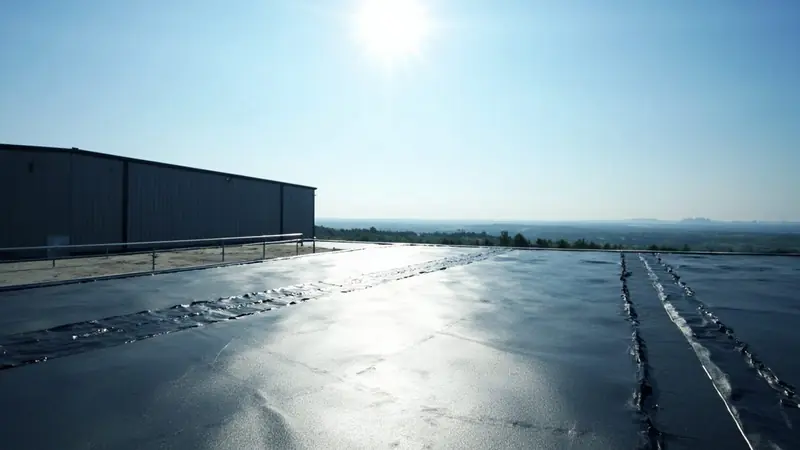
How we find and repair a commercial roof leak
We trace a commercial roof leaking back to its source before we patch anything, starting at the drains and working out to the field.
- We check the drains, scuppers, and low points for standing water.
- We walk the seams and terminations looking for lifted laps and open joints.
- We run an infrared scan of the roof after sunset to find where heat is being held under the membrane.
- We cut a core sample at the suspect spot to see how far the wet insulation runs.
- We trace the ceiling stain back through the insulation to the entry point it connects to.
The core is what decides the repair. If it comes out dry through every layer, that section gets a roof membrane repair at the seam or penetration and nothing more. If the core comes out saturated or crushed, the wet area is bigger than the visible stain. The fix moves to replacing that section of insulation along with the membrane over it.
Where EPDM is the membrane in question, the choice between a fully adhered install and a ballasted one comes down to conditions on this roof. Ontario's long stretch of hot, dry months works at every seam through heat cycling, and the fall and winter Santa Ana wind events load the field with uplift.
A ballasted EPDM roof carries weight across the surface that resists that uplift directly, which suits a larger open field. A fully adhered EPDM roof skips the ballast weight and suits a roof with more penetrations, curbs, and parapet edges where loose stone or pavers would get in the way of flashing work. Either option handles the summer heat without losing flexibility in the mild winter lows this area sees.
For a roof with a warehouse roof leak over open storage rather than finished space, the same core cut decides the size of the fix, but access for equipment and material staging on a larger field changes how the work gets sequenced.
We also handle commercial roof inspections for businesses in Ontario.
Pick the two options that fit your building, then ask which one makes sense for it.
| Option | The numbers a buyer weighs | Best suited to |
|---|---|---|
| EPDM rubber membrane | Black rubber sheet, seams taped or glued rather than welded | Low slope and commercial roofs |
| Impact rated shingle | Graded by a steel ball impact test where Class 4 is the top step | Hail country and exposed roofs |
| Three tab shingle | One layer with cutouts, lighter per square | Low exposure roofs where first cost decides |
| Standing seam metal | Fasteners hidden under the seam, panels clipped so they can expand and contract with temperature | Roofs meant to be kept for decades |
How the repair moves forward
Finding the wet section
We start by walking the roof field, drains, and terminations, then run the infrared scan after sunset and confirm the warm spots with a core cut. You'll see us mark the drain lines and any area holding water, and we'll point out the scan results against the ceiling stain location before we cut anything. The visit ends once the core tells us how far the wet insulation runs and what that board looks like underneath, and that reading sets the written quote you see next.
Opening and repairing the section
Once you approve the quote, we isolate the repair area first, sealing off the opening so the space below stays dry while work is underway. The membrane over the affected section comes up, the wet insulation comes out, and dry board goes back in before the new membrane is set and the seams are sealed or welded. At the point where the deck itself is exposed, we stop and show you its condition before anything goes back down over it.
Checking the dry reading
Before we close the job out, we check the new section with a pin moisture meter against the underside of the decking. A reading under 15 percent is what tells us that board is dry and ready to be covered. We show you that reading along with the sealed seam before we leave, so the number behind the repair isn't just something we tell you.
What a commercial roof repair needs in Ontario
A membrane repair on a flat roof usually needs a permit, and the City of Ontario Building Department reviews that kind of work under the California Residential Code. A like for like patch at one seam often does not trigger the same review a larger section replacement does, but that determination sits with the building department.
A full survey of the whole roof, done through commercial roof inspections, is a better call before a lease renewal or a sale than relying on a single patch history. A commercial metal roofing section tied into a membrane field, such as one over an addition or a loading area, needs its own flashing checked separately from the membrane repair, since the two materials move differently in heat.
Shortcuts on this job tend to show up later rather than right away. Patching only the stain location without cutting a core leaves a wet board in place, and that board keeps corroding the deck under it long after the patch looks fine from above.
Skipping the drain and scupper check before closing up a repair means standing water sits against the new patch the next time it rains, working at the same seam that was just sealed. Reusing old counterflashing at a wall instead of resetting it saves a step now and opens the same path for water the next time the wall and roof move against each other in a heat cycle.
The CSLB License Lookup publishes the rules that govern work like this in your area.
What working with us looks like on a commercial building
Today or a booked visit
On the call we ask what the tenant or staff is seeing and whether water is actively coming through a ceiling or fixture right now. An active drip over equipment, stock, or a workspace usually moves the visit up. A stain that has stopped growing and isn't near electrical fixtures can usually wait for a scheduled visit. Either way, we ask when it started and whether it tracks with a specific wind direction or rain event, since that detail narrows where the leak sits before anyone gets on the roof.
What the repair disturbs
A membrane repair stays on the roof itself for most of the visit, but a core cut or a larger insulation swap opens a section of the deck for a short stretch. Below that spot, a ceiling tile may need to come down to check for staining on the structure, and anything stored directly under a known leak path is worth moving before the visit. Roof curbs near the work area may need brief access for flashing checks.
What decides job size
The condition of the decking once the old membrane is lifted decides this job, and nobody can judge that from the ground or from a photo of the stain. A dry core means a patch at that one seam. A wet or crushed core means the insulation and the membrane over it get replaced across a wider section, not just at the visible spot. You see the quote in writing, with that work stated plainly, and you approve it before any cutting starts.
What you see and decide
We show you the infrared scan results and the core sample on the spot, point to where the wet area sits versus where the ceiling stain is, and lay out the options for that specific section. Nothing gets opened past the test cut without you seeing it first. If the insulation comes out wet, we show you the piece before it goes in the trailer, so the job in the quote matches what came out of your roof.
Commercial Roof Repair Questions From Ontario Businesses
Repairing a commercial flat roof starts with finding the wet section before any cutting. We walk the drains, scuppers, and seams, run an infrared scan after sunset, and cut a core sample at the warm spot. A dry core through every layer means a membrane repair at that seam or penetration only. A saturated or crushed core means the insulation and membrane over a wider section need replacing. The core result sets the written quote, and nothing past that test cut gets opened until you see the sample and approve the work.
The ceiling stain sits over the water's entry point. Water that gets under the membrane tracks sideways across the top of the insulation board before it finds a seam in the ceiling tile to drip through. A directional pattern, where the leak only shows up with wind from one side, usually points at a wall or parapet instead of the open roof field. That is why we trace the stain back through the insulation rather than patching straight above it.
Standing water on a low slope roof loads the deck and stresses the seams below it. Water that sits on the surface two days after rain presses against seams and terminations instead of draining off. We mark the water line with chalk so a later visit shows whether it is draining or growing. If a core at that spot comes out wet, the repair extends past a single patch into insulation replacement, since the wet area under the membrane runs wider than the visible stain suggests.
Sideways water movement spreads the wet area out across the top of the insulation board instead of dropping straight down through one hole. A board that was dry starts holding that water, and once it is saturated it stops insulating and begins holding moisture against the deck below it. This is why a patch placed only at the visible stain can leave a wet board in place, still working against the deck well past the point where the original hole sits.
A soft deck under the membrane means the sheathing has already taken on water and lost strength under the wet insulation above it. Once the membrane is lifted at that spot, we check the deck condition directly and show it to you before anything goes back down. A dry core and firm deck mean a patch at one seam. A soft section tied to a saturated or crushed core means that area of decking and the insulation over it get replaced rather than patched.
Heat cycling pulls a membrane seam apart a little more each day as the roof expands and contracts under sun then cools after dark. Ontario's long stretch of hot, dry months works at every seam this way across the whole field, and foot traffic adds to it at the same spots. Over time that movement opens a pinhole at the seam. Fall and winter wind events then push rain sideways into that opening, which is how a heat problem turns into a water leak.
A clogged roof drain holds water against the seams near it instead of letting the roof clear within about two days of rain. A seam sitting under that standing water is working harder than one on a roof that drains normally, and it can leak well before the rest of the membrane shows any wear. Checking drain and scupper condition before closing up a repair matters, because a patch sealed over a seam that still has water pooled against it will not hold.
Why Ontario's heat and wind change a commercial roof repair
Ontario and the surrounding part of San Bernardino County run hot and dry for most of the year. That long heat exposure is what works a membrane seam loose before anything else does. A flat or low slope roof built with TPO, EPDM, built-up, or modified bitumen takes that heat across the whole field, and every seam and termination expands and contracts with it each day. Add the fall and winter wind events that push through the area, and a seam that opened slightly from heat cycling becomes a path wind can drive rain into sideways. On a building where the membrane carries ballast, that weight has to resist the wind load, not just sit there. On a fully adhered membrane, the flashing at every curb and parapet edge is doing that job instead.
A membrane repair that opens a section of deck usually needs a permit, and the local building office reviews that work. An inspector at that stage is looking at deck condition, flashing detail at penetrations, and how the new membrane ties into what's left of the old one. That is part of why we photograph the open deck before it gets covered, since that's the condition a reviewer would want documented if the job grows past the original patch.
Commercial Roof Repair Across Ontario and Nearby Towns
Our Ontario crew also covers these towns for commercial roof repair.
Roofing Services Near Ontario
Need commercial roof repair in Ontario? We cover the city and the nearby towns on the map. Call (909) 330-4661 to check your address.
Address:
Ontario Roofing, 4335 E Lowell St, Suite G
More Commercial Roofing Services in Ontario
- Commercial Roof Replacement
- Flat Roof Repair
- Commercial Roofing Contractors
- TPO Roofing Systems
- EPDM Flat Roofing
- PVC Roofing Installation
- Modified Bitumen Roofing
- Built-Up Roofing Systems
- Roof Coatings & Restoration
- Commercial Metal Roofing
- Commercial Roof Maintenance Plans
- Commercial Roof Inspections
- Industrial Roofing Services
- Multi-Family & Apartment Roofing
- All commercial roofing services
- Wind Damage Roof Repair
- Storm Damage Roof Repair
- Emergency Roof Repair
Keeping roof drains and scuppers clear of leaves and debris, where that area is reachable without climbing onto the membrane itself, helps water move off the roof instead of sitting against a seam. Past that, walking the membrane, lifting flashing, or cutting into insulation to check what's underneath belongs to the visit.
Know roughly when the stain or drip started and whether it tracks with wind direction or a specific storm. Note which fixture, drain, or wall it sits near, and the age of the roof if anyone on site knows it. If water is active, know whether anyone is in that space right now.