

Modified bitumen roofing for low slope roofs that see foot traffic
Modified bitumen roofing is a multi ply asphalt sheet system built for flat and low slope sections that carry foot traffic, rooftop stairs and curbed equipment. Each modified bitumen roof layers reinforced asphalt sheets over the deck, then caps them with a smooth or granulated surface that takes the weight of people and equipment without punching through. On a building with parapets, stair bulkheads and mechanical curbs, that layered build gives flashing more material to grip at every tie in.
A modified bitumen roof leaking usually shows up as a stain on the ceiling below a parapet wall or a mechanical curb, not out in the open field of the roof. Bubbling modified bitumen membrane is trapped moisture or air pushing up under the surface sheet, and it softens the membrane underneath before it ever splits open. Cracked modified bitumen seams open at the laps where two sheets meet, usually at a corner, a drain bowl or a pipe penetration, because that is where the sheet gets stressed every time the roof flexes.
Ontario's long run of hot, clear summer days cycles a flat roof hard. The membrane expands in the afternoon heat, then pulls tight again after dark, and that cycling finds the weakest seam first. Rain that follows later in the season fills whatever low spot the heat created, so a corner that held water in summer is often the corner leaking once the rain starts. Santa Ana wind gusts that move through this part of the valley in fall and winter can lift a loose cap sheet edge at a wall tie in, which starts the same seam problem a second way.
A pinhole at a seam does not stay small. Water finds that hole and tracks sideways under the cap sheet before it ever reaches the roof edge. Once it reaches the insulation board, the board stops holding heat and starts holding water instead, and the deck underneath corrodes well past the point where the hole itself sits. A growing stain on the ceiling beneath a flat roof section is a warning sign. Call before trapped moisture under the membrane spreads, or if the deck remains damp two days past the last downpour.
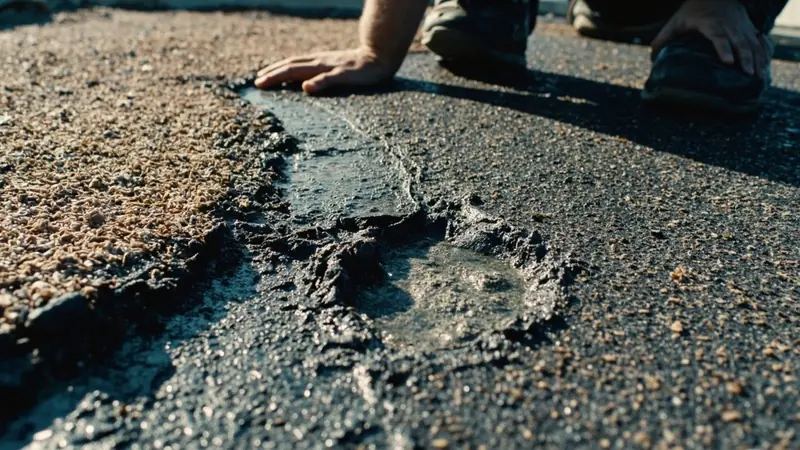
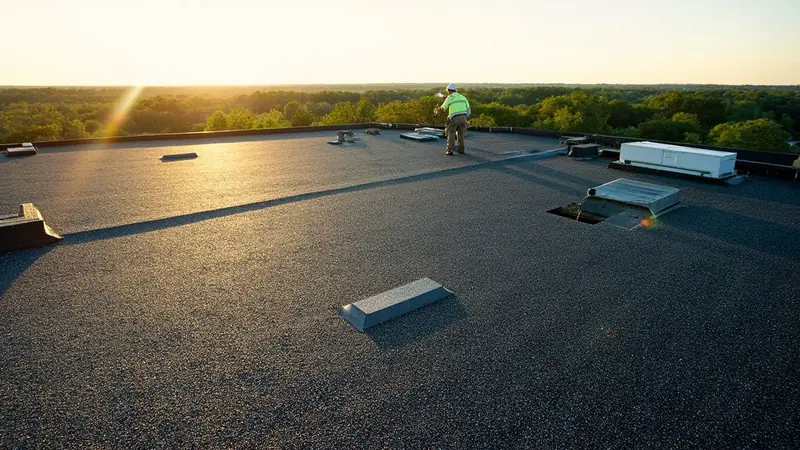
How we repair or replace modified bitumen roofing
We repair or replace modified bitumen roofing by finding where water is moving under the membrane before we open anything.
- We walk the roof and mark every low spot, seam and penetration.
- We run a ponding check across the field and the drains.
- We lift suspect seams and probe the insulation board underneath for moisture.
- We check parapet flashing, stair bulkheads and curb flashing at every tie in.
- We write up what has to come off and what can stay.
Standing water that is still sitting on the roof two days after rain means the deck and insulation under that spot are already loaded, and a seam repair there will not hold. A dry field two days after rain, with only a few failed seams, usually points to a repair instead of a full tear off.
For a roof going down to the deck, the choice is often between a torch-down application of a granulated cap sheet installation and a fully adhered EPDM rubber membrane. A torch down roofing crew welds the sheets with heat for a continuous surface that takes foot traffic well.
A self-adhered modified bitumen membrane skips the open flame and goes down under pressure instead, which suits a roof near equipment or vents where open flame is a problem. EPDM is a black rubber sheet with taped or glued seams instead of welded laps.
It stays flexible in cold weather while absorbing more heat in summer than a lighter cap sheet. A ballasted EPDM system holds down with stone instead of glue, which works where the structure can carry the extra weight. A roof with few penetrations and a lot of open field often takes EPDM in wider sheets with fewer seams, while a roof cut up with curbs, stairs and parapets usually does better in modified bitumen, since the layered sheets give flashing more to grip at every corner.
How the roof visit runs
On site assessment
Once we're on the roof, we walk the field, the drains and every flashing tie in. We run the ponding check across low spots and mark anything still holding water from the last rain. We lift any seam that looks cracked or raised and check the insulation board underneath for moisture with a probe. At a parapet or curb, we check the counterflashing and the cap sheet tie in together, since one usually fails because of the other. By the time we're done, we can tell you whether this is a seam repair, a recover over a sound deck, or a tear off, and that call comes with a written quote in hand.
Repair or replacement work
You see the quote and the job before anything comes up. On a repair, we isolate the failed seam or flashing detail first, then rebuild it with new modified bitumen sheet and fresh flashing at the tie in. On a tear off, the old layers come off down to a deck we can check directly. Any wet board gets replaced before the new self-adhered modified bitumen membrane or torch-down application goes down. Parapet and curb flashing gets rebuilt last, once the field membrane is in place and lapped correctly underneath it.
Final check
Before we leave, we check any deck we replaced or exposed with a pin moisture meter. Decking tests below 15 percent moisture counts as dry, so the new membrane gets installed directly on it. We walk the finished seams and flashing with you, from the field out to each parapet and curb, and point out every tie in we rebuilt. You see the reading on the meter yourself, along with the finished drains and the cap sheet lap lines, before we consider the roof closed.
What modified bitumen roofing needs in Ontario buildings
Replacing a modified bitumen roof usually needs a permit, since it changes the roof covering itself rather than patching one spot. The California Residential Code governs projects like this. The City of Ontario Building Department decides what inspections are required before the roof closes.
One shortcut that causes trouble here is leaving an old cap sheet in place under a new layer instead of pulling it off first. That traps moisture already in the old sheet against the new one, and the roof blisters from underneath within its first hot summer. Another is skipping new flashing at a parapet or curb and reusing the old metal, which seals the new membrane to flashing that is already loose. A third is running a self-adhered modified bitumen membrane over a deck that was never dried out from the tear off, which traps that moisture under the new sheet the same way.
A roof built as one continuous asphalt sheet with gravel or a smooth cap instead of modified bitumen layers uses built-up roofing. A roof that needs a white, heat reflecting single-ply sheet rather than asphalt sheets uses TPO roofing. Where the membrane is sound but faded and chalky rather than torn or ponding, roof coatings and restoration can extend it without a tear off. A roof that needs a chemically resistant single-ply sheet near solvents or grease, such as a roof over a kitchen exhaust, uses PVC roofing.
The CSLB License Lookup publishes the rules that govern work like this in your area.
What to expect on this job
Deciding if today works
On the call we ask if water is actively coming through a ceiling or wall right now, and whether the roof still has standing water sitting on it. Water actively flowing inside the building usually brings a technician out that same day. A slow seam, or a section that looks fine but failed a walk through before, usually gets a booked visit instead, once we know what the roof needs.
Access and work area
Low slope and torch down work mostly stays on the roof itself. We need clear access to the roof, whether through an interior hatch, a stairway or a ladder set up outside. Mechanical equipment on curbs may need to be powered down while flashing around it is redone. Below the roof, keep the top floor clear of anything that cannot handle dust or a water stain if we open a section before the next layer goes down.
Repair or full tear off
How many layers of old roofing have to come off the deck is the biggest factor in the size of this job. One layer of modified bitumen peels and hauls off fast. Two or three stacked layers, common on older low slope sections, take longer to remove and fill more of the trailer before a new membrane goes down. A roof with a sound deck and one layer often stays a repair. Review and sign the written estimate first, before any roofing work begins.
What you see and approve
We show you the ponding or the open seam where we found it, not just a description after the fact. If the deck is wet once we open it, we show you that board before it goes in the trailer. You see the options for the membrane and the flashing detail at each tie in, and you say yes before we move past what we already quoted. Nothing past that point gets added without you seeing it first.
Modified Bitumen Roofing Questions From Ontario Businesses
Lifespan depends on how many layers already sit on the deck and whether seams and flashing stay sealed against ponding. A roof with a sound deck and one layer holds up longer than one carrying two or three stacked layers, since each added layer traps more moisture risk. Ponding that sits two days after rain shortens life by loading the deck and insulation. Regular drain checks and seam inspections catch a cracked lap or bubbling membrane before water tracks sideways under the cap sheet and reaches the insulation board.
Modified bitumen works well on low slope sections that carry foot traffic, rooftop stairs and curbed equipment. The layered asphalt sheets give flashing more material to grip at parapets, stair bulkheads and mechanical curbs, which matters on a roof cut up with tie ins. A roof with fewer penetrations and more open field often does better with a different single ply sheet instead. On a building with many curbs and corners, modified bitumen's layered build holds up to the foot traffic and equipment weight without punching through.
Walking on a modified bitumen roof is expected, since the cap sheet is built to take foot traffic. The smooth or granulated surface is designed to carry rooftop stairs and equipment weight without punching through. That said, a membrane already carrying moisture underneath can hide a soft spot, so lifting a seam or probing insulation for wetness is handled on a scheduled visit rather than a casual walk. Clearing debris from drains and scuppers between visits is fine, but checking the field for soft spots goes past that point.
Seams cracking at the laps, bubbling membrane, and ponding at drains are common problems on modified bitumen roofs. Bubbling softens the membrane from underneath before it splits. Ponding that sits two days after rain loads the deck and insulation and works at every seam nearby. A ceiling stain below a parapet or curb is usually the first sign any of these are happening.
Cracked seams at the laps, bubbling from trapped moisture or air under the surface sheet, and ponding water at drains and low spots are the three problems that turn up side by side on these roofs. Bubbling shows up as a soft, raised patch before it ever splits open.
Torch-down roofing or cap sheet roofing are names used for modified bitumen, based on how the top layer goes down. A torch down crew welds the granulated cap sheet with heat for a continuous surface, while a self-adhered version skips the open flame and goes down under pressure instead. Both terms describe the same multi ply asphalt sheet system built for low slope roofs with foot traffic, stairs and curbed equipment, just named for the installation method rather than the sheet material itself.
Why Ontario's heat and rain cycle changes modified bitumen roofing
Ontario sits in a semi-arid valley climate where summer highs regularly reach the mid 90s and winter brings most of the year's rain into a few concentrated months. That gap between hot and wet seasons matters for modified bitumen roofing, because the membrane expands and contracts hard in summer, then has to seal against standing water once the rain starts. A torch down roofing crew working here times the hot work for cooler mornings, since the asphalt handles better before the surface gets too soft to control. San Bernardino County's flood control channels keep street level water moving, but a roof's own drains and scuppers carry the same load on a smaller scale, and a roof that ponds through a dry summer usually floods past its own drains once the rain arrives. Sizing the drains and crickets for that cycle, not just for one storm, is part of getting a low slope roof right here.
Inspection on a job like this happens after the old layers are off and before the new membrane covers the deck, since that's the only point anyone can see the boards directly. A sound deck gets signed off, and any soft or stained board gets flagged and replaced before work moves past it. That sequencing is also why a quote for this kind of roof can change once the tear off is underway: nobody, including us, can see a deck's actual condition until the old roofing is already off it. We walk that stage with you when timing allows, so you see the same boards getting checked.
Modified Bitumen Roofing Across Ontario and Nearby Towns
Our Ontario crew also covers these towns for modified bitumen roofing.
Roofing Services Near Ontario
We do modified bitumen roofing across Ontario and the surrounding area. Call (909) 330-4661 and we can tell you when someone can be there.
Address:
Ontario Roofing, 4335 E Lowell St, Suite G
More Commercial Roofing Services in Ontario
- Commercial Roof Repair
- Commercial Roof Replacement
- Flat Roof Repair
- Commercial Roofing Contractors
- TPO Roofing Systems
- EPDM Flat Roofing
- PVC Roofing Installation
- Built-Up Roofing Systems
- Roof Coatings & Restoration
- Commercial Metal Roofing
- Commercial Roof Maintenance Plans
- Commercial Roof Inspections
- Industrial Roofing Services
- Multi-Family & Apartment Roofing
- All commercial roofing services
- Wind Damage Roof Repair
- Storm Damage Roof Repair
- Emergency Roof Repair
Clearing debris out of roof drains and scuppers from a parapet access point or a ladder set on level ground keeps a low slope section draining between visits. That stops at the membrane itself. Lifting a seam, probing for wet insulation or walking the field to check for soft spots means standing on a membrane that may already be carrying moisture underneath, which is handled on the scheduled visit.
Know when the ceiling stain or roof leak started, and whether it tracks with a specific storm or shows up anytime it's hot. If you know how many roofing layers are already on the building, or how old the current membrane is, mention it. Find the roof access point, whether that's an interior hatch or an outside ladder, so the first visit starts there.