
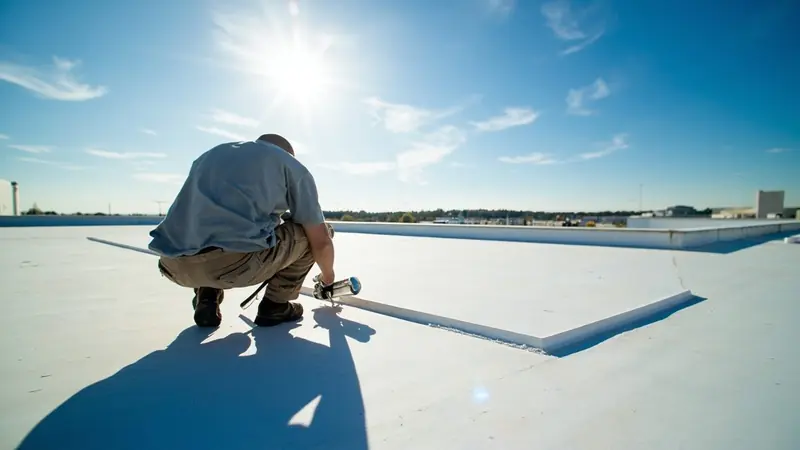
What do industrial roofing services cover?
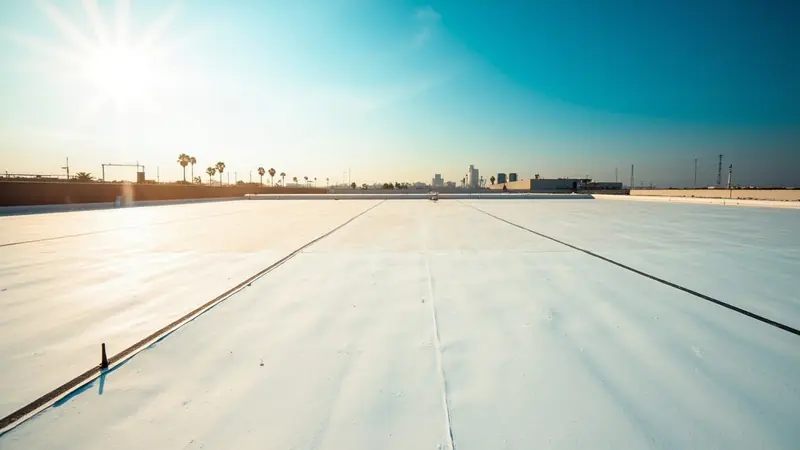
A roof over a warehouse or distribution center is measured in acres, not squares, and steel deck roofing under a low slope membrane is the usual deck below it. Industrial roofing services cover that whole range: a seam patch, a section recover, or a full tear off down to the deck. Some sites also carry a smaller flat roof over an office or loading addition, built the same way.
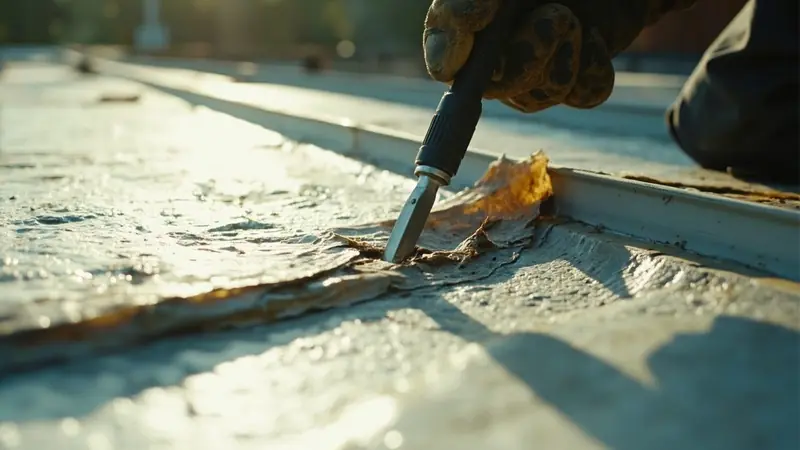
You might be asking how many years this roof has left, or you keep patching the same spot and it opens again a season later. On a membrane that has aged out, the surface turns brittle at the seams, surfacing wears down to the mat, and fasteners under the sheet stop holding tight. Each patch job then sits next to a weak spot about to go the same way.
Ontario's summers push roof surface temperatures well past the mid 90s F air reading, and that heat cycling works at every seam weld. Fall and winter bring Santa Ana wind gusts that pull at loose flashing and rooftop unit curbs. Rain mostly falls from November through March, and on a roof with slow drains that water sits instead of running off, which is when ponding water on industrial roof surfaces becomes a repeated problem instead of a one time event.
A roof leak in warehouse space can show up far from the actual opening, since water follows deck seams before it drops onto inventory or machinery below. Industrial roof leaking at a rooftop unit curb or a drain bowl reads differently than a leak out in the open field, and placing it correctly is most of the industrial roof repair work. We walk the roof from the inside out, starting at the stain, before stepping onto the membrane itself.
A pinhole at a membrane seam is usually where this starts, often too small to see from the ground. Rather than falling straight down, water from that pinhole moves sideways between the membrane and insulation beneath it. Over time a wet insulation board loses its ability to hold heat, and the deck under it starts to corrode, often well away from the hole you can see from inside. Call us if a ceiling stain spreads once rain ends, or the same spot fails again and again. Acting early can save the deck underneath from replacement.
If you are weighing options, start with metal vs shingle roofing.
How do you know you need industrial roof repair or replacement?
Repair or replacement comes down to what the deck looks like once the membrane is opened.
- We walk the roof and check every drain for ponding water on industrial roof sections.
- We inspect seams and terminations around curbs, drains and the roof edge.
- We run an infrared scan after sunset to find insulation holding heat it should have lost.
- We pull a core cut sample at any warm reading to check the insulation and the steel deck underneath.
The infrared scan only locates a suspect area, it does not prove what is inside it. That is why the core cut comes next, confirming whether the insulation is still dry around a lifted seam or genuinely soaked through. On a roof this size, that distinction decides whether the job stays a repair at one drain or grows into stripping a full section down to the deck.
A core that comes out dry through every layer, sitting on sound deck, usually points to a targeted industrial roof repair at that one seam or drain. A core that comes out saturated, or a deck that gives underfoot, means the wet area runs wider than the inside stain shows. That finding is what moves a job from a patch toward a section or full commercial roof replacement.
On a membrane replacement, TPO single ply is the usual pick for a roof this size. Mechanically attached TPO goes down faster across a wide open field, while fully adhered TPO holds tighter against wind uplift at the edges and corners. The sheet is sold in thicknesses commonly quoted as 45, 60 and 80 mil, and the thicker sheet takes more foot traffic and equipment movement without puncturing. Industrial roof coatings can add a few years to a membrane that still tests dry, but a coating does nothing for insulation a core sample already found wet.
Where the building is set to carry rooftop solar or decades of equipment traffic, standing seam metal roofing over part of the structure is worth weighing against another membrane cycle. A building planned to stay in production for years often leans toward metal for that reason, even though the install itself takes longer. A building closer to a sale or a lease turnover usually sticks with another TPO cycle instead, since that work goes down faster and needs less upkeep in the near term.
Our crews work to the installation standards of the National Roofing Contractors Association.
How we handle the visit
On site assessment
We start by walking the roof with you, checking the drains and any area holding water. From there we move through seams, curbs, and a core cut sample where the infrared scan after sunset flagged a warm reading, confirming what the deck underneath looks like. You see the ponding areas and any soft spot marked out as we go. By the time we are done, the cause has a location on the roof, not just a stain on the ceiling, and the written quote is ready to walk through with you before anyone leaves.
Repair or replacement work
After you approve the quote, we target only the affected area first. That might be one seam, one drain, or the entire roof down to the deck. A targeted industrial roof repair means welding in new membrane at the seam or drain and tying it back into the existing field. A full section calls for stripping that area to the deck, replacing any wet insulation board, and setting new TPO sheet with hot air welded seams before moving to the next section.
Final roof check
Before we leave, a pin moisture meter goes against the deck in the repaired section, and it has to read under 15 percent to call that area dry. We also walk every new seam and check it holds under hand pressure at the edge. Drains and scuppers get a final look too, clear and ready for the next rain. You see the reading taken on site, and we show you the old membrane or insulation that came out before it goes in the trailer.
What industrial roofing needs in Ontario
Replacing a membrane, adding rooftop equipment, or reworking drains on a building this size usually calls for a permit. That review runs through the City of Ontario Building Department, and a repair that swaps like for like material over one small area is the kind of work that often skips it.
Covering a damaged membrane with a recover layer instead of opening it up hides a wet insulation board instead of drying it out, and the new layer blisters in the same spot within a season. Skipping new flashing at a rooftop unit curb after a membrane job leaves the old seal to fail again under the next heat cycle. Reusing old fasteners on a mechanically attached sheet in a wind exposed corner lets that section lift the first time a Santa Ana gust gets under the edge.
Industrial roofing contractors who skip a core sample before quoting a membrane job often underbid the insulation replacement that the wet area needs. The shortfall shows up the first time it rains hard.
A roof this size holds up longer between full jobs when drains, seams and curb flashing get checked on a set schedule instead of only after a leak shows up inside. That is what a commercial roof maintenance plan is built around, catching a lifted seam or a clogged drain before the next storm finds it.
What you can expect on site
Same day or booked visit
During that call, we ask if water is reaching inventory or equipment below. The size of the affected roof area, as seen from the ground, matters too. A leak dripping onto equipment or inventory typically brings a technician out that same day. A slow stain that has not changed in weeks, or a roof you want checked before the rain season, fits a booked visit instead.
What the job disturbs
Membrane and repair work stays on the roof itself, but reaching a drain, a curb, or a rooftop unit means clearing a path across the roof deck and sometimes shutting down equipment mounted there for part of the day. Clear forklift and foot traffic away from the work area below the section involved. Any vent or unit sitting in the work zone gets moved or protected before the membrane around it comes up.
What sets your job size
On a roof this size, access decides more than square footage does. Whether a dump trailer can sit close to the building, and whether new membrane and insulation can be craned straight onto the roof, changes how fast the old material comes off and the new layer goes down. A site with tight access for a dump trailer and a material drop runs slower and in smaller sections. You see the access plan and the written quote before any membrane comes up, and you approve it before work starts.
What you see and decide
We show you the stain or soft deck where it sits, either on the roof or from inside at the ceiling, and walk through what the core sample found. You see the options for a repair, a section replacement, or a full tear off, with the reasoning behind each one. Nothing opens further, and no membrane comes up, until you say go ahead on the written quote in front of you.
Industrial Roofing Services Questions From Ontario Businesses
Industrial roofs usually fall into three categories by how they are rebuilt. A seam patch fixes one small opening in the membrane. A section recover strips and rebuilds one area down to the deck. A full tear off removes the whole membrane and insulation down to the steel deck across the building. Which type applies depends on what a core cut sample finds once the membrane is opened and the insulation underneath is checked.
Industrial roofing covers the work done on a warehouse or distribution center roof, a surface measured in acres over a steel deck. It includes patching a seam, recovering a section, or tearing off and replacing the whole membrane and insulation. The scale changes how problems get found and fixed. A leak can travel along the deck before it drops through the ceiling, so locating the actual opening through drains, seams, and curb terminations matters as much as the repair itself.
Standing water loads the insulation board below the membrane with moisture it cannot shed. A core cut sample that comes out dry through every layer points to a sound deck, while a saturated core means the wet area runs wider than any ceiling stain shows. Wet insulation loses its ability to hold heat, which an infrared scan picks up as a warm patch after sunset. Left alone, the steel deck under that wet insulation starts to corrode, often well away from the visible opening.
Curbs and drains concentrate movement that a flat field of membrane does not see. Flashing around a rooftop unit curb flexes every time Santa Ana wind gusts pull at it, and a drain bowl sits lower than the surrounding field, so water gathers there first. Both locations also take more foot traffic during service visits. A pinhole at a seam near either spot tracks water sideways under the membrane before it drops straight down, which is why these areas get checked first on a visit.
A soft spot usually means the deck underneath has already taken on water, not that it is only a surface issue. Walking the roof and pulling a core cut sample at the warm reading confirms whether the insulation below is dry around a lifted seam or soaked through to the steel deck.
Reaching a drain, curb, or rooftop unit means clearing a path across the deck for part of the day. Equipment mounted there may need to shut down while that section is open. Membrane and repair work stays on the roof itself, so areas below keep running unless the work zone sits directly above them.
Summer heat cycling and fall wind load a seam in different ways. A seam weakened by summer heat cycling can still look fine until Santa Ana gusts pull at loose flashing or a curb seal in fall. Checking drains, seams, and curb terminations before the rain season starts catches that weak point before water sits on it.
Why warehouse size and roof access shape industrial roofing in Ontario
Ontario sits in a hot summer climate where August highs run in the mid 90s F and can push past 100 F. That heat works at every membrane seam across a roof this size, not just the one someone can watch from a ladder. Winter brings most of the year's rain in a short stretch, and a low slope roof with slow drains holds that water instead of shedding it. Ontario's rain season is short and intense, so clogged drains can let water pond on the membrane before anyone notices. On a building measured in acres, a few degrees of slope and one undersized drain decide whether water sits for hours or for days.
Work like this gets inspected at specific points, typically once the old membrane is off and the deck is exposed, and again once the new membrane and flashing are in. The inspector looks at deck condition, drain tie ins, and flashing at every curb and edge. That is why we hold off on covering any section until each of those points has been walked and approved, instead of racing straight to the next one. On a roof this size that sequencing matters more than on a house, since one skipped check can sit under finished membrane for the life of the roof with no easy way to look at it again.
Industrial Roofing Service Across Ontario and Nearby Towns
Our Ontario crew also covers these towns for industrial roofing service.
Roofing Services Near Ontario
Looking for industrial roofing service near you in Ontario? Call (909) 330-4661 and we will confirm we cover your street.
Address:
Ontario Roofing, 4335 E Lowell St, Suite G
More Commercial Roofing Services in Ontario
- Commercial Roof Repair
- Commercial Roof Replacement
- Flat Roof Repair
- Commercial Roofing Contractors
- TPO Roofing Systems
- EPDM Flat Roofing
- PVC Roofing Installation
- Modified Bitumen Roofing
- Built-Up Roofing Systems
- Roof Coatings & Restoration
- Commercial Metal Roofing
- Commercial Roof Maintenance Plans
- Commercial Roof Inspections
- Multi-Family & Apartment Roofing
- All commercial roofing services
- Wind Damage Roof Repair
- Storm Damage Roof Repair
- Emergency Roof Repair
Watching for a new stain or a damp patch on the ceiling below the roof is something you can track yourself, noting where it sits and whether it spreads after dry weeks. That check stops once you need to get on the roof itself, since reaching a seam, a drain, or a rooftop unit means working at height on a membrane that can be slick after rain. Locating the actual opening and repairing it belongs to the visit.
Know where the stain or drip sits inside the building, and whether it tracks with rain or shows up anytime. Note how large the affected roof area looks from the ground, and whether a dump trailer or delivery truck can get close to that side of the building. Any age you have for the membrane or the last roof job helps too.