
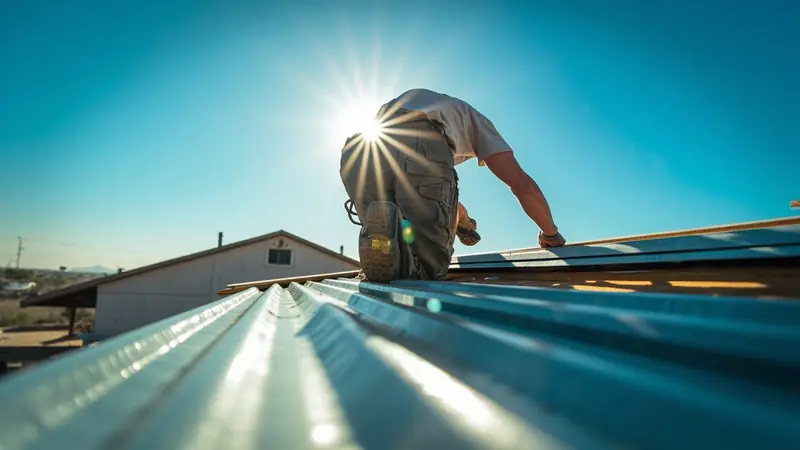
What's the difference between metal and shingle roofing?
Metal vs. shingle roofing is the choice between a steel or aluminum panel system and layered asphalt shingles on the same roof deck. A shingle roof is built from individual asphalt shingles nailed in overlapping courses. A metal roof vs shingle system instead uses long panels or interlocking seams running from ridge to eave. Both still depend on flashing at valleys, chimneys and pipe boots to keep water out of the house.
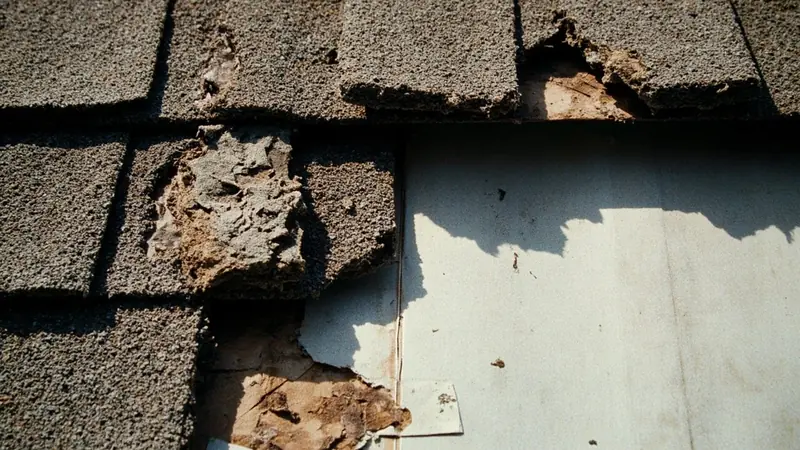
From the ground, a shingle problem usually shows as a lifted tab along an edge, a bare patch where granules have washed off, or a shingle lying in the yard after a windy night. A metal roof problem looks different: a seam that has worked loose, a ridge cap fastener backed out, or a dent from blown debris. From inside the attic, both types share one warning sign, which is daylight or a dark stain at a penetration where flashing has failed.
Ontario sees fall and winter wind events strong enough to get under a shingle edge that is already loose. A lifted shingle tab lets wind catch the course sitting above it, and the next gust can work that whole course free. Once a strip peels back in a storm, the bare decking underneath takes rain directly, with no shingle layer left to shed it. That is the point to call: a lifted or missing tab after a windy night, before the next storm finishes what the wind already started.
A metal roof resists that same wind differently, since panels lock into a continuous run instead of lifting tab by tab, though a loose clip at an edge can still work free. If your current roof is asphalt shingles and the decking underneath still reads sound, asphalt shingle roofing on that same deck is the straightforward way to close up a lifted edge. If you want to leave shingles behind for the life of the next roof, a metal roof is the service to ask about for the whole slope.
Ontario's summer heat waves push roof surface temperatures high for weeks at a time, and that cycle of heat and cooling ages an asphalt shingle faster than wind alone. Three-tab shingles, built on a thinner single layer mat, tend to show that aging sooner than a heavier architectural product. A metal panel sheds that heat at the surface instead of absorbing it into an asphalt mat, which is one reason some owners switch after heat damage rather than wind damage.
What decides metal roofing vs shingles for your roof
Deciding between metal roofing vs shingles starts with what your current roof is showing. On the visit, the order runs the same way every time.
- We check the attic first, looking at stains, framing and the underside of the decking for moisture.
- We check pipe boots and other penetrations, then valleys, then wall intersections and chimneys.
- We lift a shingle tab in the open field to see whether it still flexes or cracks, and whether granules come off in your hand.
- We note how much of the roof is affected and whether more than one layer already sits on the deck.
- We go over standing seam metal roofing and shingle options against what the roof is doing.
A tab that still bends without cracking, and keeps its granules, usually points to a repair, patching that section without touching the rest. A tab that breaks apart when lifted, with granules falling away in your palm, means that slope has aged past patching and the decision moves toward a full covering change.
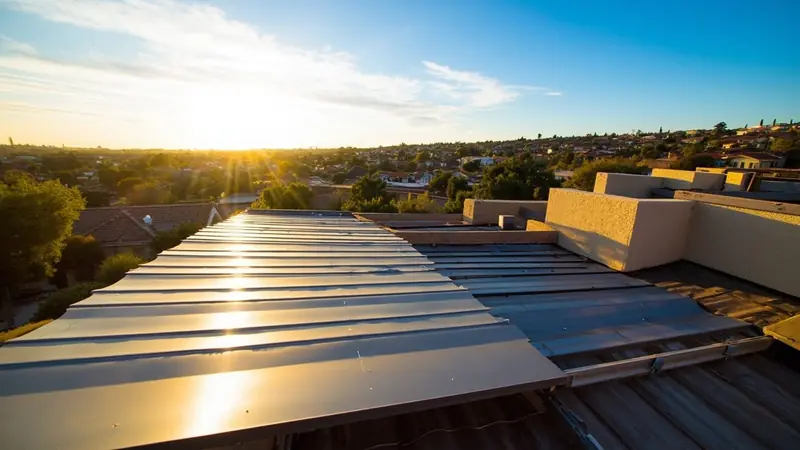
Metal roofing vs shingles is less about looks at that point and more about how each one handles decades of Ontario sun and wind. Standing seam metal roofing hides its fasteners under a raised seam, with panels clipped so they can expand and contract with heat instead of fighting it.
A corrugated metal roofing panel is a lighter option, often used on secondary structures rather than the main house. Stone-coated steel roofing adds a granule-coated profile shaped to read like tile from the street. On the shingle side, architectural asphalt shingles carry a heavier mat than three-tab shingles, which is why they tend to outlast them on the same slope.
Ontario's wind-driven season is the local condition that tips this decision: a seam fastened under a clip resists that lift better than a cut shingle edge, which is why more owners ask about metal after a roof has already shed a course or two.
The CSLB License Lookup publishes the rules that govern work like this in your area.
Pick the two options that fit your home, then ask which one makes sense for it.
| Option | The numbers a buyer weighs | Best suited to |
|---|---|---|
| Standing seam metal | Fasteners hidden under the seam, panels clipped so they can expand and contract with temperature | Roofs meant to be kept for decades |
| Architectural laminated shingle | Two laminated layers that are glued together so it is heavier and thicker than three tab | Most steep slope roofs on a house |
| Three tab shingle | One layer with cutouts, lighter per square | Low exposure roofs where first cost decides |
Steps in a roof comparison visit
On site assessment
The visit starts with the attic, checking for staining, daylight and moisture at the underside of the decking, then moves outside through penetrations, valleys, wall intersections and the open field, finishing with a shingle flexibility and granule check on the slope itself. You walk the attic with us if you want to see the staining firsthand, and we point out any panel seam or flashing issue as we find it. By the time we're done, the cause is named, whether it's a worn section of shingle or a lifted metal seam, and a written quote is in your hand before we leave.
Approval and the repair
Once you approve the written quote, the affected section gets isolated first, tarped or roped off so the rest of the roof and the yard below stay protected while work happens overhead. From there the repair follows what the deck showed: a patched section of shingle, a replaced run of metal panel, or a full tear off where more than one layer or soft decking was found. Work pauses again at that tear off point so you can see the exposed deck yourself before new material goes down over it.
Final moisture reading
Before we leave, the pin moisture meter goes against the attic side of the decking in the repaired section. A reading under 15 percent is what tells us that area is dry. We show you that reading on the meter itself, along with the replaced shingle, panel or flashing piece so you can see what came out and what went in. That same reading is the one we'd flag if it ever came back above 20 percent on a future check.
What a covering change needs under Ontario code
Replacing a roof covering typically needs a permit pulled through the City of Ontario Building Department, whether the new material is metal panel or shingle. The California Residential Code sets how that covering is fastened and flashed, and plans go through that office before the old roof comes off. A like for like shingle repair on a small section is usually simpler to clear than a full covering change, though that review still applies once the covering class itself changes.
Houses built during the 1945 to 1970s wave of postwar tract construction often carry low-pitch roofs that already show wear, and nailing a fresh shingle layer over the old one on that pitch traps heat and moisture against decking that was aging before the new layer went down. Stucco tract homes from the 1980s and 1990s often carry tile roofs whose underlayment is reaching the end of its service life even while the tile itself still looks fine, and setting metal panels onto battens built for a tile load without checking that structure first can overload a roof frame that was never sized for it.
Switching from shingle to metal without replacing the valley and penetration flashing to match the new panel profile leaves water a path to track sideways under the new roof instead of off the edge. Leaving old flashing in place at a wall intersection because it still looks fine skips the one spot most likely to leak once a new covering sits on top of it.
That metal was shaped for the roof that is coming off. Skipping a tear off on a roof that already carries two layers adds weight the original framing was not built to hold, and it hides deck damage that only shows once the old material comes off.
Our crews work to the installation standards of the National Roofing Contractors Association.
What working on this comparison looks like
Same day or planned visit
On the call we ask whether you're seeing an active leak or missing material after a storm, or whether you're comparing metal roof vs shingle for a future upgrade. An active leak or a bare patch of decking after wind usually means someone can come out the same day. A roof you're evaluating for a planned metal roofing vs shingles decision, with no active leak, is usually scheduled ahead. Either way, we ask what you're seeing and when it started before setting the visit.
What gets disturbed at the roof
A tear off puts torn off shingle or metal material and nails in a drop zone around the house, so patio furniture, planters and parked cars nearby are worth clearing first. Power and water stay on through the job, since neither is opened for this work. Ladders and material go up against the eave, and that area stays blocked off until panels or shingles are off and hauled away. Landscaping directly under the roof line is the main thing to move ahead of time.
Repair or full replacement
What decides the size of this job starts with whether the damage sits at one spot or runs across the whole slope, and whether the deck under it is sound or soft. From there, the shingle class or metal panel you choose, and whether you want an impact rated product, moves the job up or down. Reusing sound flashing instead of replacing it moves it the other way. You see that work in writing, covering the material and the area involved, and you approve it before anything comes off the roof.
What you see and approve
We show you the shingle or metal panel in hand, point to where the flex or granule check failed, and lay out the standing seam metal roofing or shingle options side by side. Before anything is pulled off the roof, you get a go ahead on the plan. Once the old material is off, we show you what the deck looked like underneath, since that is the one thing nobody can judge from the ground or from a quote alone.
Metal vs. Shingle Roofing Questions From Ontario Homeowners
A metal roof can appeal to buyers who want fewer years of roof work ahead. Its heat-shedding surface and seam system age differently than an asphalt mat baking under repeated sun exposure. What matters more to a buyer walking the attic is whether the decking is dry, the flashing is sound and the ventilation is balanced, not just which covering sits on top. A metal roof over soft decking or failed flashing won't change how a buyer judges the house once that gets found.
A dent in a metal panel does not mean the clip underneath has failed. The seam below the dent is what keeps water out, so a surface dent from blown debris is often cosmetic rather than structural. A clip failure shows up differently, as a seam that has worked loose or lifted along its run rather than a dented flat area. On a visit, the panel gets checked at the seam itself, not just at the dent, since that is where a path for water would open.
Shingles age faster on south and west facing slopes because those sides take direct sun longer each day. That exposure pushes roof surface temperatures higher during Ontario's summer heat waves. The repeated heating and cooling works at the asphalt mat, drying it out and causing granules to loosen ahead of the rest of the roof. The flexibility and granule check usually catches that slope first.
Metal panels need the old shingle layer torn off first. A tear off also lets the deck get checked for soft spots before new panels go down. Lets the valley and penetration flashing get replaced to match the new panel profile instead of leaving flashing shaped for the roof that came off.
A nail pop near a seam is worth checking from the attic side before deciding it's a problem. Rusted nail tips and dark staining around them mean warm, moist air has been condensing on the nails, which points to a ventilation or moisture issue rather than the seam itself failing. A bright light held low in the attic, looking up at the underside of the decking, finds that staining even when the roof looks fine from outside. That check decides whether the fastener or the seam needs attention.
Wind strips shingles off one slope because that slope faces the wind event directly, catching the lift under any tab that is already loose along its edge. A slope on the sheltered side of the same roof, facing away from that wind direction, doesn't see the same lift and can stay intact while the exposed slope loses shingles.
Chalking on a metal panel's paint surface is a cosmetic fade, not a sign the seam below it has opened a path for water. The panel's finish dulling or showing a powdery residue comes from UV exposure over years of Ontario sun, similar to how a dent from debris doesn't mean the seam underneath has failed. What matters for water intrusion is whether the seam lies flat and the clips still hold the panel in its run, which gets checked separately from how the paint looks.
Why Ontario's heat and wind change metal vs. shingle roofing
Ontario summers push roof surface temperatures well past the mid-90s air temperature that August typically brings. That daily swing from hot afternoon to cool night works at any roofing material through expansion and contraction. A shingle mat absorbs that heat and ages from it, which is why the granule and flexibility check tends to fail first on south and west facing slopes. A standing seam metal roofing panel is clipped rather than nailed flat, so it can move with that same swing without buckling, though the clips and fasteners still need checking over time. Ontario's rainy months bring most of the year's moisture in a short window, so whichever covering you choose has to shed water fast across a roof that stays dry and hot the rest of the year.
Inspection on a job like this checks flashing details, fastening patterns and how a new covering ties into the old roof line before the job closes out. That review focuses on valleys, wall transitions and ridge detail, since those are the spots most likely to open a path for water after a covering change. A metal panel run and a shingle field get checked differently at that stage. A seam has to lie flat and a shingle course has to lap correctly, but the goal at every penetration is the same: no path for water to track backward under the covering.
Roofing Services Near Ontario
If this guide leaves a question about your Ontario home, call (909) 330-4661 and a person will walk you through it.
Address:
Ontario Roofing, 4335 E Lowell St, Suite G
More Roofing Guides for Ontario Homeowners
- How Long Does a Roof Last
- How to Choose a Roofing Contractor
- Roof Financing Options Explained
- Reading a Roofing Proposal Line by Line
- Energy-Efficient Roofing Guide
- DIY vs. Professional Roof Repair
- Understanding Roofing Estimates
- Roof Replacement Cost Guide 2026
- Insurance Claim Guide for Roof Damage
- Signs You Need a New Roof
- TPO vs. EPDM, Which Flat Roof Is Best
- Roof Inspection Checklist
- Roof Ventilation Basics
- Storm Season Roof Prep Guide
- All roofing guides
- Wind Damage Roof Repair
- Roof Replacement
- Storm Damage Roof Repair
Checking your attic with a flashlight for daylight or dark staining around penetrations is something you can do on your own, since that view often shows trouble before it reaches the shingles outside. That check stops once you are deciding between metal and shingle, or once the work means getting on the roof itself, because walking a slope and lifting flashing calls for fall protection and belongs to the visit.
Know when you first noticed the lifted tab, dent or bare patch, and whether it followed a windy night. Have the age of the current roof if you know it, and note whether you are leaning toward staying with shingles or moving to metal. If you've been in the attic, mention any staining or daylight you saw there.