
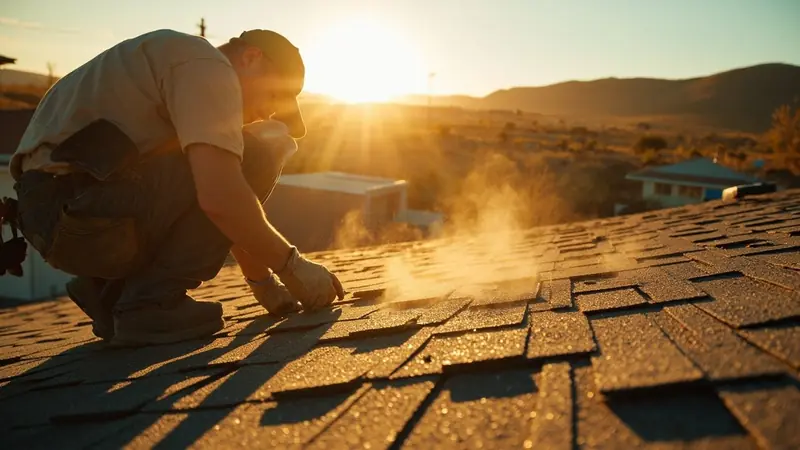
Why Upland roofs age the way they do
Upland's housing stock splits into a few distinct eras, and each one fails in its own way. The oldest homes carry wood framing on raised floors with board or plank decking (the wood boards under the roof covering), often under more than one layer of old roofing added over the decades.
Postwar ranch houses from the 1945 to 1970s era sit on slab or stem wall foundations with low pitch roofs and shallow attics. Shallow attics are hard to vent well, and a roof that cannot breathe ages faster from underneath than from the sun on top. Tract homes from the 1980s and 1990s brought tile and composition shingle roofs on stucco walls.
Climate adds its own load. Fall and winter bring Santa Ana wind events, strong dry gusts that lift shingle tabs, snap tree limbs onto roofs and strip courses along exposed edges. From November to March, winter storms concentrate nearly all annual rainfall into one brief stretch. That exposes gaps a dry summer never revealed.
Upland's rainy season is short but intense, so gutters and downspouts carry most of the load during a storm.
How a roofing job runs in Upland
Roofing contractors in Upland usually start the same way, by finding the cause before anything gets opened. We look first at what the homeowner can already see, a stain on the ceiling, granules in the gutter, a lifted tab, then move to the attic and the roof itself to place the cause. Nothing gets removed from the roof until that cause is named and shown to the homeowner.
After a Santa Ana wind event, that first look often means walking the perimeter for missing or lifted shingles and checking flashing (the metal that seals joints on the roof) around chimneys and vent pipes, since wind damage tends to start at edges and penetrations rather than in the open field of the roof. What we find there decides whether the job is a patch, a section replacement or a full tear off.
Once the cause is placed, we lay out the options in plain terms: repair the affected section, replace the covering, or in some cases correct the ventilation that let the problem start in the first place. The homeowner picks the option that fits the house, and work does not start on anything beyond the original call until that choice is made and approved in writing. If the tear off uncovers decking that needs replacing, that gets shown before it goes in the trailer.
That sequence, show first, decide second, open third, holds whether the job is a small flashing repair or a full reroof. It keeps the homeowner in control of what gets spent and why, without guessing at what a closed up roof is hiding.
Other jobs we handle in Upland include wind damage roof repair, after-storm roof inspections and asphalt shingle roofing.
Wind damage traced
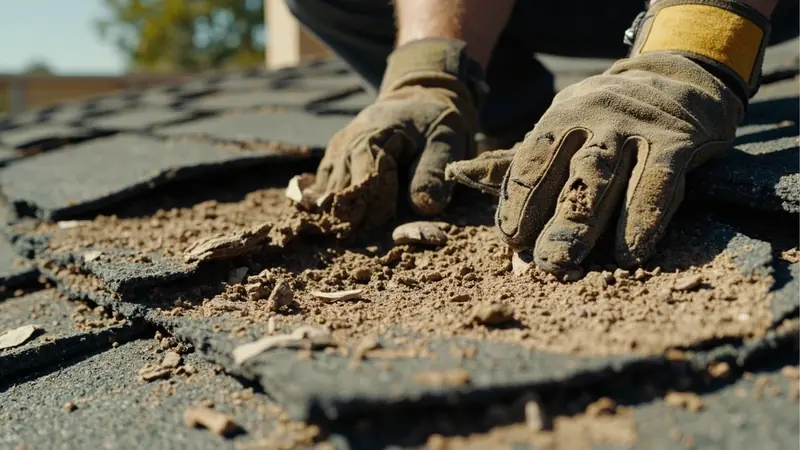
Santa Ana wind events lift shingle tabs and loosen flashing at edges and penetrations first, not in the open field of the roof. That is why we check rakes, valleys and chimney flashing before anything else after a windy week. A homeowner gets a clear answer on whether a few tabs need resetting or a whole course needs replacing.
Inspect first
An attic light and nail inspection finds rusted nail tips and dark staining on the sheathing before anyone climbs onto the covering. Clean nail shanks with no staining mean the attic is drying out the way it should. Staining with no storm to explain it means warm house air is condensing overnight, and that changes what gets fixed.
City's permit calls
Roofing work that goes beyond a small repair usually needs a permit, and the City of Upland Building and Safety Division reviews that work and decides what each job covers. A homeowner knows going in whether an inspection is part of the timeline, instead of finding out partway through.
Winter Rain Tests Roof Drainage
Upland receives nearly all of its annual rain between November and March, so roofs face short bursts of heavy runoff. That shifts more of the drainage job onto the gutters and downspouts themselves. We check that water leaving the roof clears the foundation line instead of pooling against it after a storm.
Roofing work we handle across Upland
Residential roofing in Upland falls into three kinds of calls. Repairs cover a lifted section, a failed boot or a flashing fix where the deck underneath is still sound. A job moves into roof repair and replacement territory once the decking itself is wet or soft, or once a tile roof's underlayment has aged past the point of patching.
Emergencies are different again, built around what is coming through right now rather than what is coming later, and they call for containment first and diagnosis second. Timing and access set the schedule for each, since a tear off needs dry weather and a clear drop zone that a small flashing repair never does.
Shingle and flashing repair
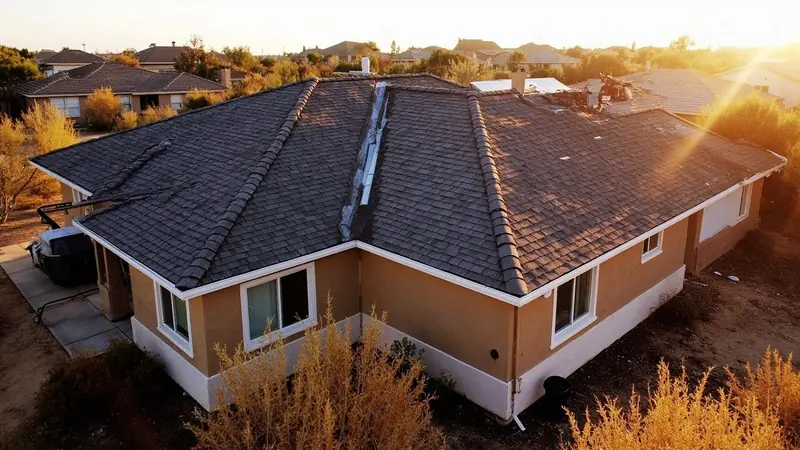
A lifted shingle tab or a cracked pipe boot (the rubber collar sealing a vent pipe) lets water track into the attic insulation before a ceiling stain ever shows. On citrus-era homes with board sheathing under one or two older layers, a shingle roof repair often starts by confirming the deck underneath is still firm before any new material goes down. One example is resetting a course along a rake edge after wind lifted it, then checking the nearby pipe boot for cracking from sun exposure. Both get fixed on the same visit once the deck reads dry.
Roof replacement and tile reroofing
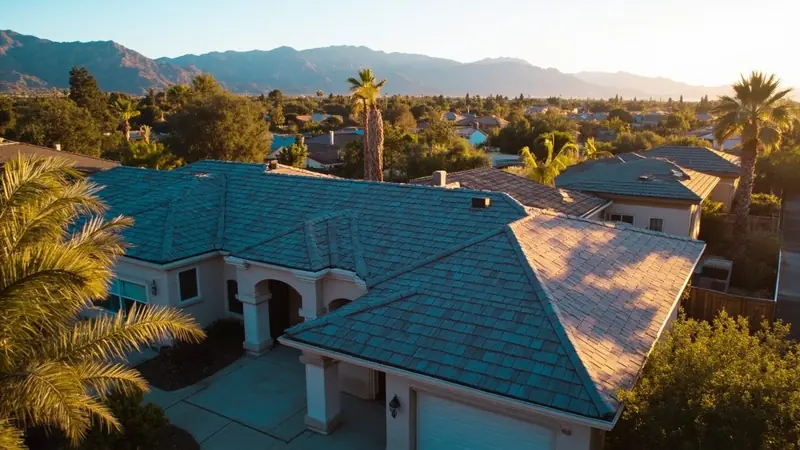
A pin moisture meter reading above 20 percent on the decking is what moves a job from repair to a full roof replacement estimate. On 1980s and 1990s tile tracts, the tile often still looks sound while the underlayment underneath has aged past its working life, so a new roof installation usually means stripping tile, replacing underlayment and resetting tile that is not cracked. One example is a tile roof that keeps leaking at the same valley after two patches, where the underlayment age, not the tile, is the actual problem.
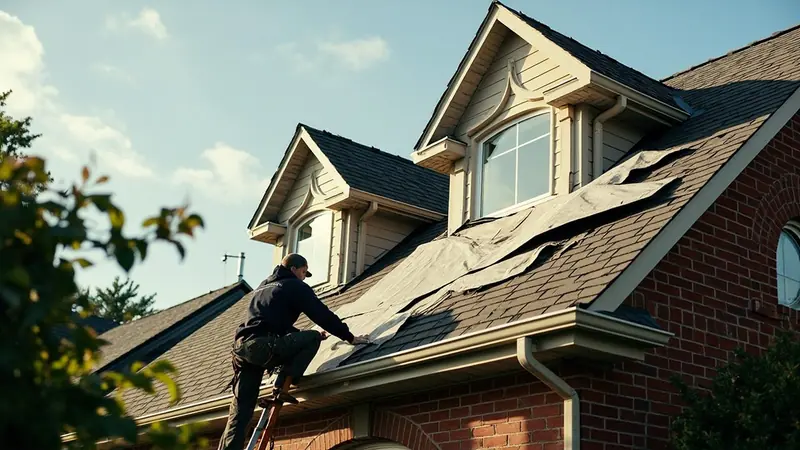
Storm leak containment
A cracked pipe boot during a storm lets water run down the vent pipe into the attic insulation fast, so shutting off any light or fan circuit near the stain comes first. Before we arrive, keep a bucket under the drip and move anything stored underneath out of the way. On arrival, our first check is always the same pipe boot, along with the insulation wrapped around it. A soaked attic floor tells us how far the water has already traveled past the stain on the ceiling.
Common Roofing Jobs in Upland
Here is where to start if you live in Upland. Each page covers one job from first call to finish.
What roofing problems do Upland homes have?
The problem that catches Upland homeowners off guard is attic moisture with no storm to blame. A ceiling stain shows up, or a covering that was just replaced starts cupping, even on a dry week. The cause is usually a soffit intake vent (the vent that lets outside air into the attic at the eaves) that is blocked or missing, while the ridge vent (the vent along the peak of the roof) keeps pulling air anyway. With no air coming in to replace what the ridge pulls out, the ridge draws warm house air up through the attic instead.
That warm air condenses on nail shanks overnight, all winter long. The nails rust, the dark rings spread across the sheathing, and the sheathing starts to delaminate from the inside. The covering above it cups from underneath with nothing visibly wrong on the surface. When nail staining appears along with a soft, spongy spot underfoot, call us right away. Don't wait for another roof replacement to warp the same way.
Ask about chimney flashing repair when you call from Upland.
Winter rain overloads gutters
Gutters packed with leaves and debris back up behind the drip edge (the metal edge along the roof line) once winter rain starts falling in volume. Water pooling there softens the fascia board and the bottom edge of the decking until the first course of shingles has nothing solid to hold its nails. Clearing gutters before the rainy stretch keeps this from starting, but once the fascia feels soft to the touch, that section needs more than a gutter cleaning.
Old board decking under layers
Homes built in Upland's citrus era often carry board or plank decking (the wood boards under the roof covering) under one or two layers of roofing added over the decades. That stacked weight hides nail pops and warped boards until a tear off strips the layers away. Roof repair and replacement on these roofs usually means budgeting for some deck work, since board decking that dried out decades ago rarely comes through a tear off untouched.
Heat Cycling Stresses Roof Seals
Repeated summer heat cycles make roofing materials expand and contract. That movement works at flashing seals around chimneys and vent pipes. A seal that held fine for years can crack open once heat cycling loosens the material underneath it. That failure can happen well before any storm tests it. We check flashing at every penetration after a reported quake, since a cracked seal rarely shows itself until the next rain finds it.
Postponed pipe boot replacement
A pipe boot (the rubber collar sealing a vent pipe) that cracks from sun exposure is easy to put off since it rarely leaks right away. Left alone, water starts running down the vent pipe into the attic insulation during the next storm, and the ceiling below stains with no obvious hole to show for it. Replacing a cracked boot before that first leak is a smaller job than the framing repair that follows once it softens.
Find the sign you have, then read across to see how soon to call.
| Symptom or first sign | What is already happening | What it becomes if ignored | When to call |
|---|---|---|---|
| Blocked soffit intake | Attic humidity climbs and the nails sweat all winter | The sheathing delaminates and the shingles cup from underneath with nothing wrong on the surface | Call this week |
| Missing kickout flashing where a roof meets a wall | Water runs behind the siding instead of onto the shingles | The wall sheathing rots with no stain on the roof at all | Call this week |
| A cracked pipe boot | Water runs down the vent pipe into the attic insulation | The ceiling below stains and the framing around the penetration softens | Call this week |
| A pinhole at a flat roof seam | Water tracks sideways between the membrane and the insulation | A wet board loses its insulating value | Call this week |
| A lifted shingle tab | Wind gets under the course above it | A full strip peels in the next storm and the bare deck takes the rain directly | Call this week |
What happens when a roofer comes out?
A roofer in Upland starts in the attic, not on the roof, because the attic shows what the ground view cannot: staining, nail condition and whether the soffit intake is open. Have the roof's rough age ready if you know it, along with when the problem started and what the weather was doing right before it. Clear access to the attic hatch and point out where the stain or sound is worst, since that narrows where the check begins outside.
The CSLB License Lookup publishes the rules that govern work like this in your area.
Same day or a booked visit
During the call, we ask if water is currently coming through and if a recent storm caused visible damage. A visible leak or exposed decking typically gets a same-day response. A stain that has stopped growing and shows no active drip more often gets booked for a visit in the next few days, since there is less urgency to rush a ladder onto a wet roof.
Clear the way before we arrive
Make sure the attic hatch is reachable and shift any items sitting below the suspected leak before our visit. When we arrive, we walk the stain or damage with you, point to where it sits relative to the roof above, and explain what we are about to check and in what order before any ladder goes up.
What we show you before leaving
Before we leave, we recheck the decking with a pin moisture meter and show you the reading. Under 15 percent reads as dry decking, which means the repair held and the section is sound. Above 20 percent means that section is still holding water, and we walk you through what that means for the job before anything gets closed up.
From your call to finished work
The first visit settles where the cause sits, and what the deck looks like once it is exposed decides the next step. A straightforward flashing fix can often be finished the same visit. A tear off that turns up soft decking needs a short pause while material gets lined up, since nobody can size that part of the job until the old covering is off. Either way, nothing moves to the next stage until the homeowner has seen what we found and approved what happens next.
Finding the cause
We start with a walk test for deck deflection, feeling for give between rafters underfoot. A firm deck with a covering that still flexes points to a repair. A spongy feel between rafters rules out a simple patch and tells us the sheathing underneath has already given way, before a single shingle comes off.
Quote and approval
Once the cause is confirmed, we put together a written quote naming the repair, or the replacement, and what has to come off to reach it, including any decking the tear off is likely to expose.
Closing the roof
The roof stays open until the moisture reading we show you at handover comes back dry. On permitted jobs, the city's inspection happens before the final layer goes down. Once that reading and any required inspection are both clear, flashing, boots and the covering go on and the roof gets closed up.
Do you need a permit for roofing work in Upland?
Replacing shingles or tile across most of a roof usually needs a permit here, and that office makes the final determination on what each job covers. A small patch over one valley, or a handful of tiles reset after wind damage, is more often treated as a straightforward repair. Homes inside one of Upland's historic districts need design review for exterior changes, which can reach a reroof when it changes how the covering looks from the street.
Once decking comes up during a tear off, what gets found there can shift the extent of the permit. A section that reads wet on a pin moisture meter, or shows board sheathing gone soft from years of trapped attic moisture, gets replaced before new shingles go down, and that work falls under the same permit as the rest of the roof. Citrus-era board sheathed roofs and 1980s tile roofs both tend to run into this once the old covering is off, since neither condition shows from the ground.
We note the permit status on the written quote before work starts, so the homeowner knows going in whether an inspection is part of the timeline.
After severe weather, FEMA's guidance on documentation makes the difference in how smoothly a claim goes.
Working from the attic out
Diagnosis starts inside, with stain position, nail staining and a pin moisture meter reading against the underside of the decking. That reading decides the job. Under 15 percent reads dry and keeps the work a repair. Above 20 percent means that section is compromised, which moves the job toward replacing decking before the covering goes back down.
What drives the size of the job
Roof pitch and how many stories the crew has to work from set the baseline for any job here. A steep, multi-story roof needs staging and fall protection that a single story, walkable roof does not, which adds time before a single shingle comes off. A low, simple roof with easy access moves faster through tear off, deck check and covering than a cut up, steep one does.
What slows a job down
Access is the main thing that stretches a timeline here, since a dump trailer and a material drop both need room on the street or driveway. Weather matters too, since a tear off needs a dry stretch to stay open safely overnight. Finished work shows a deck that feels firm underfoot with no give between rafters, and shingles that lie flat with tight granule coverage at every edge.
Why calls spike after storms
Demand in Upland climbs right after the first winter rainstorms expose leaks that sat quiet all summer, and again after Santa Ana wind events strip shingles and crack tiles. Planned reroofing is usually scheduled in spring or early fall instead, to avoid both the wettest weeks and the hottest stretch of summer.
Roofing Questions From Upland Homeowners
Missing shingles mean wind lifted tabs free at the roof edges or around penetrations, leaving nail holes open to rain. Once shingles are gone, water can reach the decking under them and soak into the wood. We check the exposed deck with a pin moisture meter, since a reading above 20 percent means that section is already holding water. A low reading means the deck stayed dry and the repair is limited to resetting the covering. Call before the next storm so the open section does not take on more water.
Heavy winter rain backs up in gutters packed with leaves, sending water behind the drip edge near Cucamonga Creek and anywhere else in Upland. Clearing gutters before the rainy stretch keeps the water moving off the roof instead of pooling at the edge. Once the fascia feels soft to the touch, the fix moves past a gutter cleaning into a repair at that section of roof edge.
Tile underlayment failing after years of summer heat is expected, even when the tile itself still looks sound. The tile on top can shed water fine while the paper layer underneath dries out and cracks from repeated heat cycles. That is why 1980s and 1990s tile roofs in Upland often need stripped tile and new underlayment rather than tile replacement. A leak that keeps returning at the same valley after patching usually points to the underlayment, not the tile, as the problem.
Yes, a fallen tree near Magnolia Park or anywhere on the roof calls for an inspection the same day. Impact can crack decking or tear flashing that keeps leaking once rain starts. We treat an active leak or visible roof damage as same-day work rather than a booked visit. Before we arrive, keep the area under any stain clear and avoid climbing onto the roof yourself. On arrival we check the impact point first, then the attic underneath it, to see how far any water has already traveled.
Wind near Foothill Boulevard can crack or loosen flashing around chimneys and vent pipes. Gusts coming down off the foothills hit edges and penetrations before the open field of the roof. That is why we walk the perimeter after a windy week, checking rakes, valleys and chimney flashing first. A loosened flashing seal lets water track into the attic insulation during the next rain even if no shingles are missing. Homes along that corridor see more of this wind damage than houses set back from the foothills.
A roof inspection near Upland Metrolink Station starts in the attic. We check nail staining and whether the soffit intake is open before touching the covering. We look at what you can already see first, a stain or a lifted tab, then move to the attic light and nail inspection to place the cause. A pin moisture meter reading against the decking comes next, with a reading under 15 percent reading as dry. Nothing comes off the roof until that cause is confirmed and shown to you.
A leak near San Antonio Regional Hospital needs attention the same day once water is actively coming through. The water can travel through attic insulation fast once it starts tracking down. A stain that has stopped growing with no active drip can usually wait for a booked visit in the next few days. Before anyone arrives, shut off any light or fan circuit near the stain and set a bucket underneath it. On arrival we check the nearest pipe boot and flashing first, since those points let water in fastest.
Homes along Mountain Avenue see fascia and soffit repair when gutters stay clogged through winter rain and water backs up behind the drip edge. That standing water softens the fascia board and the decking edge until the first course of shingles loses its grip on the nails. The same shallow attics common across Upland's postwar stock make soffit intake blockage a repeat issue, since a blocked intake lets the ridge vent pull warm house air through the attic instead of outside air. Clearing gutters and checking the soffit intake both slow this down.
Roofing Services Near Upland
Need a roofer in Upland? We cover Upland from our Ontario base. Call (909) 330-4661 to check your address.
Serving Upland, CA 91784 from our Ontario base
Clearing leaves and debris out of gutters and downspouts from a ladder set on level ground is safe to handle yourself, and it is worth doing after any storm with wind. That stops at the roof edge. Lifting a shingle tab, resetting a tile, or sealing flashing means standing on a sloped surface that may still be wet, and that part of the job belongs to a visit with fall protection in place.