

What missing or lifted shingles means on your roof
A shingle standing up off the roofline, or a bare patch where one pulled free, is what missing or lifted shingles looks like in Ontario. Lifted shingles happen when the factory adhesive strip under a tab has broken its bond, usually at one corner. That leaves the edge free to catch wind instead of lying flat against the course below it.
A shingle that still flexes without cracking is often salvageable in place, while one that has lost its granules along the cracked edge is not. Missing shingles are the next stage of the same failure. The tab works loose enough that a gust carries it off the roof entirely. Exposed roof deck shingles around that gap show bare decking with nothing covering it.
Santa Ana wind events common to the Ontario area load roof edges hardest. Ridge cap shingles, hip lines and rake edges take the worst of the gusts because nothing blocks the airflow there. Ridge cap shingles sit at the peak with no course above to hold them down, which is often why they go first. A roof with a steep pitch loses that protection fastest, since gusts get more lift on an angled surface than on a low slope section.
Shingles flapping in wind during one of those gust events work the nail line loose with every cycle. Granule loss along that same strip shows the mat has already started to crack from the repeated movement. Shingles missing after storm tends to show up through fall and winter, when the strongest gusts move through. The shingles that let go first are usually along an exposed rake or ridge, rather than out in the open field of the roof.
One lifted tab does not stay one lifted tab for long. Wind gets under the course above it, since each row of shingles overlaps and depends on the row below lying flat. The next wind event then catches that loosened course, and a full strip peels back. The bare deck underneath takes rain directly with nothing over it. Once rain sits directly on exposed decking, the wood itself starts absorbing water instead of shedding it. That is the point to call. A strip pulled away, or open decking visible under the gap, means the roof needs a look before the next storm front arrives.
For the work itself, read about storm damage roof repair.
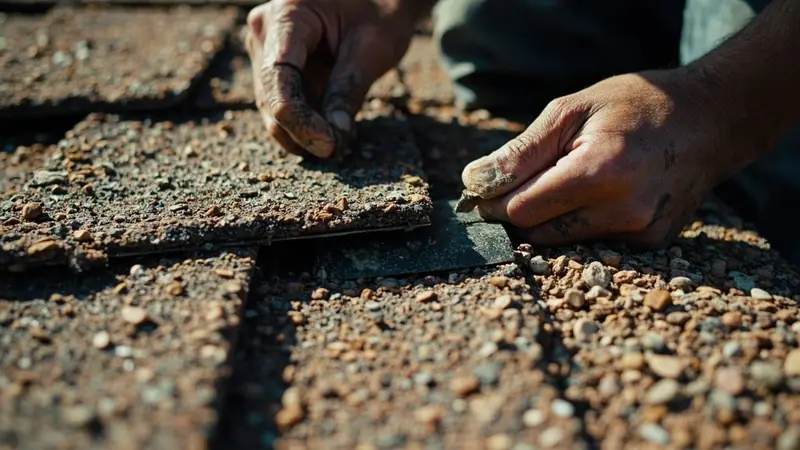
Find the sign you have, then read across to see how soon to call.
| Symptom or first sign | What is already happening | What it becomes if ignored | When to call |
|---|---|---|---|
| A lifted shingle tab | Wind gets under the course above it | A full strip peels in the next storm and the bare deck takes the rain directly | Call this week |
| Gutters packed with debris | Water backs up behind the drip edge | The fascia and the bottom edge of the decking soften until the first course has nothing | Call this week |
| A cracked pipe boot | Water runs down the vent pipe into the attic insulation | The ceiling below stains and the framing around the penetration softens | Call this week |
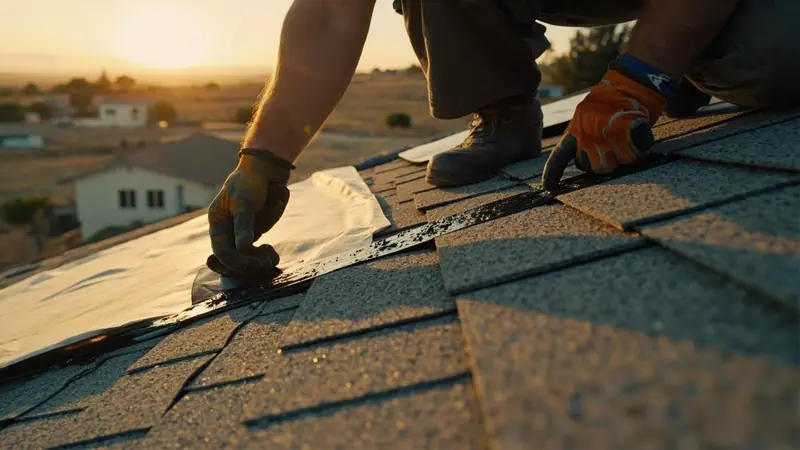
Repairing lifted shingles on your roof
We find exactly which tabs have lost their seal, then decide whether the fix stays small or grows into something wider.
- We check the attic below the suspected area first, for daylight or staining that points to where the leak sits.
- We walk the roof edges and mark every lifted tab, loose ridge cap shingle and bare spot we can reach safely.
- We lift a tab near the damage and check whether it flexes or cracks, and whether granules come off in our hand.
- We check the nail line under the affected courses for exposed or missing fasteners.
- We note which shingles need individual shingle replacement and which sections need a wider shingle tab replacement.
Where a vent pipe or stack sits nearby, we check the boot and counterflashing at the same time. A lifted shingle next to a penetration often means two separate problems.
The shingle flexibility and granule check is what decides the repair here. A tab that still flexes without cracking, with granules staying in place, is a candidate for a spot repair. We pull the damaged shingle, slide in a matching one, and reset the seal strip by hand. The sun will not reactivate that adhesive on its own this time of year.
A tab that cracks when lifted and sheds granules means that section has aged past spot repair. Matching tabs can also come out a different shade than shingles installed years earlier. Where more than a handful of courses show the same cracking pattern across the field, that points toward a fuller fix. Asphalt shingle roofing becomes the more sensible option rather than chasing tabs one section at a time.
That same flex and granule difference we can sometimes spot from the ground gets confirmed up close, tab by tab, before anything is written down. A roof with several seasons of Santa Ana gusts behind it is more likely to need the wider fix than a newer roof. The asphalt on a newer roof has had less time to dry out and crack.
A homeowner planning to stay for years, with granule loss across more than one slope, is often better off addressing the whole rake now rather than one tab at a time. A homeowner on a newer roof with one or two lifted tabs is better served by the narrower repair. The rest of the material still has its flex.
The CSLB License Lookup publishes the rules that govern work like this in your area.
Steps in the shingle repair visit
Assessment on the roof
We walk the roof edges first, since that is where lifted and missing shingles show up after wind. You'll see us check the rake, ridge and hip lines before the open field. We lift a nearby tab to test flex and granule loss. We also check the nail line and attic underside for daylight or staining. That single pass tells us whether this is a spot repair or a wider section. We name the cause and the job before writing anything down. By the time we come off the ladder, you have a cause, a quote and a written quote in hand.
Repair or replacement
Once you approve the quote, we clear the work area below the repair section first, since debris and old granules come down with the shingles. A spot repair means pulling the damaged tab, matching the replacement to the surrounding course, and resetting the seal strip by hand. A wider repair means stripping the affected run back to sound decking and confirming the deck is firm underneath. New starter, shingles and ridge cap shingles go across that section before we tie the edges back into the existing roof.
Final check
Before we leave, we lift the repaired tab and the courses around it to confirm every seal strip is holding flat. Where decking was replaced, a pin moisture meter reading under 15 percent confirms the section is dry before new shingles go over it. That reading matters most on the wider repairs, where more decking came up. On a spot repair, the seal check alone is usually enough to close it out. We show you the new seal and the matched shingles. When decking was opened, we also show you the board that came out so you can see why it had to go.
What fixing lifted shingles needs in Ontario
Swapping a handful of shingles for matching replacements along one rake usually does not need a permit. It counts as a like for like repair. Opening up a wider section of decking, or redoing the ridge and hip caps across the whole roof, usually needs a permit. Ontario's Building Department checks that type of work against the California Residential Code.
A few shortcuts get punished here more than elsewhere. Gluing a lifted tab back down with roofing cement instead of resetting the seal strip holds through a calm week. It fails the next time a gust gets under the edge, since cement does not flex the way the factory adhesive does.
Matching a faded shingle color from a box bought years after the original install leaves a visible patch. It still works but looks mismatched along the rake. If wind has opened a gap wide enough that water reaches the attic, rather than sitting on the shingles themselves, that moves past this kind of repair. It falls into wind damage roof territory, where the opening has to be closed first.
Roofing permits inside Ontario city limits come from the City of Ontario Building Department.
How the shingle repair call plays out
What we ask on the call
On the call we ask whether a whole strip pulled away or just a single tab. We also ask whether you can see bare decking from the ground or the attic. A strip gone with decking exposed usually means a visit the same day, since rain reaching open decking turns into a larger repair quickly. A single lifted tab with no decking showing can usually wait for the next open slot, especially outside an active storm window.
What gets disturbed at the roof
A shingle tab replacement or ridge section repair stays outside, with no walls, floors or ceilings opened for a repair of this size. Clear vehicles, patio furniture and anything breakable from under the work area before we arrive, since old granules and debris come down with the shingles. A ladder goes up against the eave, and gutters below the repair area get checked for granules and debris once the work is done.
Repair or wider replacement
How many courses are affected decides the repair first. One lifted tab is a spot repair. A run of cracked, granule bare tabs along a whole rake points toward replacing that section. Whether the decking is sound once a shingle comes up moves the job wider or keeps it narrow, and so does how much of the roof shares the same age and exposure. You see what we found and the quote in writing before any shingle comes off.
What you see and decide
We point out each lifted or missing shingle from the ground or the attic hatch, so you can see exactly where it sits. You get the repair or replacement options named in plain terms before anything comes off the roof. We ask for your go ahead before pulling a single shingle. The old tab or cap we remove gets set aside so you can see the cracking or granule loss for yourself.
Missing or Lifted Shingles Questions From Ontario Homeowners
Yes, because that gap leaves bare decking with nothing covering it. Rain can reach the wood directly instead of running off a shingle surface. The bare patch also lets wind work under the edges of the shingles next to it, which can loosen that course too. We check whether the deck under the gap is sound and whether nearby tabs still flex before deciding if this is a single shingle swap or a wider repair along that section.
Wind load concentrates along rake edges, ridge lines and hip lines, since nothing blocks the airflow there. Santa Ana gusts common to Ontario hit those edges hardest, so tabs along one exposed side fail before anything shows in the middle of the roof. Roof pitch matters too, since a steeper slope gives wind more lift than a low slope section. Shingles in the open field stay protected by the courses around them, which is why edge tabs go first.
Yes, a missing ridge cap matters more because no course sits above it to hold it down. A field shingle sits under the row above it, which shields its seal line from direct wind lift. That makes ridge caps among the first to lift in a gust. Once a ridge cap goes missing, the ridge line underneath is exposed with nothing shedding water off the peak. We check ridge caps and hip lines along with the field during a visit, since a missing cap there often means more than one shingle needs replacing.
Yes, a lifted shingle can let water reach the deck before any staining shows inside the house. Once the seal strip breaks, the tab stands off the roofline and wind can work it loose further with each gust, widening the gap over time. Rain that reaches bare decking starts soaking into the wood instead of running off the shingle surface. We check the attic underside for daylight or staining and lift the tab to test flex before deciding if the deck underneath needs attention too.
Roof age changes how many shingles end up lifting, since older asphalt cracks under lift instead of flexing back into place. A newer roof has had less time to dry out, so one or two lifted tabs there usually stay isolated. An older composition shingle roof carries the same wind exposure without that margin, so lifted shingles can spread across more courses. The shingle flexibility and granule check tells us which situation a given roof is in.
A starter strip lifts differently because it has no shingle below it holding its seal line down. It takes wind lift directly at the eave or rake rather than being shielded by an overlapping course. A field shingle is held down by the shingle above it, so wind has to get under two layers before it lifts. That is why starter strip failures show up at the edges first, and why we check the rake and eave lines before the open field of the roof.
Not automatically, since each slope's exposure to wind depends on which direction it faces during a gust event. A slope that takes Santa Ana gusts head on is more likely to show lifted or missing shingles than a sheltered slope on the same roof. We still check every slope during a visit, since cracked, granule bare tabs on one section can signal that the asphalt across the rest of the roof has aged to the same point, even if it has not lifted yet.
Exposed nail heads under a lifted shingle mean the nail line has worked loose from repeated wind movement. That lets the tab lift further with each gust that follows. We check the nail line under affected courses during a visit to see whether fasteners are missing or backed out. Rusted nail tips with dark rings around them point to moisture condensing on the nails, which we check from the attic side with a light rather than from the roof surface.
Why Santa Ana winds change lifted shingle repair in Ontario
New Haven, one of the newer sections built in the 2010s, shows this pattern clearly. The roof is young and the underlayment underneath is modern. Most of the repair work there is wind lifted tiles and flashing rather than a full reroof. That tells you something about work before anyone climbs a ladder. On a roof this age, a lifted tab or a loosened ridge cap is rarely paired with worn out material underneath. The fix stays narrow: reset the seal, replace the tab, check the flashing at any nearby penetration, and move on. Older composition shingle roofs across the rest of Ontario carry the same wind exposure but without that same margin. The asphalt itself may already be past the point where a lifted tab flexes back into place. That difference is what the shingle flexibility and granule check is for, on a new roof and an old one alike.
Swapping a handful of shingles for matching replacements along one rake typically stays outside permit review. It counts as a like for like repair. Stripping a wider section back to the decking crosses into work that gets reviewed before it is closed up. That includes redoing the starter course, ridge and hip caps. That review exists because decking condition is the one thing nobody can judge from the ground. A section that looks fine from the driveway can still be soft once the old shingles come off. Sequencing follows from that: the deck gets checked, and opened if needed, before any new shingle goes down.
Roofing Services Near Ontario
Dealing with missing or lifted shingles in your Ontario home? Call (909) 330-4661 and a person will talk it through with you.
Address:
Ontario Roofing, 4335 E Lowell St, Suite G
More Common Roofing Problems in Ontario
Looking at the roofline from the ground after a windy night is something you can do without a ladder. Note which edge has a lifted or missing shingle while you're at it. That stops at the edge of the roof itself. Resetting a seal strip, matching a replacement shingle and checking nearby flashing means standing on a slope that may already be loosened. That part belongs to the visit.
Have the rough date of the wind event in mind, along with which side of the roof the shingle lifted or went missing on. That side usually tells us the most. Note whether you can see bare decking from the ground or the attic. Know roughly how old the roof is if you have that figure handy.