
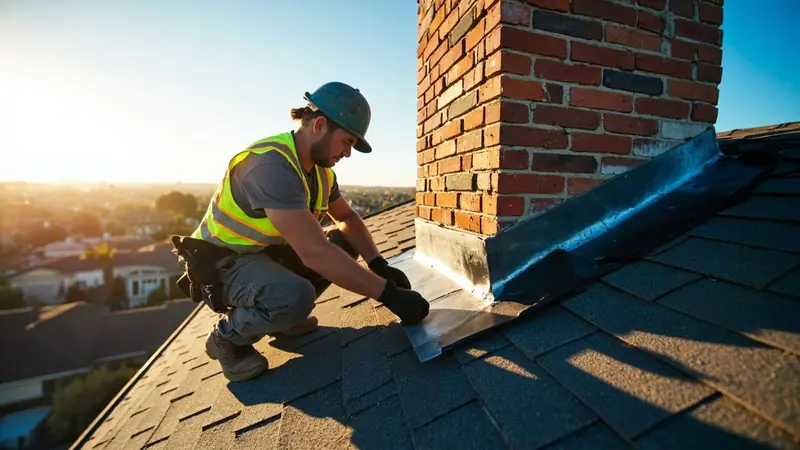
Why your roof is leaking around the chimney
A chimney roof leak usually starts at the metal around the chimney. Roof leaks around chimney problems show up as a brown ring on the ceiling near the flue, or a drip that only starts when wind drives rain from one direction. Step flashing runs up each shingle course against the chimney, and chimney counterflashing (the top piece set into the mortar joint) laps over it to shed water past the joint. Water stains around chimney walls often appear in the attic before anything shows on the ceiling below.
A chimney leaks when it rains hardest from one side, because wind pushes water sideways under flashing built only to shed a straight drop. A wide chimney without a cricket (the small peaked structure behind it that splits water around the sides) can hold standing water in a spot a square roof plane never has to handle. A chimney that has settled slightly, common in older masonry, can open a gap at the counterflashing, and that reads as chimney separating from roof framing even when the structure itself is sound.
Get out from under a dripping or bulging ceiling and keep that room clear. Set a bucket under the drip, and if the ceiling is bulging, open one small hole at the low point so the water has somewhere to go. Move furniture and electronics away and photograph the stain before anyone moves or covers it.
Ontario's winter storms, running roughly November through March, bring most of the year's rain in short, wind driven bursts that hit a chimney's upslope side harder than a flat roof plane. Builders should set kickout flashing (a small deflector) where a lower roof plane meets a wall or chimney. When it's missing, water runs behind the siding instead of dropping onto the shingles. That path leaves no mark on the roof deck, so it can run for months before a ceiling or baseboard stain gives it away. The wall sheathing behind it stays wet the whole time.
If the chimney stain grows after storms, or the drip starts minutes into rain, water has reached the wall or deck. Call us right away instead of waiting for the next storm. Roof leak repair handles an active drip once it's been traced, so call about it as soon as you see water moving rather than after it dries out between storms.
If the problem keeps coming back, look at roof replacement next.
What do I do about a leak in my roof?
The visit starts in the attic, not on the roof, because that's where an attic leak near chimney staining shows up first.
- We hold a light low under the chimney and check for daylight at the flashing and rust on the nail heads.
- We trace any dark ring or rusted nail back to the exact spot where the flashing meets the deck.
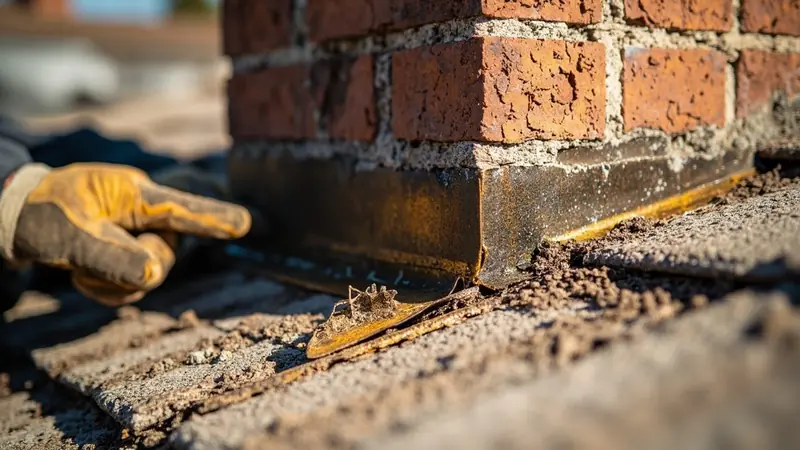
- Outside, we check the step flashing and the chimney counterflashing for gaps, lift, or separation from the masonry.
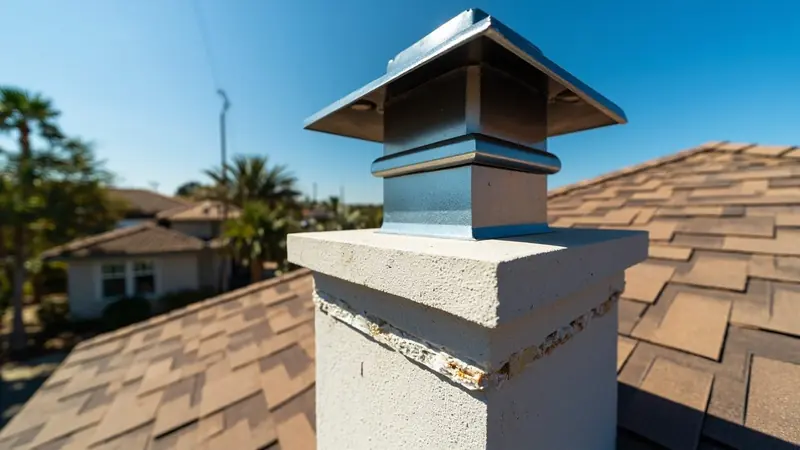
- We check for a chimney cricket behind a wide chimney, and look at the crown (the concrete cap) for cracks.
- We press on the decking around the chimney to feel whether it's firm or gives underfoot.
No daylight at the penetrations and clean nail shanks usually mean one flashing seam has failed, and that's a repair. Nail tips with rust and dark halos show moisture has condensed on that decking all winter. If the deck flexes under pressure, that section must be replaced, not resealed.
A single lifted counterflashing lip can often be reset into the same mortar joint and resealed. A chimney flashing replacement covers the whole run, step flashing, counterflashing and a new cricket if one was never installed, and that's the call once separation or rust shows along more than one seam. A cracked crown without a flashing problem usually points to chimney crown repair instead, since the crown and the flashing fail for different reasons.
Roofing permits inside Ontario city limits come from the City of Ontario Building Department.
Steps for fixing a chimney leak
On site assessment
We start in the attic with a light held low under the chimney, checking for daylight at the flashing and staining or rust on the nails, then trace that mark out to where the flashing meets the roof deck. Outside, we check the step flashing, the counterflashing, the cricket if there is one, and the crown for cracks. We press on the deck near the chimney to feel whether it holds firm. By the time we're done, we can point to the exact seam or spot letting water in. You get a written quote naming what's being repaired or replaced before anything is opened.
Repair or replacement
Once you approve the job, we cover the work area first so an afternoon rain doesn't get in while the flashing is open. A single failed seam gets reset into the same mortar joint and resealed. Where more than one seam has separated, or the deck underneath turned out spongy, the counterflashing and step flashing come off and get replaced, with a cricket added behind a wide chimney if one was never there. A cracked crown gets patched or recapped on its own, since it fails for a different reason than the flashing does.
Checking the repair
Before leaving, we test moisture levels on the decking's underside near the chimney using a pin meter. A reading in the low teens or below tells us that section has dried out and is holding. If it's still reading high, we don't close that area yet. We show you the finished flashing line and the meter reading, so you see the same number we're looking at. We also point out where the cricket or new counterflashing sits, so you know what to watch for after the next storm.
What fixing a chimney leak needs in Ontario homes
Fixing a chimney roof leak in Ontario usually means resetting or replacing flashing, and sometimes recapping the crown or adding a cricket that was never installed. A full flashing replacement usually needs a permit. Ontario's Building Department signs off on this type of project before the work starts.
Many Ontario homes from the 1945 to 1970s era carry a stucco chimney tied into a low pitch roof, and counterflashing cut into stucco rather than brick tends to crack loose at the mortar line faster than brick allows. Homes from the 1980s to 1990s era often carry tile roofs, and tile underlayment reaching the end of its service life can leak at the chimney long before the tile itself looks worn.
A common shortcut is sealing the gap between the chimney and the roof with roofing cement instead of resetting the counterflashing. That seal dries and cracks in summer heat, and it opens again on the chimney's upslope side in the next wind driven storm, often behind the chimney where it's never seen.
Our crews work to the installation standards of the National Roofing Contractors Association.
How the visit works for a chimney leak
Active drip or dry stain
We ask whether water is dripping right now while it's raining, or whether you're seeing a stain that's dry between storms. We also ask if the flashing or the chimney has been worked on before. Active dripping during rain usually brings someone out the same day. A stain that only shows after the fact, with no drip happening right now, usually gets a scheduled visit instead. Either way, we plan around what the attic check will need to confirm first.
What the visit disturbs
Reaching the flashing means getting onto the roof around the chimney, and checking the attic means moving insulation near that wall. If the stain is active, we may need to look at the ceiling or attic drywall directly below it. Clear the attic access and the area under the stain before the visit. Furniture or boxes stored near that wall get moved so we can see the framing behind it.
Repair seam or replace run
A single lifted seam of flashing is a different job from a full run that's separated in more than one spot, or a crown that needs recapping along with it. What decides it is how many points are open, whether a cricket was ever installed, and whether stucco or masonry has to be cut into to reset the counterflashing. You see the job in writing, with what's being opened and replaced, and you approve it before anything gets cut.
What you see before work starts
We show you the staining or rust where the attic light picked it up, and the exact point outside where the flashing or crown has failed. If opening stucco or cutting into the masonry joint is needed, we point out where and ask before any cut is made. The old flashing or boot comes off and we show it to you before it goes into the trailer.
Roof Leaks Around Chimney Questions From Ontario Homeowners
Failed flashing around the chimney usually lets rain in once wind drives water sideways against it. Step flashing runs up each shingle course, and counterflashing laps over it from the mortar joint, but slight settling in older masonry can open a gap at that joint. A wide chimney missing a cricket holds water on its upslope side instead of shedding it. Rust on the nail heads and a dark ring on the attic decking usually trace back to the exact seam that failed. A cracked crown fails for a separate reason.
Surface sealants like roofing cement cover a gap without fixing the flashing underneath it. The leak often continues behind the chimney where it is never seen, so the seal looks fine while water keeps moving into the wall or deck. Resetting the counterflashing into the mortar joint sheds water the way it is built to, rather than relying on a surface patch that moves with every temperature swing.
Check the attic with a flashlight under the chimney for daylight or staining before doing anything on the roof. Keep the area under any ceiling stain clear and set a container under an active drip. Photograph the stain before anything is moved.
Move away from a dripping or bulging ceiling and keep that room clear right away. Move furniture and electronics away from the area and photograph the stain before anyone moves or covers it. Active dripping during rain usually brings someone out the same day, since water is already moving inside the wall or deck.
Fixing it starts with finding whether one flashing seam failed or more than one seam separated. Where more than one seam has separated, or the deck underneath feels spongy when pressed, the step flashing and counterflashing get replaced along with a cricket if one was never installed.
Why wind driven rain in Ontario tests chimney flashing
Ontario sits in a semi-arid climate where most rain lands in a short winter window, and much of it arrives on the back of Santa Ana wind events rather than as a steady soak. That combination pushes water sideways into a chimney's upslope flashing instead of letting it run straight down a shingle course, a load most roof planes never have to handle. San Bernardino County's wider pattern of summer heat waves followed by a wet winter also cycles roofing materials between expansion and contraction every year, and a flashing seal that moved all summer is the one that opens first in a December storm. Housing built from the 1945 to 1970s era, with stucco chimneys on low pitch roofs, and homes from the 1980s to 1990s era, with tile roofs reaching the end of their underlayment life, carry this risk in different ways depending on when the roof was last opened up around the chimney.
Work that involves cutting into roof covering or chimney masonry falls under the California Residential Code, which sets standards for flashing and weatherproof roof penetrations. Resetting counterflashing into a mortar joint or adding a cricket behind a chimney is the kind of change that gets checked for a secure tie-in, not just a water-tight seal on the surface. That's one reason flashing gets reset into the joint rather than caulked over the top, and why the old piece gets photographed and shown before it's removed, so there's a record of what was there. It also means a crown repair and a flashing repair can move through that review on separate timelines.
Roofing Services Near Ontario
Dealing with roof leaks around chimney in your Ontario home? Call (909) 330-4661 and a person will talk it through with you.
Address:
Ontario Roofing, 4335 E Lowell St, Suite G
More Common Roofing Problems in Ontario
Looking in the attic near the chimney with a flashlight, checking for staining or daylight at the flashing, is something you can do from the attic hatch. That check stops once you'd need to get on the roof to look at the flashing, the cricket or the crown directly, since that means standing on a sloped surface right at the chimney intersection. Confirming what's failing, and resetting or replacing it, belongs to the visit.
Know when the stain or drip first showed up, and whether it only happens when wind drives rain from one direction. Have the roof's approximate age in mind if you know it, along with whether the chimney flashing has been worked on before. Know where the attic access is, and whether anyone will be home to show it.