
What are nail pops and exposed fasteners?
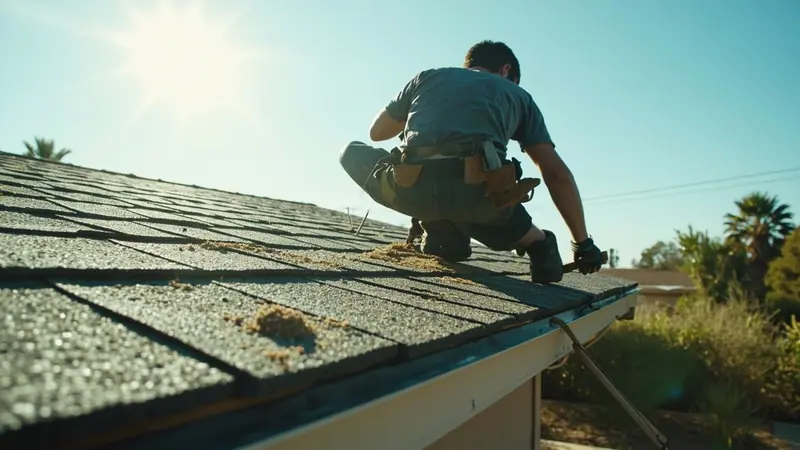
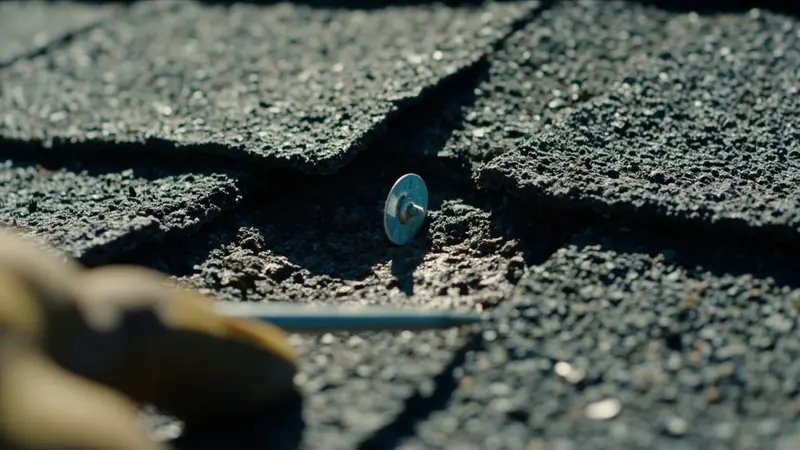
A nail pop happens when one of the roofing nails backs out of the deck it was driven into, lifting the shingle or drywall around it. On a roof, nail pops and exposed fasteners show up where a fastener head sits flush with the surface instead of buried under a shingle tab, or where the nail pokes straight through the mat.
A line of nails popping through shingles along one course often means fasteners that never sat deep enough are finally working loose. Rust rings around the fastener heads, or a bright unweathered dot where there should be granules, are both signs of the same movement. Granule loss in a tight cluster often marks nail heads showing through roof felt where the mat has worn thin. A technician will flag protruding nails in shingles near an edge because wind can catch them before more granules wear away.
In Ontario, this often starts at the soffit vents under the eaves. When soffit intake is blocked by paint, insulation, or debris, the ridge vent keeps pulling air out of the attic with nothing coming in to replace it. Warm house air rises into that space and condenses on the cold metal shanks of the nails all winter. Each nail sweats, rusts, and loses its grip. Left alone, the sheathing underneath delaminates and the shingles cup from below with nothing wrong on the surface.
One nail head showing through the granules is a small fix on its own. Leave it through another windy season and the tab around it lifts, letting the next rain find a path straight to the deck. Once a stain starts forming on the ceiling under that spot, water has already reached the attic, and that is when to make the call.
If it needs more than a quick adjustment, see our page on asphalt shingle roofing.
Not sure what you are seeing? Our page on granule loss on shingles explains the signs.
What happens when we check nail pops
We start where the movement shows up first and work outward to the roof itself.
- We look in the attic and trace any stain or rust streak back along the rafters to its source.
- We check the nail shanks and sheathing under that spot with a light, looking for daylight, staining, or rust rings.
- We check the soffit and ridge vents to see whether intake and exhaust are balanced.
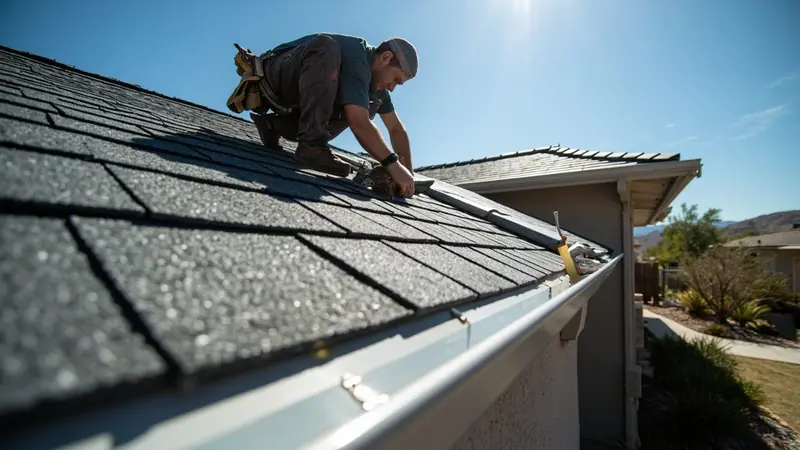
- On the roof, we check penetrations first, then valleys, then wall intersections, then the open field.
- We lift a shingle tab near each fastener to see if the mat still flexes or sheds granules.
Clean nail shanks with no staining mean the fastener worked loose from heat or wind flexing the deck. That nail gets reset or replaced and the hole gets capped with nail pop sealant rated for roofing use. Rusted nail tips with dark rings point to the attic moisture problem itself, not just the fastener, and that calls for correcting the soffit intake before any sealant goes on.
Where fasteners have popped across a wider section, we check whether the shingles nearby still flex and hold their granules. If they do, the fix stays local, resetting or replacing single fasteners one at a time. If several tabs crack or shed granules when lifted, that section is closer to needing a shingle replacement than a spot repair, which is a separate decision for the roof as a whole.
The CSLB License Lookup publishes the rules that govern work like this in your area.
How we handle this visit
Finding the source
We start in the attic and trace any stain or rust streak back to where it begins, then check the nail shanks and the soffit and ridge vent balance from there. You see what we're looking at as we go, including any rust ring or daylight around a fastener. On the roof, we follow the same spot out to the shingle tab above it. By the end of this part, we can tell you whether the fastener alone moved or the attic moisture is pulling on the whole section, and that finding goes into the written quote.
Resetting the fasteners
Once you approve the job, we reset or replace the fasteners that have backed out and cap each one with roofing grade sealant. If the soffit intake is blocked, that gets cleared or corrected first, since sealing nails over a blocked vent only buys a season. Where shingles near the fastener no longer flex, that section gets flagged for replacement rather than patched, and we confirm that with you before any shingle comes off.
Checking the deck
Before we leave, we run a pin moisture meter against the sheathing under the repaired spot. It needs to read under 15 percent before we call that section dry and close it up. We show you the reading and the capped fasteners before packing up, so you know exactly what was touched and what the deck looked like underneath.
What fixing nail pops needs in Ontario homes
Resetting a handful of fasteners and sealing them is a repair, not new construction, so it usually does not need a permit. When deck sheathing delaminates and part of it must come out, a permit is typically required. The City of Ontario Building Department reviews that work under the California Residential Code.
Hammering a popped nail flush and leaving it is a shortcut that fails here. The nail backs out again because the wood under it never stopped moving, and the shingle above it now has a hole at a different depth. Caulking over a fastener head without checking the attic hides the bump but not the moisture pulling on it, and the next sweat cycle pushes another nail through nearby. Painting over a popped fastener on a ceiling without finding the source leaves the same board free to move again.
What you can expect on this visit
Someone today or a set visit
On the call we ask whether you can see a stain forming on a ceiling and whether a shingle tab is already lifted near the fastener. A ceiling that is actively wet, or a tab you can see has pulled away, points to a visit today. A dry bump or a single rust spot with no staining usually goes onto a set visit, since nothing is actively moving yet.
What the visit disturbs
Checking nail pops means time in the attic and on the roof deck. If a ceiling fastener is involved, we may need to look at that spot from below, so clear furniture or anything stored under it. On the roof, we lift the shingle tabs near each popped nail to see the deck underneath, and those tabs go back down the same way they came up.
Reset, cap, or replace
A single clean fastener gets reset and capped, which is the smallest version of this job. A section with rusted shanks and cupped shingles needs the soffit intake corrected first, which opens more of the roof. A wider area where tabs crack and shed granules moves toward a shingle replacement instead of a spot repair. You review the written scope and sign off before we remove a single shingle.
What you see and decide
We show you the nail shank and the sheathing color around it, in the attic or on a photo if the spot is hard to reach. You see whether the shank is clean or rusted, and what that means for the fix. Before any shingle comes up or any fastener is pulled, we walk through the options with you and wait for a go ahead.
Nail Pops & Exposed Fasteners Questions From Ontario Homeowners
Wood framing shrinks and swells with temperature and moisture changes, pushing the nail head through the drywall surface. Repeated expansion and contraction loosens the nail's grip on the stud or joist, so the drywall covering it cracks or bulges outward. Above a ceiling, the same cycle works at roofing nails, and if soffit intake is blocked, warm attic air condensing on those nail shanks adds moisture that speeds the movement. A single popped nail on a ceiling usually means the framing above it is still shifting.
Press the popped nail head below the surface, then drive a new fastener nearby to hold the board. Cover both spots with compound, sand smooth, and repaint once dry. Checking what pushed the nail out matters more than patching it, since a ceiling fastener that keeps moving usually points to roof framing or attic moisture above it. Clear the area below the spot so the attic or roof deck can be checked from inside, and confirm the nail shank is clean before resetting it.
A few nail pops in new construction are common as framing lumber dries and settles. That shrinking works nails loose even when everything was installed correctly. A pop with no rust ring or ceiling stain is cosmetic, but one with staining below it points to moisture.
Hammering a popped nail flush and leaving it is a shortcut that fails. The fastener backs out again once the wood underneath keeps moving, and the shingle or drywall above it now has a hole at a different depth. Caulking or painting over the head without checking what pushed it out hides the bump but not the moisture or framing movement behind it. The next cycle of expansion or condensation pushes the same nail, or one nearby, through again.
A clean nail pop with no rust ring is a small fix worth making right away. Left alone through another windy season, the tab around a roof fastener lifts and gives rain a path to the deck below. A rusted shank points to attic moisture pulling on the whole section, not just that one nail, and that moisture keeps working at every fastener nearby until the soffit intake is cleared. Fixing it early keeps the repair local instead of spreading to more of the roof.
Worry once a ceiling stain forms under the spot or a shingle tab has visibly lifted near the fastener. Both mean water has already reached the attic or the deck underneath. A dry bump with a clean nail shank and no rust ring is a smaller issue that still needs attention but is not moving yet. Rust rings around the fastener head signal condensation building inside the attic, which keeps loosening nails across that section until the soffit intake is cleared.
Concern rises when a wall nail pop keeps returning after you reset it. A pop appearing once after construction and never returning is normal shrinkage working itself out. Several pops in the same spot, or across one wall at once, mean the framing behind it is still shifting season to season. Note whether the pop sits below a roof section, since attic moisture above can work at wall framing the same way it works at roof fasteners.
No fixed count makes nail pops normal on a ceiling. One or two pops with no rust ring or staining, soon after construction, usually reflect ordinary framing shrinkage. Several appearing in a line, or returning after you reset them, point to framing or attic moisture still moving across that section. Check each spot for a rust ring or a ceiling stain, since those details decide whether it stays a small patch or the attic needs a look first.
Why Ontario heat and wind loosen fasteners
Ontario's hot, dry summers push roof decks through sharp daily heat cycles that expand and contract wood framing and fasteners. Each cycle works a nail a little further out of the wood, so pops tend to show up in the same spots year after year. On top of that, fall and winter wind events bring strong, dry gusts that flex the roof deck with every pass. A fastener that was driven snug when the roof went on does not stay that way once heat and wind both work on it.
Homes built in Ontario between 1945 and the 1970s commonly carry roofs nearing the end of their service life, so a nail pop there often sits alongside granule loss and a tab that no longer flexes back into place. Houses from the 1980s and 1990s usually carry tile roofs, where the underlayment under the tile is reaching the end of its service life, so a fastener issue there can point to a failed layer you cannot see from the ground. Newer construction built since the 2000s uses modern plastic systems, but a soffit vent blocked behind the stucco still sweats nails the same way an older attic does.
Roofing Services Near Ontario
If you are seeing nail pops anywhere in the Ontario area, call (909) 330-4661 and we can tell you what to check first.
Address:
Ontario Roofing, 4335 E Lowell St, Suite G
More Common Roofing Problems in Ontario
Looking in the attic with a flashlight for rust streaks or staining is something you can check yourself. Stop there. Getting onto the roof slope to reset a fastener or lift a shingle tab means standing on a deck that can flex or crack under weight it was not built to carry day to day, and that part belongs to the visit.
Know when you first noticed the bump or rust spot and whether a ceiling stain has started under it. If you know the roof's age, have that ready, and check whether you can reach the attic hatch so we can look at the nail shanks from inside first.