
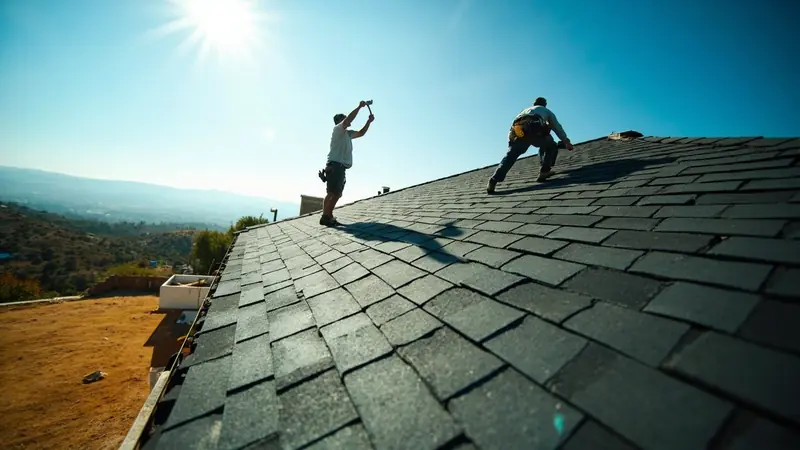
What wind and tract eras do to Rancho Cucamonga roofs
Homes here carry several eras of roofing side by side. Citrus era bungalows from the 1900s through the 1940s sit on wood framing with older sheathing, and a tear off on one of these often finds a deck that needs attention before any new covering goes down. Postwar ranch houses from 1945 through the 1970s carry low pitch roofs that were never built with much intake ventilation, so a worn covering on one of these is usually also a ventilation problem.
Stucco tract homes from the 1980s and 1990s brought concrete tile over an underlayment layer that is now old enough to fail under tile that still looks fine from the street. The newest subdivisions use concrete tile or laminated composition shingle over plywood or OSB decking, often with radiant barrier sheathing and ember resistant vents where the home sits in a fire hazard zone.
The climate load on a roof here comes from both ends of the year. Fall and winter bring Santa Ana wind events, strong dry gusts that drop off the San Gabriel Mountains and lift shingle tabs and ridge caps along the way. Most of the year's rain falls in a short stretch from late fall into early spring, which tests every flashing (metal that seals joints on the roof) and valley at once.
Summer heat waves push attic temperatures up for months, and that heat works at asphalt and underlayment (layer under the shingles) long before a leak shows up inside. Those swings between dry wind and short heavy rain are what wear down roofing fastest here.
The work splits along a rough line through the city. North toward the foothills, past Foothill Boulevard, homes take the strongest wind gusts and sit closer to the wildfire edge, so ridge and hip attachment, ember resistant vents and Class A coverings come up on most re roofs there.
South of that line, the tract homes built through the 1980s and 1990s are reaching the point where the original roofing under the tile is aging out, even when the tile itself still looks sound from the ground. That gap between how a roof looks and what is happening underneath it is why an inspection starts at the decking.
How we work on Rancho Cucamonga roofs
When we look at a roof here, we walk you through what we find before we talk about any fix. If the attic shows staining at a vent pipe or along a wall, we show you where it sits and explain what that location usually means. Dry summers followed by a short wet season mean a roof can look fine from the driveway while the decking underneath is already taking on water, so we point out what we see rather than ask you to take our word for it.
Many of the roofs we see here are tile over an older underlayment or shingle over aging decking, and the check that matters most is whether that layer still does its job once the covering comes off. We explain what firm decking feels like against a section that gives underfoot, and why that difference is what separates patching a spot from replacing a section.
From there we lay out the options as a repair at that one spot, a larger repair, or a full tear off, and we say plainly which one the condition in front of us points to. Nothing gets opened up, pulled off or replaced until you have seen what we found and said go ahead, whether that's a single boot or a full re roof.
We also walk the roof's penetrations, the places where a pipe, vent or chimney passes through the covering, since those spots fail more often than the open field of shingles or tile. You see what we find there before we talk next steps, so the explanation matches what is on your roof rather than a general description of what tends to go wrong.
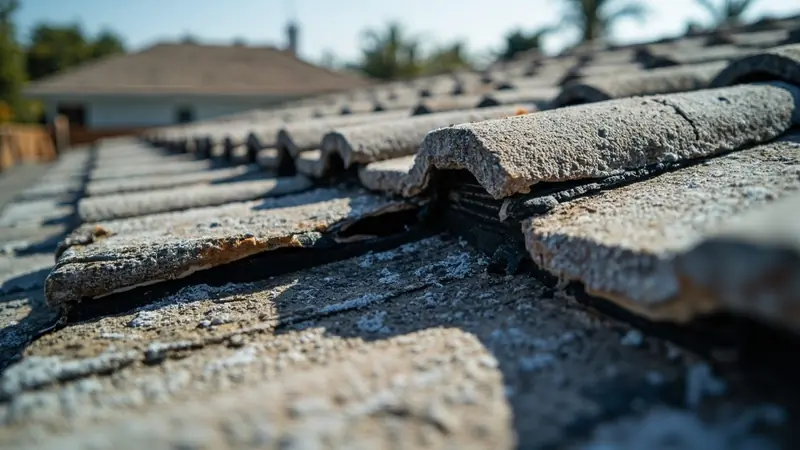
Intake checked against exhaust
Long dry summers push attic temperatures up for months. A ridge vent (vent along the peak of the roof) pulling more air than the soffits can supply draws house air through the roof instead of outside air. We check soffit intake against ridge exhaust before discussing a new covering, because a roof over an unbalanced attic cups and fails from underneath. That check tells whether the next roof holds up any longer than this one.
Attic checked with a light
We bring a bright light into the attic and look for daylight at penetrations, rust on nail tips, and dark staining on the sheathing. Rust and staining mean warm house air has been condensing on the nails all winter, which a walk across the shingles from above never shows. You see exactly what we find and where, before any talk of a repair or a full tear off.
Permit need flagged up front
Reroofing and structural repair work usually needs a permit in this city, and the review happens before any covering goes back on. We tell you up front whether your job falls into that category, so you know before work starts whether a permit and an inspection are part of the schedule, and that office decides what each permit requires.
Short Rain Season, Slower Roof Drainage
Rancho Cucamonga gets most of its rain from late fall through early spring. Dust and debris build up on low-slope roofs and gutters during dry months, leaving less room for water when storms arrive. We check that water clears the roof and the downspouts, not just that the gutters are hung, since a slow clear here means the next heavy rain backs up again.
Roofing work we handle across Rancho Cucamonga
Most of what we do here falls into three categories. Repairs cover a single boot, a flashing detail or a damaged section, and they suit a roof that is otherwise sound. A replacement or a new install comes up once the covering itself has aged out or the decking underneath is found to be compromised. That work turns on what the tear off finds once the old roofing comes off.
An emergency is different again: it's about stopping water from getting further into the house right now, whether that's near Victoria Gardens or anywhere else in the city, before any decision about the long term fix gets made. Timing and access also separate them, since a tear off needs a clear day and a place to stage material. A boot or flashing repair can often be handled in a single visit.
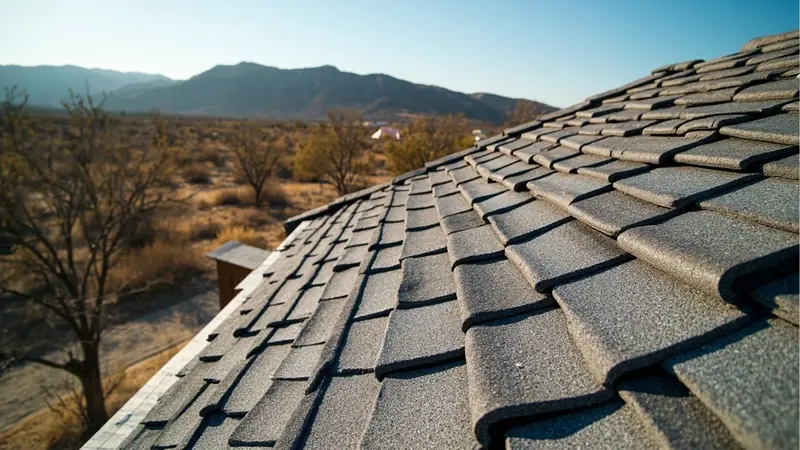
Roof repair and replacement
Roof repair and replacement covers everything from a single cracked boot to a full tear off. A lifted tab or a stained ceiling corner often points to a spot that can be repaired, as long as the decking underneath is still firm. On a 1980s or 1990s stucco tract home, the covering can look fine while the original underlayment beneath the tile has already aged out, which turns a patch job into a section by section replacement once the tile comes off and we see what is underneath.
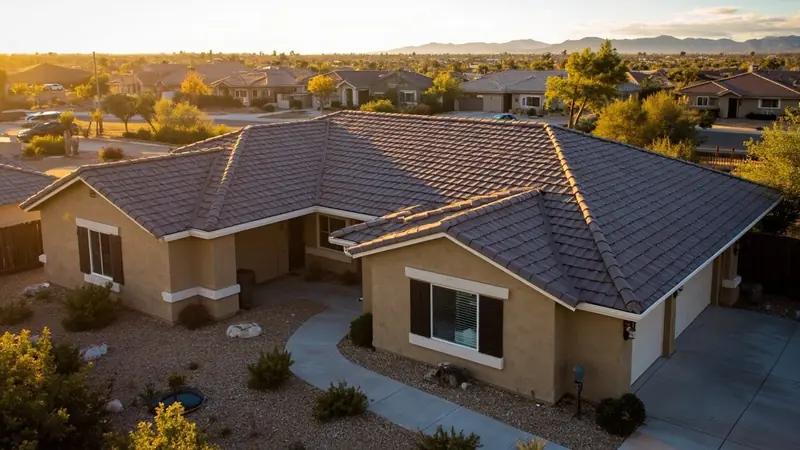
Shingle roof installation
Shingle roof installation and full tile replacement both start with the same finding: decking that gives underfoot once the old covering is pulled, instead of staying firm. Older homes often need new decking before any new roof goes down, since plank or early plywood decking rarely passes that test untouched. Newer builds usually keep their original plywood or OSB decking intact, so the install there focuses on the covering, the flashing and the fastening pattern instead.
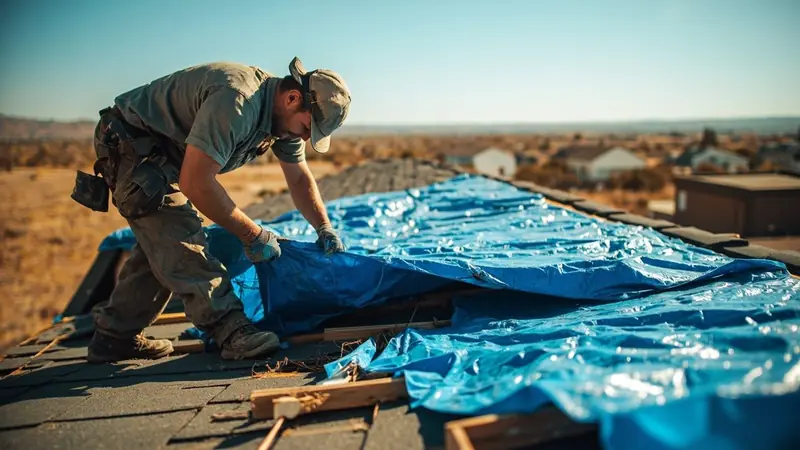
Emergency roof leak response
After a Santa Ana wind event or a hard winter storm, the first job is stopping water from spreading inside. Before we arrive, move anything valuable out from under a wet ceiling and set a bucket at the drip. On arrival, we trace where water first gets in, often through a boot, valley or wall intersection. That spot rarely sits directly above the ceiling stain since water travels sideways over the decking before it drips down.
Common Roofing Jobs in Rancho Cucamonga
Here is where to start if you live in Rancho Cucamonga. Each page covers one job from first call to finish.
- wind damage roof repair
- roof replacement
- storm damage roof repair
- roof leak repair
- emergency roof repair
- metal roof installation
Close to Rancho Cucamonga, we also work in Upland and Ontario.
What roofing problems do Rancho Cucamonga homes have?
Roofs tend to show one of two kinds of trouble: wind damage you can see from the driveway, and moisture damage you can't see until a ceiling stains. The staining case usually comes down to attic ventilation. When a ridge vent pulls more air than the soffit intake can supply, it draws house air up into the attic, and that air condenses on cool nail shanks and sheathing in the colder months.
The result is a ceiling stain or a covering that cups from underneath even when it hasn't rained in days. A cracked pipe boot follows its own path: water runs down the vent pipe into the attic insulation first, then the ceiling below stains, then the framing around that penetration starts to soften. Once the framing is affected, a repair stops being a patch at the boot and becomes work on the decking itself. That signals it's time to reach out before another storm hits.
In Rancho Cucamonga we also handle emergency roof tarping, metal roof installation and storm damage roof repair.
Wind lifted shingles and tile
Strong Santa Ana gusts get under a tab or a tile edge that isn't seated tight, and once wind lifts one course, the next gust works at the fastener line underneath it. A shingle in the yard after a windy night usually isn't the only one loosened, since wind damage spreads along a rake or ridge before it shows up as a hole. Left alone, bare courses take rain directly into the decking below.
Aging tile underlayment
Tile roofs installed through the 1980s and 1990s sit on underlayment (layer under the shingles) that is now old enough to fail on its own, independent of the tile above it. The tile itself can look sound for years after that layer starts to go, since the tile is just the rain shedding surface and the underlayment beneath it is the real barrier. By the time a stain shows up inside, the underlayment has usually been letting water through for a while.
Slow drainage after storms
A roof's drainage depends on proper slope, tight flashing and clear gutters, not on where water lands. Water that pools on a low slope section or backs up in a clogged gutter has to clear through downspouts and street drains that eventually reach channels kept by the San Bernardino County Flood Control District, and a blocked gutter slows that path right at the roofline. Standing water at a seam or a valley for more than a day or two loads that spot every time it happens again.
Postponed reroofs on older homes
Roofs on 1945 to 1970s ranch houses are often the ones put off longest, since a worn covering on a low pitch roof doesn't always show inside right away. Owners wait through one more hot summer or one more wind season, and the covering keeps losing granules and flexibility the whole time. By the time a leak finally shows up, the covering underneath has usually been thin for longer than anyone realized.
Find the sign you have, then read across to see how soon to call.
| Symptom or first sign | What is already happening | What it becomes if ignored | When to call |
|---|---|---|---|
| A cracked pipe boot | Water runs down the vent pipe into the attic insulation | The ceiling below stains and the framing around the penetration softens | Call this week |
| Blocked soffit intake | Attic humidity climbs and the nails sweat all winter | The sheathing delaminates and the shingles cup from underneath with nothing wrong on the surface | Call this week |
| Missing kickout flashing where a roof meets a wall | Water runs behind the siding instead of onto the shingles | The wall sheathing rots with no stain on the roof at all | Call this week |
| Gutters packed with debris | Water backs up behind the drip edge | The fascia and the bottom edge of the decking soften until the first course has nothing | Call this week |
What happens when a roofer comes out?
A visit here usually starts in the attic rather than on the roof itself, since moisture and nail staining show up there before a ceiling ever does. Having the roof's age, when the stain or damage started, and where in the house it shows will help the call move faster. If there's attic access, having it clear before we arrive means we can get a light on the sheathing right away instead of losing time getting up there.
The CSLB License Lookup publishes the rules that govern work like this in your area.
Today or a booked visit
On the call we ask what the roof is doing right now and where it shows inside the house. Active dripping, a soft spot you can press through the ceiling, or daylight showing from inside the attic points toward someone coming out the same day. A stain that stopped changing days ago, with no fresh water moving, usually fits a booked visit instead. Either way, the goal on the phone is to match the visit to what's happening, not just how long it's been going on.
What to clear before we arrive
Clear a route to the attic hatch and shift any items stored beneath the suspect area, since inspections typically start there. When we arrive, show us where the stain or damage is and when you first noticed it, and walk us through anything that changed around that time, like a storm or a repair done nearby. We look at that spot with you before we talk about what comes next, so the explanation matches what's on your roof.
The reading we show you before we leave
Before we leave, we check the decking with a pin moisture meter and show you the reading. Under 15 percent reads as dry decking, and that's what a sound roof should show even right after a repair. Moisture readings over 20 percent show that area is still retaining water. We point out exactly where on the roof that reading came from so you know what it covers and what it doesn't.
From your call to a finished Rancho Cucamonga roof
The first visit settles what's wrong and whether the decking underneath is sound, and what the tear off finds once the old covering comes off decides whether the job stays a repair or grows into a full replacement. Material delivery and staging space also shape the schedule, since a dump trailer and a load of tile or shingle bundles need somewhere to sit on site for the length of the job.
Weather plays a part too, since an open deck needs a dry stretch to stay safe, and a wet week can push a start date back a few days. Three things happen between that first call and a finished roof.
A walk across the decking
Once we're on the roof, we walk the decking section by section, feeling for a spot that gives or feels springy underfoot instead of staying firm. That test tells us whether we're dealing with a surface repair or something that reaches the sheathing, before a single shingle or tile comes off. A cracked boot or open valley gets the same close look at this stage, since that's usually where a leak started.
A written quote you approve
That check turns into a written quote naming the repair or replacement and what has to be opened to reach it, whether that's a single boot, a full valley, or the whole covering. You see that quote and approve it before any work starts, and if the decking needs more than expected once it's opened, that gets confirmed with you before new decking or covering goes down.
Closed up after the check passes
A repaired or replaced section stays open until the moisture reading we take comes back where it should, not just until it looks finished from the ground. On permitted work, the city's inspection happens at this stage too, before anything gets covered over for good. Once that's cleared, flashing, caps and the final courses go on and the site gets cleaned up.
Do you need a permit for roofing work in Rancho Cucamonga?
Most reroofing and structural repair work here needs a permit, while a like for like shingle or tile swap on an otherwise sound deck is more often treated as maintenance. That distinction isn't ours to make. The local Building and Safety Services Department is the office that reviews roofing permits here, and it decides which category a given job falls into. Roofing work in the city falls under the California Residential Code, the same code that governs home construction across the state, and it sets the baseline for decking, fastening and flashing details on any new work.
Because that decision sits with the city and not with us, we build our quotes around what the job needs rather than guess at the paperwork ahead of time. If a project needs a permit, that gets built into the schedule as a step the job passes through. The same applies to inspection: on permitted work, the covering and flashing stay accessible until that step has happened, which is also when a replaced section of decking gets looked at before it disappears under new material.
For homeowners, the practical effect is timing more than anything else. A permitted reroof moves through an extra step that a small flashing repair usually skips, and that step is worth planning around rather than treating as a surprise partway through the job.
For storm resilience, the IBHS FORTIFIED standard is the playbook. Several of its upgrades cost little during a re-roof.
Checking if the shingle still flexes
Diagnosis starts inside, where staining and nail condition point to where to look on the roof itself. Outside, in mild weather, we lift a shingle tab at the corner. One that bends without cracking and keeps its granules is still sound. One that snaps and leaves granules in your palm has used up the asphalt underneath it, and that's the finding that turns a patch into a section replacement.
What decides how big the job gets
The biggest unknown on almost any reroof here is the decking, and nobody can judge it until the old covering is off. Firm decking under a tear off keeps the job to the covering itself. Soft or delaminated sections mean new decking before anything else goes down, and how much that touches depends on how far the soft area reaches. Access and the number of old layers already up there shape the job too.
What slows a roof job down
A tear off runs longer when the decking needs more than a spot repair, since replacing sheathing can't be rushed if the fasteners are going to hold it. Weather matters too, since an open deck needs a dry stretch to stay safe. Finished work should feel firm and even underfoot across the whole section that was opened, with no springy spot left where new decking meets old.
Fire zone details on newer roofs
Subdivisions built from the 2000s on mostly carry concrete tile or laminated shingle over plywood or OSB decking, often with radiant barrier sheathing underneath. Where one of those homes sits in a fire hazard zone, the covering needs to be Class A rated and the vents need to resist embers rather than just screen out leaves. That changes what's available for a repair or a replacement on that specific house, since a vent swap there isn't a one size fits all part.
Roofing Questions From Rancho Cucamonga Homeowners
Underlayment beneath 1980s tile reaches the end of its service life even when the tile looks sound. Tile only sheds rain, so the underlayment is the actual water barrier underneath it. Once that layer cracks or breaks down, water moves beneath tile that still looks fine and reaches the deck below. A tear off that pulls a section of tile checks the underlayment and the decking directly, rather than judging the roof from the ground.
Full replacement turns on deck condition once the old covering comes off. Homes along Foothill Boulevard take stronger wind off the hills, so lifted tabs or shifted tile there often mean fastening failure as well as surface wear. A deck that stays firm throughout usually only needs a new covering. A spongy section means new decking before anything else goes down, and that is the point where a repair becomes a full replacement.
A roof inspection starts in the attic, checking for daylight at penetrations and staining on the sheathing. Before we leave, we take a moisture reading on the decking and show you where it came from, so you see what it covers before any talk of repair or replacement near Victoria Gardens.
A sagging roofline usually signals a deck or framing problem, not just a covering issue. That kind of dip means a section of the sheathing has likely delaminated or rotted and is no longer carrying its own weight the way it should. During a visit we walk the roof and feel for a spot that gives between rafters instead of staying firm, which is the test that separates a surface repair from decking work. Near Chaffey College Rancho Cucamonga campus, homes span several building eras, so the age of the framing underneath varies street by street.
Call right away once water is moving inside the house after a wind event. Santa Ana gusts lift a tab or tile edge that was not seated tight, and once wind lifts one course the next gust works at the fastener line underneath it, so a single shingle in the yard often means more loosened nearby. We find the entry point first, usually a boot, valley or wall intersection, because water runs sideways along the decking before it drops.
A cracked pipe boot lets water run down the vent pipe into the attic insulation before the ceiling stains. The insulation holds that moisture and keeps the area damp long after the leak started, which is why a stain can show up well after the boot first failed. We check the insulation and the framing condition at that spot during the attic inspection.
South facing slopes take more direct sun, so they run hotter than the rest of the roof. That extra heat works at the asphalt and the underlayment underneath it over the course of a summer, the same way the heat buildup in a hot attic does, just concentrated on one slope instead of spread across the whole roof. Blistering shows up there first because the asphalt is losing flexibility and granules faster on that side. Lifting a shingle tab in mild weather there tells us whether it still bends without cracking or has aged out.
Roofing Services Near Rancho Cucamonga
Need a roofer in Rancho Cucamonga? We cover Rancho Cucamonga from our Ontario base. Call (909) 330-4661 to check your address.
Serving Rancho Cucamonga, CA 91701 from our Ontario base
From the ground, zoom in with a phone camera or a pair of binoculars to check for lifted tabs, shifted tile, or a gap at a boot or vent. That's where a homeowner check stops, because flashing work, lifting shingles and anything on a wet or storm damaged surface needs fall protection. What that zoomed in look finds gets confirmed and handled at the actual check during a visit.