
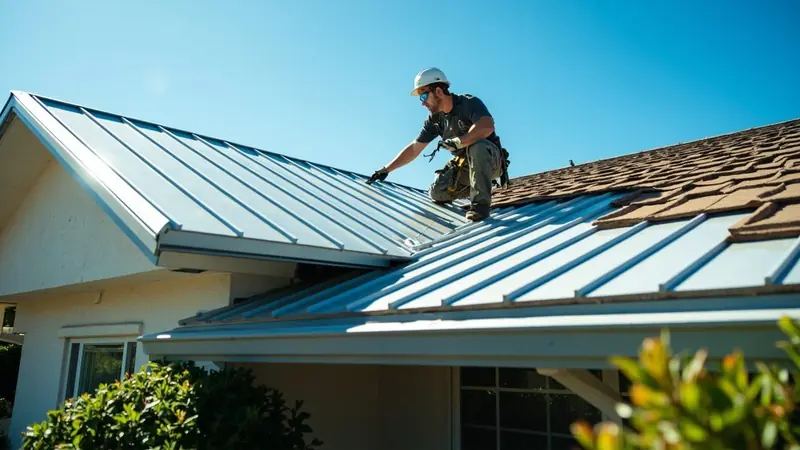
What metal roof installation replaces on an aging roof
Metal roof installation swaps asphalt shingles for steel or aluminum panels that shrug off direct sun instead of aging under it. Ontario's hot, dry summers push attic and roof surface temperatures well past what a milder climate sees, and asphalt dries out faster here than it would somewhere cooler. That drying hits the rubber pipe boots and the sealant at every penetration first, before it shows up anywhere else on the roof.
A shingle tab that has gone brittle cracks when the wind lifts it, and once that happens the course above it loses its grip. In the next storm a full strip can peel away, leaving bare decking to take rain directly. On an older roof, metal roof leaking at seams or around a chimney often starts the same way: a seam or a flashing joint dries out, opens under heat, and lets water track along the underside of the decking before it ever reaches a ceiling.
Homeowners usually notice a brown ring on a ceiling, or a leak that only shows up when wind drives rain from one direction. That kind of directional leak usually points at a wall or a chimney, not the open field of the roof, because wall flashing and counterflashing dry out and separate before shingles in the middle of a slope do.
This shows up on a low slope section some houses have over an added room or porch, where a single opened seam can leak only during a specific wind direction. A skylight leaking at its own frame calls for skylight installation and repair instead of a new covering, since the fault sits in the skylight curb.
Watch for a tab that has already cracked along an exposed edge, especially one facing the afternoon sun. Corner lifting on a strip means a strong wind could rip off the whole course. Call before rain reaches the exposed deck underneath.
Before you call, you can read up on metal vs shingle roofing.

Find the sign you have, then read across to see how soon to call.
| Symptom or first sign | What is already happening | What it becomes if ignored | When to call |
|---|---|---|---|
| A lifted shingle tab | Wind gets under the course above it | A full strip peels in the next storm and the bare deck takes the rain directly | Call this week |
| A cracked pipe boot | Water runs down the vent pipe into the attic insulation | The ceiling below stains and the framing around the penetration softens | Call this week |
| Missing kickout flashing where a roof meets a wall | Water runs behind the siding instead of onto the shingles | The wall sheathing rots with no stain on the roof at all | Call this week |
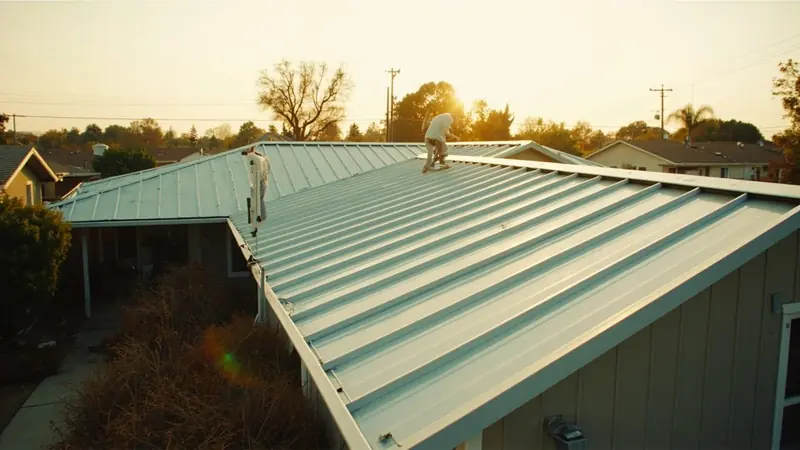
How we install a standing seam metal roof in Ontario
Before anyone talks panels, we look at what's already happening on the existing roof and in the attic. That tells us whether this is a straightforward tear off and install, or whether deck repair comes first.
- We check the attic for staining, daylight at penetrations and rusted nail tips.
- We walk the roof and test shingle flexibility and granule loss at a few spots.
- We check soffit intake against ridge exhaust so the new roof doesn't inherit the old ventilation problem.
- We check valleys, wall flashing and pipe boots for cracked sealant.
- We note deck condition at any open seam so you know what the tear off may turn up.
If a tab still bends without snapping, the covering has life left and a repair can hold it over. If the tab snaps and granules come away in your hand instead, the asphalt has aged out and a new covering is the only fix left.
Standing seam metal panels run with fasteners hidden under the seam, so nothing punches through the panel face where sun and rain can work at it.
Corrugated metal roofing panels and stone-coated steel roofing are lighter choices for a simpler roof shape, while an aluminum panel handles corrosion concerns that matter less here than the heat does. Ontario's long, hot summers favor the standing seam metal roof installation over corrugated panels on a complex roof, because the clipped panels expand and contract with the heat instead of working loose at exposed fasteners.
Panels installed over solid decking with underlayment run quieter in rain than panels set over open framing, which answers most of the noisy metal roof in rain concern. A tile roof that has only lost a few individual tiles is a smaller job than a full metal roof installation, and that repair stays separate from this decision.
For storm resilience, the IBHS FORTIFIED standard is the playbook. Several of its upgrades cost little during a re-roof.
Pick the two options that fit your home, then ask which one makes sense for it.
| Option | The numbers a buyer weighs | Best suited to |
|---|---|---|
| Standing seam metal | Fasteners hidden under the seam, panels clipped so they can expand and contract with temperature | Roofs meant to be kept for decades |
| Three tab shingle | One layer with cutouts, lighter per square | Low exposure roofs where first cost decides |
| Architectural laminated shingle | Two laminated layers that are glued together so it is heavier and thicker than three tab | Most steep slope roofs on a house |
| Impact rated shingle | Graded by a steel ball impact test where Class 4 is the top step | Hail country and exposed roofs |
The visit from call to install
On-site assessment
We start in the attic, checking for staining, daylight at penetrations and rusted nail tips, then move onto the roof to test shingle flexibility and granule loss and check valleys, wall flashing and pipe boots. You'll see us point out exactly where a boot or a seam let heat-dried sealant go, rather than just telling you the roof's old. Once we've named the cause, whether that's a handful of brittle tabs or a deck that needs attention once it's exposed, you get a written quote covering the panel option we're recommending and why, before anything gets scheduled.
Approval, then tear off
Nothing happens until you've approved the quote in writing. Once you do, we isolate the section being worked first, usually starting at the ridge or at a problem valley, and strip the old covering back to the decking. Any soft or delaminated sheathing gets shown to you on the spot before it's replaced, since that's the one thing nobody can judge until the old roof comes off. From there the new panels go on with new flashing and boots at every penetration, working the same order the leaks were found in.
Verification before handoff
Before closing a section, we check the exposed decking with a pin moisture meter. A reading under 15 percent means that section reads dry and the install can close over it. If any section reads above that, we address it before the panel goes down over it. We walk you through the finished ridge, valleys and flashing points and show you where each one sits, so you know what's under the panels once we're done.
What a metal roof installation needs in Ontario homes
Swapping a roof covering for metal usually calls for a permit here. The City of Ontario Building Department is the office that signs off on it, and what it requires depends on the job. Metal roof flashing installation at every wall and chimney intersection matters more here than the field panels do, since that's where heat-dried sealant failed on the old roof in the first place.
Houses built in the 1980s and 1990s around Ontario often carry tile roofs whose underlayment is near the end of its service life, even though the tile itself still looks fine. Pulling that tile without replacing what's underneath just moves the same leak under a new covering. The same houses from the 1945 to 1970s era tend to have a worn roof on a shallow, low pitch form, which limits how panels can be laid out without extra framing.
Santa Ana gusts in fall and winter put real load on roof edges and ridge caps, so panels fastened without edge clips rated for that wind can lift at the first storm. Clearing a clogged valley or gutter before the new roof goes on matters too, because standing water at the eave softens the fascia the first course needs to grip. Where that fascia has already gone soft, gutter installation and repair has to happen alongside the roof work, not after it.
What the visit adds up to
Same day or scheduled visit
On the call we ask when the problem started and whether water is actively coming through right now, or just visible on the ceiling after past rain. Active water today usually means someone comes out quickly. A roof that's clearly aging but holding for now gets scheduled ahead, which gives us time to line up panels and crew for a tear off instead of rushing a job that needs a full day on a hot roof.
What the tear off disturbs
A full tear off disturbs the decking, the attic insulation under any open seam, and anything stored against the fence line near the roof edge. Clear the driveway and move patio furniture or vehicles away from the drop zone before we arrive. Window screens and gutters below the eave come off where they'd catch falling material. Any satellite dish or antenna mounted to the old roof gets moved before the new panels go down.
Pitch and access set the size
A steep, multi story roof needs staging and fall protection that a single story, walkable roof doesn't, and that changes how long the crew is on site. How many stories we're working from, and whether material can reach the roof directly or has to be carried up, moves the job more than the panel choice does. We put the job in writing once the pitch and access are confirmed, and you see that quote and approve it before any panel goes on.
What you see and approve
We walk the roof plan with you using the attic findings and the shingle condition we found. You see the panel options side by side before anything is ordered, and we ask for a go ahead before the old decking comes off. If the deck underneath turns out soft once the tear off starts, we show you that section before it gets replaced.
Metal Roof Installation Questions From Ontario Homeowners
Clip fastening and flashing detail at every wall and chimney intersection decide how long a standing seam roof holds up more than the panel material alone. Panels set on clips let the metal expand and contract across the day without working fasteners loose, which is what shortens an exposed-fastener panel's service life. Flashing joints dry out under direct sun and fail before field panels show wear, so those points need checking on a schedule. Keeping valleys clear and the fascia sound at the eave protects the grip the first course depends on.
Installing a standing seam metal roof yourself is harder than it looks. Hidden fasteners under each seam have to line up across the whole run or the panel will not seat tight against the clip. Tear off work exposes decking that needs a pin moisture meter reading and a walk test for deflection before any panel goes down, work usually done tied off on a hot roof. Cutting panels, setting flashing, and working a hot slope goes past that point.
Flashing at walls, chimneys, and roof penetrations wears out faster than the panels themselves. Sealant at those joints dries out under direct sun before field panels show any wear. Noise in rain is a separate concern on panels set over open framing, though solid decking with underlayment cuts that down. Checking those points during the visit, not just the field panels, catches trouble before a seam opens.
Clip fastening and flashing condition at wall and chimney intersections set how long a metal roof holds up, more than the panel gauge or finish. Standing seam panels on clips move with daily heat swings instead of working screws loose the way exposed-fastener panels can, which keeps seams tight longer. Flashing and pipe boots dry out under sun exposure before panels in the open field show wear, so those points need checking on a schedule. Keeping valleys clear and the fascia sound at the eave protects the edge the panels depend on for grip.
Noise during rain is the tradeoff homeowners notice most with metal roofing. Sizing panels correctly for a complex roof shape, with standing seam favored over corrugated panels on anything but a simple gable, adds planning compared with a straightforward shingle swap. Edge clips rated for wind have to be specified correctly, since fasteners without that rating can lift in a gust. None of that changes once the panels are down and flashed.
Familiarity with asphalt shingles keeps metal from being the default choice for homeowners. Shingle installation does not require sizing standing seam panels or hidden fastener clips for a specific roof shape. Corrugated panels and stone-coated steel offer lighter options on simpler shapes, but a complex roof still needs the standing seam detail to handle expansion and contraction under heat. That extra planning around flashing, panel layout, and wind-rated edge clips takes more upfront decision making than laying down another course of shingles.
Why Ontario heat changes a metal roof installation
Ontario sits in a hot, dry stretch of the Inland Empire valley, with August afternoons commonly in the mid 90s and heat waves pushing well past 100 degrees. That kind of sustained heat does more to a roof than a single hot day would. Asphalt shingles lose their oils and start to curl, rubber boots harden and crack at the base, and sealant at every flashing joint dries out years before shingles in the open field look worn. Metal panels react to that same heat differently. Standing seam panels are set on clips that let the metal expand and contract across the day without working the fasteners loose. This is the detail that keeps a metal roof from developing the same seam failures that show up on an aging shingle roof here. Winters stay mild, so the bigger stress on a roof in this part of San Bernardino County is the summer heat load.
Work like this gets inspected before the final panels close up what's underneath. An inspector checks the fastening pattern at the panel clips and the flashing at every penetration, not just the finished look of the roof from the street. That's part of why flashing and boots go in before the last courses of panels, so that work can be checked while it's still visible. On a roof with a low slope section over an addition, that inspection point matters even more, since a flashing mistake there is the kind of thing that only shows up as a leak months later. That sequencing is why a cut up roof takes longer to pass final inspection than a simple gable does.
Metal Roof Installation Across Ontario and Nearby Towns
Our Ontario crew also covers these towns for metal roof installation.
Roofing Services Near Ontario
Looking for metal roof installation near you in Ontario? Call (909) 330-4661 and we will confirm we cover your street.
Address:
Ontario Roofing, 4335 E Lowell St, Suite G
More Residential Roofing Services in Ontario
Looking into the attic with a flashlight for staining or daylight at a penetration is something you can check yourself. Stop there. Walking the roof, lifting a tab or resealing a flashing joint takes fall protection and a tied off line, especially on a hot, brittle surface in direct sun. We handle that part on the visit, with the right gear for the slope.
Know when the leak or the curling started, and what changed right before it, such as a windstorm or a heat wave. Have the roof's age ready if you know it. Find the attic hatch ahead of time, since that's where we look first for staining, and note whether the leak only shows up with wind from one direction.