

What a TPO roofing system does on a flat roof
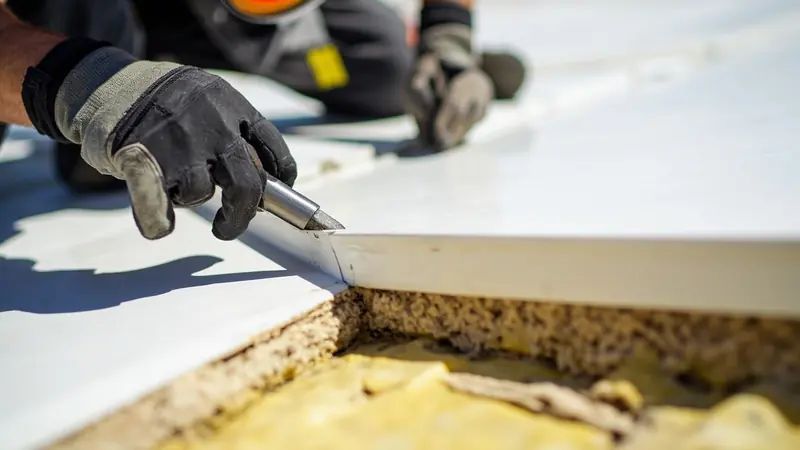
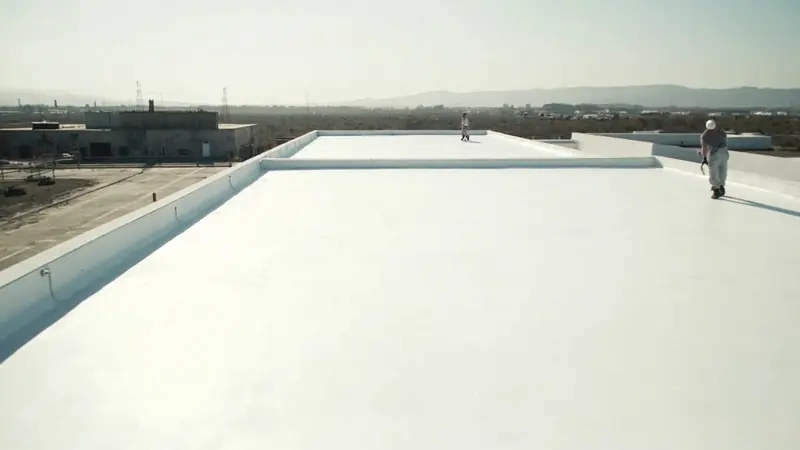
Flat commercial roofs in Ontario often carry single ply membrane, and TPO roofing systems are the version most buildings here use now. The sheet is a white reflective membrane, heat welded at every seam into one continuous surface. It sits over insulation board on the deck, and the roof depends on those welds staying sealed for years at a time.
A building owner usually spots trouble on the ceiling first. A brown ring, or a leak that only shows up when wind drives rain from one direction, points at a wall or a flashing line rather than the open field. TPO roof flashing at a parapet wall or around a vent is often the first place we look, along with the seam welds themselves.
Ontario's long run of hot, sunny months works on that seam every day. The sheet expands in afternoon heat and pulls back at night, and TPO membrane shrinking over the years opens a seam edge that was welded tight at installation. A tiny pinhole at the seam allows moisture to spread sideways under the membrane, above the insulation layer. The soaked board then loses insulating power, and decay spreads farther than the visible hole suggests.
A roof carrying old built-up roofing nearing the end of its service life is a common candidate for a switch to single ply. A modified bitumen roofing section with lifted laps is another one that often gets replaced with a TPO roof system instead. Once a seam splits and the deck beneath turns soft, call before another heat cycle stretches that gap wider.
Is a TPO roof good for your building?
A TPO roof system works well for most low slope buildings in Ontario. The seam welds and sheet thickness need to match how much foot traffic the roof carries. The visit starts by finding what is leaking, not by assuming the membrane is at fault. Once the cause is clear, a repair or a new section becomes one option among a few. What the deck looks like underneath decides whether that happens now or later.
- We check roof drains and low points for standing water.
- We walk every seam and flashing line for a lifted edge or open weld.
- We run an infrared scan across the field after sunset to find warm patches.
- We pull a core sample from any warm spot to see what sits underneath.
- We name the cause and put the fix in writing before anything opens further.
The core sample is what decides the job. A dry core under a tight weld points to a seam repair, and a new weld closes it the same visit. A saturated core, with insulation that has lost its shape, means that section of membrane and board comes out before a new sheet goes down. TPO membrane seams separating at a lap line is often the first sign we trace back to that wet spot. The core sample confirms how far the water traveled.
TPO single ply membrane comes either mechanically attached, fastened through the insulation into the deck, or fully adhered, glued down across the field. Both rely on heat welded seams and a white reflective surface that sheds summer sun. TPO roof seaming done outside the right temperature window can look sealed and still pull apart within a season. TPO membrane roofing is sold in a few standard thicknesses. A 60 or 80 mil sheet resists foot traffic and punctures better than a thinner 45 mil sheet.
A property running industrial roofing services alongside rooftop machinery often needs that thicker sheet near walkways and platforms. Equipment traffic wears a thin membrane faster than open field. EPDM flat roofing is the black rubber membrane some older Ontario buildings still carry. It gets replaced with a TPO roof system once that rubber starts to crack and the seams pull apart. Either material still depends on the same seam quality, so the visit checks that before recommending one over the other.
The CSLB License Lookup publishes the rules that govern work like this in your area.
Steps in a TPO roof visit
On site assessment
We start at the roof drains and the low points, checking for standing water sitting past normal drainage time. From there we walk every seam, penetration and flashing line, and once the sun is down we run an infrared scan across the field to find any warm patches holding heat into the night. A small core sample confirms what the scan shows, pulled from the warm spot and closed the same visit. By the time we come down, the cause is named and the next step is clear.
Repair or replacement
After you approve the quote, our team isolates the damaged section first. The team then peels back the membrane near the leaky seam or spongy decking. A small repair gets a new welded patch and a matching flashing detail. A section that failed past the seam, with a saturated core underneath, gets the old membrane and wet insulation pulled out before a new sheet goes down and is heat welded into the surrounding field. We pause at that opened section so you can see the deck before the new membrane covers it again.
Final check
Before we leave, we run the infrared scan again once the new seam has had time to cool. A repaired section should read even across the field, the same as the surrounding roof, with no warm patch left where the wet area used to show. We show you that reading on screen next to the earlier scan, so you can see the difference for yourself. If any warm spot remains, we open that area again the same visit rather than close it up and call the job finished.
What a TPO roof needs in Ontario, CA
Replacing this kind of roof on a commercial building in Ontario usually needs a permit. Before the new membrane seals the deck again, the City of Ontario Building Department inspects that type of work. A seam repair or a small patch over one section typically skips that same review, since nothing structural changes underneath it.
Welding a seam when the sheet is too cold leaves a bond that looks sealed but separates under the first heat cycle. That kind of TPO roof seaming can show up the following summer. A new roof can develop TPO roof seams leaking within its first year if that happens. Laying a new sheet over old, wet insulation instead of pulling it out saves a step on install day. That insulation keeps losing its R value, and the deck under it keeps corroding well past the spot anyone can see.
Trimming a parapet flashing short to save material leaves a lap exposed below the counterflashing line. Water gets behind that lap during the next storm, even without a visible tear anywhere in the field. Property managers switching an aging membrane to TPO roofing systems sometimes skip the insulation check underneath to save time. That hidden wet area keeps spreading until a tenant reports a stain below it.
Setting a ladder or lift against the building without checking rooftop equipment layout first can mean moving a unit twice to reach the same seam. Skipping that walk through before material arrives on site adds a day to jobs with several rooftop units or skylights. Planning that access up front keeps the field open for the scan and the seam walk without doubling back.
Our crews work to the installation standards of the National Roofing Contractors Association.
What you can expect on this job
Today call or a booked visit
On the call we ask if the leak is active right now and whether it sits near electrical gear or rooftop units. An active drip over occupied space usually brings someone out the same day. A slow stain with no active water can wait for a time that fits your building's schedule. Either way we ask when it started and what changed just before it showed up, since that shapes what we check first on site.
What the visit disturbs
Reaching a flat roof means setting a ladder or lift against the building, so clear vehicles from that spot before the visit. Rooftop units may get lifted slightly to reach the flashing underneath them. Loose equipment, storage or planters on the roof get moved aside so the field opens up fully for the scan and the seam walk. Inside, nothing usually needs to move unless the leak has reached a ceiling tile or a fixture below it.
Repair, section or full replacement
What decides the size of this job starts with how many old roofing layers come off the deck, since more layers add haul away work before the new membrane goes down. The membrane class chosen next, a standard TPO sheet or a heavier impact rated option, changes material and labor on the same job. Attachment method, mechanically attached or fully adhered, and rooftop access for material delivery add to that. You review and sign off on the written estimate before any roofing work begins.
What you see and decide
We show you the warm spot the scan found and the core sample pulled from it, right there on the roof. You see the options next, a seam repair, a section replacement or a new membrane across the field, before anything is decided. Nothing gets opened until you say go ahead, and any flashing or board we pull out gets set aside so you can see exactly what came out of your roof.
TPO Roofing Systems Questions From Ontario Businesses
A TPO roofing system is a white, heat welded single ply membrane used on flat and low slope roofs. Sheets get joined at every seam into one continuous surface and sit over insulation board on the deck. Both rely on those welded seams staying sealed and on a reflective surface that sheds sun. Thickness options include 60 and 80 mil sheets for traffic areas and a thinner 45 mil for open field.
Seam welds take the most stress from heat cycling, so they open before the sheet itself breaks down. The membrane expands in afternoon heat and pulls back at night, and that daily movement works on the seam edge year after year. A weld that looked tight at installation can shrink and open a gap long before the surrounding sheet shows wear. Welding outside the right temperature window makes this worse, since a seam can look sealed and still separate within a season once heat cycling starts working the gap.
Water enters through a pinhole or open seam edge and spreads sideways under the membrane. A wet board loses its insulating value and the deck under it keeps corroding well past the point where a stain or tear shows on top. That is why a core sample pulled from a warm spot found by an infrared scan often shows a wet area larger than what the surface tear suggests. The membrane above can still look intact while that spread continues underneath.
Thickness decides how well the membrane resists punctures and wear from foot traffic near units and platforms. A 60 or 80 mil sheet holds up better under repeated foot traffic than a thinner 45 mil sheet laid for open field. Equipment access paths near rooftop machinery see more walking than the rest of the roof, so a thinner sheet in that spot wears through faster. Buildings running rooftop equipment often need that heavier sheet placed specifically along walkways and platforms, not just across the general field.
Yes, a new TPO membrane can go over an existing built up roof if the insulation underneath is checked first and found dry. Installing new membrane over old, wet insulation instead of removing it saves a step on install day, but that insulation keeps losing R value and the deck below it keeps corroding out of sight. A core sample taken before the new sheet goes down shows whether the layers underneath are dry enough to build over or need to come out first.
Foot traffic wears a thin membrane at one spot, while sun exposure spreads its effect evenly across the field. A 45 mil sheet laid for general field use is not built to take the same repeated weight as a 60 or 80 mil sheet placed near walkways. Rooftop equipment access adds that concentrated traffic right where crews and maintenance staff walk most, so those paths show wear sooner than open areas that only face sun and heat cycling.
Yes, the work changes which review applies. A seam repair or a small patch over one section typically skips permit review since nothing structural changes underneath it. A deck issue found during a core sample, like a saturated core or soft decking, moves the job into full section or membrane replacement, and that kind of work usually needs a permit from the City of Ontario Building Department before the new membrane closes the deck back up.
Why Ontario's long summer heat changes a TPO roof system
Ontario and the rest of the Inland Empire valley sit in a hot-summer climate where afternoon highs regularly reach the mid 90s and push past 100 in a heat wave. That heat load changes how TPO roofing systems age over the years. The white surface reflects a share of it, but the sheet still softens in direct sun, so seam welding works best outside the hottest hours. Crews often start early in the day to get welds down before the field gets too soft to read a clean bond. Fall and winter bring Santa Ana wind events with strong downslope gusts, which test every fastener and loose flashing edge on a flat roof. Across San Bernardino County, that same wind load is one reason a fully adhered sheet gets chosen on an exposed building over a mechanically attached one.
The inspection on a job like this happens before the membrane closes back up, since the deck and insulation are the one part nobody can check once the roof is finished. That review usually covers the deck condition, the insulation layer and how the new flashing ties into the wall or parapet. A repair touching one seam or one boot moves faster through that process than a job that opens the whole field for a look underneath. A fully adhered sheet on an exposed building gets a closer look at that stage than a mechanically attached one, since the fastener pattern itself is part of what holds up under a wind event.
TPO Roofing Systems Across Ontario and Nearby Towns
Besides Ontario itself, we do TPO roofing systems in the towns below.
Roofing Services Near Ontario
We do TPO roofing systems across Ontario and the surrounding area. Call (909) 330-4661 and we can tell you when someone can be there.
Address:
Ontario Roofing, 4335 E Lowell St, Suite G
More Commercial Roofing Services in Ontario
- Commercial Roof Repair
- Commercial Roof Replacement
- Flat Roof Repair
- Commercial Roofing Contractors
- EPDM Flat Roofing
- PVC Roofing Installation
- Modified Bitumen Roofing
- Built-Up Roofing Systems
- Roof Coatings & Restoration
- Commercial Metal Roofing
- Commercial Roof Maintenance Plans
- Commercial Roof Inspections
- Industrial Roofing Services
- Multi-Family & Apartment Roofing
- All commercial roofing services
- Wind Damage Roof Repair
- Storm Damage Roof Repair
- Emergency Roof Repair
Keeping roof drains and scuppers clear of leaves and debris from an accessible point keeps water moving off a flat roof. That is the extent of what a building's own staff should take on. Walking the membrane, lifting a seam or pulling a core sample needs fall protection and training most maintenance crews do not carry, so that work gets left to the roof visit.
Before you call, know when the stain or leak first showed up, and whether it tracks with wind direction or only after rain. If you know the roof's membrane thickness or when it was last replaced, have that ready. Note where the nearest roof access point is, and whether anyone works directly under the affected area.