
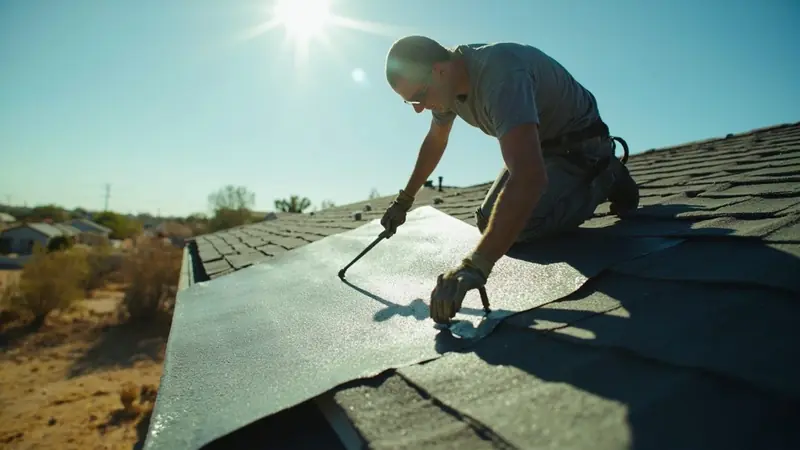
Why your roof is leaking after a storm
A storm can leave a hole in roof decking that lets rain through right away. Closing that opening right away is what temporary roof patching does until a full repair happens. You might be looking at a small roof leak dripping onto a ceiling, or a strip of shingles sitting in the yard after a windy night.
- Keep people out from under a sagging or dripping ceiling.
- Shut off the circuit at the panel if water is near a ceiling light or fan.
- Set a bucket under the drip and photograph the damage before you move anything.
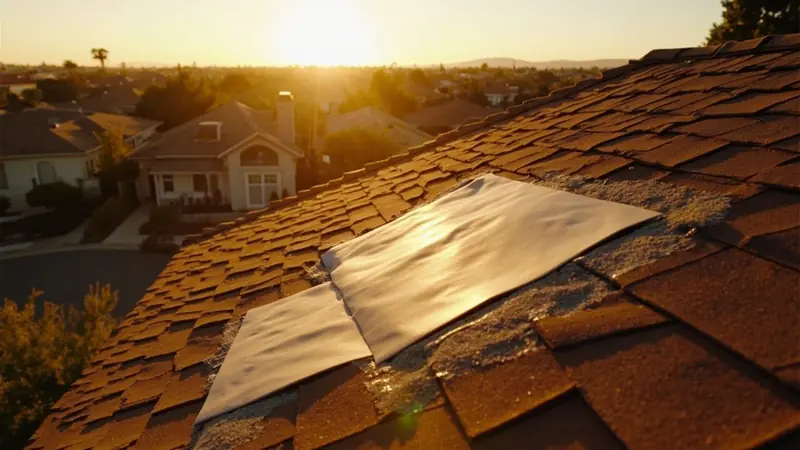
Patch material depends on what's exposed once the damage is cleared off. An opening down to bare wood gets plywood and underlayment first. A smaller gap in otherwise sound shingle gets covered with plastic roof sheeting and sealed at the edges until new shingle can be tied in properly.
A lifted shingle tab is usually how this starts. Wind gets under the raised edge, works the course above it loose, and a full strip can peel off in the next storm, leaving bare decking open to direct rain. Granule loss collecting at the downspout, or a shingle that cracks instead of flexing back into place, both point the same way, toward a covering that has aged past holding its shape.
Ontario sits under Santa Ana conditions each fall and winter, when dry gusts move down off the mountains and work loose anything already raised on a roof. Winter storms arriving later in the season then soak whatever got lifted, and a roof leaking after storm usually traces back to that one tab.
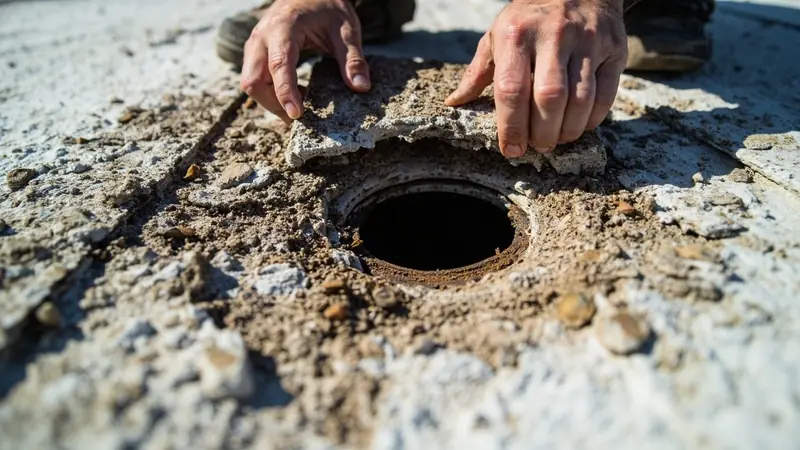
Where the damage sits matters as much as how big it is. A leak that shows up right under a roof penetration, such as a vent pipe or a skylight, usually traces to a cracked boot or lifted flashing rather than the shingles themselves. A leak out in the open field of the roof, away from any penetration, more often points to one of those lifted tabs working its way loose.
A patch over a small leak in one spot is usually enough to get through the next round of rain. A breach wide enough to see daylight through, or a section of decking that's gone soft and spongy underfoot, is past what a tarp over roof hole can hold on its own, and that is when emergency roof tarping covers the whole damaged area instead of one patch. Call before the next band of rain moves through, since soaked insulation in the attic doesn't dry out between storms.
Can you do a partial roof repair?
Yes, a partial repair is possible when the damage sits in one section and the decking under it is sound. On the visit we check the attic side first, since a flashlight there shows staining or rusted nail tips above the leak before anyone goes up on the roof. Outside, we look at penetrations, valleys and wall joints near the damage first, since that is the order roofs leak in before the open field even comes into it.
Testing the decking's underside with a moisture meter's pins produces the number that determines what happens next. A reading under 15 percent across that spot lets a patch go straight over it. One above 20 percent means the decking there is already holding water, so it gets replaced instead of covered. A temporary roof patch at that point is meant to get you through the next storm.
Once the decking checks out, a patch using three tab shingle blends into an older roof without tearing into laminated sections around it. Three tab carries one layer with cutouts and a lighter weight per square, with a lower wind rating than laminated shingle. That is why it works for a match-in repair rather than a whole new roof. A temporary roof repair done this way holds the shape of the original course instead of just covering the gap.
A roof with a low slope section, such as over an addition or a porch, leaks differently than a sloped field of shingle. Water tracks sideways under a membrane before it drops, so a patch there goes directly over the open seam once it's cleaned and dried, not wherever the ceiling stain happens to sit.
A nearby tab that stays stiff instead of flexing, shedding granules as it's lifted, points to a covering nearing the end of its life, which affects whether patching this one spot still makes sense.
If the breach runs across several courses or opens into a valley, same-day roof work replaces the whole damaged run instead of patching piece by piece. A deck torn open to bare framing, not just missing shingle, is where emergency board-up closes the gap before any new shingle goes down. Either way, the decking and flashing nearby get checked before any material goes back down, since what's hidden under the surface decides how far the work has to go.
Our crews work to the installation standards of the National Roofing Contractors Association.
Steps in a roof patch visit
Finding the opening
We start at the spot you've marked, whether that's a ceiling stain or a shingle in the yard, and run through the attic, penetration and decking checks in one visit. You see the moisture reading where it's taken, right on the decking under the damaged area, and we point out any staining or rusted nail tips before climbing onto the roof at all. That sequence is what names the cause, whether it's a dry section ready for a patch or a wet one that needs to come out first.
Patching or opening further
With the quote approved, we clear loose material away from the opening first, since a patch over debris never seals flat. Dry decking gets a patch matched to the surrounding shingle, tied in under the course above it so wind can't get under the edge again. A wet section gets opened past the stain until the framing underneath is dry, and we show you that wood before any new material goes over it. Either path pauses at that point for your go ahead before the opening closes up.
Checking the patch holds
Before we leave, we check the same spot again with the pin moisture meter. A reading under 15 percent across the patched section means the decking is dry and the new material is sealed over it, not just laid against it. We walk the edge of the patch by hand to check it doesn't lift, and show you where the fastening pattern runs so you know what's holding it down.
What a roof patch needs to hold in Ontario
The patch itself skips the permit step. Replacing a damaged section afterward is the kind of work the City of Ontario Building Department reviews, and they decide where a repair ends and reroofing begins. Most single-section patches stay under that review entirely, so the paperwork only comes up once the job grows past one small area.
Stapling a tarp down over shingles without lifting the damaged edge first traps water under the tab instead of over it, and that water sits against decking that stayed dry until then. A roof patch kit sprayed over granule loss looks sealed at first, but it stiffens and cracks once wind picks up in the fall, opening the same seam again. Nailing plywood over a soft spot in the decking without checking how far it spreads leaves a wet section just past the edge of the board, where the next rain still finds its way in.
Houses built here from the 1980s through the 1990s often carry tile roofs where the underlayment underneath has reached the end of its service life, even though the tile itself still looks fine from the ground. A patch over a cracked tile does nothing for torn underlayment below it, so the leak keeps finding a new path through the same section. Chimneys, skylights and valleys each need their own flashing checked, since a cut up roof with several penetrations fails at a different point than a plain, open field of shingle.
Flashing around a vent pipe boot or where a roof meets a dormer wall gets missed most in a rushed patch, since a flat sheet of material doesn't follow the shape of a step flashing joint or a cricket. That mismatch leaves a gap right along the edge of the patch, in the exact spot where water already found its way in.
If you are weighing emergency roof repair instead, that page covers what the work involves.
After severe weather, FEMA's guidance on documentation makes the difference in how smoothly a claim goes.
How the first call sorts the job
When we come out today
We ask whether water is actively coming through, how large the opening is, and whether it's still raining. An active leak with people in the house usually brings someone out today. A patch needed before next week's forecast, with nothing coming through right now, can go on the schedule instead. Knowing the rough size of the opening in advance helps us bring matching patch material on the first trip. Either way, the same two questions decide it before anything else gets discussed.
What we move to reach it
Reaching a roof opening usually means setting a ladder against the eave and walking the slope near the damage. Clear the yard or driveway under the work area of anything that could be hit by debris. Inside, we only need access to the attic hatch if we're checking the decking from underneath, and nothing else in the house gets touched.
What makes one patch bigger
A patch on an open field of shingle, away from any valley or chimney, is the smallest version of this job. Add a valley, a skylight or a chimney nearby and the work grows, since each one needs its own flashing checked along with the shingle around it. A breach near several penetrations at once usually means more flashing gets opened than the hole itself would suggest. After we inspect the opening, you'll get a written estimate to approve before any cutting or nailing starts.
What you're shown before we start
We point out the opening from the ground or from the attic side, whichever shows it better, and explain what we're seeing. You see the moisture reading where it was taken, and we show you the old material, a cracked tab or a split boot, before it comes off. Options get laid out plainly: patch this section, or open it further if the decking underneath doesn't check out dry. Nothing gets cut into until you've said go ahead.
Temporary Roof Patching Questions From Ontario Homeowners
A hole down to bare decking needs plywood and underlayment over it. From the ground, binoculars or your phone's zoom can show shingles sitting in the yard or a patch that looks darker or curled compared to the rest of the roof.
How long a patch holds depends on what's underneath it and how much wind and heat it sees afterward. Summer heat later on dries out sealant used in a rushed patch, so a fix that held through winter rain can crack open again once the roof bakes for months.
Set a bucket under the drip and shut off any circuit near a wet ceiling light or fan first. Keep people out from under a sagging or dripping ceiling, and photograph the damage before moving anything so the extent is clear. Closing the actual opening calls for material matched to what's exposed, plywood and underlayment over bare decking, or plastic roof sheeting sealed at the edges over a smaller gap in sound shingle. That is work for a roof visit rather than something to place from the ground.
Sprayed sealant looks sealed at first, but it stiffens and cracks once wind picks up in the fall, opening the same seam again. That kind of coating sits on top of the problem instead of addressing the lifted tab or cracked boot underneath it. A patch matched to what's exposed, plywood over bare decking or plastic roof sheeting over a sound shingle gap, holds the shape of the original course instead of just covering it. Sealant works as a finishing layer over that kind of patch.
How Santa Ana winds change temporary roof patching in Ontario
Ontario sits in a semi-arid, Mediterranean type climate, with fall and winter Santa Ana conditions sending dry gusts down off the mountains. Those gusts are what lift the first shingle tab on a roof here, since steady pressure at a rake or ridge edge finds any loose course before rain ever does. Winter storms later in the season then load that same lifted section with water it was never meant to hold. Houses built here across different decades carry different materials over that same wind exposure, from older asphalt shingle to the concrete tile common on newer tracts, and a patch has to match whichever one is already on the roof. Heat later in summer dries out any sealant used on a rushed patch, so a fix that held through winter rain can crack open again once the roof bakes for months.
Work on an existing roof here gets looked at differently depending on how much of the covering comes off. A patch limited to one section usually doesn't call for a formal review, since it's treated as a repair rather than a change to the roof's construction. Once a job opens up the decking across a wider area, it starts to look more like reroofing in work, and that's the point where the paperwork changes. Knowing which side of that line a given opening sits on is part of why the decking gets checked before anything gets quoted as a simple patch.
Temporary Roof Patching Across Ontario and Nearby Towns
Besides Ontario itself, we do temporary roof patching in the towns below.
Roofing Services Near Ontario
We do temporary roof patching across Ontario and the surrounding area. Call (909) 330-4661 and we can tell you when someone can be there.
Address:
Ontario Roofing, 4335 E Lowell St, Suite G
More Emergency Roofing Services in Ontario
From the ground, use binoculars or your phone's zoom to look for shingles sitting in the yard or a section that looks darker or curled compared to the rest of the roof. That tells you roughly where the damage is before anyone climbs anything. Stop there. Walking the slope, lifting shingles and checking what's under them is work for someone tied off, especially right after a storm when the surface is wet.
Know when the leak or the missing shingles started, and whether it's raining right now. If you checked from the ground, mention roughly where on the roof you saw the damage. Any idea of the roof's age or when it was last patched helps, along with whether anyone's directly under the stain inside.