
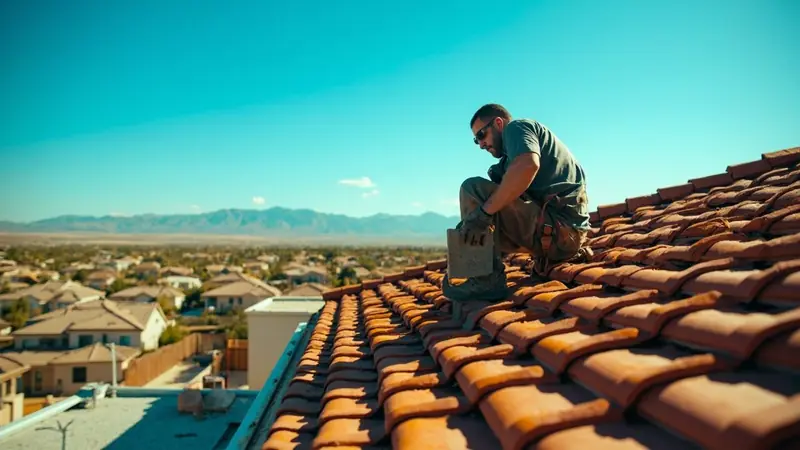
Why most Eastvale roofs age on the same clock
Eastvale was farmland and dairies into the late 1990s. The population went from about 6,000 in 2000 to roughly 47,600 by 2010, and most of the city's roofs date from that same building wave. The typical house is a two story stucco tract home with a hip and gable roof, concrete tile on top, felt underlayment below it, and plywood or OSB decking under that. Attics vent through eave intake and roof vents, a setup that only works when both sides stay clear.
The tile itself often outlasts the felt underlayment holding it to the decking. That underlayment is the layer that keeps water out, and in a roof this age it is closer to the end of its working life than the tile suggests from the ground. A tile that looks fine can sit over underlayment that has already failed.
Weather here adds its own load. Santa Ana wind events move through in fall and winter with dry, downslope gusts strong enough to lift a tile edge or snap a loose branch onto the roof field. Winter storms from late fall into early spring bring most of the year's rain in a short window, and that is when a worn underlayment under intact tile finally shows itself as a stain inside the house.
After severe weather, FEMA's guidance on documentation makes the difference in how smoothly a claim goes.
How a roofing visit runs in Eastvale
We start by naming the problem out loud before any work gets scheduled: what the stain or the loose tile tells us, and what it does not yet tell us. On tile roofs that means getting a tile up and looking at the felt and the decking underneath, since the tile rarely shows what the underlayment is doing.
From there we lay out the options as a repair at one spot, a repair across a section, or a full replacement, and we say what moves a job from one to the next. The homeowner decides which direction to take once the roof deck has been checked, not before.
Nothing comes apart before we ask. A written quote names what we found and what has to be opened to reach it, and work starts once that is approved. On a hip and gable tract roof with eave and ridge vents, we also check whether the intake side is still open, since a blocked soffit vent on one of these roofs can undo a new covering from underneath.
Our crews work to the installation standards of the National Roofing Contractors Association.
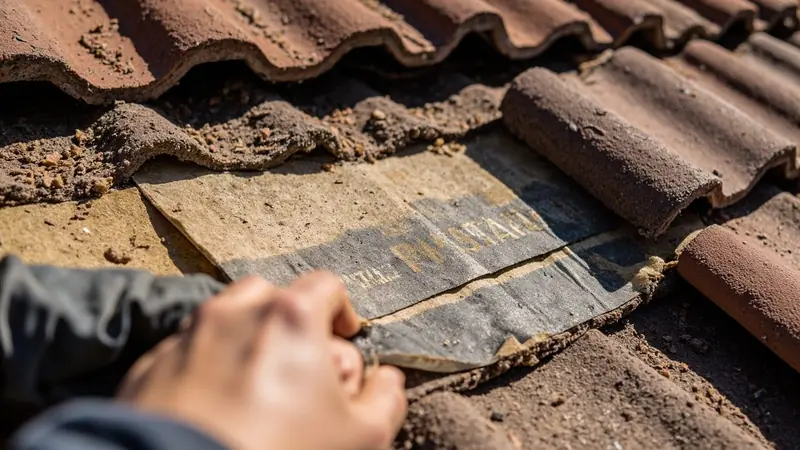
We check the vent balance
Most Eastvale roofs were built with eave intake vents paired with roof vents, and that balance only works if both sides stay open. When landscaping, insulation or a past repair blocks the soffit side, warm house air pulls out through the roof vents instead of circulating, and the decking underneath takes the moisture. We check both sides before we talk about the covering on top.
We walk the deck
A tile can look fine while the decking under it has already given way. We walk the roof and feel for give between the rafters: a firm deck underfoot means the covering is the only question, while a spongy or springy spot means the decking itself has delaminated or rotted. That reading decides whether this stays a tile repair or turns into deck work first.
Permit reviewer identified
Roofing work that goes beyond a like for like repair usually needs a permit here, and the City of Eastvale Building Safety Division decides what qualifies. Knowing that ahead of time means we can tell you, before work starts, whether this job will involve a permit step or not, instead of finding out partway through.
Roof Drainage Inspection
Eastvale gets most of its rain from late fall through early spring, so gutters must move runoff fast during storms. That same loose fill can settle unevenly under equipment set up on a wet lawn, so we check footing before ladders or a dump trailer go down.
Roofing work we handle for Eastvale homes
Repairs cover a single tile, a boot, a section of flashing or a run of gutter that is failing on its own, usually without touching the rest of the roof. A replacement or a new install turns on what the deck looks like once the old roofing is off, since that is the one thing nobody can judge from the ground. Some of these tract homes carry a flat patio cover or garage extension finished in a single ply membrane rather than tile.
TPO on a roof like that is sold in thicknesses commonly quoted as 45, 60 and 80 mil, with seams welded with hot air rather than sealed, and the thicker sheet holds up better where foot traffic crosses it. Emergency calls are different again: the constraint is keeping water out of the house right now, which changes what gets done first and what waits for daylight.
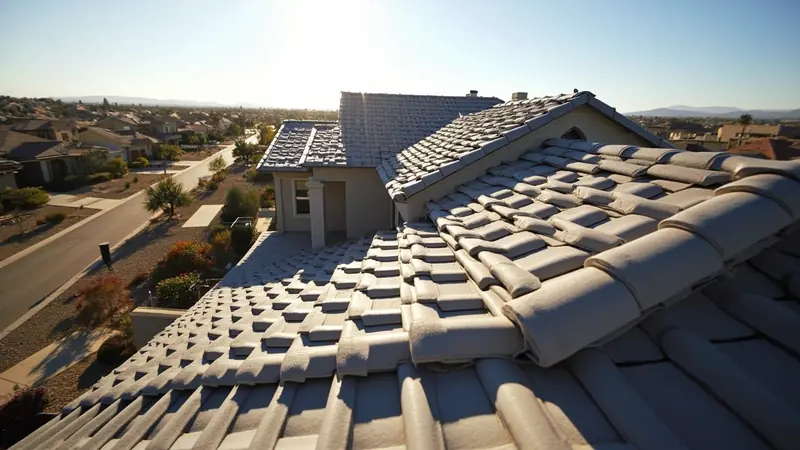
Tile and shingle repairs
Repair calls here start with a lifted tile, a cracked piece near a valley, or an older section still finished in roof shingles rather than tile. We pull the damaged piece, check the felt underneath, and replace what has failed without disturbing the rest of the field.
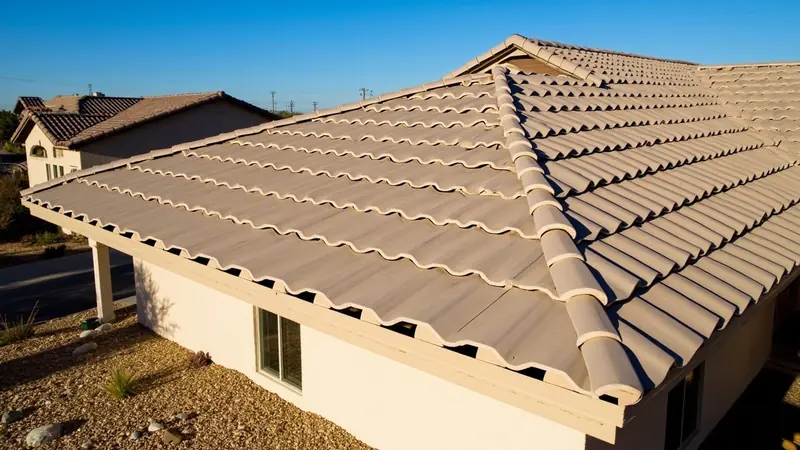
Tile replacement and new installs
A replacement gets decided by the decking. If the deck is spongy once the old roofing is off, that section gets replaced before anything new goes down. In newer tract areas such as Ontario Ranch, homes often carry factory installed solar arrays, so the install has to work around panel mounts and conduit rather than a clear field. A replacement is also when ridge vent installation gets corrected if the intake side was ever blocked.
Storm damage and leak calls
Before we arrive, move anything valuable out from under an active drip and shut off power to a fixture if water is running near it. The first thing we check on arrival is where water is entering relative to the stain, since it usually traveled sideways under the tile before it dropped. Storm damage sometimes turns into a roof damage insurance claim. We document what we find and name it in the quote, and the owner files from there.
Common Roofing Jobs in Eastvale
Pick the job that matches what you are seeing in your Eastvale home. Each page explains the work and what to expect.
What roofing problems do Eastvale homes have?
Eastvale's roofs share a common weak point: a cracked pipe boot where a vent pipe passes through the tile. Water gets past the boot, runs down the outside of the pipe into the attic insulation, and the ceiling below starts to stain while the framing around that penetration softens. It is a quiet failure, since the tile above it can look untouched the whole time.
Roof leaking after rain usually traces back to a penetration like this, a valley, or a wall intersection, in that order, rather than the open field of tile. The point to call is when a ceiling stain shows up a second time in the same spot, or when it appears without a recent storm at all. That usually means the path behind it has been open for a while.
Santa Ana wind lifts tile edges
Fall and winter Santa Ana wind events bring strong, dry gusts that work under a loose tile edge or hip cap before anyone notices. A raised tile creates a gap wind can slip under the neighboring one. The next gust may blow it off the roof completely, leaving bare felt open to the next downpour. A missing tile after a windy night is worth a call before the next storm front moves through.
First generation underlayment wearing out
In homes built out in the 2000s, the concrete tile on top is often original, but the felt underlayment underneath is now the part reaching the end of its service life. The tile can look sound while the underlayment has already cracked or pulled away at the laps. A stain that keeps returning in the same room is a sign that underlayment, not the tile, needs attention.
Gutters and storm drainage backing up
Water off these roofs funnels into yard gutters, then city storm drains, then concrete lined channels, including the Cucamonga Creek and Deer Creek channels that the San Bernardino County Flood Control District maintains. When gutter systems fill with leaves and tile grit, that path backs up right at the roof edge instead of draining away, and it is the fascia and the first course of tile that sit in standing water the longest.
Debris and heat left unchecked
Long dry summer stretches bake granule loss and blistering into any shingle sections, and owners often put off clearing valleys and gutters until the first fall rain is already falling. Debris sitting in a valley holds moisture against the tile and the felt below it longer than open field ever does. A valley that still has last season's leaves in it is worth clearing before the rainy stretch starts.
Find the sign you have, then read across to see how soon to call.
| Symptom or first sign | What is already happening | What it becomes if ignored | When to call |
|---|---|---|---|
| A cracked pipe boot | Water runs down the vent pipe into the attic insulation | The ceiling below stains and the framing around the penetration softens | Call this week |
| Missing kickout flashing where a roof meets a wall | Water runs behind the siding instead of onto the shingles | The wall sheathing rots with no stain on the roof at all | Call this week |
| Blocked soffit intake | Attic humidity climbs and the nails sweat all winter | The sheathing delaminates and the shingles cup from underneath with nothing wrong on the surface | Call this week |
| Gutters packed with debris | Water backs up behind the drip edge | The fascia and the bottom edge of the decking soften until the first course has nothing | Call this week |
| A lifted shingle tab | Wind gets under the course above it | A full strip peels in the next storm and the bare deck takes the rain directly | Call this week |
What happens when a roofer comes out?
A roofer in Eastvale starts at the trouble spot you called about, not a general survey of the whole roof, because that is where the cause usually sits. Have ready what you are seeing, when it started, and roughly how old the roof is if you know it. Open up access to the attic hatch and clear the space beneath the stain, as crews inspect both spots first.
What we ask on the phone
When you call, we ask if water is leaking right now and if the stain has spread since you first saw it. Active leaks typically bring a technician to your home that same day. A stain that has stayed the same size for a while, with no active drip, usually becomes a booked visit instead. Either way, knowing roughly when it started helps us plan the visit before we arrive.
What to clear before we arrive
Clear furniture and anything valuable away from the stained area and move a ladder or landscaping out from under the roof section we need to reach. When we arrive, show us the stain or the spot you noticed from the yard, and walk us through what you saw and when. We look at that same spot from the attic side before anyone goes up on the tile itself.
What we show you before we leave
Before we leave, we check the decking again with the pin moisture meter and show you the reading. A number under 15 percent means that section reads dry. A number above 20 percent means it is still holding water, and that spot gets flagged for the next step rather than closed up over a wet board.
From your call to finished work
The first visit settles where the water is entering, and what the decking looks like at that spot decides whether the next step is a patch or more. Access for a dump trailer or a material drop, if the job needs one, decides how the work gets scheduled from there. Most jobs move through the same three stages after that first look.
First look at the cause
We trace the stain or the loose tile back to its source, whether that is a boot, a valley, or a wall intersection, since that is the order these roofs tend to leak in. Checking the attic side first rules out whether the problem is a leak at all or a ventilation issue mimicking one.
Written quote and approval
Once the cause is found, we write a quote naming the repair and what has to come up to reach it, such as a run of tile or a section of decking.
Closing the roof back up
The opened section stays uncovered until the decking passes the moisture check we show you at handover. On permitted work, the city inspection happens before the covering goes back down for good. After that, tile or flashing goes back on and the site gets cleared.
Do you need a permit for roofing work in Eastvale?
Eastvale roofing work falls under the California Residential Code, and the City of Eastvale Building Safety Division is the office that reviews it. That division handles plan review, permit issuance and inspections for residential building, plumbing, mechanical and electrical work, which puts roofing permits in the same queue as other structural changes to a house.
Not every roofing job needs a permit. Swapping a single cracked tile or resetting a boot without opening the decking usually counts as a like for like repair. A full tear off, a section of new decking, or a change to the covering material is the kind of work that typically gets filed with the division before it starts. The division is the one that decides where a given job lands on that line, so a borderline job gets flagged to them before any tile comes up.
Once a permit is in place, an inspector looks at the parts of the roof that get covered up once the work is done. On a tile roof that means the exposed decking, the underlayment laid over it, and the flashing at valleys, walls and pipe boots, checked before the new tile goes back down. On a section where the eave or ridge vents were touched, the inspector also looks at whether intake and exhaust are still balanced, since that affects how the attic performs long after the crew leaves.
Knowing which category a job falls into matters before any decking comes up. A homeowner who hears upfront whether their repair needs review from the Building Safety Division can plan around that step instead of finding out partway through a tear off. It also means the quote can name the inspection stage as part of the job, rather than as a surprise once the roof is already open.
The practical effect for Eastvale homes is mostly about sequencing. A small repair confined to one tile or one boot rarely slows down. A job that opens a run of decking or replaces flashing across a section moves through the permit step first, and the roof stays open until that inspection has cleared. That is one more reason the decking reading gets taken and shown before anything gets closed back up, since the same board that passed the moisture check is often the one an inspector is looking at too.
In Eastvale we also handle wind damage roof repair, after-storm roof inspections and asphalt shingle roofing.
Finding the cause before the tile
We start inside, checking the decking from the attic side with a pin moisture meter. A reading under 15 percent tells us that section is dry, and a reading above 20 percent tells us it is holding water and compromised.
What decides how big the job gets
The main thing that moves this job larger is whether the flashing, boots and ventilation come off with the old roof or get reused. Reusing aged flashing keeps the job smaller but carries the same age problem forward into the new covering. Replacing all three with the roof adds work up front but means nothing old is sealed back under new tile.
How long the work takes
A roofing job runs longer when the decking underneath turns out to need replacing, since that cannot be rushed once it is found. Access for material and disposal, and how much of the roof is cut up with valleys or penetrations, also add time. Finished work should show a dry decking reading at every spot that was opened, not just the one that started the job.
Where the Eastvale Permit Portal fits in
Most permit applications for roofing work in Eastvale go through the Eastvale Permit Portal rather than a counter visit, which means the paperwork can move before the crew even arrives on site. That matters for scheduling: a job that needs a permit can sit waiting on that review before decking or flashing comes off, so we flag it early rather than at the quote stage.
Roofing Questions From Eastvale Homeowners
Call for emergency service when a fallen tree has broken tile or exposed the decking near Hamner Avenue. A cracked or punctured roof lets rain enter fast, and the opening needs to be covered before the next storm front moves through. On the call we ask if water is actively coming through right now, since that usually means someone comes out the same day. If the tile is only scratched and the deck is intact, the visit can often be scheduled instead of treated as an emergency.
Repair or replace near Eastvale Community Park comes down to what the decking looks like once a tile is lifted and checked. A firm deck with no give between rafters usually means the covering is the only issue, so a tile or section repair handles it. A spongy or springy spot means the sheathing has delaminated or rotted, which turns the job into deck work before anything new goes down. The pin moisture meter reading taken from the attic side confirms which condition applies before a quote is written.
Move anything valuable away from the dripping area and shut off power to any nearby wet fixture first. Water usually travels sideways under the tile before it drops, so the ceiling stain is rarely directly below the entry point. Active water coming through usually gets someone out the same day, while a stable stain with no drip can become a booked visit.
A visit near Harada Heritage Park starts at the spot you called about, not a full roof survey, because the cause usually sits there. We check the attic side first with a pin moisture meter, since a reading under 15 percent reads dry and a reading above 20 percent means that section is holding water. We also check whether intake and exhaust vents are still balanced. Once the cause is found, a written quote names what has to be opened to reach it before any tile comes up.
Santa Ana wind events bring dry, downslope gusts strong enough to lift a tile edge or hip cap on older homes before anyone notices. Older tract roofs carry original felt underlayment that has already aged, so a gap left by a missing tile exposes material closer to the end of its working life than newer underlayment would be.
Cold winter nights can cause attic condensation when soffit intake vents are blocked while ridge vents keep pulling air. That pulls warm, moist house air out through the roof vents instead of circulating it, and the moisture lands on the underside of the decking and on nail shanks, showing as rusted tips and dark rings. A ceiling stain that appears with no recent rain often points to this vent imbalance rather than a leak, and checking both the vent balance and the decking tells us which one it is.
How long tile roofing lasts on a 1980s tract home depends on the felt underlayment underneath it. The underlayment typically wears out before the tile does, so a roof that looks sound from the ground can already be leaking underneath. A walk test across the deck shows whether the sheathing still feels firm or has started to give, which is what decides whether the roof needs attention now or can wait.
Roofing Services Near Eastvale
Eastvale is part of our regular Ontario area route. Call (909) 330-4661 and we can tell you when someone can be there.
Serving Eastvale, CA from our Ontario base
From the ground, scan the roof with binoculars or your phone's zoom for a lifted tile, a bare patch, or a sagging ridge line. That is as far as DIY goes here. Walking the tile, lifting a boot, or checking flashing up close means standing on a surface that can crack or give way underfoot, so that part of the work belongs to the visit.