
EPDM flat roofing repair and replacement
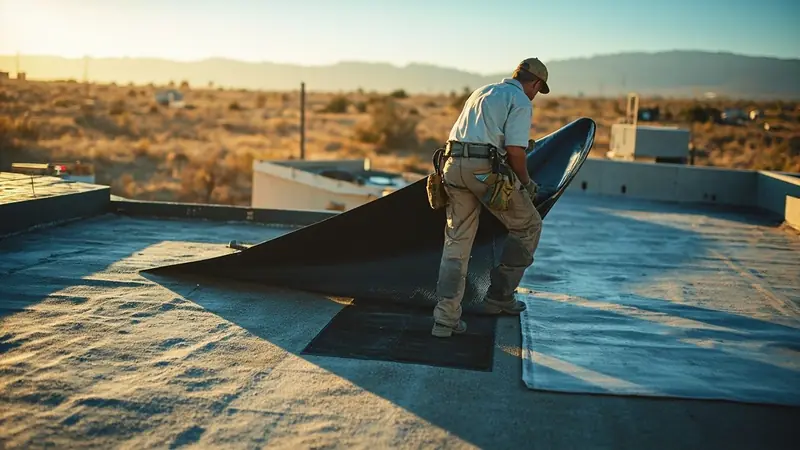
On a small commercial roof, EPDM flat roofing means one wide sheet of black rubber membrane set down with taped or glued seams instead of a run of heat welded joints. Because the sheet comes in wide rolls, a roof this size often needs only one or two seams instead of a grid of them, which is less perimeter for weather to work at.
The rubber stays flexible through a wide range of temperatures, so it moves with a roof that bakes in summer sun and goes cold on a January night without cracking at the lap. A building with a flat roof spread across more than one level sometimes needs a broader assessment before a single membrane choice makes sense.
A property manager usually calls after noticing one of a few things. A seam along the perimeter or around a roof drain shows what looks like EPDM roof leaking, water finding its way through an open lap. A section of membrane shows rubber roof blistering, bubbling underfoot when you walk across it. The membrane has pulled back from a parapet or a piece of EPDM roof flashing, leaving a gap where water collects. Sometimes the sheet itself has shrunk at the edges, a sign called EPDM roof shrinking, which pulls a once watertight lap apart from the inside.
On a commercial building, a problem this size often sits above a tenant space or a storage room, which makes timing part of the decision as much as the leak itself. A seam that separates near a rooftop unit or a vent stack usually traces back to that equipment.
A tiny pinhole at a flat roof seam may look harmless. Yet moisture seeps through and spreads sideways under the membrane into the insulation below. The wet board under that spot loses its insulating value, and the deck can corrode well past where the hole sits. Black membrane absorbs more heat than a lighter covering, which pushes surface temperatures higher through long summer afternoons and keeps the adhesive working through repeated expansion and contraction. Rain that arrives in fall and winter then goes looking for any seam that heat cycling has already started to open.
A seam that has only begun to lift is something to watch. Left alone, water starts tracking under the membrane the next time it rains, and the insulation below it stays wet instead of drying out. Once the deck under that spot feels soft when you press on it, the roof has moved past a patch and into a repair. That softness is the point to call.
For background, see our guide on TPO vs EPDM which flat roof is best.

Is 2 degrees enough for a flat roof?
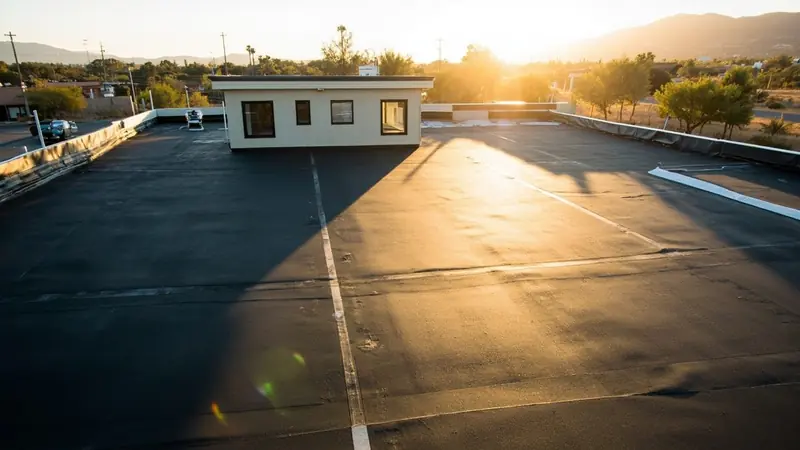
Two degrees of slope moves water in theory, but what decides a ponding problem is whether the roof clears that water. The test for that is simple: the surface should be dry and the drains clear within about two days of rain. Standing water still sitting on the roof two days after a storm means the drainage, and likely the deck under it, has a problem that the slope alone won't fix.
On a visit, the order runs the same way every time.
- We check how the roof is draining and mark where water is still standing from the last rain.
- We walk the seams and terminations, looking for EPDM roof seams that have lifted, open laps, or flashing pulled from a wall.
- After dark we run an infrared scan across the field, since wet insulation holds heat the dry sections have already lost.
- Where the scan flags a spot, we cut a small core sample to see how deep the wet insulation runs.
- We close the core the same visit and write up what the deck and insulation looked like underneath.
What that core finds decides the next step. A dry core means the seams and flashing get resealed and the membrane stays in place. A saturated core means that section of insulation, and the membrane over it, needs to come out, because sealing the surface over wet insulation only hides the problem.
On a roof this size, two versions of EPDM rubber roofing come up. Fully adhered EPDM is set down with EPDM roof adhesive and fewer fasteners, which keeps the seams visible for inspection and the roof light. Ballasted EPDM is held down with stone or pavers instead, which shields the membrane from foot traffic and sun but adds weight a smaller structure has to carry.
Both versions stay flexible on a cold morning, which matters here since a stiff membrane cracks at the fold instead of moving with it. A black membrane also absorbs more heat than a reflective covering, so the field runs hotter than the air around it on a long summer afternoon.
A roof currently covered in built-up roofing, the asphalt and gravel kind, needs a different tie in detail where it meets new EPDM, since the two materials don't bond the same way. A roof covered in modified bitumen roofing needs its surface granules cleaned off before a new membrane or a patch will adhere to it at all.
Our crews work to the installation standards of the National Roofing Contractors Association.
How we handle the EPDM visit
Checking the roof
We start on the roof, not in an office, looking at drainage, seams, and any area that stands out on the infrared scan after dark. Every reading from that work, from the ponding check to the core sample, happens on this one visit. You see any wet insulation the core finds before we leave, and you know what the repair involves before anything on the roof gets touched.
Approving the repair
After you approve the quote, our crew isolates the affected area, trimming away the membrane and wet insulation the core found. A sound seam or a small puncture gets a seaming tape patch and fresh adhesive at the lap. A section with saturated insulation gets that board pulled and replaced before a new sheet of membrane goes down and gets taped or glued at every seam. Nothing moves past the approved section without you seeing it first.
Checking the finished roof
Before we call it finished, we check how the repaired section drains after the next rain. A patched seam that stays dry and a roof that clears standing water within about two days of rain is what passes. We walk the repair with you one more time and point out the sealed seam and the dry insulation underneath before we leave. If ballast was moved to reach the membrane, we confirm it is reset evenly before the visit closes.
What this EPDM job needs in Ontario buildings
A full EPDM flat roofing replacement on a commercial building typically requires a permit, and the City of Ontario Building Department reviews that work against the California Residential Code. A seam repair or a small patch usually falls outside that review, though the work decides that.
Setting ballast stone directly over a membrane that hasn't been checked for existing punctures traps any pinhole under a layer of stone, so a small leak keeps feeding water into the insulation for years before it shows up inside the building. Gluing a lap while the membrane underneath is still wet from the last rain leaves EPDM roof adhesive without a sound bond. That lap is often the first one found with EPDM seams separating after the next heat cycle. Patching a blistered section without lifting it to see what's underneath leaves wet insulation in place, so the same spot blisters again within a season or two.
Santa Ana wind events common in fall and winter can lift loose ballast or peel back a lap that wasn't fully set, so a roof checked right after one of those wind events often shows damage a calm week would hide. A roof tied into a rooftop unit or a vent stack without new EPDM roof flashing around the penetration is one of the more common corners cut on a small commercial job, since reusing old flashing is faster than replacing it. That shortcut shows up later as a leak that traces back to the equipment rather than the field of the membrane.
Once a membrane is sound, commercial roof maintenance plans catch a lifted seam or a clogged drain before either turns into a leak that reaches a tenant space below.
If the issue sits elsewhere in the building, read about TPO roofing systems.
How this job runs for your building
Deciding when we come out
We ask two things first: is water reaching the inside of the building right now, and how long has the roof been ponding in that spot. Active water inside usually brings someone out the same day. Ponding that hasn't reached the ceiling, or a seam that only just started to lift, can wait for a scheduled visit instead. Those two answers settle which one this call turns into.
What the roof work disturbs
Reaching the roof usually means equipment going up through a hatch, a ladder, or a hoist set up in a loading area, depending on access. Clear that path and move anything stored near the roof access point before the visit. If a rooftop unit or vent stack sits in the work area, it may need to be shut down briefly while the membrane around it is cut back and resealed. Nothing inside the building below gets opened for this job.
What sets the repair
Access decides more of this job than the membrane itself. A roof reached easily from a loading area lets a dump trailer sit close and material go up in one lift. A roof boxed in by other buildings, with no clear path for a trailer or a hoist, means material gets carried up by hand and old membrane carried down the same way, adding time before the work even starts. After we confirm access, you'll review a written quote and sign off before any roofing work begins.
What you're shown before we start
Before any membrane comes up, we walk the roof with you and point out every spot the scan or the core flagged. You see the wet insulation, if there is any, and decide whether that section gets patched or replaced before we move past it. That includes any area a prior patch may have missed, since old repairs sometimes sit right over the same wet spot. Nothing beyond the area we show you gets opened without you saying so.
EPDM Flat Roofing Questions From Ontario Businesses
EPDM is a black rubber membrane made for flat and low slope roofs. It comes in wide sheets with taped or glued seams instead of a grid of heat welded joints. The sheet stays flexible across a wide temperature range, moving with the roof in summer heat and winter cold without cracking at the lap. On a small commercial building it usually needs only one or two seams, which means less perimeter where water can work its way in compared to a roof covered with many smaller panels.
EPDM holds up well on a flat roof because the rubber flexes instead of cracking under heat and cold. Fewer seams mean fewer places for a lap to open under repeated expansion and contraction. The membrane comes in two common setups, fully adhered with adhesive or ballasted with stone, and either one can work depending on how much weight the roof structure can carry and how much foot traffic or sun exposure the surface needs to handle.
Black EPDM absorbs more heat than a lighter colored roof covering. The sheet can shrink at the edges over time, a problem called EPDM roof shrinking, pulling a once watertight lap apart from the inside. A ballasted version adds stone weight a smaller roof structure has to carry, while reusing old flashing around a rooftop unit instead of replacing it is a common shortcut that leads to a leak later.
EPDM roofs usually show one of a few problems. A seam lifts along the perimeter or around a drain, a section blisters and bubbles underfoot, membrane pulls back from a parapet or flashing leaving a gap, or edges shrink and pull a lap apart. A pinhole at a seam looks small but lets water track sideways under the membrane into the insulation, which loses its insulating value once wet. A seam near a rooftop unit or vent stack often traces back to that equipment rather than the field of the membrane.
EPDM works better on most flat roofs than fiberglass. The rubber sheet flexes with temperature swings without cracking at a seam, while fiberglass is a rigid reinforcing material more suited to pitched roof shingle layers than a membrane roof. A flat roof needs a covering that moves with the deck as it expands in summer heat and stiffens in cooler nights, which is what the rubber membrane is built to do. The choice still depends on what the existing roof structure can carry and how the roof ties into its drains and flashing.
TPO and EPDM are both membrane options for a flat roof. The better choice depends on how the seams are joined and how the roof handles heat. EPDM uses taped or glued laps and stays flexible through a wide range of temperatures without cracking at the fold. TPO typically uses heat welded seams instead. Either one needs flashing set correctly at drains, parapets, and rooftop equipment, since a tie in done wrong at those points is what can turn into a leak.
How Ontario heat and rain change a rubber roof membrane
Ontario's summers run hot and dry, with the warmest stretch pushing well past 100 degrees some years. A black rubber membrane sitting in that heat expands at every seam, so the lap at a drain or a flashing has to be set to move with it instead of against it. Winters stay mild here, but cooler nights in the mid 40s can stiffen a membrane that was flexible all summer, and a seam glued in cold weather needs more cure time before it is tested by the next rain. Fall and winter bring the bulk of the year's rain, arriving in storms that load a flat roof fast rather than slow, which is exactly when a seam that was starting to lift finally opens. Wind events in the same season add gusts strong enough to lift an edge of ballast or peel back a loose lap before the rain even starts.
Work like this gets reviewed for how much weight the roof structure can carry, since ballast stone adds a load a fully adhered membrane never does. An inspector looks at how the new membrane ties into existing flashing and drains, not just the sheet itself. That is why a wall or parapet detail gets checked before the rest of the field goes down, since a tie in done wrong there shows up as a leak somewhere else entirely.
EPDM Flat Roofing Across Ontario and Nearby Towns
Besides Ontario itself, we do EPDM flat roofing in the towns below.
Roofing Services Near Ontario
Looking for EPDM flat roofing near you in Ontario? Call (909) 330-4661 and we will confirm we cover your street.
Address:
Ontario Roofing, 4335 E Lowell St, Suite G
More Commercial Roofing Services in Ontario
- Flat Roof Repair
- Commercial Roof Repair
- Commercial Roof Replacement
- Commercial Roofing Contractors
- TPO Roofing Systems
- PVC Roofing Installation
- Modified Bitumen Roofing
- Built-Up Roofing Systems
- Roof Coatings & Restoration
- Commercial Metal Roofing
- Commercial Roof Maintenance Plans
- Commercial Roof Inspections
- Industrial Roofing Services
- Multi-Family & Apartment Roofing
- All commercial roofing services
- Wind Damage Roof Repair
- Storm Damage Roof Repair
- Emergency Roof Repair
Looking at the ceiling under the roof for a new stain, a sagging tile, or a damp patch you can press a finger into is something you can check without going up. That tells you roughly where water is coming through, but not how deep it has traveled under the membrane. Finding the open seam, the wet insulation, and how far it spread is EPDM membrane patching work that happens on the roof itself, with the membrane cut back to confirm it.
Before you call, know when the stain or standing water first showed up and whether it followed a specific storm or wind event. If you know roughly how old the roof is, or whether it has ever been patched in that same spot, have that ready too. Finding the nearest roof access point, whether a hatch, a ladder, or a stairwell door, saves time once we're there.