
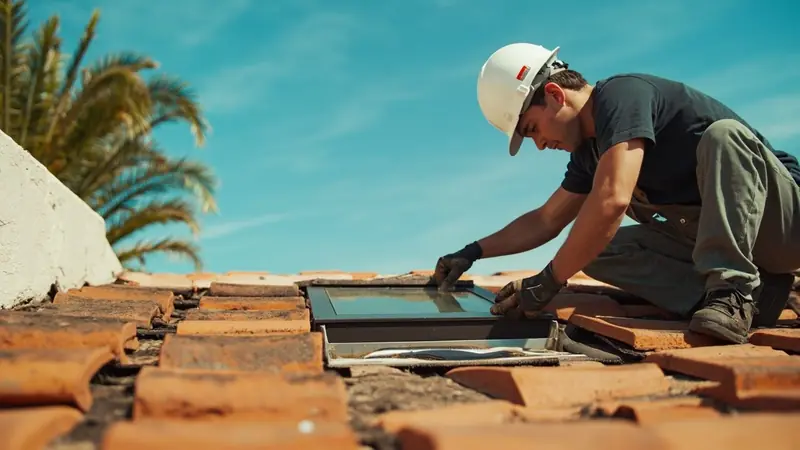
Skylight installation and repair in Ontario homes
Skylight installation and repair covers two different jobs, fitting a new unit into the roof and finding why an existing one leaks. A brown ring on the ceiling under a skylight is usually the first sign, often paired with skylight leaking during rain that only shows up when wind drives water from one direction.
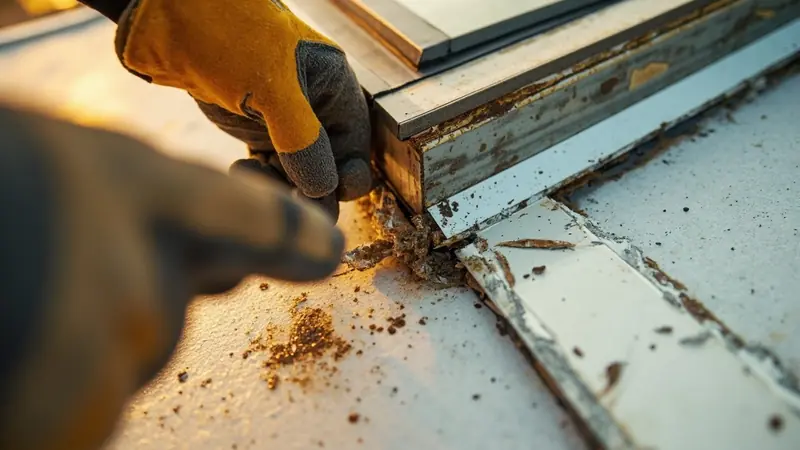
Most of these leaks are not the glass. Water usually gets in at the curb seal, at the flashing where it meets the roofing, or at a boot nearby. On a tile roof, a cracked tile close to the curb can let water travel sideways under the skylight well before a stain shows up inside. That is a separate repair from the skylight itself, since tile work and flashing work meet at the same edge.
One mechanism behind this kind of leak is a cracked pipe boot on the same roof plane as the skylight. Once the rubber collar on that boot splits, water runs down the vent pipe into the attic insulation. The ceiling below stains next, and the framing around that penetration softens with repeated wetting.
Installing a new unit where no opening exists means cutting the decking, building a curb, and tying fresh flashing into the surrounding roofing or tile. A flashing detail that gets rushed at that stage is often why a brand new skylight leaks within its first few rains.
Skylight condensation inside the dome is a different problem from an active leak. It comes from warm house air meeting a cold glass surface overnight, not a failed seal, though both show up as water on the sill and get reported the same way. A skylight seal replacement or a flashing repair resolves most leaks without touching the glass. Cracked skylight glass or a fogged double pane unit calls for skylight glass replacement instead, since a new seal cannot fix broken or delaminated glazing.
A stain that stays the same size after each storm is worth watching. A stain that grows, drips during the rain itself, or lets water coming through the skylight trim onto the floor below is the point to call before the next storm reaches that same spot again.
Find the sign you have, then read across to see how soon to call.
| Symptom or first sign | What is already happening | What it becomes if ignored | When to call |
|---|---|---|---|
| A cracked pipe boot | Water runs down the vent pipe into the attic insulation | The ceiling below stains and the framing around the penetration softens | Call this week |
| A pinhole at a flat roof seam | Water tracks sideways between the membrane and the insulation | A wet board loses its insulating value | Call this week |
| A lifted shingle tab | Wind gets under the course above it | A full strip peels in the next storm and the bare deck takes the rain directly | Call this week |
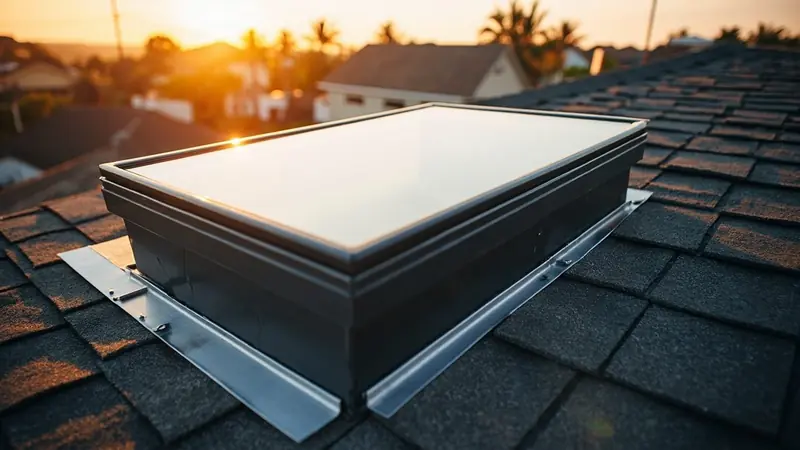
How do you know if a skylight needs repair or replacement?
Which one applies starts with where the water is getting in.
- We ask what you have seen and when, including whether the leak only shows during wind-driven rain.
- From inside the attic, we run a light along the curb and check the nail shanks for rust and dark staining.
- On the roof, we check the flashing, the seal, and any pipe boot sharing that roof plane.
- We flex the covering near the curb to see whether it is still sound or brittle.
- We write up what we found and what it decides, a repair, a full replacement, or starting fresh with a new unit.
Clean nail shanks with no staining usually mean the leak sits in the flashing or the seal, and a skylight flashing repair or a skylight seal replacement handles it. Rusted nails and dark rings mean moist air has been condensing in that attic bay for a while, which changes the recommendation even if the skylight itself looks fine from below.
Cut up complexity decides how far this job spreads. One skylight on an open run of roof is simple to isolate. Valleys, dormers, chimneys, and more than one skylight sharing a roof plane add flashing details that each need their own fix. That is why a single leak on a cut up roof can take longer to trace than one on a plain field.
Wind-driven rain in the cooler months tests the uphill side of the curb flashing, while Santa Ana gusts load it from the opposite direction. A skylight repair aimed at only one side often reopens once the wind shifts, which is why we check all four sides of the curb before closing anything up. A skylight repair at one unit does not require touching the others on the same roof unless they share a chimney or valley.
If the trouble sits somewhere else in the system, look at chimney flashing repair.
Pick the two options that fit your home, then ask which one makes sense for it.
| Option | The numbers a buyer weighs | Best suited to |
|---|---|---|
| Three tab shingle | One layer with cutouts, lighter per square | Low exposure roofs where first cost decides |
| Architectural laminated shingle | Two laminated layers that are glued together so it is heavier and thicker than three tab | Most steep slope roofs on a house |
| Impact rated shingle | Graded by a steel ball impact test where Class 4 is the top step | Hail country and exposed roofs |
| TPO single ply membrane | Seams are hot air welded rather than glued, white reflective surface | Low slope and commercial roofs |
How we handle your skylight visit
Finding where it leaks
We start inside, since the attic tells us more than the roof does before we climb up. The attic light and nail inspection shows whether nail shanks are rusted and whether the sheathing near the curb is stained. From there we go up to the curb, the flashing, and any boot sharing that roof plane. You walk through the findings with us, see the attic staining or the roof photos, and get a written quote before anything is opened further.
Repairing or replacing the curb
After you approve the quote, we section off the skylight area, lifting roofing or tile near the curb before cutting begins. A flashing repair or a skylight seal replacement goes in first where the finding points there. Where the curb or glass is damaged, we move to a full replacement instead. The work pauses again if we open the curb and find soft decking, so you see that before it gets covered back up.
Checking the fix before we leave
Before anything gets closed up, we check any new decking with a pin moisture meter. A reading over 20 percent means it still holds water and waits before the covering goes back on. Once it reads under 15 percent, we show you that number along with the new flashing or boot, before the roofing goes back over the curb.
What skylight installation needs in Ontario homes
A new skylight opening usually needs a permit, since it changes the decking and the framing around it. That type of work falls under review by the City of Ontario Building Department. A repair that reuses an existing curb without changing the opening typically does not trigger the same review. The California Residential Code governs how that opening and the framing around it get sized.
Reusing an old curb under a new skylight without checking its flashing saves a step but carries the old leak path into the new unit. Setting a skylight close to a valley or a chimney without a cricket lets water pool against the upslope side every storm. Skipping a kickout where the curb meets a step in the roof sends water behind the covering instead of over it, with no sign on the surface until the ceiling below stains.
On a tile roof, replacing tiles around a new curb without matching the existing lap and headlap leaves a gap that only shows during a hard rain. That gap sits under the tile where nobody checks it again until the stain reappears.
For storm resilience, the IBHS FORTIFIED standard is the playbook. Several of its upgrades cost little during a re-roof.
What happens once you call about a skylight
When we come out today
On the phone we ask where the water is showing, whether it is actively dripping, and how long the ceiling has been wet. Active water inside the house during a storm moves this to the same day. A stain that has stayed the same size for weeks can wait for dry weather, since checking curb seals in the rain adds risk without adding information. Wind direction during the leak matters too, since it often points at which side of the curb to check first.
What the visit disturbs inside
Reaching the curb from inside usually means working from the attic, where insulation gets moved aside to check the nail shanks and sheathing near the opening. Clear the space under the attic access before we arrive. Outside, we work from the roof itself and do not need to come through finished living space unless the ceiling has already opened from water damage. Tile or roofing around the curb gets lifted and set aside, then relaid once the flashing underneath is sound.
What decides the size
Cut up complexity decides this more than anything else. One skylight on an open run of roof is simple to isolate. Valleys, dormers, chimneys, and more than one skylight sharing a roof plane add flashing details that each need their own fix. Whether the curb and flashing get reused or replaced also moves the job. You'll get the finding and quote in writing, and nothing is removed from the curb or flashing until you approve it.
What you see during repairs
We show you the nail staining or the split in the boot, in the attic itself or on a screen. You see the options, a repair, a replacement, or a new opening, before we recommend one. If opening the curb finds soft decking underneath, we show you that wood before it goes in the trailer, and you decide how to proceed from there.
Skylight Installation & Repair Questions From Ontario Homeowners
Roofing crews usually install skylights because the job centers on the curb and flashing. Setting a skylight means framing a new curb through the roof deck, then lapping flashing into the surrounding shingles or tile so water sheds around the opening instead of into it. That flashing detail is the same skill used on any other roof penetration, which is why the work usually falls to a roofing crew rather than a window installer. The City of Ontario Building Department reviews that framing and flashing plan before the opening closes up.
A properly flashed skylight protects the ceiling and attic below it, which matters more than any value figure. A skylight that leaks does the opposite, staining the ceiling and softening the framing around the curb until that section needs replacing. What changes the outcome is how the curb and flashing were built and kept, since a unit tied into sound underlayment with correctly lapped flashing holds up. One patched over aging material keeps failing at the same seam.
Call a roofing crew that works on curb and flashing details. Skylight leaks trace to the flashing or seal around the curb, the same detail used on any roof penetration, so the fix needs someone who checks the attic side of that curb. They should trace the ceiling stain back to the point where water crosses the flashing before opening anything, and show you the failed seal or cracked glazing before replacing it.
Call a roofing crew once you see a ceiling stain or dripping near the skylight. The repair depends on whether the seal has pulled away from sound wood, which usually means a reseal or flashing patch, or whether the curb has rotted or the glazing has cracked through, which usually means the unit and curb get replaced. A crew that checks the attic side of the curb first, looking for daylight, staining, and rusted nail shanks, can tell you which repair applies before any tool touches the roof.
Skylight lifespan depends on how the seal and flashing hold up against sun and wind. Winter storms test that gap first, often turning a small seal failure into a stain that shows up with the season's first heavy rain. A curb that stays dry and a seal that still grips the frame keeps a skylight sound. A cracked glazing panel or a rotted curb means the unit needs replacing regardless of age.
Santa Ana wind works at a flashing edge that has loosened, finding a gap sun and seasons have opened. Heat from Ontario summers dries and shrinks the sealant around an older skylight faster than the metal flashing around it, which opens a thin gap at the frame before rain shows. A wind-driven rain event pushes water sideways into that gap instead of straight down, where a reseal over old flashing gives way before a properly lapped flashing joint does. That's why calm weather rain can sit fine for a season while a wind event finds the same weak point first.
Yes, a skylight boxed in by a valley needs its own flashing detail where it meets the valley line. A skylight in open field only needs flashing around its own curb, but one set near a valley, a chimney, or another penetration has to tie each flashing plane into the next without leaving a seam where water can cross. That makes the job larger, since every edge where roofing elements meet gets its own lapped flashing joint instead of one continuous run. A crew checks each of those joints from the attic side before calling the work finished.
A cracked tile near the skylight lets water run sideways before it reaches the skylight frame itself. On tile roofs, that sideways path can show up as a stain under the skylight even though the frame and flashing are sound, since the water entered somewhere else and traveled under the tile to find the opening. Finding that cracked tile means checking the field around the skylight, not just the curb, before deciding whether the fix is a tile swap, a flashing detail, or both.
Why newer roofs in Ontario still leak at skylights
Edenglen, built out from 2007 through the late 2010s, sits on the newer end of Ontario's tract housing. Underlayment at that age is usually still sound, so a leak there usually traces to flashing, a penetration, or a cracked tile rather than aged felt. Concrete tile common to that era adds a step a flat composition roof does not need. Tiles have to come off around the curb before the flashing is reachable, then go back without changing the lap that sheds rain downhill. Skipping that step is the kind of shortcut that reopens a repair once the wind shifts direction across the curb. That is why the flashing gets checked on all sides before the tile goes back down.
Work that changes the roof opening or the framing around it usually falls under inspection, while a repair that reuses the same curb and footprint typically does not trigger the same review. A field inspection on this kind of job looks at how the new flashing ties into the surrounding roofing, not just whether the skylight itself is watertight. That is why a swap into an existing curb does not carry the same requirement as a new opening, even though both end with a dry ceiling. Knowing which category a job falls into before scheduling keeps the sequence straightforward instead of adding a step mid job.
Skylight Installation Across Ontario and Nearby Towns
We handle skylight installation across Ontario and in these nearby towns.
Roofing Services Near Ontario
Looking for skylight installation near you in Ontario? Call (909) 330-4661 and we will confirm we cover your street.
Address:
Ontario Roofing, 4335 E Lowell St, Suite G
More Residential Roofing Services in Ontario
Looking in the attic with a flashlight for staining or daylight near the curb is something you can check yourself. That check stops once you would need to get onto the roof to look at the curb, flashing, or boot up close. Walking a wet or sloped roof without fall protection, and removing any suspect old roofing material, belongs to the visit.
Know when the stain or drip started and what the weather was doing that day. Note whether it only happens during wind-driven rain or every storm. If you know the skylight's age, whether it's a Velux unit, or where the attic access is, have that ready too.