
Why Claremont's hills and tract streets wear roofs differently
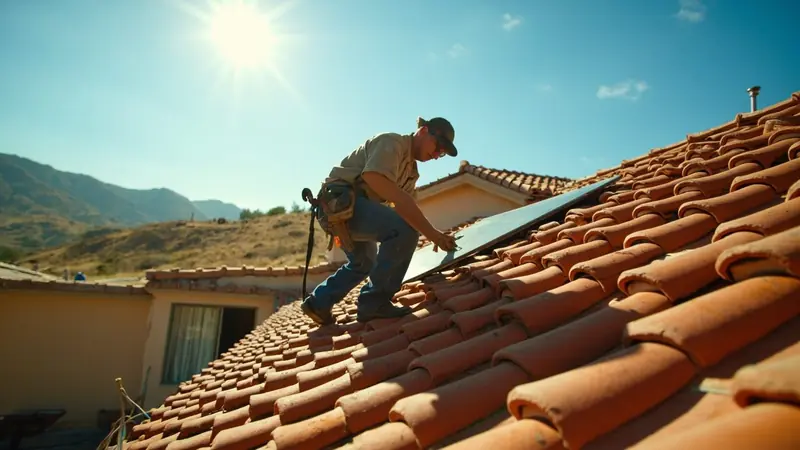
Claremont's oldest streets near the Village carry bungalows and Spanish Revival houses from the 1920s through the 1950s, built with low pitched gabled roofs, wide eaves and exposed rafters over board decking. Many still wear clay tile or older composition laid straight onto those boards, and the underlayment under that tile is now older than most of the people living under it. Santa Ana wind events in fall and winter push dry downslope gusts that lift cracked or loose tile along a rake or ridge. The boards underneath take the weather directly once a tile has shifted.
In Old Claremont, the bungalows and Spanish Revival houses built mainly from the 1920s through the 1950s often still carry clay tile over board decks, so a repair here can turn into resetting tile and replacing the underlayment under it rather than patching around a single broken piece. Tile looks sound from the driveway long after the paper underneath has failed, which is why these houses need a closer look than a drive-by estimate gives.
Winter storms running roughly November through March bring most of the year's rain in a short window, and that is when a Claremont tile roof with tired underlayment finally lets water through, usually at a valley or around a chimney rather than across the open field of tile. A roof that has stayed dry for most of the year can still fail in the first real storm if the paper under the tile gave out months earlier.
Ventilation matters as much as the covering on these older roofs. Low pitched gables with tight eaves hold heat and moisture in the attic. A soffit vent blocked by decades of paint or insulation leaves warm air with nowhere to go but straight up into the roof deck. That moisture works at the underlayment from underneath, on the same timeline the sun is working it from above.
In Claremont we also handle metal roof installation, storm damage roof repair and wind damage roof repair.
How we work on Claremont roofs
When we look at a Claremont roof, we start by showing you what we found before we talk about what to do about it. If a tile is cracked or a valley is holding water, we walk you through where it sits and what is happening underneath it, in plain language, before any plan gets made. You see the same thing we see: a lifted tile, a stained board, a reading from a meter.
From there we lay out the options that apply to your roof. On a tile roof with aged underlayment, that might mean resetting the tile you have and replacing the paper under it, or it might mean the tile stays and only the flashing around a chimney or valley gets rebuilt. We say which repair fixes the spot in front of us and which repair is the start of a larger job, and we leave that choice with you.
Nothing gets opened, cut or removed until you say go. On an older board-decked bungalow, that matters more than most houses, because tile has to come off in sections to check the decking, and we want you to know what that looks like before a single tile moves. You decide the job before material starts coming up off the roof.
We walk the roof first, then the attic, because what the attic shows often changes what the repair needs to be. A dry attic with no staining on the rafters usually means the tile and underlayment took the hit alone, while staining near a valley or chimney means the flashing failed before the tile did. Either way, you get the finding before you get the plan, and the plan reflects what we found instead of a standard package built for a roof we have not looked at.
The CSLB License Lookup publishes the rules that govern work like this in your area.
Checking the valleys first
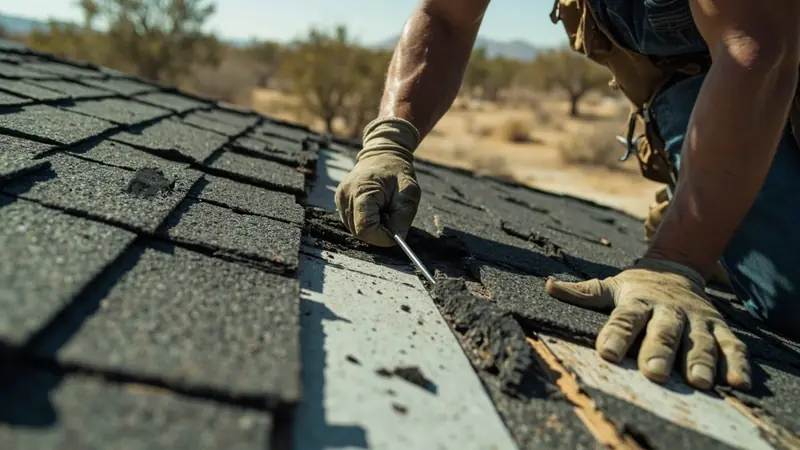
Claremont's winter rain falls hard and short, mostly from November through early spring, and a tile roof holding onto cracked or shifted pieces from a Santa Ana wind event earlier in the season is the one most likely to leak at the first real storm. We check valleys and low points before we look at open field tile, because that is where a short, heavy rain season finds a weak spot first and where a missed leak does the most damage to the deck underneath.
Checking the attic first
Before we go up on a Claremont tile roof, we look at the attic with a light aimed at the underside of the deck. Rusted nail tips and dark rings around them mean warm, moist air has been condensing on the wood all winter. On older board decking, like the kind under citrus-era tile roofs, that staining shows up faster than it does on plywood. It changes whether the job is a tile reset or a full underlayment replacement.
Who reviews the permit
A full reroof in Claremont usually needs a permit, and the City of Claremont Community Development Department, Building Division reviews that work before and after it happens. We tell you up front whether your job falls into that category, so you know before any tile comes off whether an inspection is part of the schedule. A straight tile reset or small flashing repair often does not need the same review, but that office decides it case by case.
Short Rain Season, Fast Drainage
Claremont gets almost all its rain from late fall through early spring. Gutters and drip edges have to move that water off the roof fast. A valley or chimney flashing still has to move water off the deck on its own, because fast draining ground downstream does not slow water down once it is already inside a wall or under a tile. We check that every low point on the roof clears on its own.
Roofing work we handle for Claremont homes
Claremont homes carry a mix of shingle and tile roofing, from older composition on citrus-era houses to concrete tile on newer tracts, and knowing which of three kinds of help applies saves a call. Roof repair and replacement covers a cracked tile, a failed valley or a flashing problem on a roof that is otherwise sound. A straight visit for roof estimates and inspections often settles which category a job falls into before anything gets scheduled.
A full replacement or a new install comes up when the underlayment under the tile has aged out everywhere, not just at one spot, or when the decking itself is no longer holding nails. An emergency is different again: wind or a storm has already opened the roof, and the timing question is what keeps water out until we arrive.
Access and the season both change which of the three fits, since a tile reset can often wait for a dry stretch between storms while active water intrusion moves to the front of the line regardless of the calendar.
Roof repair and tile work
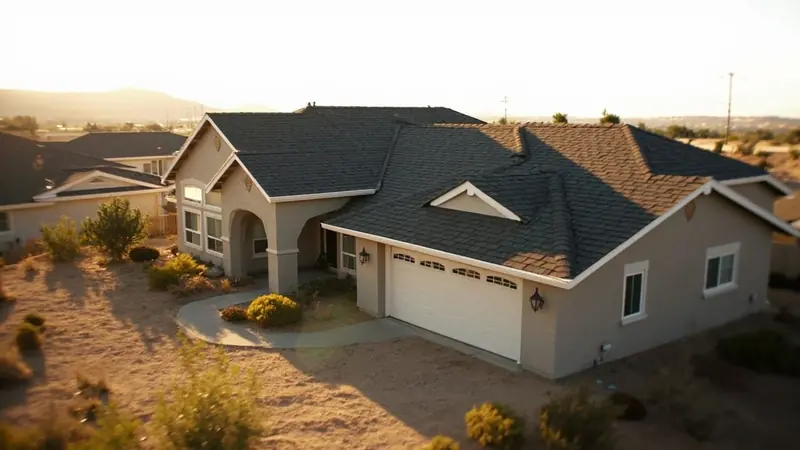
Roof repair and replacement on a Claremont home usually starts small: a cracked tile, a lifted shingle tab, or a valley that has started holding water instead of shedding it. On a tract house from the 1970s through the 1990s with concrete tile over plywood, the tile itself is often fine and the felt underneath it has simply aged past the point of holding water out. We reset the tile that is still sound and replace the paper under it, rather than treating a roof that still looks good from the ground as one that needs full replacement.
Full reroofs and low slope sections
A full reroof gets considered once a pin moisture meter reading on the attic side of the decking comes back above 20 percent in more than one spot. That means the wood itself is holding water and a reset will not hold. Many Claremont homes also carry a flat section over a porch or addition, where asphalt tile does not apply and the choice is between a fully adhered EPDM rubber membrane and a ballasted EPDM system. EPDM stays flexible through cold nights and hot afternoons and needs fewer seams on a small roof, since it comes in wide sheets.
Storm and wind damage response
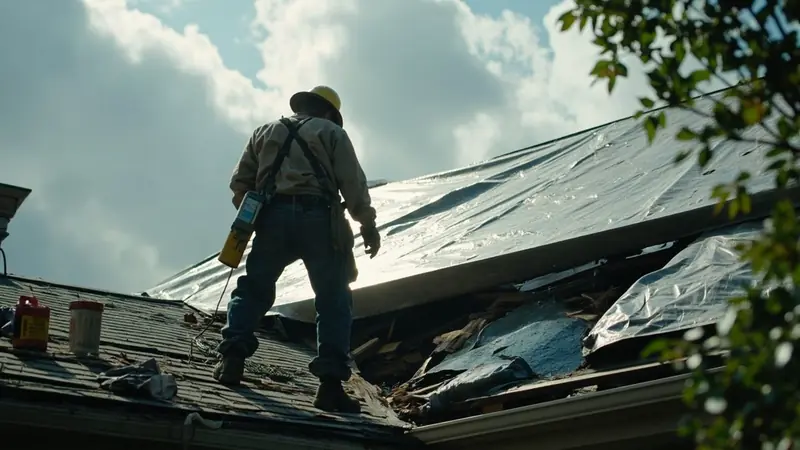
When wind or a storm has already opened a Claremont roof, protect the inside first: move anything underneath the leak, set a bucket under the drip, and keep the room clear until we get there. Santa Ana wind events can lift a run of tile along a ridge or rake in one night. The first thing we check on arrival is whether that uplift is isolated to one section or has started further along the same ridge line. That tells us whether the fix is a patch or a wider tear off.
Common Roofing Jobs in Claremont
Here is where to start if you live in Claremont. Each page covers one job from first call to finish.
- wind damage roof repair
- roof replacement
- storm damage roof repair
- roof leak repair
- emergency roof repair
- metal roof installation
Close to Claremont, we also work in La Verne, Pomona and Upland.
What roofing problems do Claremont homes have?
Claremont homes run into roof problems tied to wind, age and water finding a path the covering was never meant to carry. Storm displacement is the one we see most directly: Santa Ana gusts lift a course of tile or shingle along a rake, hip or ridge, and hail from an unusual storm can bruise the mat in a way that shows only once someone reads it closely.
A quieter version of the same problem shows up where a roof meets a wall and the kickout flashing that should direct water into the gutter there is missing or was never installed. Water runs behind the siding instead of onto the shingles, and it keeps running there through one storm season after another.
By the time it shows as a stain, the wall sheathing behind that join has already been wet for a while with nothing visible on the roof itself to explain it. That gap is worth checking the first time a wall near a roof line feels damp.
Our crews work to the installation standards of the National Roofing Contractors Association.
Wind lifted tile and shingles
Santa Ana wind events in fall and winter push strong, dry gusts down through Claremont, and the first place they find a weak spot is a tile or shingle edge along a rake or ridge. A course that lifts once rarely reseats on its own, so the next gust usually takes it further. Call once you see a tile or shingle on the ground or shifted out of its row, because an open edge lets the next storm's rain in directly.
Tract tile with tired felt
Northeast Claremont, including Blaisdell Ranch and Creekside, carries tract houses built from the 1970s through the 1990s with concrete tile over plywood and hip roofs cut up by several valleys. The tile on these roofs is usually still sound, but the felt underlayment beneath it is near the end of its working life. Call when you notice a stain forming near a valley on one of these roofs, even if every tile overhead still looks fine from the yard.
Runoff that outruns the gutters
A roof still has to move water off itself first, through valleys, drip edges and gutters doing their own job. Winter storms from roughly November through March bring most of the year's rain in a short run. A gutter or valley already loaded with debris backs water up behind the roof edge before the ground ever gets a chance to help. Call when you see water lapping over a gutter edge during a storm.
Valleys nobody checks between storms
Most of Claremont's rain lands in a short winter window, which leaves a long dry stretch where a cracked tile or a clogged valley sits unnoticed because nothing is testing it. Owners often put off a look at the roof until the next storm is already forecast, by which point debris has packed into a valley or a boot has dried out and cracked. Call before the next rain, not during it, if a dry season has passed since the roof was last checked.
Find the sign you have, then read across to see how soon to call.
| Symptom or first sign | What is already happening | What it becomes if ignored | When to call |
|---|---|---|---|
| Missing kickout flashing where a roof meets a wall | Water runs behind the siding instead of onto the shingles | The wall sheathing rots with no stain on the roof at all | Call this week |
| A pinhole at a flat roof seam | Water tracks sideways between the membrane and the insulation | A wet board loses its insulating value | Call this week |
| Blocked soffit intake | Attic humidity climbs and the nails sweat all winter | The sheathing delaminates and the shingles cup from underneath with nothing wrong on the surface | Call this week |
| Gutters packed with debris | Water backs up behind the drip edge | The fascia and the bottom edge of the decking soften until the first course has nothing | Call this week |
| A cracked pipe boot | Water runs down the vent pipe into the attic insulation | The ceiling below stains and the framing around the penetration softens | Call this week |
What happens when a roofer comes out?
The first stop on a Claremont visit is usually the attic, because what we find there decides where we focus on the roof itself. Before you call, note when you first noticed signs of roof damage, whether it tracks with a storm or wind event, and the age of the roof if you know it. Clear access to the attic hatch and to any spot where a ladder needs to go against the house. That lets us move straight from your description to a reading, instead of spending the first part of the visit just getting set up.
Today or a scheduled visit
When you call, we ask two things: is water actively dripping or pooling inside right now, and can you see open sky through any part of the roof. A yes to either one usually brings someone out the same day. A cracked tile with no active drip, or a stain that has sat unchanged for weeks, usually works better as a visit timed around the next dry stretch rather than squeezed in immediately.
Clearing the way for a look
Please provide clear access to the attic opening and remove any stored items near the suspected leak before our visit. When we get there, we walk the spot with you first: where the stain sits, when it showed up, and what the weather was doing right before it appeared. That walkthrough usually points us toward one section of the roof before a single tile or shingle gets lifted to check it.
What we check before we leave
Before we leave, we take a second pin moisture meter reading from the attic side, aimed at the spot we repaired, and show it to you. A number under 15 percent reads as dry decking, which means the repair held. A reading that still comes back above 20 percent means water is getting in from somewhere we have not found yet, and that keeps the job open instead of closing it out.
From your first call to a finished Claremont roof
A Claremont roofing job runs in three parts: the look that finds the cause, the quote you approve, and the work itself, closed out only after the last check passes. Tile roofs take one extra step most composition roofs skip, because tile has to be lifted and reset rather than torn off in sheets, and that changes how material gets staged on site.
We plan around Claremont's short, heavy rain window too, timing tear offs for a dry stretch so an open deck is never sitting exposed overnight. Access for a dump trailer and material delivery gets confirmed before a date is set, since a driveway or a narrow street changes how fast material can move.
Checking the deck underfoot
Once we're on the roof, someone tied off walks the suspect section to feel for give between rafters. A deck that feels firm rules out the worst case right there, and the job stays a repair. A spongy or springy feel between rafters means the sheathing underneath has already delaminated, and that moves the job toward a wider replacement before we talk numbers.
Quote approved before work starts
The look on the roof and in the attic turns into a written quote naming the repair and what has to come up to reach it, whether that's a section of tile, a run of flashing, or the decking underneath. Work starts after you approve that quote, so you know the job before anything on the roof gets disturbed.
Closing the roof back up
The repaired section stays open until the closing check passes. On permitted work, inspection happens before anything gets covered for good. Once that clears, flashing goes back on, tile or shingle gets reset over it, and the site gets cleared of debris and old material, with torn out roofing hauled off the same visit.
Do you need a permit for roofing work in Claremont?
A roofing job in Claremont usually needs a permit when it's a full reroof or anything that reaches the decking, and smaller like for like repairs often do not trigger the same review. Replacing a section of tile, resetting flashing, or swapping a boot without touching the deck typically stays under that threshold, while tearing off a layer of roofing and replacing the covering across the whole house puts the job in front of the permit process.
Work on a Claremont home falls under the California Residential Code, which sets the baseline for how a roof assembly is built here, from decking to covering to flashing. That code does not change by neighborhood or by how old the house is, so a 1930s bungalow and a 1990s tract house both get measured against the same assembly requirements once a permit is pulled, even though what's already on each roof looks different.
Inspection on a permitted reroof typically happens after the old covering is off and before the new one goes down, which is the point where decking condition, fastener pattern and flashing detail are all visible at once. That's also the point in the job where a Claremont tile roof most can turn up decking damage that a tile reset alone would never have shown. The boards underneath stay hidden until the tile and the felt both come up.
For a straight repair, meaning one that reuses the existing decking and doesn't change the covering or the roof's footprint, the permit question usually comes down to whether the repair touches structural framing or just the surface layers. A cracked tile swapped for a matching one, or a section of flashing rebuilt around a chimney, usually sits on the lighter side of that line. A repair that opens up framing to deal with rot found underneath moves toward the fuller review, because at that point the work is no longer just the roof covering.
None of this changes based on which part of the city a house sits in. A bungalow with board decking under its tile and a newer tract house both go through the same review once the job crosses into decking or structural work, even though the underlying construction is decades apart. What differs is how likely each one is to need that fuller work once the covering comes off, since older board decking shows its age faster than plywood does.
Finding wet decking before it's opened
Inside the attic, we press a pin moisture meter against the exposed decking from below. Readings below 15 percent indicate dry wood, while readings over 20 percent show that area is already wet. That reading, taken before a single tile moves, decides whether a quote assumes a repair or budgets for replaced boards.
What makes a Claremont roof bigger to work
Valleys, dormers, chimneys and skylights move a job further than open field tile or shingle ever does, because each one needs its own flashing detail instead of a straight run of covering. A hip roof over a 1970s or 1980s tract house with several valleys takes longer per square than a simple gable. A roof with a chimney and two skylights needs more flashing work than either alone. The covering itself matters less here than how cut up the roof is.
What slows a reroof down
A reroof runs longer when the decking underneath turns out to be bad in more places than the first look suggested, because replacing boards can't be rushed without risking a soft spot later. Weather matters too, since tile can't go back down safely on a wet deck. Finished work should read dry on a pin moisture meter check at every section that was opened, not just the spot that looked worst to start.
Foothill wildfire exposure
Homes along Claremont's foothill edge sit closer to wildfire risk driven by the same Santa Ana winds that lift tile, since dry gusts push embers downslope. That proximity makes covering choice and tight flashing at vents and eaves matter more there than on a flatter tract street, since an open gap under a ridge or soffit vent gives embers a path in that a sealed detail does not.
Roofing Questions From Claremont Homeowners
A sagging roofline usually points to a rafter or sheathing problem rather than the covering itself. A firm deck means the covering alone needs attention, while a spongy or springy feel means the sheathing has delaminated or rotted underneath. Postwar houses near Baseline Road often carry roofs old enough that this kind of deck failure can hide under tile or shingle that still looks fine from the ground. Call before the sag gets worse.
A pin moisture meter reading from the attic side decides that, not how the tile looks from the driveway. A reading under 15 percent on the decking means a reset and new underlayment can hold. A reading above 20 percent in more than one spot means the wood itself is holding water and a full reroof gets considered instead. Old Claremont bungalows with board decking under clay tile often need that check because sound looking tile can sit over underlayment that already failed.
Protect the inside of the house first, then call. Move anything under the damaged area, set a bucket under any drip, and keep the room clear. Do not climb onto the roof or try to move the tree yourself. Homes near Claremont Hills Wilderness Park sit closer to wind exposure, so a fallen limb can open decking as well as covering. On arrival, the check starts with whether the opening is isolated to one section or has spread along the same line.
Yes, a loaded valley or gutter along Indian Hill Boulevard can back water up before the ground ever gets a chance to help. Claremont's rain falls hard over a short winter window, and debris packed into a valley or a sagging gutter upstream adds to that load right when drainage is working hardest. Watch for water lapping over a gutter edge during a storm. That is the sign a valley or drip edge needs clearing before the next rain.
Felt underlayment under 1980s concrete tile ages on its own timeline, often past its working life while the tile overhead still looks sound. Sun works the paper from above while trapped attic moisture works it from underneath, especially where soffit intake is blocked. A hip roof with several valleys, common on tracts from this era, gives that moisture more edges to find. A stain near a valley is usually the first visible sign.
Condensation is worth checking, not ignoring, especially in a bungalow with older board decking. Rusted nail tips and dark rings around them mean warm, moist air has been condensing on the wood all winter, even with no rain and a roof that looks fine outside. That staining shows up faster on board decking than on plywood. It usually means the soffit intake is not moving as much air as the ridge is pulling out, not that the roof is leaking.
Roofing Services Near Claremont
Claremont is part of our regular Ontario area route. Call (909) 330-4661 and we can tell you when someone can be there.
Serving Claremont, CA 91711 from our Ontario base
Looking in the attic with a flashlight for staining, daylight at penetrations or rusted nail tips is something you can do yourself, and it tells us a lot before we arrive. Walking the roof itself, lifting tile or shingle to look underneath, and sealing or resetting flashing is past that point. Fall protection and knowing how tile lifts without cracking belong to the visit.