
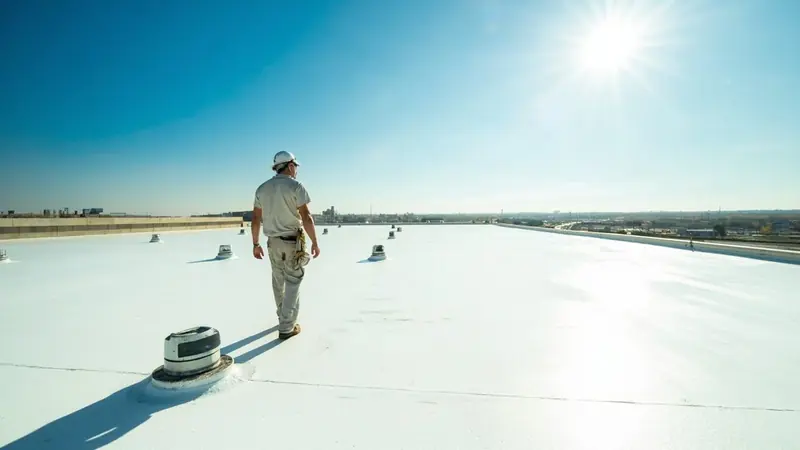
What commercial roofing contractors check on a low slope roof
Warehouses and industrial buildings along the freeway and airport corridors in Ontario carry large low slope membrane and built up roofs. Building owners call commercial roofing contractors when a membrane roof starts ponding, blistering or leaking at a seam, since shingle style repairs do not apply to a flat surface.
The signs of bad roofing on a low slope roof show up differently than on a house. Standing water that sits for more than a couple of days after rain is one sign. A soft or spongy spot felt underfoot near a drain is another. Blistering across the membrane, or a seam that has pulled apart at the edge, both point to a surface that is no longer shedding water the way it should. Warehouse roofing contractors look for these signs at drains, parapet walls and rooftop equipment pads first, because that is where seams and penetrations concentrate.
Ontario's hot, dry summers put long hours of direct sun on these roofs, and the heat cycles the membrane and its seams every day it bakes and every night it cools. That daily expansion and contraction works at welded and glued seams until one gives.
A single pinhole opening at a seam does not look like much from the roof surface. Water finds it in the next rain and tracks sideways between the membrane and the insulation below, moving away from the hole before it ever reaches the deck underneath it.
By the time a stain or a soft ceiling tile shows up inside the building, the wet insulation board under that spot has already lost its ability to hold heat, and the deck under it has started to corrode, often well away from where the hole sits on the surface.
That gap between where the water gets in and where the damage shows up is the reason a small leak on a low slope roof is worth a call the day it is noticed, not after the next rain confirms it.
Office building roofing contractors and retail roofing contractors face a smaller version of the same problem on strip retail and office roofs, where parapet flashing and rooftop unit curbs create the same kind of seam concentration. On any of these buildings, call a commercial roofing contractor the first time a seam separates or a stain appears on a ceiling tile below the roof deck, before the wet area that caused it grows past what the stain shows.
Need a roofer in Ontario for something else? Our main page lists everything we handle.
How commercial roofing contractors handle a low slope repair
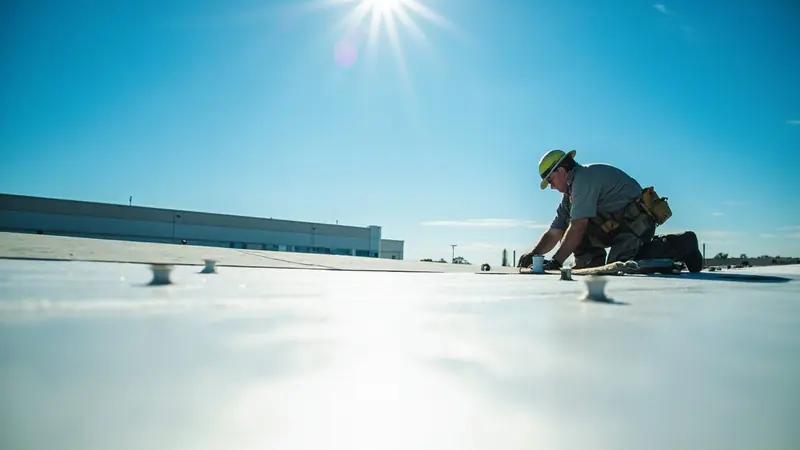
Commercial roofing contractors handle a low slope repair by finding where water is moving before touching the surface.
- We walk the roof and check every drain, scupper and low point for standing water.
- We run a ponding check across the field and mark where water sits longer than it should.
- We check every seam, penetration and parapet edge for separation or blistering.
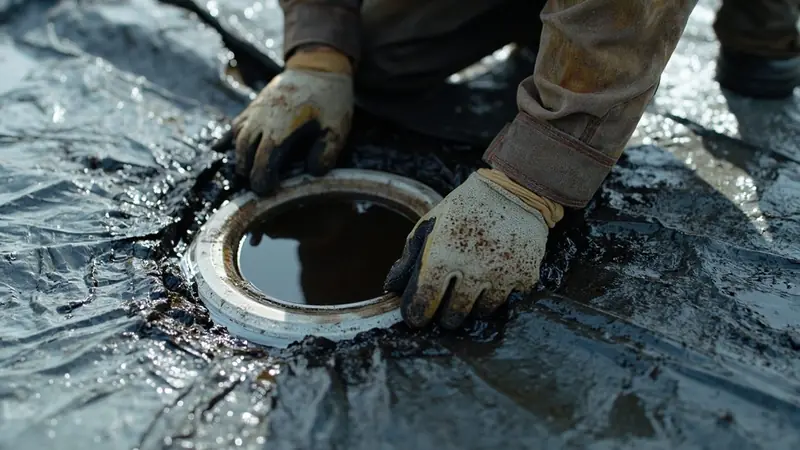
- We open the suspect seam to see how far the wet area reaches under the membrane.
- We note the extent of the problem and put a written quote together before we leave.
A blistered patch with a dry deck underneath usually stays a repair at that one spot. A section that is still holding water two days after rain, with a deck that reads wet once we open it, usually means more of the roof has to come off than the surface stain suggests.
Most of these roofs go back on as TPO single ply membrane, either mechanically attached or fully adhered, with seams hot air welded rather than taped or glued. TPO comes in a handful of thickness grades, often listed as 45, 60 or 80 mil, and the heavier grade stands up to foot traffic and punctures better.
Ontario's long run of hot, sun heavy days and the gusts that come through with Santa Ana events both push toward the thicker sheet and the white reflective surface on a roof that gets regular foot traffic from rooftop units.
A roof with fewer penetrations and lighter traffic can run the lighter sheet without losing much. Two commercial roofing companies bidding the same building often split on one thing: whether a mechanically attached or a fully adhered system fits the deck and the wind exposure here, and that is worth asking both of them to explain.
If the building also needs commercial roof repair, that page covers what the work involves.
The CSLB License Lookup publishes the rules that govern work like this in your area.
Pick the two options that fit your building, then ask which one makes sense for it.
| Option | The numbers a buyer weighs | Best suited to |
|---|---|---|
| TPO single ply membrane | Seams are hot air welded rather than glued, white reflective surface | Low slope and commercial roofs |
| EPDM rubber membrane | Black rubber sheet, seams taped or glued rather than welded | Low slope and commercial roofs |
| Three tab shingle | One layer with cutouts, lighter per square | Low exposure roofs where first cost decides |
| Architectural laminated shingle | Two laminated layers that are glued together so it is heavier and thicker than three tab | Most steep slope roofs on a building |
Steps for a commercial roof visit
Finding the wet area
We start at the roof access point and walk the full field, not just the area you reported. The checks follow the order already covered: ponding and drains first, then seams and penetrations, then an infrared read after dark when conditions allow, confirmed with a core cut sample where the scan shows a warm patch. You see which marked areas are dry and which ones are not while we are still up there. By the time we come down, we can tell you whether the deck under the wet spot is sound or soft, and the written quote reflects that finding before we leave the site.
Opening up and approving the repair
Once the deck reading is in, the work itself starts with cutting out and removing the wet membrane and insulation over the affected area, not guessing at its edges by eye from the surface. A sound deck gets new insulation and a new membrane patch welded into the existing field. A soft or corroded deck section gets that board replaced before anything goes back down. We stop at the point where the opened area turns out larger or smaller than quoted and show you the difference before any additional cutting happens.
Final walk and seam check
Before we leave, we walk the repaired section the same way we walked the original problem spot, checking for any give underfoot across the new deck and membrane. It should feel firm all the way across, with no soft spot between supports. We show you the welded seam edges and the new flashing tie in, and point out the drain path so you can watch it the next time it rains hard.
Permits and shortcuts on a commercial roof job in Ontario
A roof covering replacement on a commercial building usually needs a permit here. The City of Ontario Building Department reviews that kind of work before it closes in, and it decides what inspections the job needs on a given building.
Covering a wet insulation board instead of pulling it out traps moisture under the new membrane, and the deck under that patch keeps corroding where nobody can see it from the roof surface.
Reusing old flashing at a parapet wall or a rooftop curb instead of matching it to the new membrane leaves a seam that was never built for the new material, and that seam is usually where the next leak starts. Skipping a tapered insulation fix on a roof that already ponds just repeats the same low spot under the new surface, so water collects there again the first time it rains hard.
A written quote that names the membrane thickness, the flashing details and whether insulation is being replaced gives a property manager something to hand to a lender or an insurer before work starts, and it gives the roof crew a record to check against once the old surface comes off. Tear off material from one of these roofs also has to be hauled and processed under the same local rules that cover other demolition debris. That disposal step is part of what the permit review looks at.
A membrane roof lives or dies at its seams, and those two questions tell a building owner whether the work is being documented the way the permit review expects. Ask the same question of any commercial building roofing contractors bidding a warehouse, office or retail roof here, since the seam work is the same regardless of what sits inside the building.
If you are weighing options, start with understanding roofing estimates.
Our crews work to the installation standards of the National Roofing Contractors Association.
Ask which of these decides the size of your job.
| Driver | Why it changes the job | What you control |
|---|---|---|
| Cut up complexity | Valleys, dormers, chimneys and skylights instead of open field | The size and the count in the design |
| The shingle or membrane class chosen | Whether an impact rated product is wanted | The grade you choose, the rest of the work is set by the house |
| Roof pitch | How many stories the crew has to work | The size and the count in the design |
How the job runs on your building
Phone questions that set timing
On the call we ask whether water is actively getting into the building right now and whether it is near electrical equipment or stored inventory. An active drip near equipment or stock usually brings someone out the same day. A ponding spot with no active leak, or an old stain that already looks dry, waits for a scheduled visit instead. Either way we ask when the roof was last serviced and what sits below that part of the building.
What the visit disturbs on site
A membrane repair stays on the roof and rarely touches anything inside the building. A deck repair under a wet section means pulling insulation and the deck board over that spot, which can mean a ceiling tile below has to come down to check for damage. Clear rooftop storage or equipment away from the work area before the visit, and let us know if a forklift or ladder needs clear access to a roof hatch or an exterior ladder point.
Permits and disposal set the size
Permit and disposal requirements set by the local jurisdiction move this job further than almost anything else, since tear off material from a large low slope roof has to be hauled and processed under those same rules. What is found once the old membrane and insulation come off plays into it too, since a dry deck closes out fast and a wet one adds board replacement. You see the job in writing, including what is being replaced and why, and you approve that quote before the crew opens anything.
What you see before
We walk you through what the ponding check and the opened seam showed, either at the roof hatch or in photos taken during the visit. You see the wet insulation or the corroded deck section before it goes into the trailer, and you decide whether that area gets repaired or replaced. If the job grows once more of the roof is open, we show you what changed and ask before any additional area is touched.
Why Ontario's heat and wind change a low slope roof
Ontario sits in a hot, dry stretch of the Inland Empire, with August highs in the mid 90s and long runs of clear, sun heavy days. That much direct heat on a dark built up roof raises surface temperature well past the air temperature, and the membrane expands and contracts through that swing every day it sits in the sun. Fall and winter bring Santa Ana wind events, dry downslope gusts that work at the roof edge and any loose flashing around rooftop units. On the low slope membrane and built up roofs that cover most of the warehouses and industrial buildings here, that combination shows up as blistering in the field and lifted edges at the perimeter, rather than the missing shingle a homeowner might expect. A roof spec for this city weighs reflectivity and seam strength against both of those loads.
Inspections on this kind of roof follow the California Residential Code process for the jurisdiction, and a job that opens the deck draws more attention than one that stays at the surface. Replacing insulation and deck boards under a membrane usually adds a step to that review, since the inspector wants a look at the deck before the new covering closes it back up. That is one reason a quote on this kind of roof separates deck repair from membrane replacement instead of bundling them, so the review step lines up with what got opened on the building.
Commercial Roofing Contractors Across Ontario and Nearby Towns
We handle commercial roofing contractors across Ontario and in these nearby towns.
Roofing Services Near Ontario
Looking for commercial roofing contractors near you in Ontario? Call (909) 330-4661 and we will confirm we cover your street.
Address:
Ontario Roofing, 4335 E Lowell St, Suite G
More Commercial Roofing Services in Ontario
- Commercial Roof Repair
- Commercial Roof Replacement
- Flat Roof Repair
- TPO Roofing Systems
- EPDM Flat Roofing
- PVC Roofing Installation
- Modified Bitumen Roofing
- Built-Up Roofing Systems
- Roof Coatings & Restoration
- Commercial Metal Roofing
- Commercial Roof Maintenance Plans
- Commercial Roof Inspections
- Industrial Roofing Services
- Multi-Family & Apartment Roofing
- All commercial roofing services
- Wind Damage Roof Repair
- Storm Damage Roof Repair
- Emergency Roof Repair
From the ground, you can scan the roofline with binoculars or a phone's zoom for a lifted edge, a loose metal cap or a seam that looks open at the perimeter. That look tells you something is worth a call. Standing water, soft decking and how far a wet section reaches are checks that need someone up on the roof with the surface open, which belongs to the visit.
Before you call, know what you are seeing: a wet ceiling tile, a visible pond, or a lifted edge seen from the ground. Note when it started and whether it followed a storm or a hot stretch. If you know the roof system's age or when it was last recovered, have that ready too, along with how to reach the roof hatch or exterior ladder access.