
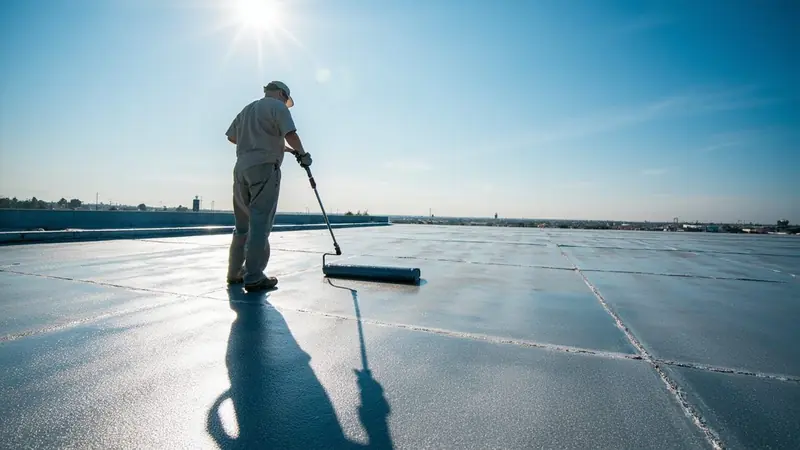
When a roof coating restores a membrane and when it doesn't
A flat roof's membrane can often be restored with roof coatings and restoration rather than torn off, as long as the membrane itself is still watertight. A sound membrane with a faded roof coating or light surface cracking is usually a good candidate. A membrane that already lets water through at a seam or a penetration is not, because a coating applied over an active leak only traps the water it should keep out.
From the ground or a roof walk, the signs are visible. A peeling roof coating lifts at the edges in sheets. Roof coating cracking shows as a web of fine lines across the surface, worse near seams and drains. A coating that has gone chalky and gray has lost most of its reflective surface, and the membrane underneath is absorbing heat it was built to shed.
Ontario and the broader San Bernardino County area see a hot, dry summer climate, with August highs typically in the mid 90s F and heat waves that push well past 100 F. That heat cycle expands and contracts the membrane every day it runs, and that is what eventually cracks an aging coating at the seams. Long dry spells leave a cracked coating exposed to UV with nothing softening it. When the rainy season arrives, water finds every crack that summer heat opened and starts working into the seams below.
A pinhole at a seam is where this starts. Water tracks sideways between the membrane and the insulation before it shows up inside the building, so a small blister on the surface can sit above a much larger patch of wet insulation. Once a board is saturated, it stops insulating and the deck under it corrodes, often well away from the visible hole. Standing water still on the roof two days after a storm, on a membrane already cracked or peeling, means that spread is already underway. Reach out now instead of waiting until another storm hits.
For a building owner, the decision carries more than a roof question. Standing water under a membrane adds dead load to the deck, and insulation that has lost its R-value lets cooling loads climb through the summer heat described above. A coating applied over a membrane that is already compromised can mask the problem on paper while the deck underneath keeps losing capacity, which is the kind of condition a lender or an insurer will eventually want documented.
If the issue sits elsewhere in the building, read about built-up roofing systems.
Our crews work to the installation standards of the National Roofing Contractors Association.

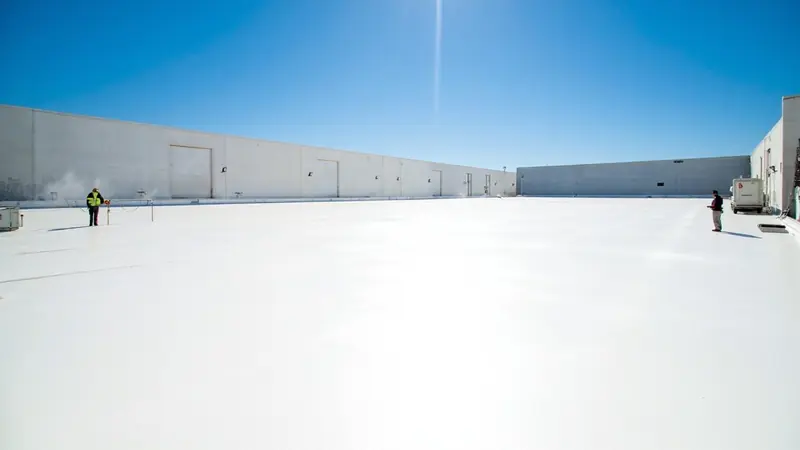
Deciding between a roof coating and a tear off
The visit starts with locating where the membrane is still sound and where it isn't, because that split decides whether a coating goes on or the roof comes off.
We walk the surface and mark every area that is faded, peeling, or already cracked. We check every drain, seam, and penetration for standing water. We run an infrared scan across the field after sunset to find insulation holding heat instead of releasing it. We confirm any warm reading with a core cut and check the insulation and deck underneath it. We write the finding and the two options into a quote before anyone proposes a material.
A core that comes out dry through every layer, under a membrane that is still elastic apart from surface wear, points to a coating and restoration job. A core that pulls up a wet board, or a deck gone soft under it, points to a tear off instead, because a coating over that spot would only seal moisture in rather than keep it out.
When a dry core and elastic membrane are confirmed, the choice is between an acrylic roof coating, a silicone roof coating, and a reflective finish, chosen for how each handles ponding and UV exposure. Where the deck or insulation has already failed, a fully adhered or mechanically attached TPO single ply membrane replaces it instead.
TPO seams are hot air welded rather than caulked, the surface runs white and reflective, and sheet thickness options usually run 45, 60, and 80 mil, with the heavier sheet standing up better to foot traffic and punctures.
If you are weighing options, start with energy-efficient roofing guide.
How the roof coating visit works
The on-site assessment
We start by walking the roof and marking every spot where the coating is cracked, peeling, or already ponding. After sunset, an infrared scan finds any area holding heat instead of releasing it, and a core cut confirms what that warm patch means. You see each core as it comes out, wet or dry, and the deck underneath it. Sections that test dry get marked for restoration, and any that test wet get marked for replacement. The visit ends with the cause named and a quote in your hands, built from what the cores showed.
Restoration or replacement begins
Once you approve the quote, the section that tested dry gets cleaned, primed, and coated first, since that work doesn't require opening anything. Any section that tested wet gets isolated and cut back to dry insulation and sound deck before a new TPO membrane goes down in its place. We pause again before that membrane or coating goes on, so you can see the exposed deck and insulation underneath before any of it gets covered back up. Seams on the new TPO are hot air welded rather than taped, which is checked before the section closes.
Checking the finished surface
Before we leave, we check that every drain runs clear and that the surface sheds water instead of holding it, since a roof that still ponds two days after rain hasn't solved the problem it was coated or replaced for. On a TPO replacement, we run a probe along the welded seams to check they're sealed. On a restoration, we check film thickness at the edges and the drains to confirm the coating built up evenly. You're shown the finished surface and the drain lines before we pack up, so you can see what the quote covered.
What roof coating and restoration work needs in Ontario
Recoating a membrane that is still sound as a maintenance recoat often skips permitting, but a restoration that adds new insulation board, a different membrane class, or deck work typically needs one. The City of Ontario Building Department reviews that work under the California Residential Code and decides what the project needs before work begins.
A coating applied straight over an open seam without checking it first just seals a wet patch under a new skin. The next ponding event pushes water past that same seam again. Skipping the core cut on an older low slope roof hides how many insulation layers are already wet, so a coating goes on over board that is already losing its insulating value. On a roof with ponding, the low points still need slope correction or added drains before a coating goes down, or the same spot ponds through the new surface.
The CSLB License Lookup publishes the rules that govern work like this in your area.
How a coating or restoration visit runs
Today visit or scheduled
On the call we ask two things: whether water is already showing up inside the building, and whether the roof is actively ponding right now. An active interior leak usually brings someone out the same day. A coating that's faded, chalky, or cracked but keeping water out so far usually gets booked onto the schedule instead, with time built in for the infrared scan to be run after sunset.
What gets moved or opened
A roof coating or restoration job stays on the roof itself, so nothing inside the building usually needs to be opened. Rooftop equipment such as vents, curbs, and mechanical units may need to be shifted or worked around to reach the membrane underneath. Clear access to the roof hatch or ladder point beforehand. Core cut holes are closed the same visit, so no opening is left exposed overnight.
What decides the job size
The biggest factor is whether the job stays a surface recoat or opens into insulation and deck work, because that decides whether a permit applies. Disposal requirements in the local jurisdiction add to it: removing a failed membrane and wet insulation means hauling material off site, while a straight recoat leaves nothing to remove. Before any work begins, you review and sign off on the written quote, with permit details already settled.
What you see during the job
You're shown each core sample as it comes out, so you can see whether the insulation underneath is dry or soaked before anything is decided. The options, coating in place or a new membrane, are explained against what that sample showed. Nothing gets opened past the test area without you agreeing to the next step first. Any membrane or deck material that comes out gets set aside so you can look at it yourself.
Roof Coatings & Restoration Questions From Ontario Businesses
A coating only seals a membrane that's already watertight. Applying it over an active leak traps the water instead of keeping it out, and it won't restore insulation that's already soaked. A coating also won't correct a roof that ponds from a slope or drainage issue, since the surface keeps holding water no matter how many layers go on. That's why a core cut and an infrared scan confirm dryness before any coating is applied.
Worth depends on what the core cut and infrared scan show underneath the surface. On a membrane that tests dry and still flexes, a sprayed coating restores UV protection without opening the roof. On a membrane with a wet core or a soft deck, spraying over it just seals moisture in. A ponding spot from a slope or drain issue won't be solved by any coating, sprayed or otherwise, until that underlying problem gets corrected first.
Silicone resists ponding and UV well, but it can't fix a roof that already drains poorly. A low spot that collects water will keep collecting it underneath the new coating. Silicone also only works on a membrane that tests dry at the core and still has some flexibility, since putting it over wet insulation or a damaged deck seals moisture in rather than keeping it out. That's why a core sample gets checked before any silicone goes down.
Longevity comes down to how well the coating resists the daily expansion and contraction from heat. An acrylic coating tends to crack at the seams faster under that cycling. The deciding factor is always the same: a dry core and an elastic membrane underneath, confirmed before coating.
A coating's lifespan depends on the membrane's condition and the heat cycling it takes each summer. A sound, elastic membrane with a fresh coating sheds that stress well. A membrane that's already cracking or chalky at the surface loses its reflective layer faster, letting the deck underneath absorb more heat. That's why the visit checks the core and the membrane's flexibility before recommending a coating, rather than estimating from the surface alone.
Why Ontario's summer heat changes roof coating choices
Ontario and the broader San Bernardino County area see a hot, dry summer climate, with August highs typically in the mid 90s F and heat waves that push well past 100 F. A membrane under that load expands and contracts every day it's exposed, which is what eventually cracks an aging acrylic roof coating at the seams. A silicone roof coating or a reflective finish with more flexibility across that swing tends to hold up longer on a flat roof here than a coating chosen only for how easily it goes on. Santa Ana wind events in fall and winter add mechanical stress at loose edges and flashings, and the rainy season that follows tests every seam a summer of heat has already opened. That is why timing restoration work matters as much as the coating chosen.
Work that goes beyond a straight recoat, meaning new insulation board or deck repair, gets inspected while the roof is open, not only at the end. That inspection confirms the deck is sound and the insulation is dry before the new membrane or coating goes over it. This is why a roof opened for restoration can stay open a day longer than planned. Sequencing follows from that: cores get cut and the deck gets checked before any material order is finalized, so the quote reflects what's underneath rather than a guess from the surface alone.
Roof Coatings Across Ontario and Nearby Towns
Roof coatings calls reach us from all over the Ontario area, including these towns.
Roofing Services Near Ontario
Need roof coatings in Ontario? We cover the city and the nearby towns on the map. Call (909) 330-4661 to check your address.
Address:
Ontario Roofing, 4335 E Lowell St, Suite G
More Commercial Roofing Services in Ontario
- Commercial Roof Repair
- Commercial Roof Replacement
- Flat Roof Repair
- Commercial Roofing Contractors
- TPO Roofing Systems
- EPDM Flat Roofing
- PVC Roofing Installation
- Modified Bitumen Roofing
- Built-Up Roofing Systems
- Commercial Metal Roofing
- Commercial Roof Maintenance Plans
- Commercial Roof Inspections
- Industrial Roofing Services
- Multi-Family & Apartment Roofing
- All commercial roofing services
- Wind Damage Roof Repair
- Storm Damage Roof Repair
- Emergency Roof Repair
Checking a ceiling or the underside of a low slope deck for a stain or a soft spot is something you can do without climbing onto the roof. That tells you whether water has already reached the inside. It does not tell you how far the wet insulation extends or whether the membrane can still be coated. Locating the seam, running an infrared scan, and deciding between a coating and a tear off is work for the visit.
Know how long the current coating has been on and whether it's cracked, peeling, or just faded. Note any spot that holds water after rain and how long it sits there. If you know the roof's age or when it was last recoated, have that ready. Knowing where the roof access point is also helps.