
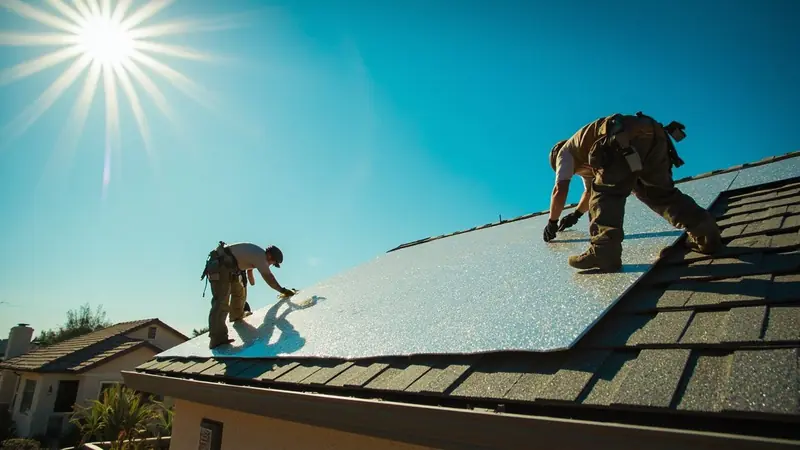
Does a new roof count as an energy-efficient improvement?
A new roof only counts as an energy-efficient improvement when the covering, the decking under it and the attic airflow all work together to shed heat. Energy efficient roofing is not just the shingle color on top. That is the cool roof definition worth knowing before you pick a covering: a surface that reflects more sunlight than it absorbs, so the deck underneath stays cooler through the afternoon.
You might notice the attic feels hot long after sunset, or a ceiling is stained even though it has not rained in weeks. Shingles on a roof installed only a few years ago can already be cupping at the edges with nothing wrong visible from the yard.
Ontario summers run hot, with August days commonly in the mid 90s, and an attic without enough airflow holds that heat long after dark. That trapped heat is usually traced back to blocked soffit intake. When the vents under the eaves are painted shut, packed with insulation or simply undersized, the ridge vent keeps pulling air anyway, except now it pulls that air from inside the house instead of outside. Warm, moist house air condenses on the attic nails through the colder months. Over time the sheathing delaminates and the shingles cup from underneath, with nothing wrong you can see standing on the ground.
A ceiling stain that returns in dry weather is the signal to act on. First the stain comes back after a cold night with no rain. Then shingles above it start cupping even though they are not old. Then the decking underneath softens and a patch stops being enough. Once a stain returns without rain, that is the point to call.
When you are ready for the work itself, see metal roof installation.

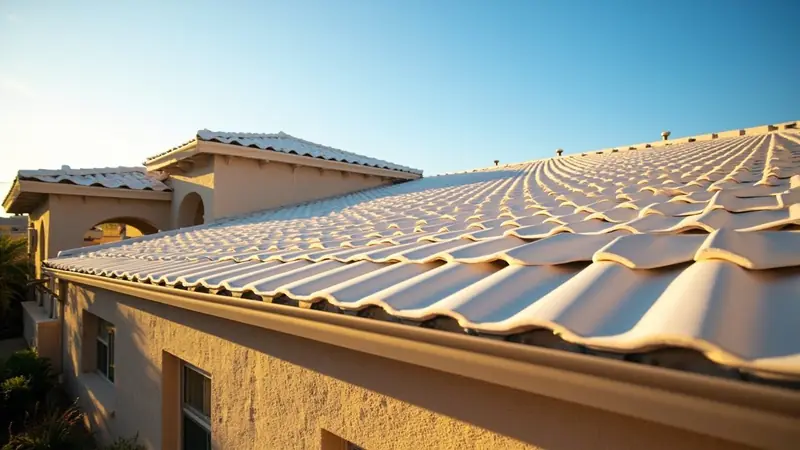
Checking airflow and covering before any upgrade
We check attic airflow and the covering together, because fixing one without the other wastes the work. On a visit the order runs the same way every time.
- We look in the attic first and check the nail tips and sheathing for staining.
- We measure soffit intake area against ridge exhaust area to see if they balance.
- We check decking moisture with a pin moisture meter against the underside of the sheathing.
- We look at the covering from the ground and note color, granule condition and any cupping.
- We note how each slope's sun exposure has aged it differently.
The reading that matters most is the ventilation balance. Intake net free area at the soffit needs to at least equal exhaust net free area at the ridge. When exhaust outruns intake, the ridge pulls conditioned air out of the house, and that drives the moisture problem no matter what covering sits on top.
If the deck is dry and intake can be balanced, a swap to reflective roof shingles or energy star rated shingles lowers attic temperature without a full tear off. A radiant barrier roofing layer under the decking can also cut attic heat gain where re-roofing already means opening the deck anyway.
If you plan to keep the house for the long run, standing seam metal (a 24 gauge steel panel, a 22 gauge steel panel or an aluminum panel) is the longer option. Its fasteners sit hidden under the seam, and panels are clipped so they can expand and contract with heat instead of working loose. A lower gauge number means thicker steel, and of the common residential coverings it carries the longest expected service life.
If you are still sorting out the cause, start with attic mold.
Steps for an energy efficient roof upgrade
Checking the attic and roof
The visit starts in the attic, where we look at nail tips, sheathing color and insulation placement before anything else. We check the sheathing with a pin moisture meter and look at soffit intake against ridge exhaust to see where the balance sits. From there we walk the covering and note color, granule condition and cupping on each slope. You get to see any staining or blockage where it is, not just hear about it. The visit ends when the cause is named and a quote is ready.
Approving the covering change
Once you have seen the finding, the vent work or covering change waits for your go ahead before anything comes off the roof. If soffit intake needs opening up, that gets isolated and cleared first, since it changes how the rest of the job is sequenced. The covering swap, radiant barrier layer or metal panel install follows after that, in the order that keeps the deck covered as much as possible. Nothing proceeds past the attic check without your sign off on the plan.
Confirming the fix before we leave
Before we leave, we recheck the balance: soffit intake net free area should at least equal ridge exhaust net free area. We show you that comparison and point out where the intake sits now compared to where it started. If a pin moisture meter reading on the decking came back high earlier, we check it again and confirm it reads under 15 percent before calling the deck dry. You see both readings before we close anything up.
What energy efficient roofing needs in Ontario homes
Replacing a covering or adding a layer under the decking usually needs a permit, since changing the roof assembly falls under the California Residential Code. The City of Ontario Building Department reviews work like this and decides what the job needs to pass.
Postwar tract homes from the 1945 to 1970s era often have shallow attics with little room to add intake. Coating the covering with a reflective product on one of these roofs without opening up more soffit area just traps the same heat under a lighter color. Homes from the 1980s to 1990s with tile roofing are reaching the point where the underlayment under the tile has aged out.
The service side of this is covered under roof replacement.
Our crews work to the installation standards of the National Roofing Contractors Association.
What to expect when you call about efficiency
Today visit or scheduled check
On the phone we ask what you are noticing, such as a ceiling stain, a hot upstairs room, or shingles that look uneven in color. An active leak or a stain that keeps coming back usually means getting someone out the same day makes sense. A roof that just runs warm in summer with no active leak fits a scheduled visit instead. Either way we ask when it started and whether anyone has already been up on the roof.
What gets opened to check
We open the attic hatch and move any stored boxes out of the way first. Checking soffit intake sometimes means pulling insulation back near the eaves, and we put it back before leaving that area. If the covering itself needs a closer look, we walk the roof, which means clearing patio furniture or planters from underneath. Clear the attic hatch area and anything stored near the eaves before the visit.
Covering choice sets the job size
The covering class you choose moves this job most. A reflective shingle swap over sound decking is a smaller job than a full standing seam metal install, which brings new flashing, new fasteners and a different deck attachment. Wanting an impact rated product adds another layer of material to plan for. Once we know the covering and the deck condition, we write up a quote. You see that quote in writing and approve it before anything starts.
What you see before we order
We show you the attic nail staining or the blocked soffit vent where it sits, in the attic or on a photo. You decide between a reflective covering, radiant barrier roofing added under the deck, or a longer term option like standing seam metal. We walk through it like a short cool roof guide, naming what each option changes before anything is ordered. Any old vent cover or flashing we remove gets shown to you first.
Energy Efficient Roofing Guide Questions From Ontario Homeowners
Standing seam metal carries the longest expected service life among common residential coverings. Reflective or energy star rated shingles lower attic temperature without a full tear off, but either covering only helps once soffit intake balances ridge exhaust area. A roof with blocked soffit vents keeps trapping heat no matter how reflective the surface is.
A cool roof covering that reflects sunlight works only when soffit intake matches ridge exhaust underneath it. Reflective shingles, energy star rated shingles or a radiant barrier layer added under the decking all cut attic heat gain, and radiant barrier roofing makes sense when a reroof already means opening the deck. Standing seam metal panels add the same reflective benefit plus a longer service life. None of these coverings lowers attic temperature on its own if blocked soffit vents keep the ridge pulling air from inside the house instead of outside.
Sun exposure changes how fast each slope ages. A slope that faces more direct afternoon sun shows cupping or granule loss sooner than a shaded slope, since heat works on the asphalt faster there. The soffit intake and ridge exhaust balance that drives moisture into the deck has nothing to do with which direction the roof faces, it comes down to whether the vents are open and sized to match. A hot slope can sit over a well vented attic, and a shaded slope can sit over blocked soffit vents.
Shingle cupping at the edges signals moisture acting on the sheathing from underneath. Blocked soffit vents let the ridge pull warm, moist house air into the attic, and that air condenses on the attic nails and sheathing through the colder months. Over time the sheathing delaminates and the shingles cup from below, even on a roof installed only a few years ago. Cupping with no visible cause from the yard is the point to check nail tips and sheathing staining in the attic.
Ceiling stains are not always caused by attic ventilation problems. A stain that returns after a cold night with no rain usually traces to condensation from blocked soffit intake pulling moist house air into the attic. A stain that shows up only during or right after rain points to a leak at the covering or flashing instead, which is a separate problem. Timing tells them apart: dry weather staining means moisture is forming inside the attic, wet weather staining means water is coming in from outside.
Radiant barrier roofing only goes in once the deck is open. On a tile roof that means the tile comes off first, which usually happens when the underlayment under it has aged out, as it has on many 1980s to 1990s tile roofs. Adding the layer under tile that stays in place is not how the work happens, since the barrier sits on top of the decking before the covering goes back on. Pulling the tile for underlayment replacement is the point to add it.
Nail staining inside the attic shows warm, moist air condensing on the nails through the colder months. Rusted nail tips and dark rings around them mean that moisture cycle is already running, usually because soffit intake is blocked and the ridge vent is pulling conditioned air from inside the house. Left unchecked, that same condensation reaches the sheathing next, and the decking can delaminate from underneath with the shingles cupping before anything looks wrong from the yard. A bright light held low in the attic finds this staining a roof walk never shows.
Blocked soffit airflow usually comes from paint, packed insulation, or vents that were undersized from the start. Any one of the three keeps outside air from reaching the attic, and the ridge vent keeps pulling air anyway, drawing it from inside the house instead. Fresh insulation added near the eaves can bury vents that used to work fine, which is one reason a roof can have plenty of louvers and still choke. Checking for daylight through the soffit screens from inside the attic shows more than counting vents from the ground.
Why Ontario summers make attic airflow matter for energy efficient roofing
Ontario summers run hot and dry, with August days commonly reaching the mid 90s and heat waves pushing well past 100. A roof assembly that cannot shed that heat keeps working against the air conditioning long after the sun sets, and Southern California Edison bills reflect that load every August. Most roof energy efficiency tips start with the attic, not the shingle, because the deck is what holds the heat the covering lets through. Houses built on slab, which covers most of Ontario's postwar and newer stock, run hotter in the attic than a raised foundation house with more airflow underneath. That is one more reason the ventilation balance matters here before the covering color does.
A straightforward color or product swap on an existing covering is treated differently than opening the deck to add a layer underneath it. Once decking is exposed, inspectors want to see the nailing pattern and the new underlayment before anything goes back over it. That is one reason that kind of work gets scheduled in a single pass: the deck stays open for inspection, then gets closed the same visit once it passes.
Roofing Services Near Ontario
Still deciding what your Ontario home needs? Call (909) 330-4661 and we will talk it through before anyone books a visit.
Address:
Ontario Roofing, 4335 E Lowell St, Suite G
More Roofing Guides for Ontario Homeowners
- Roof Replacement Cost Guide 2026
- Metal vs. Shingle Roofing
- How Long Does a Roof Last
- Signs You Need a New Roof
- How to Choose a Roofing Contractor
- Roof Financing Options Explained
- Reading a Roofing Proposal Line by Line
- Roof Ventilation Basics
- DIY vs. Professional Roof Repair
- Understanding Roofing Estimates
- Insurance Claim Guide for Roof Damage
- TPO vs. EPDM, Which Flat Roof Is Best
- Roof Inspection Checklist
- Storm Season Roof Prep Guide
- All roofing guides
- Wind Damage Roof Repair
- Roof Replacement
- Storm Damage Roof Repair
From the ground, you can zoom in with a phone camera on the ridge line and look for shingles that are a visibly different shade or already curling at the edges. That tells you something, but it will not tell you whether the attic air is moving under the covering. Checking soffit intake area, nail staining and sheathing moisture needs attic access and a flashlight pointed the right way, which is part of the visit.
Have the age of your roof ready if you know it, along with when you first noticed the hot room or the stain. Note whether the attic has been insulated recently, since fresh insulation sometimes covers the soffit vents. If you can, find the attic hatch location before the call so the visit starts there.