
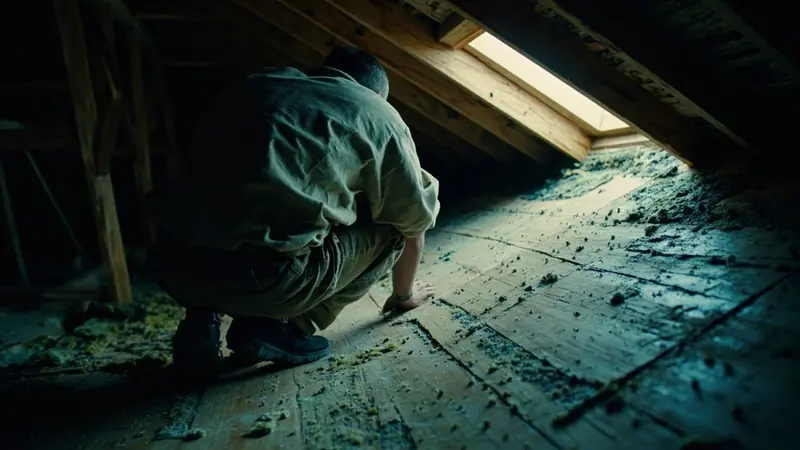
What is causing stains and mold in your attic?
A ceiling stain with no rain to explain it, a musty smell in attic air, or dark spots on the underside of the roof deck usually point to attic condensation and mold. This moisture forms when warm air from inside the house meets the cold underside of the sheathing and turns to water there. Mold on roof sheathing takes hold wherever that water sits for more than a day or two.
This is different from a leak at a single spot, such as a pipe boot or step flashing, which stains the ceiling right under that one spot no matter the weather. Condensation shows up as a wider, flatter stain nearer the center of the ceiling, often on the side of the attic that gets the least airflow. Some homeowners also notice frost on attic nails on a cold morning, or shingles cupping from underneath while the surface outside looks fine.
Ontario's hot, dry summer days bake the roof, then clear nights let the attic cool fast once the sun drops. That swing settles any trapped moisture out against the cold deck overnight, with no rain involved at all. Blocked soffit intake vents are usually behind it. Once intake is choked off, the ridge keeps pulling air out while little fresh air replaces it, so warm, moist house air rises in its place.
Attic humidity climbs and the nails sweat all winter. Over time the sheathing delaminates and the shingles cup from underneath, with nothing visible from the ground. An attic mold inspection is how that gets confirmed before anyone touches the roof. That kind of rebalancing is what roof ventilation work addresses, rather than a single cleanup of the stain.
Call once a dried stain comes back, once nail tips show dark rust rings, or once the musty smell in attic air returns within days of airing the space out. That return means the moisture source is still active, and it is the point to call rather than wait for the next ceiling spot to open up.
Our crews work to the installation standards of the National Roofing Contractors Association.

Can you have too much R value in an attic?
Yes, in a sense. Thick insulation without enough airflow still traps moist air against the cold roof deck, so R value alone does not stop the problem.
On the visit we start inside, since the attic tells us where to look before anyone sets foot on the roof.
- We trace the ceiling stain back along the rafters to find where moisture is settling.
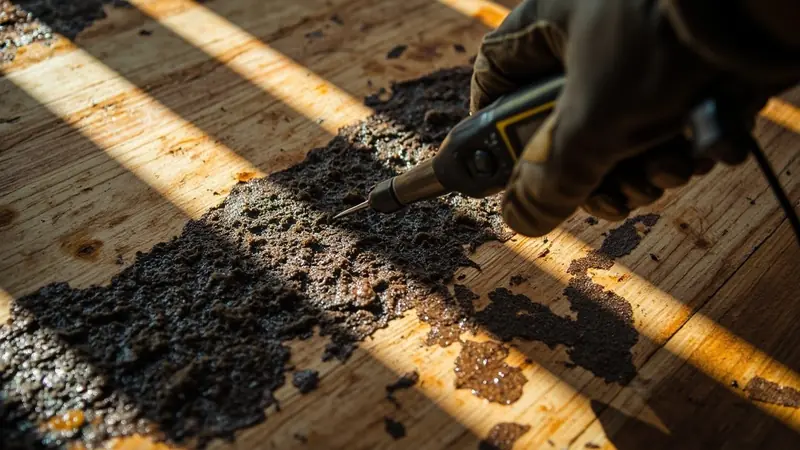
- We check nail tips and the underside of the sheathing with a bright light held low in the attic.
- We check soffit intake vents and roof vent baffles for blockage or paint buildup.
- We measure insulation near the eaves and look for gaps or compression that choke intake air.
- We compare ridge exhaust against soffit intake to see which side is starving the other.
The reading that decides the fix is the attic light and nail inspection. Clean nail shanks and no dark staining mean the attic is drying the way it should, so the fix stays at the vent level. Rusted nail tips with dark rings around them mean warm, moist house air has been condensing there, a sign attic insulation venting has not kept pace with the house all winter.
A bathroom exhaust fan that vents into the attic instead of outside adds moisture directly, and no bathroom exhaust venting fix works until that vent runs outside the house.
From there the choice is between clearing and adding roof vent baffles so intake matches the ridge, or adding a vapor barrier installation under the insulation when the house generates more moisture than the vents alone can carry out. A house with blocked baffles usually just needs airflow restored. A house that already has a vapor barrier and still shows condensation usually needs the exhaust and intake rebalanced instead.
Steps for fixing attic condensation
Assessing the attic first
We start in the attic, since that's where the real cause shows up first. You can walk us to the stain and show us when it's worst. We run a light along the sheathing and the nail tips, check the soffit intake and roof vent baffles for blockage, and look at how the insulation sits near the eaves. That's the full set of checks for this visit, done in that order. By the time we're back down, we can name what's driving the moisture and put together a written quote for the fix, so you know what the job involves before anything opens further.
Approving the fix
You see the quote and the reasoning before anything moves. If the nail inspection pointed to blocked intake, we clear and open the soffit vents first, since that's what the ridge has been missing. Where the sheathing underneath has delaminated, that section gets cut out and replaced before the shingles go back down. If moisture had reached the insulation, the wet sections come out too. Each step waits for your go ahead, and you see the old material, the stained sheathing or the wet insulation, before it goes in the trailer.
Checking the airflow balance
Before closing up, we check the soffit intake against the ridge exhaust, since that balance is what keeps the attic dry going forward. Intake net free area at the soffit should at least match exhaust net free area at the ridge. If it doesn't, the vents or baffles get adjusted until it does. We show you the vents from inside the attic and from the ground, so you can see the airflow path meant to keep moisture from building up there again.
What fixing attic condensation and mold needs in Ontario homes
Cutting new vents into the roof deck, or enlarging existing soffit intake, typically needs sign off from the City of Ontario Building Department before the roof gets closed back up. That office decides whether the finished vent area meets what the work requires.
A common shortcut is stapling a vapor barrier installation over insulation that already touches the roof deck, which seals moisture in rather than keeping it out. Another is caulking or foaming soffit vents shut during a repaint to stop a draft, which blocks the air the attic needs to stay dry. Painting over roof vent baffles until the louvers gum shut has the same effect: the ridge keeps pulling air, the soffit stops supplying it, and the deck underneath takes the difference.
The CSLB License Lookup publishes the rules that govern work like this in your area.
What the job looks like once you call
Deciding today or later
On the call we ask whether you're seeing active water or just a stain and a smell, and whether anyone in the house has noticed breathing irritation. Active water or a sagging ceiling spot usually points to someone coming out the same day. A stain that's dry and stable, with just a musty smell, is usually a booked visit so the attic can be checked in daylight.
Getting into the attic
Reaching the stained area means opening the attic hatch and moving anything stored near it. If the fix includes soffit work, that part happens at the eaves outside, which can touch plantings or low fencing beneath them. Clear a path to the attic hatch and move boxes or bins away from the eaves before the visit. Nothing inside the living space has to move for this job.
What decides the size
The size of this job turns on what we find once the attic and soffits are open. Clearing blocked vent baffles and rebalancing intake against the ridge is a smaller job than replacing a section of delaminated sheathing underneath the shingles. Whether moisture has reached the insulation, and how much has to come out, moves the job too. Once we know what's involved, you see the plan in writing and approve it before anything starts.
What you see and decide
We show you the stained sheathing or the rusted nail tips under a light, in place, before anything is opened further. You see the options: clear and rebalance the vents, add a vapor barrier, or replace a damaged section of deck. We check vent sizing and insulation condition before recommending any of it, and nothing comes out or goes in until you say go ahead.
Attic Condensation & Mold Questions From Ontario Homeowners
The City of Ontario Building Department reviews new roof vents and soffit changes before the roof closes up. That office checks the finished vent area against what the work requires and wants the openings, along with any replaced sheathing, visible while they're still exposed. The California Residential Code sets the ventilation standard behind that review.
Balancing soffit intake against ridge exhaust is what stops attic condensation. Intake net free area at the soffit needs to at least match exhaust net free area at the ridge, since more exhaust than intake pulls house air up into the attic instead of fresh air in through the eaves. A bright light held low in the attic shows whether nail tips are clean or rusted, which tells you if the imbalance has already been pulling moist air up all winter. Clearing blocked baffles and rebalancing the vents addresses the cause rather than just the stain.
Lungs clear up once the source feeding the irritation is gone, not on their own while moisture keeps condensing in the attic. Breathing irritation in the house is one of the things worth mentioning on the call, along with a musty smell that returns. Addressing it on the roof side means clearing blocked soffit intake, rebalancing it against the ridge exhaust, and removing any insulation or sheathing that's stayed wet. Until that moisture source is shut off, the air feeding the irritation keeps getting replaced.
Breathing irritation noticed in the house, alongside a musty smell in the attic air, is a sign worth acting on. A ceiling stain with no rain to explain it, or frost on attic nails on a cold morning, can show up around the same time. These point to warm, moist house air condensing against the cold roof deck rather than a leak. If anyone in the house has noticed breathing irritation along with the smell, that combination is worth mentioning when you call rather than waiting for the stain to spread.
Blocked soffit intake vents usually drive attic condensation by starving the ridge of fresh air. Warm, moist house air rises to replace what the ridge pulls out, and it condenses once it meets the cold sheathing. Ontario's hot, dry summer days heat the roof deck, then clear nights cool it fast once the sun drops, settling that trapped moisture out overnight with no rain involved. Shallow attics in older ranch style homes leave less space for that air to balance, so the imbalance shows sooner there than in a taller attic.
Condensation does not clear on its own while blocked soffit intake lets the ridge keep pulling house air up. A stain can dry out between episodes, but it returns once warm, moist air condenses on the cold sheathing again. A stain that comes back after drying, or a musty smell that returns within days of airing the space out, means the moisture source behind it is still active. That is the point to get the attic checked rather than wait for the next ceiling spot to open up.
Attic mold is common in Ontario homes with shallow attics and undersized original vents. Postwar ranch homes across the city tend to have low pitch roofs. That leaves little clearance for air to balance between the soffit and the ridge, so the imbalance behind condensation shows up faster than it would in a taller attic. Blocked soffit intake, a bathroom fan venting into the attic instead of outside, and insulation compressed near the eaves are usual causes, and any one of them can trigger the same staining and smell.
Clearing and opening soffit intake vents keeps moisture out by balancing airflow against the ridge exhaust. You can check this yourself with a flashlight, looking for staining on the sheathing or daylight coming through at the eaves. Walking the roof deck to look closer is where that stops, since a delaminated deck can give way underfoot without warning. Clear a path to the attic hatch and move anything stored near the eaves before the visit, since that is where the check begins.
Why Ontario's dry heat and shallow attics drive attic moisture problems
Ontario's summers run hot and dry, with August highs in the mid 90s, then clear nights that cool fast once the sun goes down. That swing means moisture trapped in the attic settles out against the cold deck overnight, even without a drop of rain. Postwar ranch homes built across the city in the 1945 to 1970s era tend to have low pitch roofs and shallow attic spaces, leaving little room for air to move between the soffit and the ridge. When those shallow attics also carry original, undersized vents, the imbalance between intake and exhaust shows up faster than it would in a taller attic with more room to breathe. Ontario's dry climate and short winter rain season mean outside moisture rarely reaches the attic, so the water behind attic condensation comes from inside the house.
Work that reopens the roof deck or changes the vent openings gets looked at before the covering goes back on, since what's under the shingles has to be seen to be checked. An inspector wants to see the new or cleared vent openings and any replaced sheathing while they're still exposed, not after insulation covers them again. That's why the sheathing stays open until that stage is done, and why a repair gets cut back a little further than the stained area looks like it needs, so sound wood shows on every edge of it.
Roofing Services Near Ontario
If you are seeing attic condensation anywhere in the Ontario area, call (909) 330-4661 and we can tell you what to check first.
Address:
Ontario Roofing, 4335 E Lowell St, Suite G
More Common Roofing Problems in Ontario
Looking into the attic with a flashlight for staining, daylight at the eaves, or frost on attic nails is something you can check yourself before calling. Walking the roof deck to look closer is where that stops. A delaminated deck can give way underfoot without warning, and that check belongs to someone tied off above it.
Knowing when the stain or smell first showed up helps, along with anything that changed right before it, like a new bathroom fan or a repaint. The age of the roof or the attic insulation, if you know it, helps too. Find the attic hatch and check that it's easy to reach, since that's where the visit starts.