
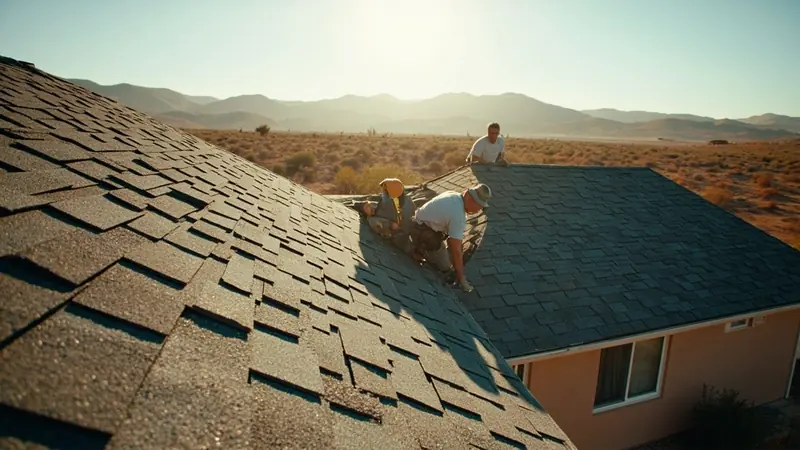
When asphalt shingle roofing needs repair or replacement
On an older roof in Ontario, asphalt shingle roofing usually fails one tab at a time, not all at once. A tab lifts along its sealant strip after years of sun and wind, and it stays loose until a gust catches the open edge. Once air gets under that tab, the course above it has nothing holding it flat against the deck.
Summers here run hot for months, and that heat works hardest on south and west facing slopes. The sealant strip under each tab softens and dries out faster on those sides, long before the north slope shows any wear. Pipe boots crack in the same stretch of weather, and shingles cracking in heat is common on a slope that has carried a decade of inland sun.
A roof that keeps needing the same patch is usually past patching. Brittle tabs crack under a boot step, granules thin down to the mat in spots, and fasteners stop biting into the deck the way they used to. Each repair holds for a while, then the next one shows up near the last.
A tab that lifts is the start of a longer sequence. Wind gets under the open edge, then under the course above it. The next storm pulls a full strip loose, and once a strip peels back, the bare deck takes rain directly instead of shedding it off the shingle surface. Shingles blowing off roof during a Santa Ana wind event is usually the point a homeowner first notices the damage from the yard. That is the point to call, before the next gust finds the same weak tab and takes the whole course with it.
A shingle roof leaking at a valley or around a vent pipe is a separate problem from worn shingles, and it points to flashing rather than the shingle itself. Either way, an asphalt shingle roof on a slope that has already lost one course will keep losing ground until the deck underneath is wet.
The CSLB License Lookup publishes the rules that govern work like this in your area.
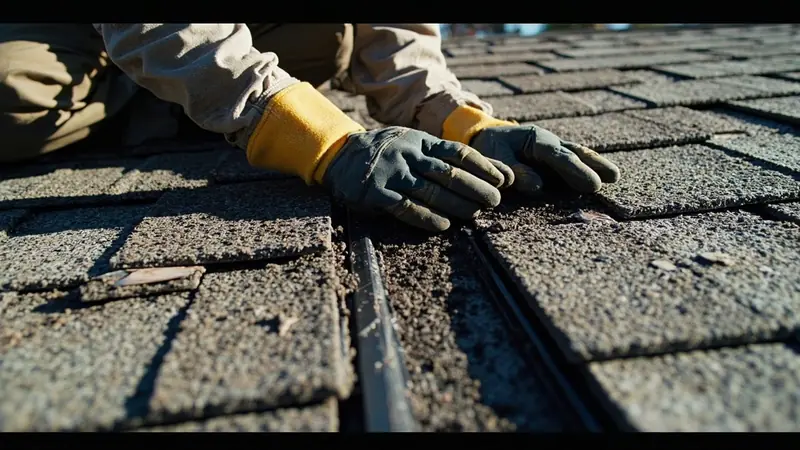
Find the sign you have, then read across to see how soon to call.
| Symptom or first sign | What is already happening | What it becomes if ignored | When to call |
|---|---|---|---|
| A cracked pipe boot | Water runs down the vent pipe into the attic insulation | The ceiling below stains and the framing around the penetration softens | Call this week |
| Blocked soffit intake | Attic humidity climbs and the nails sweat all winter | The sheathing delaminates and the shingles cup from underneath with nothing wrong on the surface | Call this week |
| Missing kickout flashing where a roof meets a wall | Water runs behind the siding instead of onto the shingles | The wall sheathing rots with no stain on the roof at all | Call this week |
| A lifted shingle tab | Wind gets under the course above it | A full strip peels in the next storm and the bare deck takes the rain directly | Call this week |
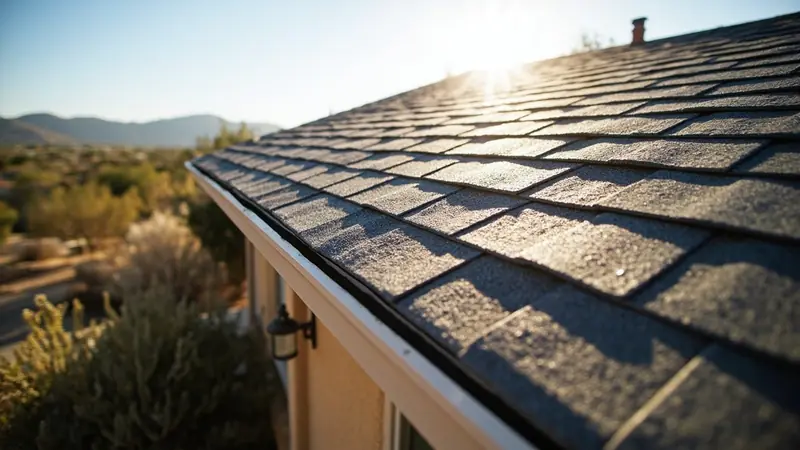
How we repair or replace asphalt shingle roofing
We start inside, checking the attic for daylight at the fasteners and staining on the decking, then move onto the roof in the order it leaks: boots and penetrations first, then valleys, then the field of shingles itself.
- We look from the attic for staining and daylight at the nail shanks.
- We walk the slope and check for give in the deck between rafters.
- We lift a tab on the worn slope and flex it by hand.
- We check granule loss in that same spot.
- We check pipe boots and valley flashing for cracking.
A tab that still bends without cracking, with granules staying put, usually means that spot can be repaired on its own. A tab that cracks when lifted, with granules coming off in your hand, means the asphalt has aged out across that slope, and one patch will just be followed by another nearby.
That finding is also where the shingle choice comes in. 3-tab shingles still make sense as a repair match on an older roof already covered in that style. They run a single layer with cutouts, lighter per square, with a lower wind rating than architectural shingles.
Architectural shingles, also sold as dimensional shingles, layer two tabs into one piece, which adds wind resistance and holds up longer on slopes that take the most sun. Shingle roofing installation on a roof going through a full replacement is usually architectural, while a small repair on an older three tab roof calls for a matching patch instead.
Not quite your problem? Read about tile roof installation instead.
Reflective shingles carrying the ENERGY STAR roof products rating measurably cut summer cooling loads.
Your asphalt shingle roofing steps
On site assessment
We start in the attic with a light, checking for daylight at the fasteners and staining on the decking, then move onto the roof to flex a tab and check the deck underfoot. You walk the yard with us while we point out the slope that failed and why, usually the south or west side that carried the most sun. Once the cause is named, the shingle class and the job, one spot or the whole roof, go into a written quote on the spot, so you have it in hand before deciding anything.
Repair or replacement work
Once you approve the quote, we clear the slope of anything loose first, pulling the damaged course and any shingles around it that have the same cracked or thin look. A repair ties new shingles into the existing courses at that spot. A full replacement strips every layer down to the decking, replaces any boards that failed the deck check, and sets new underlayment and flashing before new shingles go down. Either way, work pauses once that section is open so you can see the deck or the old flashing before it disappears.
Final check and handoff
Before we pack up, we check that the soffit intake area at least matches the ridge vent's exhaust area, since a new roof over an unbalanced attic cups from underneath the same way the old one did. We show you the vent count and the fastener pattern along the new ridge cap so you can see the finished line matches what was quoted and that the attic can breathe once the shingles are on.
What asphalt shingle roofing needs in Ontario homes
Full tear off and replacement work usually needs a permit here, and plans go to the City of Ontario Building Department before the work starts. A small repair at one spot, such as swapping a handful of tabs, usually does not need one, though that office decides anything borderline. The decking and fastening underneath fall under the California Residential Code once the old shingles come off.
Postwar ranch houses from the 1945 to 1970s era carry low pitch roofs over shallow attics, and skipping a ventilation check on one of those roofs leaves the new shingles cupping from underneath later, with nothing wrong visible on the surface. That era also carries the worn roofs that show up on repair calls, since the field shingles have simply run their course.
Laying new shingles over a layer that is already failing hides the granule loss until the deck underneath takes on weather. Nailing through a bowed existing course leaves fasteners that back out in the first wind event, which is why a tear off that finds a bad board gets that board replaced before anything new goes down.
If this started as curling or cupping shingles, that page walks through the causes.
How the roofing visit works for you
Deciding when we come out
On the call we ask when the tab or bare patch first showed up and whether water is coming through onto a ceiling or wall inside the house. An active leak or a strip already peeled back usually means someone comes out the same day. A slope that has lost granules but is holding dry underneath can usually wait for a scheduled visit. Either way, the same checks happen once we are on the roof, so the answer you give shapes only the timing.
Work disturbance at your house
Tear off work means old shingles coming down into a trailer or dumpster set in the driveway or on the lawn, so clear cars and patio furniture from that area first. Pets and kids are best kept away from the yard below the roof edge while material comes down. Inside, we may need the attic hatch open to check the decking from below, so clear anything stacked under it before we arrive.
What decides job size
The biggest factor is whether the slope gets a repair at one spot or a full tear off, since stripping old layers and checking the deck underneath changes what the job involves. After that, the shingle class you pick, 3-tab, architectural, or an impact rated product, moves the job up or down, along with whether flashing and boots get replaced with the new shingles instead of reused. You see the quote in writing and approve it before anything comes off the roof.
What you see before work starts
We show you the lifted or cracked tab where it sits on the roof, or photos of it if the slope is steep, along with the granule loss up close. You hear the options for that spot, a patch, a partial re-shingle, or a full replacement, and you say which one to do before any tear off starts. If old flashing or boots come out, we set them aside so you can see the cracked rubber or rusted metal yourself.
Asphalt Shingle Roofing Questions From Ontario Homeowners
Asphalt roofing is a general term, and asphalt shingles are the specific shingle type sold under that name for sloped roofs. The shingle itself is a fiberglass mat coated with asphalt and topped with granules, built as either a single layer with cutouts, known as 3-tab, or two tabs layered into one piece, known as architectural. Both fall under the asphalt roofing category, but the class you pick changes wind resistance and how the shingle holds up on a sun exposed slope.
Skip a 3-tab shingle on a slope that carries heavy sun and wind. On south or west facing slopes where sealant strips dry out fastest, an architectural shingle, which layers two tabs into one piece, holds up longer. A 3-tab shingle still works as a patch match on an older roof already covered in that style, but is not the stronger pick for a full replacement on an exposed slope.
Asphalt shingles dry out and crack under years of direct sun, especially on south and west facing slopes. The sealant strip under each tab softens and loses grip over time, letting wind lift the tab and get under the course above it. A 3-tab shingle also carries a lower wind rating than an architectural shingle, which matters most on an exposed slope.
Architectural shingles are commonly replacing 3-tab shingles on full roof replacements. Layering two tabs into one piece raises wind resistance and helps the shingle hold up longer on slopes that take the most sun. An impact rated shingle is another option that changes job size and how the roof performs in wind. A 3-tab shingle still gets used to match an existing older roof during a small repair, but a full tear off usually moves to the heavier architectural class instead.
Sun and wind exposure on a slope decides how long a shingle holds up. A south or west facing slope dries out and loses its sealant grip years before a north slope on the same roof. The shingle class also matters, since an architectural shingle holds up longer than a 3-tab shingle on an exposed slope. Flexing a tab and checking granule loss shows whether a spot has aged out or still has life left. That reading decides whether a repair or a full tear off fits the roof you have.
Shingle refers to any small, overlapping piece used to cover a roof, including slate, wood, or metal panels cut to that shape. Asphalt shingles are the specific type built from a base mat saturated with asphalt and surfaced with granules that shed water and block sun. They come in two classes, 3-tab, a single layer with cutouts, and architectural, which layers two tabs into one piece for a higher wind rating. Ontario roofs mix both, with older houses often keeping the 3-tab style and full replacements usually moving to architectural.
Full roof replacements typically use architectural shingles, since two tabs layered into one piece raise wind resistance. That construction holds up longer on slopes that take the most sun through the year. A 3-tab shingle, with a single layer and cutouts, still gets chosen to match an older roof already covered in that style during a repair. An impact rated shingle is a separate option that changes wind performance and the size of the job. The shingle class picked depends on the slope's exposure and whether the job is a patch or a full tear off.
Ventilation balance between the soffit and the ridge decides how long a new roof holds up. An unbalanced attic, with more exhaust at the ridge than intake at the soffit, pulls moisture into the deck and cups the new shingles from underneath before any surface wear shows. Shingle class matters too, since an architectural shingle resists wind better than a 3-tab shingle on a south or west facing slope. Checking the attic for daylight and staining at the nail shanks, and flexing a tab on each slope, shows whether a section still has life left or has already aged out.
Why Ontario sun ages asphalt shingle roofing
Ontario's summers run hot and mostly dry for months, and the sun sits high and direct on south and west facing roof slopes for most of the afternoon. That exposure dries out the asphalt in a shingle faster than on a north slope under the same roof, so one side of a house can need attention years before the other. The granules on a south slope wear thin first, and the sealant strip under each tab on that side loses its grip sooner too. When we spec a full roof, that difference is part of why a heavier architectural shingle often makes more sense on a house with long exposed south or west slopes than a repeat of a lighter three tab roof.
A full tear off on a house here typically gets a look before the new shingles go down, while the decking and the fastening pattern are still visible. That stage is where a soft board or a thin nailing pattern gets caught. This is why we would rather show you a bad section of decking in person than cover it and have someone ask about it later. Repairs on one spot rarely trigger the same stage, since the opened area is smaller and gets closed the same visit.
Asphalt Shingle Roofing Across Ontario and Nearby Towns
Our Ontario crew also covers these towns for asphalt shingle roofing.
Roofing Services Near Ontario
We do asphalt shingle roofing across Ontario and the surrounding area. Call (909) 330-4661 and we can tell you when someone can be there.
Address:
Ontario Roofing, 4335 E Lowell St, Suite G
More Residential Roofing Services in Ontario
Looking up at the attic hatch with a flashlight for staining or daylight around the vent pipes is something you can check yourself before calling. That tells you whether water has already reached the decking. Flexing a tab, pulling a boot, or walking the slope to check for give between rafters means being on a roof with fall protection, and that work stays with the visit.
Know the rough age of the roof if you have it, and which slope the tab, bare patch or stain sits on, south, west, north or east. If water has reached a ceiling inside, note which room and whether the stain follows a ceiling line. That tells us where to start once we're on the roof.