
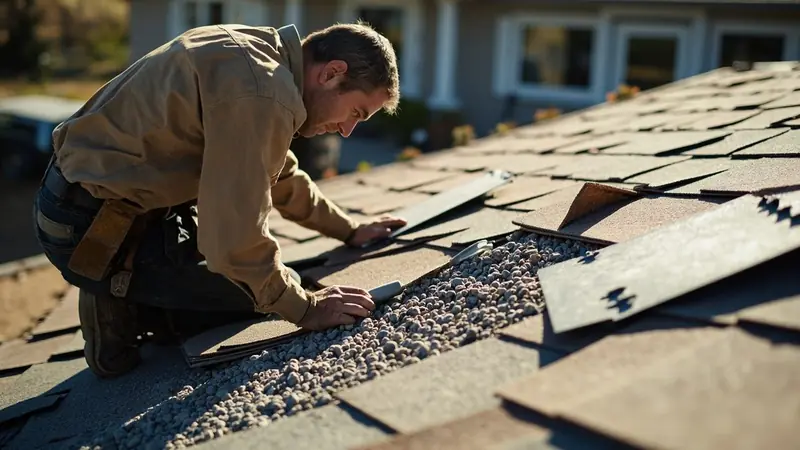
Why shingles curl or cup on Ontario roofs
A shingle that curls lifts at its edges while the center stays flat. One that cups does the reverse, and curling or cupping shingles both point to moisture moving through the mat from underneath rather than sun wear alone.
In most Ontario houses with this problem, the soffit intake vents are blocked or too small for the ridge vent above them. Outside air cannot get pulled in at the eave. The ridge vent then pulls moist air up from inside the attic instead. That air condenses on the cold underside of the sheathing overnight, and the nails sweat through the winter months. The sheathing starts to delaminate under that moisture, and the shingle above it cups from underneath with nothing visibly wrong on the surface.
Shingles curling up at edges can also come from asphalt aging out on its own, especially on a slope that takes full afternoon sun with little shade. That kind of wear sits on the surface. Shingles aging prematurely from attic moisture is a different problem, since the cause sits in the framing below the covering rather than in the shingle itself.
Once enough tabs have lost their flex, wind gets an edge to catch. A corner that lifts this season tends to have the tabs next to it lift the next time a gust comes through. A shingle with no flex left cracks instead of bending back into place. When several tabs in one section have gone stiff and the attic below them feels warm and damp, that is the point to call.
The CSLB License Lookup publishes the rules that govern work like this in your area.
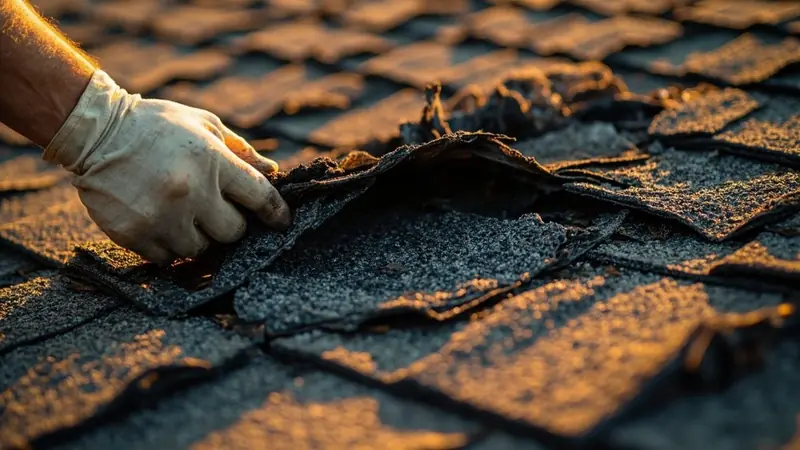
Find the sign you have, then read across to see how soon to call.
| Symptom or first sign | What is already happening | What it becomes if ignored | When to call |
|---|---|---|---|
| Gutters packed with debris | Water backs up behind the drip edge | The fascia and the bottom edge of the decking soften until the first course has nothing | Call this week |
| Missing kickout flashing where a roof meets a wall | Water runs behind the siding instead of onto the shingles | The wall sheathing rots with no stain on the roof at all | Call this week |
| Blocked soffit intake | Attic humidity climbs and the nails sweat all winter | The sheathing delaminates and the shingles cup from underneath with nothing wrong on the surface | Call this week |

How we track down curling shingles
We start in the attic, not on the roof, because that is where the cause of curling or cupping shingles usually sits.
- We check the soffit intake vents from inside the attic for blockage or insulation covering them.
- We look at the roof decking with a light for dark staining around the nails.
- We check the nail shanks for rust and condensation rings, since that reading tells us how long moisture has been collecting.
- We walk the affected slope and lift a few tabs to see whether the asphalt still flexes or cracks.
- We measure how much ridge exhaust area the roof has against how much soffit intake it gets.
Clean nail shanks with no staining point to normal asphalt aging, something handled with shingle edge sealant or a small section of spot repair. Rusted nail tips with dark rings around them mean the moisture has been condensing all winter. That calls for correcting the intake and exhaust balance before any new shingles go down.
A three tab shingle is simpler to patch in a small area, while architectural shingles hold up better against the wind gusts that lift tabs in the first place. Which one fits depends on how much of the slope is already affected and how long you plan to keep the roof as it is. When most of a slope looks like this, asphalt shingle roofing takes over from chasing individual tabs across the whole run.
We explain metal vs shingle roofing in more detail in our resources.
Our crews work to the installation standards of the National Roofing Contractors Association.
Steps to fix curling shingles
On site assessment
We start inside the attic, since that is where this problem usually begins. We check the soffit intake vents, look for staining and rust on the nail shanks, and lift a few tabs on the affected slope to see whether the asphalt still flexes. You can come up and look at the stained decking or the blocked vent with us. By the time we are back down, we can tell you whether this is surface wear or attic moisture. You get a written quote that spells out which slope and which vents are involved before anything is scheduled.
Approval then repair
Once you approve the quote, we open the soffit if the intake needs correcting, since that has to happen before new shingles go down over it. Isolated curling gets new shingle edge sealant and a handful of swapped shingles. A slope that has cupped throughout gets that section stripped and replaced along with the vent correction underneath it. We pause before pulling the first shingle so you can see the extent of the affected area before it is committed to. Shingles next to the repair area that still flex stay in place rather than being replaced automatically.
Final ventilation check
Before we leave, we measure the soffit intake area against the ridge exhaust area. Intake should equal or exceed exhaust, not fall short of it the way it likely did before. We show you that comparison and point out the vents that changed. If shingles were replaced, we also check that the new tabs seal flat with no lift at the corners before calling the job finished. That balance is what keeps the next batch of shingles from cupping the same way the old ones did.
What fixing cupping shingles needs in Ontario
Replacing shingles on an affected slope, or opening the soffit to correct intake, usually needs a permit in Ontario. The City of Ontario Building Department reviews work like this and decides what it requires for this address.
A shortcut that causes trouble here is sealing a lifted tab with edge sealant and skipping the soffit. The tab goes back down. The moist air behind it keeps condensing on the nails. The next slope over starts showing the same stain.
Another shortcut is adding ridge vent length without adding matching intake at the soffit. More exhaust without more intake pulls harder on the same blocked vents. The attic dries no faster than it did before.
Painting over stained decking instead of opening the soffit hides the sign an inspector would look for. It does nothing to change the moisture behind it. A roof that looks finished from the curb can still trap the same moist air it had before any shingles were swapped.
If you are still sorting out the cause, start with missing or lifted shingles.
What happens once you call us in
What we ask on the phone
We ask whether the curling is isolated to one slope or spread across the roof, and whether you have noticed any staining inside yet. Spread damage with interior staining usually moves to the front of the schedule. A few lifted tabs on one slope with a dry attic underneath can usually wait for a time that suits you better. Either answer tells us how to plan the visit before we arrive.
What the attic work disturbs
Checking the cause means opening the attic hatch and moving around above the insulation for a short while. Clear a path to the hatch and move anything stored directly under it. On the roof side, we lift shingles at the affected tabs to check the mat underneath, which does not disturb the landscaping or the siding the way a full tear off would. The attic access is the one spot that gets opened up.
Spot repair or full slope
A few curled tabs in one spot usually means a patch: new sealant, a handful of shingles swapped, and a vent corrected at the soffit. Cupping across a whole slope usually means replacing that slope's covering along with the venting underneath it. Whether the attic needs new intake vents cut in is part of what decides which way this goes. You see the quote in writing before any shingles come off or go down.
What you see and approve
We show you the stained nail tips or the delaminated decking in the attic, not just a description of it. You see where the soffit intake is blocked and what opening it involves. Before any tabs come up or new shingles go down, you get a plan for exactly which slope and which vents are affected, and you say go ahead before any of it starts.
Curling or Cupping Shingles Questions From Ontario Homeowners
A patch or a full slope replacement depends on how far the moisture has spread under the shingles. A few stiff tabs with clean, dry nail shanks usually take new sealant and a handful of swapped shingles. A slope with rusted nail tips and dark staining needs the soffit intake opened and corrected before any new covering goes down, since sealing a tab over wet decking only hides the problem until it shows up again on the next section.
Curling or cupping means the shingle mat is reacting to moisture or heat moving through it, not sitting flat the way it was installed. A curled edge lifts while the center stays flat, often from sun wear on an exposed slope. A cupped shingle does the opposite and usually points to moist attic air condensing on the sheathing below it. Checking which direction the shingle is bending, and what the attic looks like under it, tells you which cause you're dealing with.
A shaded slope traps attic moisture longer than one that gets full sun, so cupping can show up on the shaded side first. Soffit intake vents feeding that slope may be blocked or undersized compared to the exhaust above them, letting the ridge vent pull moist air out of the attic instead of outside air in. A sun baked slope with no shade ages shingles by a different mechanism, straight asphalt wear, which is why checking nail condition inside the attic separates the two causes.
Clean granules usually mean the asphalt itself hasn't aged out, so the cupping is coming from underneath rather than from sun exposure. Moisture moving through the mat from a damp attic can delaminate the sheathing and pull the shingle into a cup shape without stripping granules off the surface. That's why lifting a tab and checking whether it still flexes, alongside a look at the nail shanks in the attic, tells you more than the surface condition does on its own.
Rust and dark rings on a nail shank mean warm, moist air has been condensing there all winter. That moisture spreads into the surrounding sheathing, which can delaminate and push the shingle above it into a cup shape with nothing visible from outside. A sweating nail shank points to blocked or undersized soffit intake pulling air the wrong way through the attic, which needs correcting before any new shingles go down over it.
A new roof can still cup if the soffit intake vents are blocked or too small. The ridge exhaust above them then pulls moist air from inside the attic instead of outside air at the eave, regardless of how recently the shingles went on. The covering is not the cause in that case, the airflow balance underneath it is. A shaded slope installed during a cool stretch can also take longer for the edge sealant to bond, leaving a tab open to wind lift until it seals.
Hand sealing bonds a tab down for that section, but it doesn't change what's happening in the attic underneath it. If the moisture problem is blocked or undersized soffit intake, the nails keep collecting condensation through the winter and the next slope over can start showing the same staining. Correcting the intake and exhaust balance is what stops the cupping from spreading, while sealant alone only addresses the tab that's already lifted.
Why cool mornings slow shingle edge sealant in Ontario
Ontario sits in San Bernardino County, where winter mornings often sit in the mid 40s before the sun reaches a roof. Shingle edge sealant strips use the sun's heat to bond a tab down flat. A shaded north slope in a cool month can take hours longer to seal than a slope facing full sun. On an install done in that window, we hand seal the tabs on the shaded side rather than leave them to bond on their own, since a tab that never seals down is the first one wind lifts and curls. A roof installed late in the year carries that risk longer than one finished at the height of summer heat.
Work on the venting or the covering falls under the California Residential Code. That is the code family Ontario inspectors use to judge roof work. An inspector checks that soffit intake and ridge exhaust area are balanced under that code. The check looks at airflow, not just whether the shingles sit flat. A patch on the surface can fail that review even when the new shingles look right from the street. Because the review weighs airflow as much as the covering, we measure intake area against exhaust area before closing a soffit back up. That way the numbers already match what a reviewer checks for, rather than leaving the balance to chance once the attic is sealed again.
Roofing Services Near Ontario
Dealing with curling or cupping shingles in your Ontario home? Call (909) 330-4661 and a person will talk it through with you.
Address:
Ontario Roofing, 4335 E Lowell St, Suite G
More Common Roofing Problems in Ontario
From the ground, you can zoom in with a phone camera or binoculars and look for tabs lifting at the corners or granules missing in patches. That tells you which slope to mention when you call. Checking whether the lift comes from sun wear or attic moisture means getting onto the tabs themselves and looking inside the attic, and that part belongs to the visit.
Know which slope of the roof the curling shingles are on, and whether you have noticed any staining inside yet. If you know roughly when the roof was last done, mention that too. Finding where the attic hatch is ahead of time helps, since that is the first place we look once we are there.