
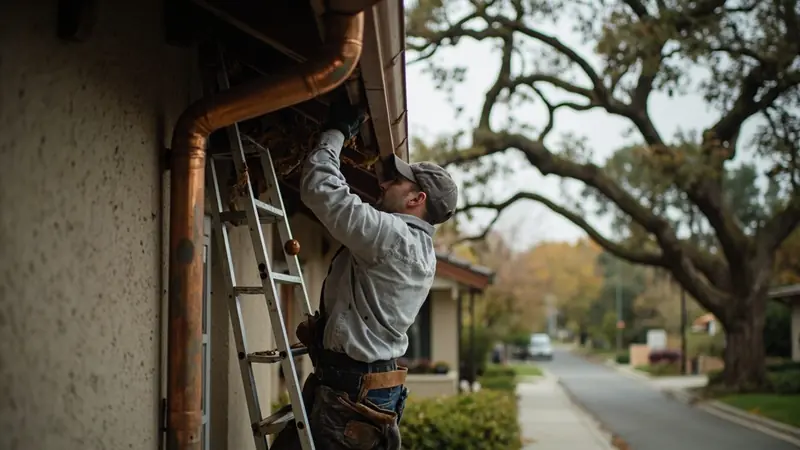
Why do gutters overflow or pull away from the roof?
Water spilling over the front lip of the gutter, or pooling in the trough once the rain stops, usually points to damaged or clogged gutters rather than a leak in the roof itself. A gutter is a trough that carries rain off the roof edge to the downspout. Once it fills with leaves, grit and shingle granules, it cannot move that water anywhere, and the trough holds it against the fascia instead.
Damaged gutters cause the same backup even when they're clear of debris. A split seam or a pulled hanger lets water drop straight down the wall instead of reaching the downspout, so the ground against the foundation gets wet every time it rains.
Signs show up in a few places. You might see gutters pulling away from the roof, loose gutter brackets along the fascia, or a sag in the middle of a long run. Standing water in gutters a day or two after a dry week is one of the clearest signs, since a gutter that drains properly empties on its own. A musty smell in the attic near the eave, or water running down the siding during a storm instead of through the downspout, points the same way.
Ontario gets most of its rain in a short winter stretch, so a gutter that looked fine all August can start gutters overflowing with water the first real storm that rolls through. Fall and winter wind events knock loose branches and leaves into the trough right before that heavier rain arrives, which is the combination that clogs a run fastest.
In Ontario's older districts, mature parkway trees drop leaves into the gutter through the fall, and the debris piles up faster than most homeowners expect. That pile dams water back against the roof edge instead of letting it run off, so the trough stays full even on a dry afternoon. Over a season or two, that standing water works under the tile or shingle edge at the eave, well below where anyone is looking from the ground.
A gutter packed with debris backs water up behind the drip edge first. From there it soaks into the fascia board and the bottom edge of the decking, until the first course of shingles or tile has nothing solid left to hold its nails. Once you can press a finger into a soft fascia board, or see that first course sagging along the eave, that is the point to call rather than wait for the next storm.
Seeing a related sign? Read about cracked or damaged flashing.

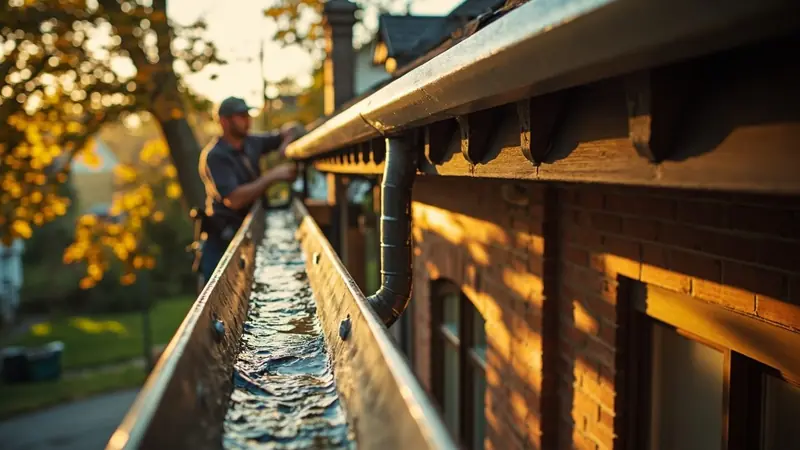
How we check and fix clogged or damaged gutters
On the visit, we start with what's blocking or breaking the gutter, then decide whether the fix stays at the gutter line or reaches into the roof edge behind it. Here's the order we work through, from the ground up to the eave.
- We look at the run from the ground and check where water is spilling over or pooling.
- We clear the debris from the trough to see whether the metal itself is bent, split, or pulled from its brackets.
- We check the fascia board and the first course of decking at the eave for soft spots.
- We walk the roof edge nearby to feel whether the deck is firm or gives between the rafters.
- We check each downspout outlet for slow drainage or a buildup of granules.
- We write up what we find and what it means for the roof before any work starts.
A walk test for deck deflection decides which way the repair goes. If the deck feels firm underfoot with no give between the rafters, the fix stays at the gutter line: reset the brackets, replace a damaged length, and clear the run. If the deck gives or feels spongy under a section, the sheathing there has delaminated or rotted. The repair has to open that part of the roof edge before the gutter goes back on. That single reading is what separates a bracket reset from pulling boards.
From there the options split by what's wrong. Loose gutter brackets and a sag in the middle of the run point to sagging gutters repair. A crushed or disconnected outlet points to downspout repair. A run where the leaves keep winning every season is a case for gutter guards instead of clearing it by hand every fall.
When the metal itself has corroded or split along most of a run, gutter installation and repair of the whole length usually makes more sense than patching it section by section. A cleared and reset gutter holds through an ordinary rain, but a run that keeps clogging every fall under nearby trees is better served by guards that keep the debris out in the first place.
Our crews work to the installation standards of the National Roofing Contractors Association.
Steps in a gutter repair visit
On site assessment
We clear the debris and check the run, the fascia, the deck underneath, and each downspout outlet, which tells us in one pass whether the problem stays at the gutter or reaches the roof edge. You can watch from the ground while we work the ladder along that side of the house. By the time we're done, you have a written quote that spells out exactly what's wrong and what it takes to fix it, before anything gets ordered or replaced.
Fixing the gutter line
Once you approve the written quote, we isolate the section causing the backup first, usually by disconnecting the downspout or pulling the damaged run free from its brackets. A repair at one spot gets reset or replaced in place. Where the fascia or decking underneath has already softened, that section comes out and gets replaced before the gutter goes back on. You see the old section before it goes in the trailer, and nothing past the approved work gets opened without checking with you first.
Closing moisture reading
If decking got replaced, we check it with a pin moisture meter against the underside before closing that section back up. A reading under 15 percent reads as dry, which is what has to show before the gutter goes back on. We show you that reading on the meter, along with the old piece of decking or gutter that came out. That's what we leave you with when the ladder comes down and the run is back in place.
What fixing clogged gutters needs in Ontario
Most gutter repair itself doesn't call for a permit, but once the fix opens the fascia or replaces decking at the eave, that work usually does. The City of Ontario Building Department has the final say on jobs that reach that stage.
Clogged gutters that get cleared without resetting the loose hardware back up again fast, especially under trees that keep dropping leaves through fall. Clearing the trough and leaving a bent hanger in place looks finished from the ground, but the low point it creates still holds water, so the same spot backs up at the next real storm.
Caulking a split seam instead of replacing that section works for a season. Then the seam opens again under the next heavy rain, and the water finds a new path down the fascia instead of into the downspout.
Resetting a sagging run without checking the slope toward the downspout is another shortcut. It stops the overflow at that spot but just moves the standing water to the next low section down the line.
The CSLB License Lookup publishes the rules that govern work like this in your area.
What happens once you call about your gutters
Deciding if this is urgent
During the call, we check whether water has reached the fascia or siding, or if it's still just spilling over the trough. We also ask how long the run has been pulling away from its brackets. Water already touching the wood usually points to a visit the same day. Overflow alone, with no wood contact yet, can often wait for a scheduled slot instead.
What gets moved or cleared
Expect ladders set along the gutter line on that side of the house, so patio furniture, planters and anything breakable under the eave should come in first. Downspouts sometimes get disconnected at the base to check for a crushed or blocked outlet, so keep that area clear too. Landscaping right under the drip line may get stepped on briefly while the run is cleared, so move anything delicate out of that strip beforehand.
Repair spot or full run
What decides the size of this job is how far the damage reaches once the debris comes out. A bent hanger or one bad seam stays a repair at that spot. A run where several sections have pulled loose, or where the fascia underneath has gone soft in more than one place, moves toward replacing the whole run instead of patching it piece by piece. Either way, you see the written quote before anything gets replaced and approve it first.
What you see before work starts
We show you the soft fascia board or the bent hanger where it's found, not just describe it over the phone. If the problem reaches past the gutter into the roof edge, we point out exactly where before opening anything further and wait for your go ahead. Any section that gets replaced comes out where you can see it, including a fascia board that's gone soft enough to crumble at the edge.
Damaged or Clogged Gutters Questions From Ontario Homeowners
Look for water spilling over the front lip of the gutter or pooling in the trough after rain stops. Check for loose brackets along the fascia, a sag in the middle of a run, or water running down the siding during a storm instead of through the downspout. A musty smell near the eave inside the attic points the same way, often before any wood underneath has softened.
Clogged gutters back water up behind the drip edge, where it soaks into the fascia board and the bottom edge of the decking. Over a season or two that moisture leaves the first course of shingles or tile with nothing solid to hold its nails. Once a finger presses into a soft fascia board, that damage has already reached the roof edge.
Blocked gutters hold rainwater in the trough instead of reaching the downspout, pressing water against the fascia. The longer the blockage sits under fall leaf drop, the more likely the fascia and decking underneath begin to soften. Water held against that edge works under the first course of shingles or tile, softening the wood holding it in place. A soft fascia board or a sagging first course along the eave is the point where the backup has reached the roof structure, not just the gutter line, and calls for a visit rather than more clearing.
Check a hard to reach gutter with a phone camera or binoculars from the ground first. Once you need to know whether the fascia or decking underneath is still firm, that call means someone on the roof edge, tied off, since no ground level check answers that question. Reaching higher than a ladder safely allows, or opening the gutter line itself, belongs to that visit rather than a DIY attempt.
Water tracking behind a pulled gutter can wet the siding every time it rains. That steady wetting at one point on the wall also keeps the ground against the foundation wet. Fixing the gutter line stops the water at its source, but the siding gets checked separately for staining or softening the tracking has already caused. Catching it early keeps the damage at the surface rather than reaching the wall framing behind it.
Gutter guards reduce most leaf buildup, but no guard blocks every bit of grit and granule debris forever. Mature parkway trees in Ontario's older districts drop leaves through fall faster than most homeowners expect, and fine debris can still settle past the mesh over time. Guards work better than hand clearing every season for a run that keeps clogging under nearby trees. They don't fix an existing problem though, so a damaged hanger or a split seam underneath still gets reset or replaced before the guards go on.
Flat sections behind parapets hold water on the surface instead of shedding it off a sloped edge. A dry surface with drains clear within about two days of rain is normal. Standing water still there after two days loads the deck and works at every seam along that wall. That calls for a ponding check with the water line marked in chalk, since there's no downspout carrying water to the ground to show whether it's moving.
A crushed or disconnected downspout outlet sends water straight down next to the house instead of away from it. That keeps the ground against the foundation wet after every rain instead of letting it drain off. Checking the outlet after a storm shows whether water flows out freely or backs up at a joint higher up. Clearing that joint and resetting the outlet moves water away from the foundation again.
Why parkway tree debris changes gutter repair in Ontario
Rain in Ontario falls mostly across a few winter months, so a clogged run carries the heaviest load during that short stretch rather than year round. The sandy, fast draining soil common across the area doesn't hold much rainwater on the ground. That means more of it has to move through the gutter system instead of soaking in nearby. Add fall and winter wind events that knock loose branches and leaves into the trough right before the rain arrives, and a gutter that was fine in summer can be overwhelmed within one storm cycle. Mature parkway trees in Ontario's older districts make this worse, since their leaf drop lands straight in the trough below. A roof edge built for routine runoff ends up holding water against the fascia for days at a time instead of hours, which is what pushes a seasonal cleaning job into a repair.
Work that opens the fascia or replaces decking at the eave gets looked at the same way other exterior repair does in Ontario, through the same permit stage the city already reviews for roofing work. An inspector checks how the new wood ties back into the roofline and whether the flashing and drip edge above it still shed water correctly before the gutter goes back up. That's why a repair reaching past the gutter itself gets written up as its own line in the job, separate from clearing and resetting. Routine gutter clearing or a straight hanger swap doesn't reach that stage at all, which is most of what this symptom involves.
Roofing Services Near Ontario
If you are seeing damaged or clogged gutters anywhere in the Ontario area, call (909) 330-4661 and we can tell you what to check first.
Address:
Ontario Roofing, 4335 E Lowell St, Suite G
More Common Roofing Problems in Ontario
Zooming in with a phone camera or binoculars from the ground shows whether the trough is mounded with leaves, whether a bracket has pulled away from the fascia, or whether a seam has opened at a joint. That check stops once you need to know if the fascia or decking underneath is still firm, since that call means someone on the roof edge, tied off.
Know when the overflow or sagging started, and whether it followed a storm or a windy stretch, before you call. Note which side of the house it's on and whether water is reaching the fascia yet. If you know roughly how old the gutters or the roof are, that helps, along with where the nearest downspout empties out.