

Are ceiling water stains permanent?
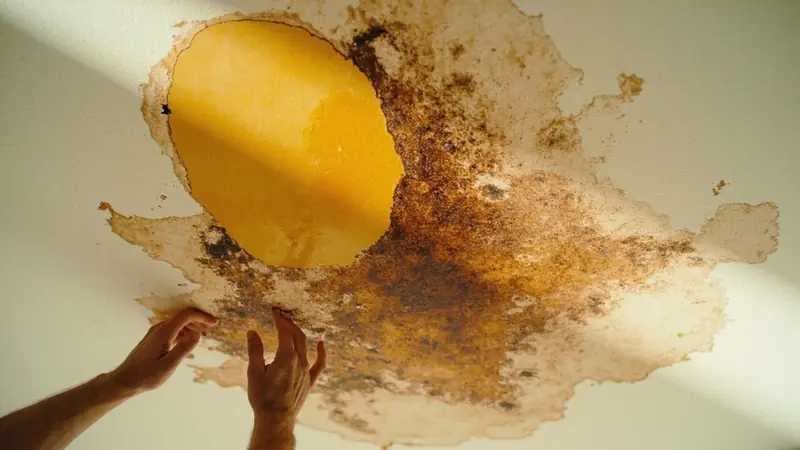
Ceiling water stains are not usually permanent by themselves, though what caused them often leaves lasting damage behind. A brown ring on ceiling drywall is the mineral and tannin trace left once water dried on the surface, one of the water stains on ceiling finishes homeowners notice weeks after the rain that caused them. The ring rarely sits right under the hole that let water in. Water tracks sideways along a rafter or across the back of the drywall before it drops, so the mark usually sits downhill from the real entry point, often well uphill under the tile.
In Ontario, a common source behind a stain like this is a cracked pipe boot, the rubber or metal collar that seals a roof around a vent pipe. Once that boot splits, water runs down the outside of the pipe instead of draining off the tile, and it lands in the attic insulation around that penetration.
The wet insulation holds water against the drywall below long enough to leave the mark, and if it stays wet, the framing around the pipe starts to soften under it. That path means the stain on the ceiling can keep growing even after a storm passes, since the insulation stays wet long after the roof itself has dried.
Finding that point takes more than looking straight up from the stain. Concrete tile sits on battens above the plywood deck, so the actual gap in the boot or flashing can be a full roof plane away from the ceiling mark below it. A stain that lines up with a bathroom or kitchen vent pipe, rather than a chimney or wall, usually points straight at this cause.
Not every stain means ceiling water damage is active right now. A faint, dry ring with no odor and a ceiling that still feels firm is often old and no longer growing. Call sooner if the stain spreads after a fresh rain, if you press the spot and find ceiling sagging and wet drywall instead of a firm dry ring, or if a musty smell in ceiling drywall shows up that was not there before.
Softened framing around the pipe loses its grip on fasteners, which is what eventually lets the boot shift further and let in more water. Any one of those signs means water is still reaching that spot, and each storm that passes before it is found adds more softened insulation and framing for the repair to deal with.
If you are still sorting out the cause, start with attic mold.
Find the sign you have, then read across to see how soon to call.
| Symptom or first sign | What is already happening | What it becomes if ignored | When to call |
|---|---|---|---|
| A cracked pipe boot | Water runs down the vent pipe into the attic insulation | The ceiling below stains and the framing around the penetration softens | Call this week |
| A pinhole at a flat roof seam | Water tracks sideways between the membrane and the insulation | A wet board loses its insulating value | Call this week |
| Missing kickout flashing where a roof meets a wall | Water runs behind the siding instead of onto the shingles | The wall sheathing rots with no stain on the roof at all | Call this week |
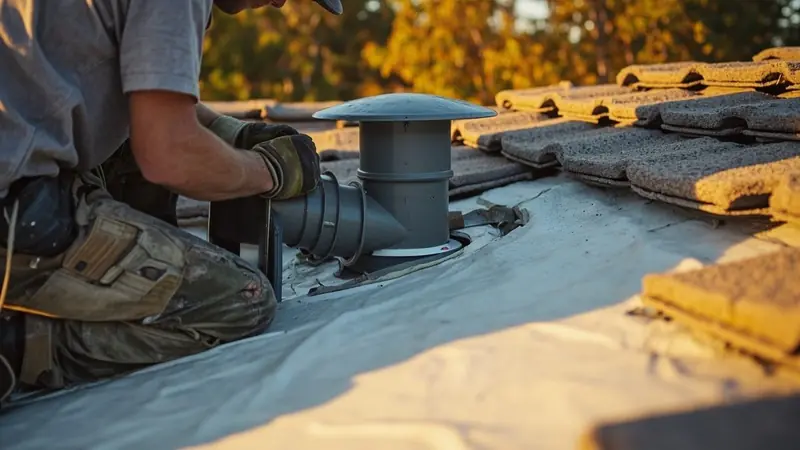
How we trace a ceiling water stain to its source
The visit starts with an attic moisture inspection focused on the stain's uphill side, since the attic shows where water is traveling before the roof does.
- We look at the attic insulation and nail tips above the stain for staining or recent wetness.
- We check the eave intake for blocked bird stops that could be trapping moisture instead of a leak.
- We run a pin moisture meter against the underside of the decking around the nearest vent pipe and valley.
- We trace outward across the tile toward the boot, valley, or wall line uphill from that point.
- We pull the boot or flashing we suspect and check its condition against the moisture readings.
That attic to roof sequence is the core of ceiling leak detection on a stain like this, since locating the point before opening anything avoids lifting more tile or drywall than the job needs.
A pin moisture meter reading under 15 percent on that section of decking reads as dry. A dry reading next to a resealed boot is usually enough to patch and repaint the ceiling. A reading above 20 percent tells a different story. That piece of decking has already taken on water and has to be cut out before the roof goes back together, which usually means opening more tile than the stain alone would suggest.
From there the choice is between two kinds of work. A dry deck with a cracked boot is a flashing and ceiling repair, closed up in one visit to that section of roof. A wet, compromised deck means a section of decking gets replaced along with the boot, and drywall water damage repair patches and repaints the ceiling once the roof side is confirmed dry, not before. If the moisture reading stays low near the obvious penetration but the stain keeps coming back, a roof inspection checks the tile and valleys further uphill for a cause the attic view alone did not show.
Our page on roof inspection services explains the repair side of this.
The CSLB License Lookup publishes the rules that govern work like this in your area.
How the ceiling stain visit runs
On-site assessment
The visit starts in the room with the stain, where we ask what you have noticed and when it changed. From there we move to the attic and run the moisture meter and staining checks, tracing the mark back toward its source on the roof. You see where on the roof that trace leads, whether it is a boot, a valley, or a wall line, before anyone touches the tile. Once the source is pinned down, we write up what we found and put together a quote covering the repair or replacement that reading points to, and you have that in hand before any work begins.
Repair or replacement
Once you approve the quote, we protect the room below the work area before anything on the roof is disturbed. If the deck reads dry, the boot or flashing gets resealed or replaced and the tile goes back down over it. If the deck came back wet, that section gets cut out and replaced before the boot or flashing goes in, which means lifting more tile around that spot. The ceiling patch and paint wait until the roof side is confirmed dry, so the repair below does not have to be redone.
Final moisture check
The pin moisture meter goes against the same section of decking one more time before the tile goes back down. A reading under 15 percent means that area reads dry and holds, which is what has to show before the roof closes up. We show you that reading next to the one taken at the start of the visit, so you can see the difference for yourself before the ceiling patch and paint go on below it. That same check is why a quick reseal without the meter can look finished while the deck underneath stays wet.
What fixing ceiling water stains needs in Ontario
Opening decking or replacing a run of tile to reach the boot usually needs a permit, and the City of Ontario Building Department decides what that permit covers. A simple reseal of an existing boot or a small flashing patch usually does not reach that threshold, but a section of new decking or tile often does.
A few shortcuts cause trouble on this exact job. Smearing roofing cement over a cracked boot instead of replacing it buys a season at most, since the cement dries and cracks the same way the boot did. Painting over the ceiling stain without finding the source lets it bleed back through the new coat within a few rains, and ceiling stain repair and painting only holds once the boot or flashing above it is fixed. Lifting only the one tile directly over the stain, instead of following the batten line to the actual gap, can miss a wider wet area the tile was hiding.
The repair for this usually falls under emergency roof repair.
What happens once you call about it
Same day or scheduled visit
When you call, we ask whether water is active right now and whether the ceiling feels soft or spongy under light pressure. Either answer usually means someone comes out that day, before the softened area spreads further. A stain that is dry, stable, and has not changed in weeks can usually wait for a scheduled visit instead. We also ask when the stain first appeared and what the weather was doing around that time, since that helps narrow down which part of the roof to check first once we arrive.
What gets opened up inside
Reaching this leak usually means moving insulation in the attic above the stain and, if the deck underneath is wet, cutting out drywall to dry and repair the ceiling itself. Clear the floor space under the stain before the visit so nothing sits in the way of a ladder or a drop sheet. Furniture or boxes stored in that part of the attic get moved aside to reach the insulation and decking above the mark, and anything fragile below the stain is worth moving out of that room first.
Repair at one point or more
The size of this job turns on what the roof side shows once the boot and decking are checked. A dry deck with a cracked boot stays small, limited to that penetration and the tile right around it. A wet, compromised section of decking means lifting more tile to reach it and cutting out that piece before anything goes back together. Whether a second penetration nearby shows the same reading also changes how much tile comes up. You see the quote in writing for whichever work applies and approve it before any tile or decking is disturbed.
What you see and decide
We show you the moisture reading next to the stain's position so you can see why the cause sits where it does. The cracked boot or the wet piece of decking comes out where you can look at it before it goes in the trailer. If reaching the leak means opening more tile or cutting into the ceiling further than first expected, we stop and walk through the options before anything past that point gets touched. Paint and ceiling finish choices for the patch are yours to make once the roof side is confirmed dry.
Ceiling Water Stains Questions From Ontario Homeowners
Painting over a ceiling stain only hides it until the next rain. The stain is a mineral and tannin trace left once water dried on the drywall, and repainting does not address the cracked boot or flashing causing it. New paint can bleed through again if that source stays open. Ceiling repaint work holds once the roof side is confirmed dry with a pin moisture meter.
Scrubbing or wiping will not remove it, because the discoloration is set into the drywall paper and paint. Cutting out the damaged section or skim coating it and repainting is what clears the mark. That step only holds once the boot or flashing causing the leak is resealed or replaced and the decking underneath has dried out. Painting straight over the ring without fixing the source lets the stain bleed back through within a few rains. Ask about an attic moisture check first so the patch goes on after the roof side is confirmed dry.
Press the spot and check whether the ceiling feels firm and dry or soft and spongy. A firm dry ring with no odor is often old and stable, and a scheduled visit can trace it. A soft spot, a spreading mark after rain, or a musty smell means water is still reaching that area and calls for a same day visit.
Water travels sideways along a rafter before it drops, so the stain sits away from the gap above it. A cracked pipe boot or a flashing gap uphill on the roof lets water run into the attic insulation. That wet insulation holds moisture against the drywall long after the roof itself has dried. No active dripping shows up in the room because the water never reaches the ceiling directly, it travels along the framing first. A faint, dry, stable ring with no odor can also be an old mark from a leak that was already fixed.
Worry when the stain spreads after a fresh rain or the ceiling feels soft under light pressure. A musty smell in the room that was not there before is another sign water is still reaching that spot. Each of these means the boot or flashing above it is still open, and the insulation and framing keep taking on water with every storm.
Removing a ceiling stain for good means fixing the cracked boot or flashing causing it. The damaged drywall is then cut out and replaced or patched and repainted. Painting over the mark without that step lets the mark return through the new paint before long, since the source above it is still open.
Cutting out the stained drywall or skim coating and repainting is what takes the stain away for good. That patch step waits until the boot or flashing above the stain is resealed or replaced and the decking has dried through. Doing the ceiling work first, or just painting over the ring, lets the mark reappear once the next rain hits the same soft spot. The roof side gets checked and closed up before any paint or drywall repair starts below it, so the fix underneath does not undo itself.
Why 1980s and 1990s tile roofs stain ceilings in Ontario
Many stucco tract homes built in Ontario during the 1980s and 1990s carry hip and gable roofs finished in concrete tile, laid over battens on a plywood deck with felt underlayment underneath. The eaves are vented with bird stops to keep pests and debris out while still letting air into the attic. On houses this age, that felt underlayment is now old enough to fail well before the tile itself wears out, so a cracked boot or an opened seam in the felt can leak for a while before a stain shows up on the ceiling below. Because the tile sits on battens rather than directly against the deck, the actual gap uphill from the ceiling stain can be a full course of tile away from where the mark appears, so reaching it means lifting tile along the batten line rather than just the piece straight above the stain.
Work that opens the decking or replaces a section of tile to reach a leak falls under the California Residential Code, which sets the requirements for roof coverings and flashing on a job like this. A reseal of an existing boot or a small patch of felt usually stays within routine repair and does not call for the same scrutiny. Once a section of decking has to come out, the replacement piece and the flashing around it are fastened and sealed to that code's requirements before the tile goes back down. That is also why that step gets checked before the ceiling patch goes in.
Roofing Services Near Ontario
If you are seeing ceiling water stains anywhere in the Ontario area, call (909) 330-4661 and we can tell you what to check first.
Address:
Ontario Roofing, 4335 E Lowell St, Suite G
More Common Roofing Problems in Ontario
You can look in the attic with a flashlight and check the insulation and nail tips above the stain for new staining or dampness. That check stops once you are deciding whether to lift tile or open decking, since both call for working on a tile roof itself. Tracing the gap in the boot or flashing, and replacing a wet section of decking, belongs to the visit.
When the stain first appeared and whether it has grown since the last rain help most. Note whether the ceiling feels soft or sagging near the mark, and whether the room smells musty. If you know the roof's age, or when the tile last had work done, have that ready, along with where your attic access is.