
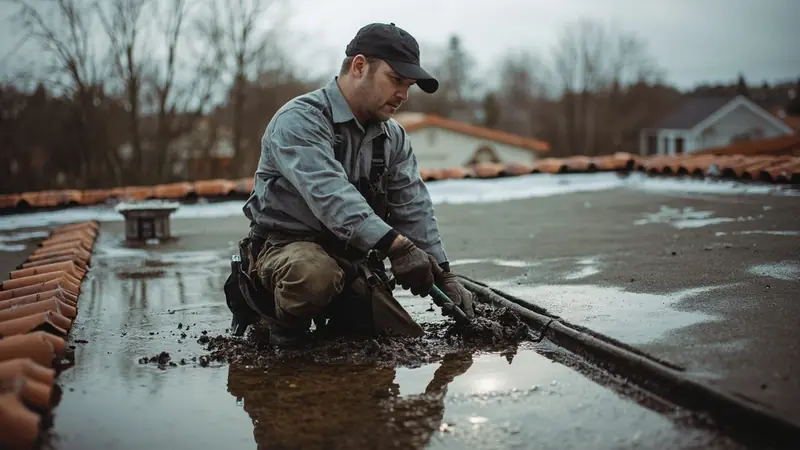
What ponding water on a flat roof means for your house
When rain sits on a flat roof for days instead of draining away, that's ponding water on flat roofs, usually caused by a low spot in the deck or a blocked scupper. A dark ceiling ring may appear below, and the leak might only surface when wind blows rain from a particular angle.
A leak tied to wind direction usually points at a wall. A stain near a parapet cap often means water is pooling against that wall before it finds a way in, which is what a roof holds water after rain looks like instead of draining the way it's built to.
The membrane does not need a visible hole to let water in. A pinhole in a seam can let water slip sideways beneath the membrane. That shift lets the indoor wet mark appear several feet from the actual roof opening. Once a board under the membrane takes on water, it loses its insulating value and stops supporting the membrane the way it should. The deck under that board starts to corrode, and the damage spreads out from the pinhole long before any of it shows on the surface.
Flat roofs that use interior roof drains instead of a scupper and downspout setup show ponding differently, since a clogged interior drain backs water up across the whole field instead of just against one wall. Either way, a puddle that doesn't clear within a day or two of dry weather, sometimes called birdbath ponding, is already sitting past what the membrane is built to hold for long.
In Ontario, a flat section often sits behind a parapet wall on an older house, built as a porch or addition roof while the rest of the house is pitched. Most of the year's rain falls between November and March, and that stretch loads the flat section hardest. When the roof drain scuppers along that parapet clog with leaves, water has nowhere to go and starts to collect against the wall. That pooling is what drives the leaks you see at the parapet cap and the wall flashing below it.
Ponding water on roof surfaces for more than about two days is the sign that matters most. It starts by adding weight to the deck, then works at every seam it's sitting against, then opens a path through the membrane at the weakest point. Once that happens, water reaches the insulation and the deck, not just the surface. That's the point to call, before the next storm adds more weight to a deck that's already wet underneath.
The repair for this usually falls under EPDM flat roofing.
How we trace a ponding roof back to its cause
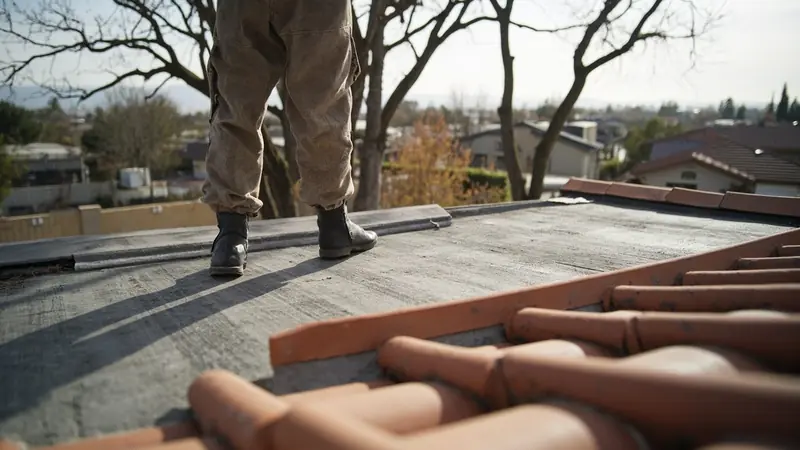
Finding out why water isn't draining off a flat roof starts inside the house, tracing the stain back along the framing before anyone walks the roof. That inside read points us toward the right side of the roof instead of searching the whole field blind.
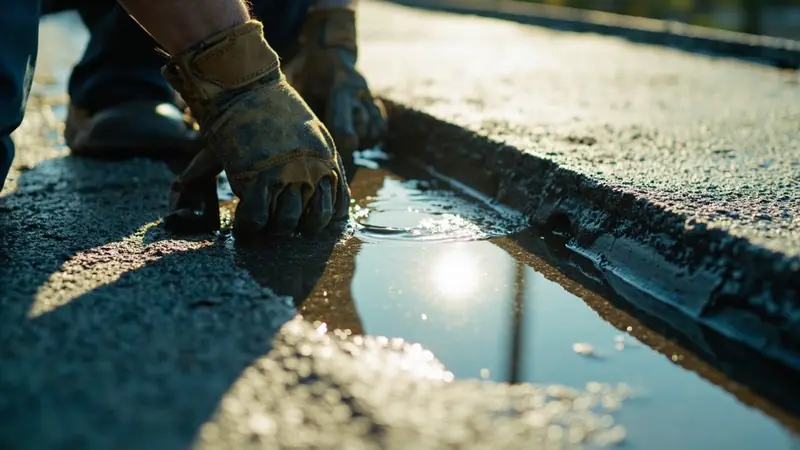
- We mark the waterline with chalk so the next visit shows whether that spot is draining or still full.
- We check the scupper or drain opening for debris that's keeping water not draining off roof surfaces the way it should.
- We check the seams and terminations closest to the low point for an opening.
- We scan the field after sunset on a clear evening, looking for warm patches that hold heat from trapped moisture.
- We cut a small core sample where the scan flags a warm spot, to see how far any wet insulation reaches.
The core sample is what decides the repair. A core that comes up dry means the membrane and the seam near it can be patched and the slope corrected without opening up more of the deck. A core that comes up soaked or crushed means the wet area reaches further than the stain shows. That board has to come out before a new membrane goes down over it.
Where the existing scupper is undersized for the roof it drains, we check the numbers before recommending anything new. Adding an overflow scupper installation or a second interior roof drain only goes on the quote when the roof's drainage falls short of what it needs.
Where the problem is a true low point rather than one bad seam, we look at roof slope correction. Adding tapered insulation crickets at that spot gives water a path back to the scupper instead of a flat place to collect. A smaller section with one clogged drain often just needs the drain reset and the seam resealed. A roof holding water across several sections, or a membrane that's past its working life everywhere, usually points toward a full TPO single ply membrane replacement, which has its own page.
The CSLB License Lookup publishes the rules that govern work like this in your area.
How the ponding roof visit runs
Finding the low point
We start at the spot where water sits, mark the waterline, and check the scupper or drain before walking the rest of the field. We check seams near the low point, scan the roof after sunset on a clear evening for warm patches, and cut one core sample to see how far any wet insulation reaches. You walk the roof with us where it's safe to stand, and we point out the low point and any opened seam as we find them. By the time we're done, we can name what's causing the ponding and have a written quote ready to go over with you.
Resealing or slope correction
You look over the quote and decide which repair fits before anything gets opened. For a seam only fix, we clean the area, reseal the opening, and check that it holds water out under a test. Where the low point itself is the problem, we set tapered insulation crickets at that spot and build the slope correction into the new section, so water has a path to the scupper instead of a flat spot to collect in. Any wet board we find gets replaced before the new membrane goes down over it.
Checking the finished slope
Before we leave, the pin moisture meter goes against the repaired deck. A reading under 15 percent is what we're looking for there, confirming the new membrane is going over decking that's dry. Then we run water across the corrected slope and watch where it heads. You see it move toward the scupper instead of sitting at the old low point, which is what tells us the job holds.
What a ponding repair needs in Ontario
A slope of about 2 degrees is usually enough to carry water to a scupper, but only if the drain path underneath is still open and the deck hasn't sagged below that line. Replacing a flat roof section typically requires a permit, which the City of Ontario Building Department has to approve before the new membrane goes down.
The shortcut that causes repeat calls is patching the surface without correcting the slope underneath it. A membrane patch stops one leak for a while, but if the low point that caused the ponding is still there, water finds the next weak seam the following winter. Another shortcut is reusing old scuppers that are narrower than the roof's current drainage load, which backs water up behind the parapet again as soon as debris collects. Skipping tapered insulation crickets at a low point means the next heavy rain just rebuilds the puddle in the same place it was before.
This is the kind of problem we solve with flat roof repair.
What the roofing job looks like from here
Today call or booked visit
During the phone conversation, we check if water still pools on the roof or has drained off, and if the interior stain keeps spreading. An active leak with water still standing usually points to someone coming out the same week. A drained roof with a dry stain can wait for a booked visit, once the surface is safe enough to walk and check the low point properly.
What gets opened to look
Tracing a flat roof leak can mean opening a section of ceiling below the stain to see how far the water traveled, and walking the roof itself once it's dry enough to carry weight safely. Clear furniture and anything that can't get wet from the room under the stain before the visit. We move outdoor furniture or planters off the roof deck, where there is one, so we can reach the scupper and the low point.
Patch or slope correction
The core sample decides most of it. A dry core under one opened seam usually means a patch and a reseal. A soaked or crushed core means more of the deck has to come out before new insulation and membrane go back down. Whether the existing scuppers can stay or need to be resized adds to the work, and so does whether tapered insulation crickets go in to stop the low point from reforming. You see each of these in a written quote and approve it before anything is opened up.
What you see decided
We explain readings where we take them, whether that's the core sample on the roof or the moisture meter against the decking from inside. You see the low point marked on the roof and get to weigh a patch against a roof slope correction before anything is decided. Any wet board or insulation that comes out gets set where you can see it, so the size of the problem isn't something you have to take on word alone.
Ponding Water on Flat Roofs Questions From Ontario Homeowners
Water leaves through a scupper in the parapet wall or through an interior roof drain, depending on how the section was built. A scupper routes water out through the wall and down a downspout, while an interior drain pulls water down through the roof field itself. Either path needs to stay clear of debris and needs enough slope behind it to carry water there. When one clogs or the slope flattens, water sits instead of reaching either outlet.
A slope of about 2 degrees usually carries water to a scupper. That only holds if the drain path stays open and the deck hasn't sagged below that line. Correcting the slope on a repair means building the surface so water keeps moving toward a working scupper instead of settling at the old low point, which is what stops the puddle from reforming in the same spot.
Standing water on a flat roof is a problem once it sits past about two days after rain. That extra weight loads the deck, works at every seam underneath it, and eventually opens a path through the membrane at the weakest point. Once water reaches the insulation and deck under the membrane, the damage spreads out from that opening before anything shows on the ceiling inside.
Two days of dry weather is the point where standing water stops being normal and starts working against the roof. Past that mark, the weight on the deck and the pressure against each seam keep building instead of easing off. Chalking the water line on a visit is how you can tell if a spot is draining or still full.
About 2 degrees of slope is usually enough to keep water moving toward a scupper. The drain path underneath has to stay open for that pitch to matter, though. A roof built to that slope can still pond if the scupper is undersized for the roof's drainage load or if the deck has sagged below the line it was built on. Tapered insulation crickets added at a low point rebuild that path once the original slope has flattened out over time.
Fixing it starts with finding whether the problem is one bad seam or a true low point in the deck. Those two causes call for different repairs. A core sample that comes up dry usually means the seam gets patched and the slope corrected without opening more of the deck. A core that comes up soaked points to a wider repair. Tapered insulation crickets and a resized scupper get added only where the drainage falls short of what the roof needs.
Water sitting on a flat roof for a day or two after rain is within what the membrane is built to hold. Some pooling after a storm is expected because of that. It stops being normal once it sits past about two days, since that's when the weight and pressure start working at the seams instead of just resting on the surface. A roof that ponds in the same spot after every rain usually has a clogged scupper or a low point in the deck behind it.
Why parapet drainage changes flat roof repairs in Ontario
A flat roof section in Ontario often sits behind a parapet wall, built into older houses as a porch or addition roof while the main roof around it is pitched. That design has no eave for water to run off at the edge, so it depends entirely on the scuppers in the parapet wall to drain. When those scuppers clog with leaves, water pooling after every rainstorm becomes normal for that section instead of an occasional problem. The pitched sections of these houses often carry a tile covering, and the ground around them drains fast once water reaches it. None of that helps a flat deck sitting a few inches below the top of the parapet with its only way out blocked. Correcting the slope on a repair like this means building the new surface so water reaches a working scupper before it's deep enough to load the deck.
Work like this is reviewed under the California Residential Code, which covers a flat or low slope section the same way it covers the rest of the roof framing on a house. An inspection at that stage checks whether the corrected slope carries water to a working scupper, not just whether a new membrane sits over the old low point. We test the slope with water before the membrane goes down for good. For an addition or porch roof built decades after the main house, that step matters, since the framing underneath it was often sized for a smaller load than the rest of the roof. That mismatch shows up often on older Ontario houses where a flat section was added after the original roof went up.
Roofing Services Near Ontario
Dealing with ponding water on flat roofs in your Ontario home? Call (909) 330-4661 and a person will talk it through with you.
Address:
Ontario Roofing, 4335 E Lowell St, Suite G
More Common Roofing Problems in Ontario
Clearing leaves and debris from the scupper outlet and downspout at ground level keeps minor clogs from turning into standing water on roof. Stop there. Climbing onto a flat roof to check the drains yourself means standing on a wet, possibly overloaded deck, which is where the real risk sits. Finding the low point, testing the slope, and opening a seam or the deck itself belongs to the visit.
Before you call, note how many days the water has sat since the last rain and whether the stain inside is still spreading. Knowing roughly where the stain sits relative to an inside wall helps us guess the low point before we arrive. If you know the roof's age or whether it's been patched before, mention that too, along with how to reach the roof safely.