
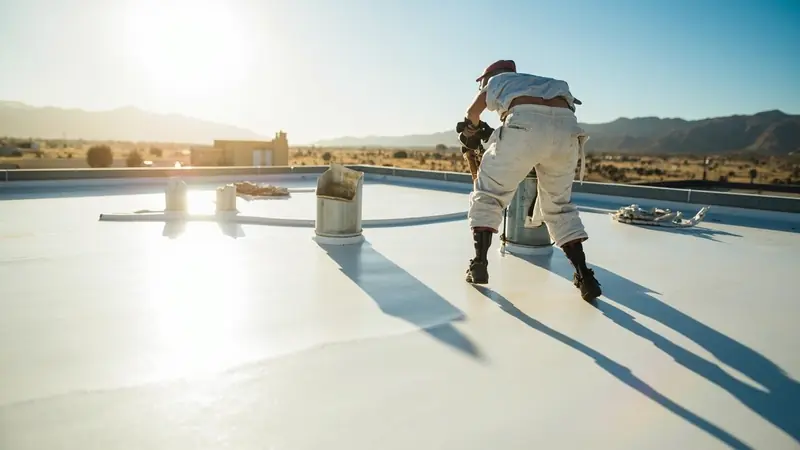
Which flat roof is best, TPO or EPDM
A flat or low slope roof is covered with a single ply membrane instead of shingles or tile, and TPO membrane roofing and EPDM rubber roofing are the two sheets most buildings in this area get. The comparison people ask about, TPO vs. EPDM, which flat roof is best, comes down to how the seams are joined and how each sheet handles heat.
TPO sheets are heat welded at the seams, so the joint becomes one continuous piece of plastic. EPDM sheets are taped or glued, and a glued seam can lift years before the rubber itself wears out. A white TPO membrane reflects sun, while a black EPDM membrane absorbs it and runs hotter on the roof surface.
Owners usually notice one of two things first. Either the same spot keeps getting patched and the patch fails again nearby, or a corner of the roof has gone stiff and cracks when you press on it. Both point to a seam or a membrane that has aged past the point a patch can hold.
A tiny hole in a flat roof seam allows water to move sideways under the membrane, soaking the insulation beneath it. The insulation board under that water loses its ability to hold heat. The roof deck under the wet board can corrode well away from the hole you can see on the surface. Once a patch on the same seam has failed a second time, or a stain shows up on the ceiling under a flat section, that spot has moved past a patch and needs the membrane opened and checked.
The service side of this is covered under flat roof repair.
Our crews work to the installation standards of the National Roofing Contractors Association.

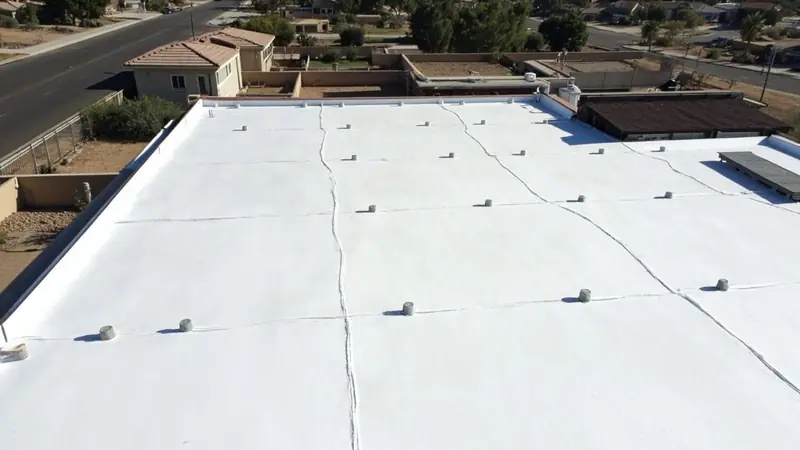
Checking your flat roof before replacing it
A flat roof visit starts at the drains, not the membrane itself, because standing water is the fastest way to tell how the roof is behaving.
- Check every drain and low point for water sitting after recent rain.
- Walk the field and look at every seam and termination for lifting or separation.
- Scan the roof after sunset with an infrared camera to find warm patches holding heat.
- Cut a small core sample where the scan flags a warm area.
- Check the membrane's flexibility and thickness at a few points across the field.
The core sample is the reading that decides the job. A dry core through every layer means the roof gets a repair at that seam or penetration. A soaked or crushed core means the wet area under the membrane is larger than the stain shows, and patching the surface will not dry out what is underneath, so that section gets replaced.
Where replacement is the answer, the choice sits between TPO or EPDM roof coverings. EPDM rubber membrane comes in wide sheets, which means fewer flat roof seams on a small roof, and it stays flexible through temperature swings without cracking. A fully adhered EPDM sheet is glued down, while a ballasted EPDM system is held in place with stone instead of full adhesion.
TPO's heat welded seams hold up better over a large field where there are more joints to maintain, and its lighter surface runs cooler under direct sun. Roofing membrane thickness matters for both, since a thicker sheet resists a dropped tool or foot traffic better than a thin one.
When you are ready for the work itself, see emergency commercial roof repair.
Steps in a flat roof replacement
Finding the wet section
We start at the drains and work the seams, then confirm any suspect area with an infrared scan and a core sample, in that order, so you see exactly where water has gotten under the membrane. You will watch the core come out and see whether it is dry or soaked. By the time this step ends, the wet section is marked on the roof, the cause is named, and a written quote covering that section is in your hands before anything is cut.
Opening and replacing the section
Once you approve the quote, the old membrane over the affected section is cut back and the wet insulation board underneath comes out first. The deck underneath gets checked and dried before anything new goes down. New insulation and a TPO or EPDM sheet, matched to the class approved in the quote, are set in and the seams are heat welded or glued depending on the membrane. Flashing at every drain, vent and penetration in that section is replaced rather than reused.
Checking the finished membrane
Before we leave, every new seam gets walked and checked by hand. The section is watched during the next ponding check to confirm it stays dry within about two days of rain with no low spot holding water. You are shown the sealed seams and the drain or boot that was replaced, so you can see the finished work matches what the quote described.
What a flat roof job needs in Ontario
Replacing a flat roof covering usually calls for a permit here. The City of Ontario Building Department handles that review and the inspection before the roof closes up, under the California Residential Code where it applies to the structure. A repair patched into the same footprint often does not trigger that review, but the building department has the final word on a given job.
A common shortcut is welding or gluing a new membrane over a deck that never dried out from the last leak. The new seams hold for a season, then the trapped moisture under them works the same wet board until it corrodes again, and the second failure is harder to find than the first. Another shortcut is skipping tapered insulation at a low point to save a step, which leaves the same drain problem under the new membrane that caused the ponding in the first place.
A third shortcut shows up on small roofs covered in several narrow strips instead of one wide EPDM sheet. Every extra seam is another spot that can lift, and on a roof this size the seam count is one of the biggest things a buyer can control.
For help with the job itself, read about EPDM flat roofing.
The CSLB License Lookup publishes the rules that govern work like this in your area.
What the flat roof replacement looks like day to day
Today call or booked visit
On the phone we ask whether water is coming through right now and how long the roof has been patched at that spot. Active water coming through a ceiling or wall usually puts someone on the schedule the same day. A roof that is only holding water on the surface, with no interior leak yet, can often wait for a booked visit without getting worse in the meantime. Either way, the drains and seams get checked before anything else.
What the roof work disturbs
A membrane replacement opens the roof surface itself, not the inside of the building, unless water has already reached a ceiling or wall below it. Clear anything stored on the roof deck or against the parapet before the visit, including planters, equipment or stacked materials. Rooftop units, vents and drain covers get lifted or moved to reach the membrane underneath them, then set back once the new sheet is sealed around each one.
Spot repair or full replace
The size of this job comes down to the membrane class chosen and whether an impact rated product is wanted for this roof. A single seam repair stays small. A full tear off and new TPO or EPDM sheet, especially one with impact rated backing, is a larger job with more material and more labor across the field. You see the finding from the core sample and the seam inspection in writing, and you approve that quote before any membrane comes off.
What you see and decide
The wet or failed section is shown to you directly on the roof, along with the core sample if one was taken. You are walked through the TPO and EPDM options for that spot, including the seam type and membrane thickness each one carries. Nothing gets cut into or welded down until you say go ahead. If a drain, boot or old flashing comes out, you see the old piece before it goes in the trailer.
TPO vs. EPDM, Which Flat Roof Is Best Questions From Ontario Homeowners
Standing water can sit on EPDM just like any flat roof covering when a drain or low spot fails. A ponding check after rain shows whether the surface clears within about two days or still holds water. Water sitting that long works at every seam and loads the membrane, so it gets marked and traced back to the cause. EPDM's wide sheets reduce seam count, but they do not fix a clogged drain or a low spot that needs tapered insulation.
Roof size and seam count decide that choice more than the material name. A small roof covered in one wide EPDM sheet has fewer seams to maintain, while a surface with many penetrations benefits from TPO's heat welded joints that fuse into one continuous piece. A white TPO surface also runs cooler under direct sun than black EPDM. Check the seams and drainage first, since either sheet performs only as well as how it is sealed around vents, drains, and edges.
Fewer seams on a smaller roof is one reason to choose EPDM. EPDM comes in wide sheets, so a compact roof needs fewer joints than a surface covered in narrow strips, and each seam is a spot that can lift later. The rubber stays flexible through temperature swings without cracking.
TPO performs better on roofs with many penetrations, since its heat welded seams fuse into one piece. EPDM performs better on smaller roofs where wide sheets mean fewer seams overall. The deciding factor is roof size, seam count, and heat exposure, not one sheet performing better on every roof.
TPO roofing has more welded seams on a roof with many penetrations, since every welded line is a spot that must be checked. A thinner TPO sheet resists a dropped tool or foot traffic less than a thicker one, so sheet thickness affects how it holds up on a busy roof. Picking a thicker or impact rated version changes how the membrane performs under foot traffic and tools. This does not mean TPO fails faster than EPDM, it means the welded seams and surface thickness need the same attention EPDM's glued seams need, at different points.
Longevity is decided by seam type and heat load rather than one membrane always outlasting the other. TPO's heat welded seams fuse into one continuous piece, which can hold up longer on a roof with many penetrations. EPDM's taped or glued seams can lift years before the rubber itself wears out, but its wide sheets mean fewer seams to begin with on a small roof. A white TPO surface runs cooler under sun, while black EPDM runs hotter, and that heat cycling affects how each one ages over time.
Why Ontario summer heat changes the TPO vs EPDM choice
Ontario and the surrounding part of San Bernardino County sit in a climate with hot, mostly clear summers and mild winters, and that heat does most of the work on a flat roof here. Long stretches of direct sun put a low slope membrane through daily heat cycling, and a black EPDM membrane absorbing that heat runs noticeably hotter than a white TPO membrane reflecting it back off the surface. Winters bring most of the year's rain in a shorter stretch. That is when a roof with poor drainage shows ponding fastest, and freezing temperatures are rare enough that cold flexibility in the membrane matters less here than the heat load does. Flat and low slope commercial coverings, including TPO, EPDM, built-up and modified bitumen, are common across the metro's building stock. This is why seam quality and heat behavior come up on almost every flat roof call here.
Swapping out the full membrane here usually calls for a permit. City of Ontario Building Department inspectors review and approve that job before it's sealed up. The inspection generally looks at drainage slope, flashing at penetrations, and how the new membrane terminates at the roof edge. That is one reason drains and terminations get checked first on a visit, since a roof that fails that review on drainage slope has to be reopened and corrected before the job is finished and approved by the Building Department.
Roofing Services Near Ontario
If this guide leaves a question about your Ontario home, call (909) 330-4661 and a person will walk you through it.
Address:
Ontario Roofing, 4335 E Lowell St, Suite G
More Roofing Guides for Ontario Homeowners
- Roof Replacement Cost Guide 2026
- Metal vs. Shingle Roofing
- Insurance Claim Guide for Roof Damage
- How Long Does a Roof Last
- Signs You Need a New Roof
- How to Choose a Roofing Contractor
- Roof Financing Options Explained
- Reading a Roofing Proposal Line by Line
- Roof Inspection Checklist
- Energy-Efficient Roofing Guide
- Roof Ventilation Basics
- Storm Season Roof Prep Guide
- DIY vs. Professional Roof Repair
- Understanding Roofing Estimates
- All roofing guides
- Wind Damage Roof Repair
- Roof Replacement
- Storm Damage Roof Repair
Keeping roof drains clear of leaves and grit is something you can do yourself from a ladder set on level ground. Past that, walking the membrane, lifting a seam to check it, or cutting a core sample belongs to the visit. A flat roof surface can hide soft or wet decking that is not safe to stand on without knowing where it is first.
Know when you first noticed water or a soft spot, and whether it got worse after a specific storm. If you know the roof's membrane type, TPO or EPDM, say so. Check whether any drain or low spot is holding water right now, and have roof access ready for the visit.