

What your roof is telling you right now
A handful of specific signs you need a new roof matter more than the calendar. Age alone does not tell you whether a roof is done, what it looks like up close and in the attic does.
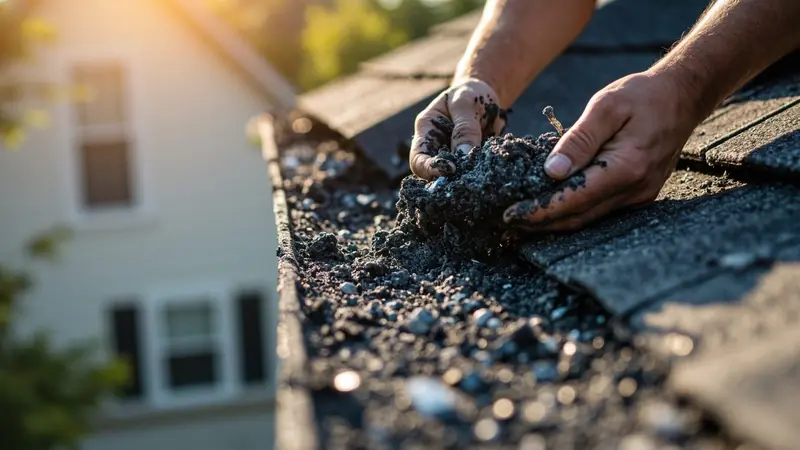
Start with the covering. A tab that lifts and cracks instead of flexing, or sheds granules in your hand, has aged out of the asphalt's useful life. Bare patches along the ridge or valley, or shingles falling off roof during ordinary wind, show the mat has lost its grip on the fasteners. Dark streaks on roof surfaces are often algae or soot staining and point to a covering nearing the end of its life.
The attic tells a different part of the story. A ring or bulge on a ceiling with no recent rain, rusted nail tips, or a roof that looks worn out and is already cupping even though it is not old, point to moisture trapped under the deck rather than a failed shingle. This usually starts with blocked soffit intake, the vents at the roof's lower edge that are supposed to pull outside air into the attic.
When that intake is blocked or undersized, the ridge vent at the top keeps pulling air anyway, except now it pulls it from inside the house. Warm, moist house air rises into the attic all winter, condenses on the cold nail shanks, and over a season or two the sheathing (wood boards under the roof) delaminates from the inside.
The shingles above it cup from underneath with nothing visibly wrong on the surface. That is why a roof leaking after rain can show up on a roof that still looks new from the driveway.
The point to call is when any of these show up together: a ceiling stain with no storm to explain it, shingles that crack rather than flex when lifted, and more than one spot of granule loss in the yard or gutter. On their own, each one might wait. Together, they mean the deck may already be absorbing water the covering was supposed to stop, and that calls for a look before the next storm season pushes it further.
Our new construction roofing page covers how we do this work.
Our crews work to the installation standards of the National Roofing Contractors Association.
What we check and the options that follow
The visit starts from the inside, because the attic shows what the covering cannot. We trace stain position and run marks on the framing first, since water travels along a rafter or the underside of the sheathing before it drips, so the wet wood is rarely directly above the ceiling stain.
- We look at the attic for staining, daylight at penetrations, and rust on nail tips.
- We check the soffit intake against the ridge exhaust to see if the attic can breathe the way it is supposed to.
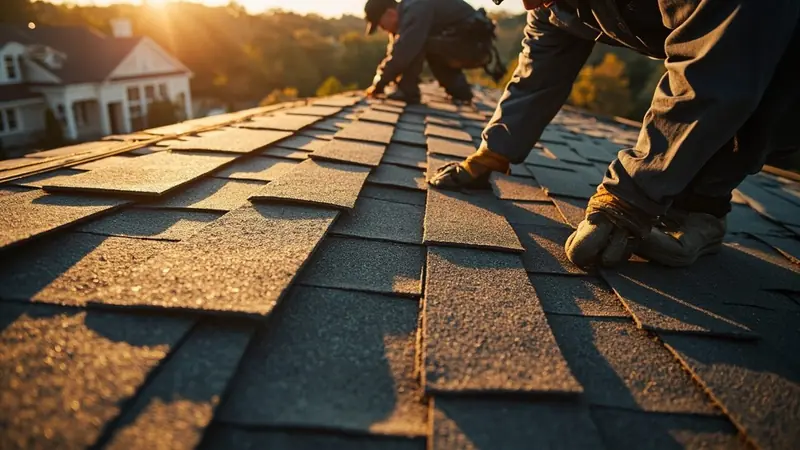
- We walk the roof itself, starting at penetrations, then valleys, then wall intersections, then the open field.
- We flex a shingle tab and check whether granules come off in our hand.
- We walk the deck itself to feel for firmness between rafters.
That last check is the one that decides the job. A firm deck under a covering that still flexes points to a repair, patching the boot, the flashing or the damaged course. A deck that feels spongy or springy between rafters means the sheathing has already delaminated or rotted, and no shingle choice fixes that without opening the deck first.
Once replacement is on the table, the covering choice usually comes down to a three tab shingle against a laminated architectural shingle. A three tab product is a single layer with cutouts, lighter per square, with a lower wind rating and a shorter service life than laminated shingle.
It still gets specified as a repair match when the rest of the roof is already three tab and a full tear off is not planned yet. Ontario's fall and winter wind events put more load on a lighter single-layer product, which is the local reason a roof going to full replacement usually moves to the heavier laminated option instead of matching the old three tab.
The service side of this is covered under roof replacement.
Pick the two options that fit your home, then ask which one makes sense for it.
| Option | The numbers a buyer weighs | Best suited to |
|---|---|---|
| Three tab shingle | One layer with cutouts, lighter per square | Low exposure roofs where first cost decides |
| Standing seam metal | Fasteners hidden under the seam, panels clipped so they can expand and contract with temperature | Roofs meant to be kept for decades |
| Architectural laminated shingle | Two laminated layers that are glued together so it is heavier and thicker than three tab | Most steep slope roofs on a house |
| TPO single ply membrane | Seams are hot air welded rather than glued, white reflective surface | Low slope and commercial roofs |
The roof assessment and repair steps
Finding where the water is
We start in the attic with a light, tracing stains back along the framing before we ever go up a ladder, since water runs sideways under the deck before it drips down. From there we walk the roof in the order it tends to fail, penetrations first, then valleys, then wall intersections, then the open field, flexing a shingle tab and walking the deck for firmness as we go. You see what we are looking at and where, and the visit ends with a written quote once the cause is pinned down.
Approving the repair or reroof
Once you approve the quote, the damaged section gets isolated first, a boot, a run of flashing or a course of shingles pulled back so the area underneath is exposed. On a full reroof, the old covering comes off down to the deck. If the boards underneath are bad, you see them before they are replaced and before the new covering goes down over them. Nothing gets opened further than what you approved.
Checking the finished deck
Before wrapping up, the crew checks the sheathing's underside from the attic using a pin moisture meter. A reading has to come in under 15 percent to read as dry decking before the job is called finished. We show you that reading and the condition of the deck we are closing up, whether it was replaced or left in place.
What this job needs to meet in Ontario
Stripping the old roof down and replacing it typically requires a permit. The City of Ontario Building Department checks this work against the California Residential Code. A like for like repair on an existing roof, such as swapping a damaged course or resealing a boot, typically does not trigger the same review, though the work is what that office weighs.
Ontario's housing stock from the 1945 to 1970s era carries low pitch gable roofs over shallow attics, which makes balancing soffit intake against ridge exhaust harder to begin with. Skipping that balance on a reroof, which happens when a crew matches the old vent count instead of the rated free area at each vent, leaves the new roof exposed to the same attic moisture that aged out the old one.
Newer tract housing built since the 2000s brings more hips, dormers and penetrations, and skipping new boots and step flashing at those penetrations during a reroof is what turns a five year old roof into a roof leaking after rain at a chimney or a plumbing vent instead of the field.
A reroof that reuses old underlayment and just lays new shingles over it is a shortcut that hides decking condition instead of fixing it, since nobody can judge the deck from the ground, only once the old covering comes off.
The CSLB License Lookup publishes the rules that govern work like this in your area.
What the roof replacement process looks like
Same day or booked visit
During that call, we ask whether you notice stains above or wet spots outside, plus whether water already entered the home. A ceiling stain with no storm behind it, or granules showing up heavily in the gutter, usually points to someone coming out the same day. A roof that just looks worn but is dry inside can go on a booked visit instead, since the attic and deck checks take the same amount of time either way.
What the visit disturbs
Checking the attic means someone opens the attic hatch and spends time up there with a light. Walking the roof means ladders against the eaves and foot traffic across the field, valleys and ridge. Clear the attic hatch area and any stored items nearby beforehand. Outdoor furniture, grills and plants near the eaves get moved clear so ladders can go up without anything in the way.
Repair or full replacement
The deck decides this. If the sheathing is firm once the covering is checked, the work can stay a repair at that one spot. If it is spongy between rafters, the job moves toward a full tear off, because nobody can judge decking condition until the old covering is off and the boards are exposed. You review the written estimate and sign off on it before any roof work starts.
What you see before work starts
We show you the stain or the attic staining where it sits, point out the lifted tab or the spongy spot underfoot, and lay out the repair or replacement options before anything is cut into. If a tear off finds bad sheathing once the old roof is off, we show you the boards before they go in the trailer and you decide before we go further.
Signs You Need a New Roof Questions From Ontario Homeowners
A new roof becomes necessary when the covering and deck both show damage. Look for shingle tabs that crack instead of flexing, granules collecting in the gutter, and bare patches at the ridge or valley. Check the attic for a ceiling stain with no storm behind it, rusted nail tips, or shingle cupping from underneath even on a roof that still looks new. When several of these appear together, the deck may already be absorbing water the covering was meant to stop.
Checking a roof for replacement means looking at both the shingles and the attic, not just age. On the surface, flex a tab to see if it cracks, and check for granule loss or bare patches along the ridge. In the attic, look for daylight at penetrations, rust on nail tips, or dark staining on the sheathing with no recent rain. A firm deck under a covering that still flexes usually points to a repair, while a spongy deck between rafters means the sheathing has already delaminated.
The walk test on the deck gives the clearest answer. A firm sheathing underfoot between rafters usually means the covering alone needs work. Look at the attic too: rust rings on nail tips, daylight at penetrations, or a ceiling mark that appeared without a recent storm all point past the surface. Add a tab that snaps instead of bending and granules coming off in your hand, and those signs together point toward a tear off rather than a patch.
Five signs carry equal weight. A tab that snaps when lifted rather than flexing, granules building up heavily in the gutter, bare patches along the ridge or valley, dark streaking from algae or soot across the field, and a ceiling mark with no storm to explain it all point the same direction. None of these alone settles the question, but seeing more than one at once means the deck underneath should be checked before the next rain.
Age alone does not decide whether a 20 year old roof needs replacement, condition does. A roof that still flexes without cracking and shows a firm deck underfoot can stay a repair at that age. One that sheds granules in your hand, cracks when a tab is lifted, or shows attic staining with no storm behind it has likely aged out regardless of the number. The walk test on the deck is what settles it, since a spongy feel between rafters means replacement even on a roof that looks fine from the ground.
Moss on a sloped roof means moisture is sitting on the shingle surface longer than normal. Moss needs standing dampness to grow, and that extra moisture softens the asphalt mat underneath it, which speeds up the same granule loss and cracking that dark streaking from algae or soot points to. Moss alone does not mean the deck underneath is wet, but it is worth flexing a tab in that spot to see whether the mat still bends or cracks. Heavy moss along a shaded slope is reason to look closer at that section.
Yes, a ceiling stain can appear with no rain when moist house air condenses inside the attic. Blocked or undersized soffit intake lets the ridge vent pull conditioned air out of the house instead of pulling outside air in, and that moisture condenses on cold nail shanks and the underside of the sheathing. Over a season or two the deck delaminates from the inside and the shingles above it cup, even though nothing looks wrong from the driveway. The attic light and nail inspection, checking for rust on nail tips and dark staining, finds this before it reaches the ceiling.
No, attic staining can come from condensation rather than a leak through the covering. When soffit intake is blocked or undersized, warm house air drawn up into the attic settles moisture onto the nail shanks and the wood above, leaving marks and rust that look like a surface leak. The way to separate the two is tracing the stain back along the framing, since water travels sideways under the deck before it drips down. Either way, the deck in that section needs a closer look before conditions worsen.
Why Ontario roofs cup from the inside first
Ontario's long, hot summers and strong Santa Ana wind gusts put real stress on roofs. Heat cycling and wind uplift cause more roof damage than anything else here. Summer highs in the mid 90s and heat waves well past 100 push constant thermal cycling into every shingle and seam, which is what drives granule loss and shingle cupping well before a roof reaches old age. Fall and winter bring Santa Ana wind events with strong downslope gusts that lift tabs and strip bare courses along exposed edges. Houses from the 1945 to 1970s tract era were built with shallow, simply vented attics. That is exactly the kind of roof where a walk test for deck deflection turns up a spongy deck even though the shingles on top still look serviceable.
Replacing an entire roof in Ontario usually requires a permit. The City of Ontario Building Department then reviews that project under code. A straightforward repair, patching a boot or swapping a damaged course, typically moves ahead without that same review, though the office decides where that line falls on a given job. That review step is part of why ventilation correction gets looked at during a reroof rather than left for later, since a permitted job is the point where the soffit and ridge balance is easiest to fix.
Roofing Services Near Ontario
If this guide leaves a question about your Ontario home, call (909) 330-4661 and a person will walk you through it.
Address:
Ontario Roofing, 4335 E Lowell St, Suite G
More Roofing Guides for Ontario Homeowners
- Roof Replacement Cost Guide 2026
- How Long Does a Roof Last
- How to Choose a Roofing Contractor
- Roof Financing Options Explained
- Reading a Roofing Proposal Line by Line
- Energy-Efficient Roofing Guide
- Roof Ventilation Basics
- DIY vs. Professional Roof Repair
- Understanding Roofing Estimates
- Metal vs. Shingle Roofing
- Insurance Claim Guide for Roof Damage
- TPO vs. EPDM, Which Flat Roof Is Best
- Roof Inspection Checklist
- Storm Season Roof Prep Guide
- All roofing guides
- Wind Damage Roof Repair
- Roof Replacement
- Storm Damage Roof Repair
Looking into the attic with a flashlight for staining, daylight at penetrations or rust on nail tips is something you can do yourself. That check stops once you are deciding whether the deck underneath is sound, since a spongy or delaminated deck can only be felt by walking it, and that belongs to the visit.
Know when the stain or the granule loss started and whether it followed a storm or just showed up on its own. If you know the roof's age or how many layers are up there, have that ready too. Finding the attic hatch ahead of time speeds up the first part of the visit.