
What a wind damaged roof shows before you file a claim
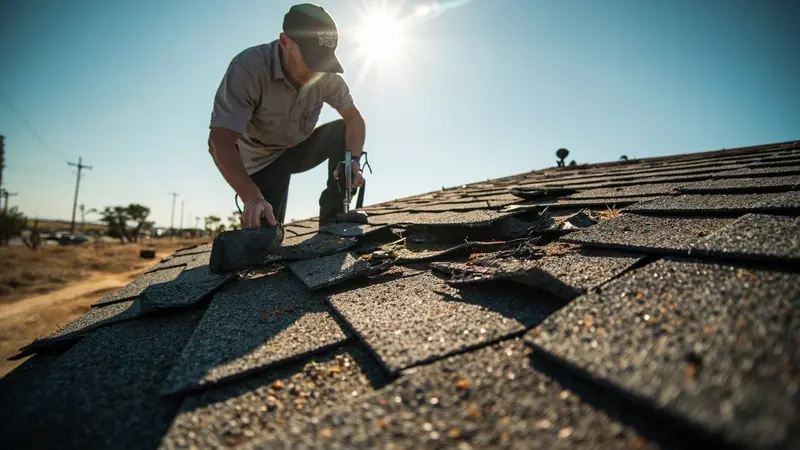
A lifted shingle tab is usually the first sign that Santa Ana gusts have gotten under a roof section. This insurance claim guide for roof damage starts there because that is what an adjuster photographs first. The tab bends up at one corner, the seal strip underneath has broken, and the nail line beside it sits exposed to weather. On its own the tab looks minor. Filing a roof insurance claim often comes down to proving the damage is wind related and recent, not a roof simply reaching the end of its service life.
Wind works into the lifted tab first, then pushes under the course above it on the next gust. That course lifts in turn, and the fasteners holding the row below lose their grip on the shingle. A full strip can peel away in the next storm, and once a strip is gone, the decking underneath takes rain directly, with no shingle layer between the water and the wood. That sequence turns a single tab into an open section of roof fast. It is exactly what a written estimate has to account for once the claim moves past the first adjuster visit.
San Bernardino County sits outside any recognized hail corridor, and hail bruising on a roof here is uncommon. A roof damage insurance claim in this area usually rests on wind evidence instead: lifted or missing tabs running along the direction the gusts traveled. Roof damage documentation that shows a consistent wind pattern, dated close to the storm, carries more weight with an insurance adjuster roof inspection than a single torn shingle photographed on its own. Wait too long after the wind event and that pattern gets harder to separate from ordinary wear.
If wind has already opened a section and rain is reaching the attic, storm damage roof repair needs to happen before any claim paperwork gets filed. A branch down across the slope calls for fallen tree roof damage repair for the same reason, since an open deck takes on more water with every hour it sits uncovered. Call once water is entering the house or you can see decking from below. That is the point where filing can wait and the opening cannot.
Our crews work to the installation standards of the National Roofing Contractors Association.
How the roof gets documented for a claim
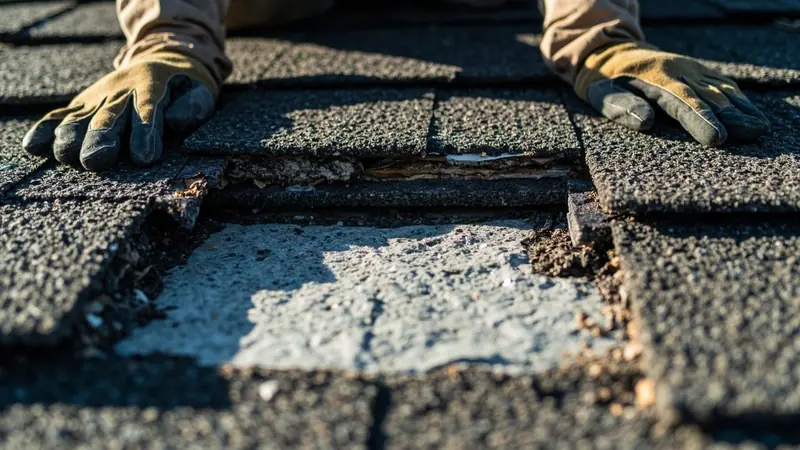
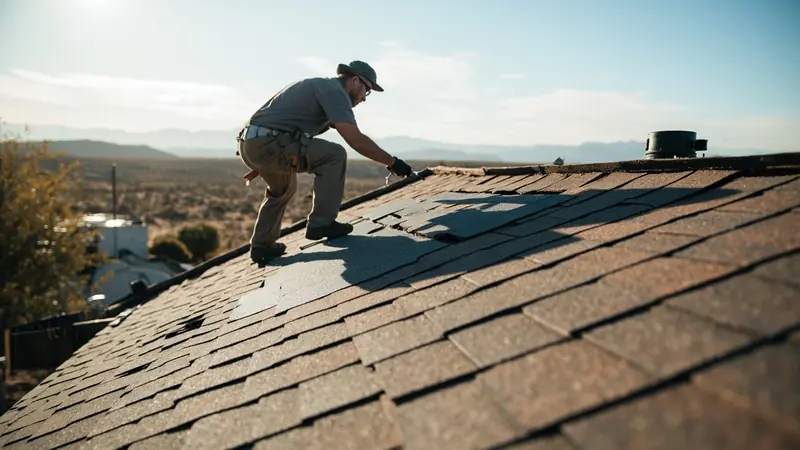
This visit documents what the roof shows, in the order an insurance claim estimate has to list it. We walk the slopes that faced the gusts first, since uplift concentrates there, then move to the rest of the roof. Each lifted or missing tab gets a photograph with its location marked, and we note whether the damage lines up along a single wind direction, which is what separates storm damage from age.
- We check shingle flexibility at several points, lifting a tab corner to see if it bends or cracks.
- We look for granule loss at the same spots, since bare asphalt under missing granules points to displacement rather than years of wear.
- We photograph every lifted, torn, or missing tab with its position on the slope.
- We check any exposed nail line and open seam for water that has already gotten past it.
- We write the findings into a claim estimate with the repair or replacement work listed by location.
A tab that still flexes without cracking, on a roof with a firm deck, usually means the damage stays limited to that section and a repair holds. A tab that cracks and sheds granules on contact, across several courses, points past repair toward a full slope or a full roof replacement.
Because hail is uncommon here and Ontario sits outside any recognized hail corridor, the deciding factor between a standard architectural shingle and an impact rated shingle usually isn't hail resistance. It's wind performance, how the mat holds up and how the shingle seals back down after repeated gusts. A homeowner planning to stay through more wind seasons gets more use out of the heavier mat than one weighing a single repair.
The same lifted tab a wind event started is the detail every option on this list is built around. Whichever shingle class goes back on, the course above the first lift still needs to be reset, not just the one tab that failed.
For help with the job itself, read about wind damage roof repair.
Pick the two options that fit your home, then ask which one makes sense for it.
| Option | The numbers a buyer weighs | Best suited to |
|---|---|---|
| Impact rated shingle | Graded by a steel ball impact test where Class 4 is the top step | Hail country and exposed roofs |
| TPO single ply membrane | Seams are hot air welded rather than glued, white reflective surface | Low slope and commercial roofs |
| Three tab shingle | One layer with cutouts, lighter per square | Low exposure roofs where first cost decides |
| Standing seam metal | Fasteners hidden under the seam, panels clipped so they can expand and contract with temperature | Roofs meant to be kept for decades |
Steps in a roof damage claim
Assessing the roof
We walk the slopes that faced the wind first, checking shingle flexibility, granule loss, and the nail line at each lifted or missing tab, and we photograph every point as we go. You see each spot as we find it, including anything that lines up along a single rake or ridge, which is what points to wind rather than age. Once the pattern is clear, we check whether the deck underneath feels firm or gives underfoot, and that reading sets the repair. The visit ends with a written estimate in hand, broken out by location, before anyone talks to the carrier.
Repair gets underway
Work starts with the course directly above the first lifted tab, since that's the one wind already worked under. Decking underneath gets checked as it's exposed, and any soft section gets cut out before new material goes down over it. If that changes the repair beyond what the estimate listed, you see the bad decking and confirm before the repair continues. Flashing at any opened seam gets reset in the same pass, rather than left for a second visit.
Closing check on decking
Crews test the replaced decking's underside with a pin moisture meter. It must register below 15 percent moisture before the new covering is installed. We show you that reading at the spot where the old decking came out, along with the section of flashing and shingle that went back in over it, so the record matches what the estimate described.
What a roof claim needs to hold up here
Replacing decking or resetting flashing crosses into permitted work, and the City of Ontario Building Department is the office that reviews it before the roof closes up. Work done under the California Residential Code gets inspected at that stage.
An estimate written before the tear off can only describe what's visible from the surface. That is why the decking gets looked at again once it's exposed and the job gets updated from there.
Skipping that second look once decking is replaced means a soft spot goes unnoticed until the new covering is already down. Filing a claim weeks after the wind event, once more storms have moved through, makes it harder to separate the original damage from everything that happened after it. Patching a lifted section without resetting the course above it leaves the same edge open to the next gust, and the repair fails again before the claim file is even closed.
The CSLB License Lookup publishes the rules that govern work like this in your area.
What the claim visit adds to the job
Deciding today or later
On the call we ask two things: is water entering the house right now, and can you see open decking from inside. Yes to either usually means someone comes out before the day ends. A roof that's holding, with only cosmetic lifted tabs and no active leak, gets a scheduled visit instead, timed to when the adjuster can be there too.
What the visit disturbs
The inspection itself stays outside for the most part, on the roof and at the eaves, though we may need a ladder set against a wall or near plantings. Clear vehicles and patio furniture from directly under the eaves before the visit. If staining shows in a ceiling or attic, that area gets opened enough to see the decking above it, and nothing gets closed back up until you've seen what's inside.
What decking decides
A firm deck under the damaged area usually keeps the job to that one spot. A soft or spongy deck found once the old covering is up extends the work to a full section before new material goes back down. You see the bad decking before it's replaced, and you approve the quote in writing before that work continues.
What you're shown and asked
We point out each lifted tab and open seam on the roof or in a photo, so you're looking at the same thing we are. Where decking needs to come up, we ask before any of it opens, and the piece that comes out gets set aside so you can see it. Options get laid out by slope section, not as one lump decision, so you can see what each one would cover before choosing.
Insurance Claim Guide for Roof Damage Questions From Ontario Homeowners
Rate changes after a claim are set by the carrier, not by anything a roofing visit can predict. What a documented claim can do is make sure the file reflects wind damage accurately rather than leaving gaps a carrier could question later. Dated photos from the day of the wind event, a shingle flexibility and granule check, and an estimate broken out by location all support that the claim matches what happened to the roof. That is the material that goes into the carrier's own decision.
Car damage claims go through your auto carrier. This guide covers wind damage to a roof, documented through shingle flexibility checks, granule loss, and photos of lifted or missing tabs, which doesn't carry over to a vehicle. For auto damage you'd contact your auto carrier directly and follow their claims process for that policy. If a storm caused both roof and vehicle damage, the two claims get filed and documented separately with each carrier.
Avoid guessing at the roof's age or admitting you'd been meaning to get it looked at before the storm. Stick to what you can show: the date of the wind event, photos taken that day, and what's changed since. Don't speculate about whether the damage is covered or offer an opinion on repair versus replacement, since that's decided by what the deck and shingles show once opened. Let the documented pattern, lifted tabs, exposed nail lines, granule loss, speak for itself rather than filling in gaps with assumptions.
Windshield claims fall under an auto policy, separate from roof damage claims and outside what a roofing visit documents. A roof claim here rests on evidence like lifted tabs, granule loss, and a wind-direction pattern across the slope, none of which applies to a windshield. Rate impact on an auto policy is set by your auto carrier's own rules for glass claims. If you're dealing with both after the same storm, file and document each with the matching carrier.
Why wind, not hail, drives a roof claim in Ontario
Ontario roofs face real stress from summer heat cycling and strong Santa Ana wind gusts that can lift shingles and loosen tiles. That ground doesn't change how a roof claim gets built, but the wind pattern above it does. Fall and winter bring the gust events that do most of the structural damage to roofs here, pushing downslope gusts that catch under a loose tab before a storm front ever arrives. Most of the year's rain falls across a short winter stretch too, and that's the window when an already lifted section takes on water fast enough to turn a wind claim into a water damage claim as well, which changes what the estimate has to cover.
Some homeowners bring in a public adjuster for roofing claims that involve more than one slope or a disputed job, since that person works for the policyholder rather than the carrier.
Roofing Services Near Ontario
If this guide leaves a question about your Ontario home, call (909) 330-4661 and a person will walk you through it.
Address:
Ontario Roofing, 4335 E Lowell St, Suite G
More Roofing Guides for Ontario Homeowners
- Storm Season Roof Prep Guide
- Roof Replacement Cost Guide 2026
- Metal vs. Shingle Roofing
- How Long Does a Roof Last
- Signs You Need a New Roof
- How to Choose a Roofing Contractor
- Roof Financing Options Explained
- Reading a Roofing Proposal Line by Line
- TPO vs. EPDM, Which Flat Roof Is Best
- Roof Inspection Checklist
- Energy-Efficient Roofing Guide
- Roof Ventilation Basics
- DIY vs. Professional Roof Repair
- Understanding Roofing Estimates
- All roofing guides
- Wind Damage Roof Repair
- Roof Replacement
- Storm Damage Roof Repair
Opening the attic hatch and looking up with a flashlight is something you can do before calling, watching for new staining or daylight near a vent pipe. That tells you whether water has already reached the inside. Walking the slope, lifting a tab to check its flex, or resetting a seam is past that point. Those checks need someone tied off on the roof, and that part belongs to the visit.
Know roughly when the wind hit and whether anything changed since, like a new stain or a tab in the yard. Photos you already took, even from the ground, help us match the damage to that event. If you know the roof's age, have it ready, and know where the attic hatch is so we can look from inside too.