

What matters most when choosing a roofing contractor in Ontario?
What matters most is whether a contractor checks the decking (the wood boards under the shingles) before writing the estimate, not just the shingles on top. How to choose a roofing contractor in Ontario comes down to one question: does the quote separate the shingle layer from any decking replacement, or lump both into a single line. A roof can look sound from the driveway while the boards underneath have already softened. That gap between what's visible and what sits underneath is where disagreements start once the old roof comes off. That's the detail a written estimate should make clear before anyone touches the roof.
A few signs point toward a decking problem rather than a worn surface alone. Rust rings around nail tips inside the attic, a dark stain on the sheathing with no storm that week, and shingles turning up in the yard after a windy night all point the same direction.
A roof that's aged out shows differently: brittle tabs, granule loss down to the mat, and the same patched spot failing again each season. None of these signs confirm anything on their own, but each one is reason enough to ask a contractor to check from the attic side before quoting the job. A contractor who only glances at the shingles from the ground can miss both kinds of damage entirely.
Santa Ana wind gusts moving through the Inland Empire each fall and winter lift shingle tabs along roof edges first, and a contractor who skips that detail during an estimate misses where the next storm does the most damage. San Bernardino County's hot, dry summers also bake the asphalt mat brittle over time, so a roof that held through one windstorm can shed a course in the next.
A contractor working Ontario roofs regularly should name both of these as reasons to look closer, not just measure the roof and move on. That's the difference between a quote built from a ladder in the driveway and one built from inside the attic.
Gutters packed with debris are the detail that turns a small roof problem into a bigger one. Clogged gutters back water up behind the drip edge, and that standing water softens the fascia and the first few feet of decking until there's nothing left there to hold a nail. Once that happens, a contractor is no longer repairing a roof, they're rebuilding an edge. If you can see sagging at the gutter line or missing nails along that first course, that's the point to call before the next storm finds the gap.

How do you compare roofing contractor estimates?
Comparing roofing contractor estimates means lining up the same work item by item. Two bids covering different work can't be measured against each other at all. A visit that supports a usable estimate runs in a set order.
- Walk the attic first, checking for staining on the sheathing and rust on nail tips.
- Check the gutters, the drip edge, and the first few feet of decking for softening.
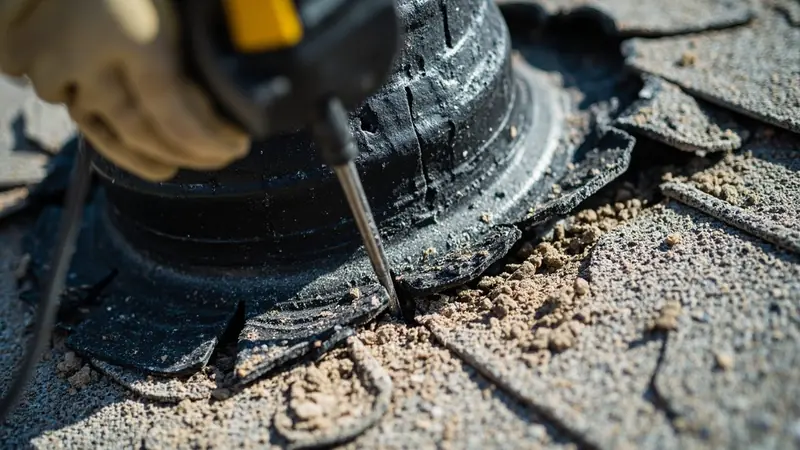
- Walk the roof itself, starting at penetrations and valleys before the open field.
- Run a pin moisture meter against the decking from the attic side.
- Write a quote that separates the shingle layer from any decking replacement.
The reading that separates a repair quote from a replacement quote is that pin moisture meter check against the decking. Under 15 percent reads dry. Past 20 percent, that section is compromised and gets replaced. Ask any roofer you're vetting whether that check happens before or after the old roof comes off. A quote written before anyone sees the decking is a placeholder, no matter how detailed it looks.
Two layers are glued together, so the shingle is heavier and thicker than a three tab. The published wind rating is commonly stated in the 110 to 130 mph range, though that figure only holds with the nailing pattern and starter strip the manufacturer specifies. It's the default choice for most Ontario homes. If an estimate quotes three tab instead without explaining why, ask what's being traded away.
These questions fall under the basic questions to ask a roofer before any crew starts pulling material off the roof. A verbal promise about coverage means nothing once the crew is gone. A local roofing contractor who works Ontario roofs regularly should be able to name the climate factors that shorten a roof's life here without being prompted, from wind uplift to the short, heavy rain stretch each winter. That's one practical way of finding a reliable roofer apart from checking paperwork alone.
When you are ready for the work itself, see roof replacement.
Before you call, you can read up on understanding roofing estimates.
How your estimate visit runs
Roof walk and attic check
We start at the attic hatch, checking for nail staining and daylight at penetrations before anyone gets on the roof itself. From there we walk the roof in the order it leaks: penetrations and boots first, then valleys, then where the roof meets a wall, then the open field. A pin moisture meter against the decking tells us which sections are dry and which are holding water. By the time we're back on the ground, we can name what's wrong and where. You get a written estimate that lists the cause, the fix, and what happens if decking underneath needs replacing.
Your approval before any work
Once you've seen the estimate and the photos, you decide whether this is a repair at one spot or a full tear off. You sign off on that work before a single shingle comes off. If decking needs replacing, that section gets opened first, one piece at a time, so a small soft spot doesn't turn into an open roof overnight. The new shingle course goes back down once the decking underneath has passed the moisture check.
Reading we check before leaving
Before we consider the job finished, the pin moisture meter goes against the new decking one more time. It has to read dry, under the 15 percent mark that separates sound boards from compromised ones. We show you that reading directly, along with photos of whatever decking got replaced. We also walk the new flashing and boot seals one more time before cleanup, checking that each one sits tight against the decking it's fastened to.
What roofing contractor red flags show up around permits in Ontario?
Watch for a bid that never mentions a permit at all, or one that lumps disposal, decking, and the permit fee into a single unexplained number. That kind of estimate makes it hard to tell what the inspector will see on site. If decking gets swapped without that inspection step, a soft board can sit under new shingles for years before anyone finds it again.
Don't hand over any deposit until the contractor has provided a written, itemized quote and scheduled an inspection appointment. A roofer who pushes for payment before you have that written quote in hand, or who pressures you to sign the same day a storm hits before anyone has looked at the attic or the decking underneath, is showing one of the common signs of a bad roofer.
A contractor who names the permit step up front, and separates it from the shingle work on the estimate, is giving you something to check against what the City of Ontario Building Department requires for that work. That separation is also what keeps a decking replacement from getting buried inside a line item nobody can verify later.
For help with the job itself, read about metal roof installation.
The CSLB License Lookup publishes the rules that govern work like this in your area.
What to expect once you pick up the phone
Today visit or scheduled walk through
We start by asking what the roof is doing right now, whether that's missing shingles after a wind event or a slow drip inside. Active leaking during a storm usually means getting someone out that day instead of a scheduled slot. A second opinion on an existing estimate, or a roof that's just gotten old, fits fine as a scheduled walk through instead. Either way, the first question is always what you're seeing.
What the estimate visit disturbs
Walking the roof and the attic doesn't open walls or floors, but expect a ladder against the house and someone on the roof for part of the visit. Clear a path to the attic hatch and move anything stored directly under it. If gutters are being checked for the debris that backs water up behind the drip edge, clearing a path along the fence line helps too. None of this requires you to be home for more than the walk through itself.
What decides the permit work
What decides the size of this job is mostly permit and disposal requirements in this jurisdiction. More layers coming off means more hauling, and a full tear off brings a formal permit and inspection into the job that a simple repair doesn't trigger. You see that work in writing, including how disposal and permit work are covered, and you approve it before anyone starts pulling material off the roof.
What you're shown before work starts
Before anything is recommended, we check the decking from the attic side and walk the roof itself, not just the parts visible from the driveway. You see the pin moisture meter reading, photos of whatever penetration or valley is leaking, and the options for repair against replacement side by side. Nothing gets added to the job, and no board gets replaced, without you seeing the reading and the spot first.
How to Choose a Roofing Contractor Questions From Ontario Homeowners
Hiring a good roofing contractor starts with asking whether they check the decking before writing a quote. Ask for a moisture reading on the decking rather than a quote based on a ladder look from the driveway. A written estimate should separate the shingle layer from any decking replacement so you know what each line covers. A contractor who names Santa Ana wind uplift and the short winter rain stretch as reasons to look closer is working from attic photos.
A full tear off in Ontario usually needs a permit from the City of Ontario Building Department. That office reviews the work under the California Residential Code before it closes up. A simple repair on existing shingles typically doesn't trigger that same review. A bid that never mentions a permit, or calls it optional, is worth questioning before you sign.
What decides the size of a 2000 square foot roof job is how much decking underneath needs replacing. A roof that reads dry under the pin moisture meter, below 15 percent, needs only the shingle layer replaced. One that reads above 20 percent means that section of decking is compromised and has to come out before new shingles go down. How many layers are coming off, the disposal load, and any permit or inspection requirement also change the job's size. A written estimate lists each of those factors separately instead of folding them into a single line.
Estimates follow a set order that starts at the attic. A visit checks for nail staining and daylight at penetrations, checks the gutters and the first few feet of decking, then walks the roof from penetrations and valleys out to the open field. What you get afterward is a written quote listing the cause, the fix, and what happens if the boards underneath need attention, so you can measure it against another bid item by item.
Repair or replacement is decided by the pin moisture meter reading taken from the attic side of the decking. A reading under 15 percent reads dry and points toward a repair at the shingle layer alone. A reading past 20 percent means that section of decking is compromised and gets replaced before new shingles go down. The written estimate separates those two outcomes into their own line items so you can see which sections fall into each category before any work starts.
Comparing contractors yourself works for the ground level checks, but the decking reading still needs a visit. You can look for rust rings on nail tips, a dark stain on sheathing with no recent storm, or shingles turning up in the yard, and you can lift a shingle tab in mild weather to check whether granules come off in your hand.
Why Ontario's weather changes what a roofer should check
Ontario's postwar tract neighborhoods, built mostly from the 1945 to 1970s era, carry low pitch roofs common to that period and now reaching the point where the original material has worn out. Houses from the 1980s and 1990s mostly carry tile, and it's the underlayment under that tile aging out now, even though the tile itself still looks fine from the ground. Either way, a contractor vetting the roof needs to look under the covering. Ontario's winter rain season is short but intense. Roofs need sealed flashing and clear gutters to shed water fast and avoid leaks. That's one more reason the decking under a worn or aging roof matters as much as the shingles on top.
Permitted reroofs here get inspected before they're closed up, which is exactly why the pin moisture meter reading matters on paper, not just as something a crew mentions out loud. An inspector wants to see which boards failed that check and got pulled. A roofer who already photographs and documents that swap is ready for the review instead of improvising an answer on inspection day. That's also why the work should name decking contingency as its own line, not fold it quietly into the shingle layer. A vetted roofer treats that documentation as part of the job.
Roofing Services Near Ontario
If this guide leaves a question about your Ontario home, call (909) 330-4661 and a person will walk you through it.
Address:
Ontario Roofing, 4335 E Lowell St, Suite G
More Roofing Guides for Ontario Homeowners
- Roof Replacement Cost Guide 2026
- Metal vs. Shingle Roofing
- How Long Does a Roof Last
- Signs You Need a New Roof
- Roof Financing Options Explained
- Reading a Roofing Proposal Line by Line
- Energy-Efficient Roofing Guide
- Roof Ventilation Basics
- DIY vs. Professional Roof Repair
- Understanding Roofing Estimates
- Insurance Claim Guide for Roof Damage
- TPO vs. EPDM, Which Flat Roof Is Best
- Roof Inspection Checklist
- Storm Season Roof Prep Guide
- All roofing guides
- Wind Damage Roof Repair
- Roof Replacement
- Storm Damage Roof Repair
Clearing gutters from a ladder on level ground is reasonable, and so is a flashlight look in the attic for staining or daylight. Walking the roof itself to check flashing or lift a tab is different. A wet or storm damaged slope needs fall protection, and that part of checking or fixing a roof belongs to whoever comes out for the visit.
Before you call, have any other estimate you've already gotten, the rough age of the current roof if you know it, and a description of what you're seeing, whether that's missing shingles, a ceiling stain, or just wear. Knowing whether water has come through inside, and where your attic hatch is, helps the call move straight to what matters.