
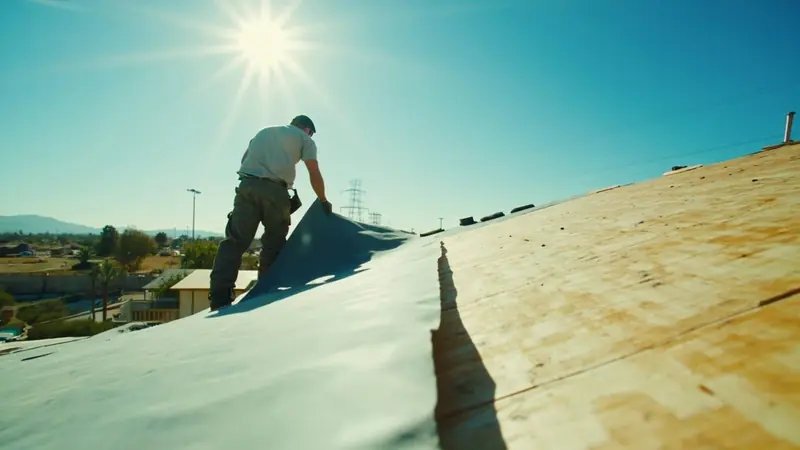
Why roofs rarely make it to their stated lifespan
A shingle's stated life on the package is a lab number. How long does a roof last depends more on what happens underneath the covering than on the covering itself. An asphalt shingle is a fiberglass mat coated in asphalt and granules, and once that mat stops flexing in your hand, the shingle has reached the end of its usable life. Lifted tabs, granule buildup at a downspout, and a ceiling stain with no rain in the forecast are signs roof needs replacing before the surface looks worn.
The average roof lifespan printed on a shingle wrapper assumes the attic behind it stays dry and reasonably cool. In Ontario's hot, dry summer stretch, attic temperatures climb for months, and that heat works on a shingle from underneath as much as the sun works on it from above. When soffit intake is blocked, often by insulation pushed against the eave, the ridge keeps pulling air up without anything replacing it. Attic humidity climbs through the winter rains, and moisture condenses on the nail shanks overnight.
That condensation sweats onto the sheathing every cold night. Over seasons, the wood layers under the nails start to separate. A roof can look fine from the driveway while the deck underneath delaminates, and the shingles cup from underneath with nothing visibly wrong on top. That's a roof past its lifespan even though the shingles upstairs still hold their granules, because the layer holding the nails has already failed.
The sequence worth watching is simple. Shingles cup across a section with no storm or tree damage nearby, a ceiling stain tracks back toward the ridge instead of one penetration, and the attic shows dark rings around the nail tips under a flashlight. Once those line up, the deck underneath is already wet, and waiting does not slow that down. Seeing both signs together means you should call now rather than letting the stain spread further.
Our crews work to the installation standards of the National Roofing Contractors Association.
What decides repair or replacement on your roof
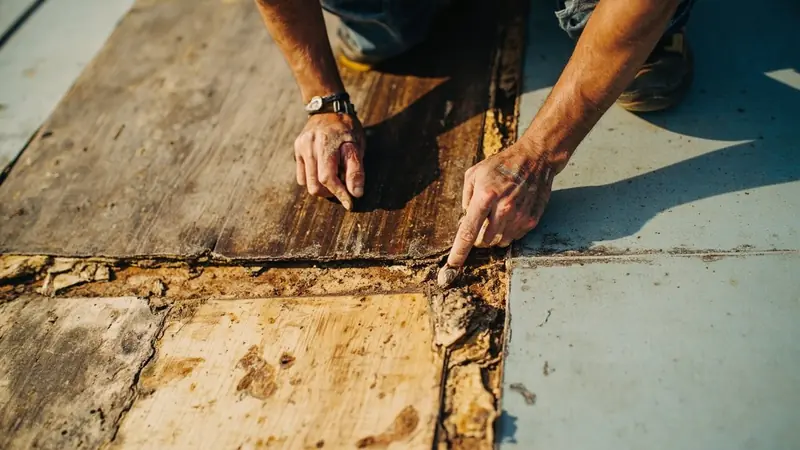
That decision comes down to one check: does the asphalt still flex, or does it crack and shed granules in your hand. We walk the visit in a set order so nothing gets guessed at.
- We start in the attic and look for staining or rust on the nail shanks.
- We check the soffit intake against the ridge exhaust for balance.
- We lift a shingle tab in a few spots and see whether it flexes or cracks.
- We check how much granule rubs off in that same motion.
- We put the finding and the repair or replace options in writing before anything is scheduled.
A tab that flexes and keeps its granules means that section of the asphalt shingle lifespan still has use left, and a localized repair holds. A tab that snaps and sheds granules in your hand means that section has aged out. Patching next to it just moves the same failure a few feet over.
Most Ontario roofs land on architectural laminated shingle at that stage, since it carries more weight and a longer run of years than the strip style it replaces. A metal roof lasts longer again, and metal roof lifespan numbers appeal to anyone planning to own the house for decades, though matching a damaged panel years later takes a specific skill.
On a flat section, flat roof lifespan runs shorter under direct summer sun exposure, and the membrane choice matters more there than the slope choice ever will. Ontario's long run of hot, dry days works hardest on a south or west facing slope, which is usually where nailing pattern and starter strip earn their keep first.
Pick the two options that fit your home, then ask which one makes sense for it.
| Option | The numbers a buyer weighs | Best suited to |
|---|---|---|
| Architectural laminated shingle | Two laminated layers that are glued together so it is heavier and thicker than three tab | Most steep slope roofs on a house |
| Three tab shingle | One layer with cutouts, lighter per square | Low exposure roofs where first cost decides |
| EPDM rubber membrane | Black rubber sheet, seams taped or glued rather than welded | Low slope and commercial roofs |
How a roof assessment visit runs
On site assessment
We start in the attic with a flashlight, checking the nail shanks and sheathing for staining before we get on the roof. From there we walk the slope, lift shingle tabs in a few spots, and check how much granule comes away in the same motion. You're shown anything that came up, whether it's a stained section of sheathing or a tab that cracked under a light pull. The assessment ends with the cause named out loud and a written quote covering what we found.
Repair and deck work begins
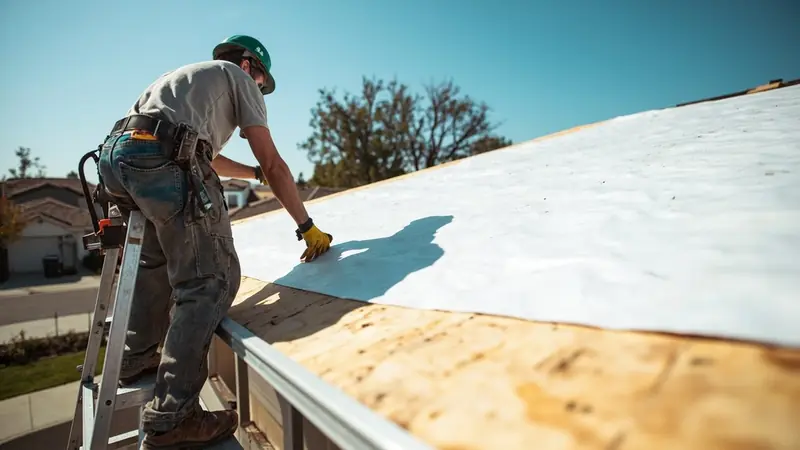
Once you approve the quote, isolation comes first. The affected section gets tarped off and the old covering stripped back to the decking at that spot. If the deck reads firm, the new shingle course goes straight on with new underlayment and flashing. If a section came up spongy during the walk, that decking gets cut out and replaced before anything goes back down, and you're shown the bad section before it's hauled off. Ventilation correction at the soffit happens at this stage too, while the deck is already open.
Final check before we leave
Before we leave, we lift a tab on the new covering the same way we tested the old one, confirming it flexes without cracking and holds its granules. On a low slope section, we check that water sheets off the field toward the drain instead of sitting in a pond. We walk you through the finished edge, the new flashing at any wall or chimney intersection, and the corrected soffit intake, so you can see the balance we set between intake and exhaust before closing out.
What a roof job needs to clear in Ontario
Replacing more than a small section of the covering usually needs a permit, and the City of Ontario Building Department reviews the job against the California Residential Code before it closes out. A straight like for like patch on a handful of shingles typically doesn't trigger that review, but a full tear off always does.
Skipping the ventilation correction during a tear off is the shortcut that causes the most trouble later. Once the decking is exposed, it's the only point in the whole job where blocked soffit intake can be fixed, and closing it back up without correcting it locks the same imbalance under a brand new roof replacement.
Reusing old flashing and boots instead of replacing them is another shortcut that backfires. A pipe boot or a piece of step flashing that already failed once around a chimney or a wall intersection tends to fail again under new shingles, often in the same weather pattern that took out the old one.
Going over the top of an existing layer instead of a full tear off hides the deck condition completely. Nobody can tell you if the sheathing is firm or delaminated without seeing it, and that's the one reading that should decide this job in the first place.
How the visit works day to day
Today call or scheduled visit
On the call we ask whether you're seeing a stain with no recent rain, or shingles that are visibly cupped across a section, and how long the current roof has been up there. A stain that showed up this week, or a section that's open to the weather, usually means someone comes out today. A roof that just seems to be aging without an active leak gets scheduled for a full look at the deck and the attic.
What the tear off disturbs
A full tear off means a dump trailer in the driveway and nail debris coming off every edge for the day. Clear patio furniture, planters and anything breakable from under the eaves and away from the walls before the visit. Anything hung on the exterior near the roofline, such as string lights or a mounted planter, comes down so flashing and boots at the wall intersections can be reached without working around it.
What sets the job size
The main factor is which covering class you choose and whether you want an impact rated product on top of it. Architectural laminated shingle takes more labor to set than a basic three tab because of the heavier double layer and a tighter nailing pattern. An impact rated version adds another layer of specification on the nailing and starter strip. A metal covering or a flat membrane changes the job again, since each has its own fastening and flashing detail. You see the covering option and the job in writing and approve it before anything comes off the roof.
What you see and approve
Before we recommend a covering class, we show you the attic reading and the tab test results so the recommendation traces back to something you saw yourself. You're shown the flagged section of decking, if any came up spongy, before it goes in the trailer. Options get laid out side by side, and you say yes to the one that fits the house. Nothing about ventilation correction or an impact rated shingle gets added without you seeing the reading that calls for it first.
How Long Does a Roof Last Questions From Ontario Homeowners
Job size depends on covering class, an impact rated option, and repair versus full tear off. You see the attic reading and the tab test results, then the options laid out side by side, and approve the job before anything comes off the roof.
Shingles get replaced section by section, not on a fixed schedule, once a tab snaps instead of flexing. A tab that still bends and holds its granules means that section has life left, so a localized patch makes sense there. What speeds the clock is attic condition: blocked soffit intake against the ridge exhaust lets moisture condense on the nail shanks through winter, and that can take out the deck underneath long before the shingles upstairs look worn from the ground.
A roof needs replacement when the deck underneath has failed, not just the surface shingles. Checking the attic with a flashlight for dark rings on the nail tips, and lifting a shingle tab to see if it flexes or cracks, shows which side of that line your roof is on.
Shingles cupping, a stain near the ridge, and dark rings on the nail tips point to the same cause. Any one sign alone can mean less, but all three together mean decking moisture is already at work underneath. Confirming that a tab no longer bends without breaking shows the asphalt has aged out in that spot. Once these signs line up, waiting does not slow the moisture already in the deck.
Why Ontario's heat and housing stock shorten roof lifespan
San Bernardino County's long stretch of hot, dry summer days works on a roof from both sides, baking the covering while raising attic temperatures underneath for months. That cuts into roof life expectancy more than age alone does. Heat cycling loosens the bond between the granules and the asphalt mat faster than a milder climate would. Ontario's housing stock adds its own wrinkle: 1980s and 1990s stucco tracts commonly carry tile roofs, and it's usually the underlayment beneath the tile, not the tile itself, that reaches the end of its service life first. Tile roof lifespan gets judged by that hidden layer, so a roof that still looks intact from the street can already be past the point where the underlayment is doing its job. Older 1945 to 1970s tract ranch houses carry low pitch roofs that are harder to vent well, which is often where the ventilation imbalance starts.
Replacement work like this gets reviewed before it closes out, mainly to confirm the deck, flashing and fastening meet the assembly the covering requires. That review is why the wind rating quoted for an architectural laminated shingle only holds when the nailing pattern and starter strip match the tested specification. An inspector checking fastener count after a tear off is checking the same detail that decides whether that wind rating means anything in a strong gust. Getting the nailing pattern right before the covering closes it in is what that inspection is checking for.
Roofing Services Near Ontario
If this guide leaves a question about your Ontario home, call (909) 330-4661 and a person will walk you through it.
Address:
Ontario Roofing, 4335 E Lowell St, Suite G
More Roofing Guides for Ontario Homeowners
- Roof Replacement Cost Guide 2026
- Metal vs. Shingle Roofing
- Signs You Need a New Roof
- How to Choose a Roofing Contractor
- Roof Financing Options Explained
- Reading a Roofing Proposal Line by Line
- Energy-Efficient Roofing Guide
- Roof Ventilation Basics
- DIY vs. Professional Roof Repair
- Understanding Roofing Estimates
- Insurance Claim Guide for Roof Damage
- TPO vs. EPDM, Which Flat Roof Is Best
- Roof Inspection Checklist
- Storm Season Roof Prep Guide
- All roofing guides
- Wind Damage Roof Repair
- Roof Replacement
- Storm Damage Roof Repair
Clearing debris out of the gutters from a ladder set on level ground is something you can handle yourself. It keeps water moving instead of backing up under the first course of shingles. That's where it stops. Getting onto the slope itself, lifting a tab to check it, or working near any open valley or boot belongs to the visit, since a wet or storm damaged surface isn't something to stand on without fall protection.
Know when the stain or the cupping first showed up, and whether it followed a storm or just appeared on its own. If you know roughly how old the current covering is, have that ready. Check whether you can see daylight or staining from the attic hatch, and know where that hatch is so we can reach it quickly.