
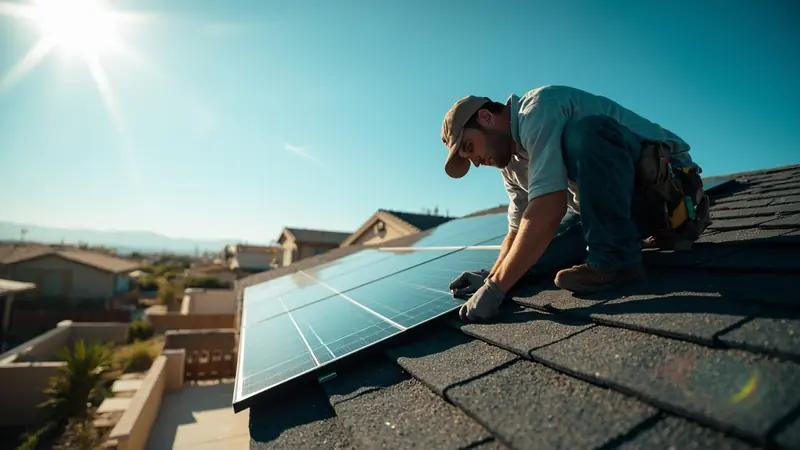
What a lifted shingle or cracked tile means
Figuring out what you're looking at comes before any DIY vs. professional roof repair decision. A shingle tab (the overlapping piece of an asphalt shingle) that lifts at one corner, or a shingle sitting in the yard after a windy night, is loose material that wind already caught. On a tile roof the same wind works at the ridge caps, and a tile can crack where someone walked near a vent, a skylight, or an air conditioning unit.
That's usually storm displacement: material the wind lifted or pulled off, sometimes with hail bruising mixed in that only shows up once someone reads the surface closely. It can be a short run of courses along a rake, hip, or ridge where wind pulls hardest, or damage spread across the whole field that looks fine until you check each shingle one at a time.
You might notice a shingle on the lawn, a neighbor getting a new roof, or granules collecting at the bottom of a downspout after a storm. Santa Ana winds that pick up in fall and winter can lift a shingle that was already loose, and the rain that follows finds whatever gap the wind opened. A roof that held through one windy night can still have a few courses weakened enough to go in the next one.
A lifted tab doesn't stay a small problem. Once one tab lifts, wind gets under the course directly above it. The next storm can peel that whole strip away, and the bare deck underneath takes rain with nothing between it and the sky.
Deciding between DIY and professional roof repair comes down to how far the damage goes and what's underneath it. A single granule stain or a loose nail head is something you can watch from the ground. DIY roof repair risks show up fastest on a tile roof, where one cracked piece lets water reach the underlayment below it right away, and walking a slope to look closer is usually how that crack happens in the first place. Call a professional roofer when you see more than one lifted tab, a cracked tile near a vent or a mount, or any spot where bare decking shows from below.
If you would rather hand this to us, see roof replacement.
Our crews work to the installation standards of the National Roofing Contractors Association.
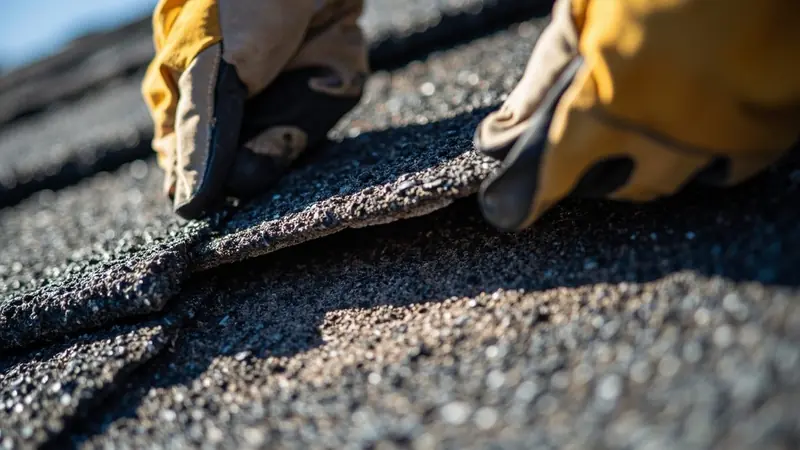

How a repair visit decides between a patch and a replacement
A repair visit starts wherever the wind or impact first lifted material, then works outward from there to see how far it spread.
- We walk the roof from the ridge down, checking each course near the lifted or missing shingle.
- On a tile roof we check tiles around vents, skylights, and solar mounts first, since foot traffic cracks them there.
- A walk test for deck deflection checks for a spongy or springy feel between rafters under the damaged section.
- We check nearby flashing and boots, since a lifted shingle or cracked tile rarely sits alone.
- We write up what we found, with photos, before anything is replaced.
The walk test for deck deflection is what decides the job. A deck that feels firm underfoot, even with the covering damaged above it, points to a repair at the surface. A deck that gives between rafters means the sheathing has already delaminated, and the job grows to include that section of deck before new material goes down.
Where the fix is a shingle match rather than a full replacement, the choice is often between a three tab shingle and a laminated shingle. A three tab shingle is a single layer with cutouts, lighter per square, and carries a lower wind rating than a laminated shingle does. Both types come in multiple styles and grades to match what is on the roof already.
It still works as the right match on an older three tab roof, since the tab size and shadow line sit close to what's already there. Mixing a laminated shingle into a three tab roof as a patch stops the leak but leaves a visible seam where the two profiles meet, since laminated shingles sit thicker and cast a different shadow.
The service side of this is covered under metal roof installation.
Steps in a roof repair visit
On site assessment
We start at the lifted shingle, cracked tile, or spot you called about and work outward from there. On a tile roof we check the tiles around vents, skylights, and solar mounts first, since that's where foot traffic cracks them. A walk test for deck deflection on the affected section tells us whether the deck underneath is firm or has already given way. We check nearby flashing and boots too, since one lifted edge rarely sits alone. By the time we're done, we can name what's causing the leak and have a written quote ready for you to look at.
Repair or replacement decision
You see the quote before anything comes off the roof. Where the deck tested firm, the repair matches the existing shingle or tile and replaces the flashing or boot nearby. Where a lifted tab had already let wind under the course above it, the repair extends to that full course instead of one tab. On a tile roof, cracked pieces come off first, then the underlayment underneath gets a look before new tile goes back down.
Verification before we leave
A pin moisture meter check on the decking should come back under 15 percent before the job is called finished. That reading tells us the wood underneath the new shingles or tile is dry, not just covered over. We show you that reading, along with the section of decking or the old tile that came out, so you can see what the repair addressed before we're done.
Do I need a permit to reshingle my roof in Ontario?
Reshingling or re-tiling a roof section in Ontario usually needs a permit. The City of Ontario Building Department is the office that reviews the work under the California Residential Code. How much of the roof is involved changes what that review looks like, so it's worth a call to that office before material gets ordered.
Houses from the 1945 to 1970s era carry roofs closer to the end of their service life, and patching the surface without checking what that shortened life has done to the deck underneath lets the same soft spot come back after the next storm.
Skipping the flashing when a chimney or a vent boot comes off during a shingle swap leaves the old metal in place, and metal that's already pitted lets water track under the new shingles at the first hard rain.
Patching a cracked tile without checking the underlayment underneath skips the layer that's doing the sealing. A felt or synthetic layer that's gone brittle tears the moment a new tile sits on it, and the leak returns at the same spot the next time it rains.
A roof with several valleys, chimneys, or skylights holds more of these shortcuts than an open field of shingles does, since each penetration is one more place a quick patch can miss the flashing or the underlayment underneath it. Long stretches of summer heat work at every seam and fastener too, so a patch that looked tight when it went on can open slightly by the time the rain tests it again.
The CSLB License Lookup publishes the rules that govern work like this in your area.
What happens after you call about a roof repair
Deciding same day or scheduled
On the call we ask what you can see on the roof and whether that damage follows a recent windstorm or other work on the roof, such as a solar install or AC service. An active leak inside the house, exposed decking, or a tile that cracked during work someone just did up there usually puts you ahead of a scheduled visit. A lifted tab with no interior leak and no rain in the forecast can often wait for a booked time instead.
What the repair visit disturbs
Reaching a damaged section means walking the roof near it, so clear patio furniture, planters, or anything breakable from directly below that area first. On a tile roof we move loose or cracked tiles out of the way to reach the underlayment, and on a shingle roof we lift the course above the damage to see what's underneath it. Landscaping right under the work area is worth covering or moving if it's delicate.
Size of this roof repair
Cut up roofs, meaning ones with valleys, chimneys, or skylights, take longer to work than an open field, since each one needs its own flashing check. Rooftop solar adds foot traffic around the mounts, which is where tiles crack most on tile roofs that carry panels. A single cracked tile is a small repair. A run of cracked tiles across a valley or several mounts is larger. You'll receive a written quote and must approve it before we replace anything.
What you see before work
We show you the damaged section, whether that's a lifted shingle, a cracked tile, or a soft spot in the decking, either in person or with photos if it's not safe to stand near. You see what's underneath before we recommend replacing it. If a tile or shingle match is available, we show you the option next to what's already up there so you can judge the match yourself before deciding.
DIY vs. Professional Roof Repair Questions From Ontario Homeowners
Full roof replacement is difficult for a homeowner because it involves fall protection, a full deck check, and flashing work at every penetration. On a tile roof, walking a slope to remove old material is how tiles crack in the first place. A full tear off also means knowing where the deck has delaminated under old material, which takes a walk test for deck deflection across the whole roof, not just one damaged section.
A homeowner can watch minor signs from the ground without climbing anything. A granule stain at the downspout or a loose nail head can be checked that way. What a homeowner should not do is walk the slope to lift a tab or check a tile near a vent or mount, since that walking is often how a crack happens. Once more than one tab has lifted or decking shows from below, the work moves past what ground observation covers and into a repair visit.
A spongy spot means the sheathing underneath has delaminated or started to rot. This shows up during a walk test for deck deflection, where a firm deck feels solid underfoot and a compromised one gives between rafters. That giving feel changes the job from a surface repair into one that includes replacing that section of deck before new shingle or tile goes back down, since covering a soft deck with new material leaves the same weak spot underneath.
A three tab shingle matches an older three tab roof better than a laminated shingle does, since the tab size and shadow line sit close to what is already up there. Both types come in styles and grades, but profile match is what decides the fit here.
Multiple lifted courses mean wind has already gotten under the shingles above the first lifted tab, not just at one spot. The next storm can peel that whole weakened strip away, leaving bare decking exposed with nothing between it and the sky. A repair visit in that case extends past the single tab to the full course, checking fastener pattern and nearby flashing before deciding how much of that section needs new shingle.
Dry summer stretches hide damage because there is no rain to find the gap a crack or lifted edge already opened. Long periods of summer heat work at seams and fasteners, so a patch or a lifted tab that looked tight can loosen further without ever showing a leak indoors. The crack or lift is already there. It just has not been tested by rain yet, and the first hard rain after that heat is what reveals it.
Why newer roofs in Ontario mean different repairs
Ontario Ranch areas built in the 2010s and 2020s, including Archibald Ranch, carry roofs that are only a decade or two old, so the repairs we see there are rarely a full tear off. A roof this new rarely needs new decking, so the repair usually stays at the surface: a cracked tile swapped, a lifted shingle reset, flashing resealed where a mount or a unit was set. The decision on these newer roofs is less about whether the deck can take another repair and more about matching the tile or shingle profile already up there and keeping the solar mounting undisturbed.
Permitted roof work gets checked before it's closed back up, which is why the deck gets a look whenever a section is opened, even for a small tile or shingle swap. That's also why a written quote for this kind of job lists what's being replaced on the surface and separately what gets opened up to check, rather than one bundled job. On a cut up roof with several penetrations, that sequencing matters more, since each valley, chimney, or skylight gets its own flashing check before the surface goes back down. A repair that skips that step on one penetration can pass fine at the surface and still leak at the next one over.
Roofing Services Near Ontario
If this guide leaves a question about your Ontario home, call (909) 330-4661 and a person will walk you through it.
Address:
Ontario Roofing, 4335 E Lowell St, Suite G
More Roofing Guides for Ontario Homeowners
- Roof Replacement Cost Guide 2026
- Metal vs. Shingle Roofing
- How Long Does a Roof Last
- Signs You Need a New Roof
- How to Choose a Roofing Contractor
- Roof Financing Options Explained
- Reading a Roofing Proposal Line by Line
- Energy-Efficient Roofing Guide
- Roof Ventilation Basics
- Understanding Roofing Estimates
- Insurance Claim Guide for Roof Damage
- TPO vs. EPDM, Which Flat Roof Is Best
- Roof Inspection Checklist
- Storm Season Roof Prep Guide
- All roofing guides
- Wind Damage Roof Repair
- Roof Replacement
- Storm Damage Roof Repair
From the ground, binoculars or a zoomed phone camera can show a lifted tab, a cracked tile, or a bare patch of decking without climbing anything. That is as far as the ground check goes. Walking the slope to confirm what you saw, lifting a tab, or checking a tile near a solar mount belongs to the visit, since fall protection and knowing where the sound deck ends are part of that job.
Know which slope or side of the roof has the problem, and when you first noticed it, before you call. Note whether a windstorm, or recent AC or solar work on the roof, happened right before. The roof's age, if you know it, helps too.