
Matching financing to the extent of the roof work
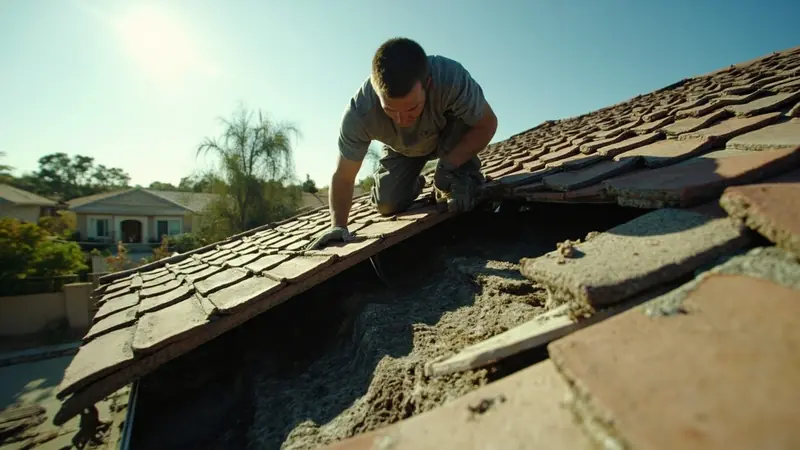
Here, roof financing options explained comes down to matching the loan or payment plan to the extent of the roof work, since a single repair and a full tear off are financed differently. A loan sized for a spot repair will not cover a job that turns out to need the whole field redone.
Most people ask about financing options after losing shingles in a storm, or after a neighbor's roof gets replaced and a sales call shows up at their own door. Those are both storm displacement situations, and the job often is not clear yet when the financing questions start.
In Ontario, Santa Ana winds blow strongest in fall and winter, and they lift tabs that looked fine on a dry afternoon. Many homes from the 1980s and 1990s have tile roofs with aging underlayment. This changes how financing a new roof needs to include beneath the tile.
A lifted shingle tab lets wind get under the course above it. In the next storm, a full strip can peel off the roof, and the bare deck underneath takes the rain directly. Contact us before the work starts, so your financed total stays within what one repair would cost.
When you are ready for the work itself, see metal roof installation.
Our crews work to the installation standards of the National Roofing Contractors Association.

How the visit sets the repair you end up financing
The visit decides the actual number of squares and layers involved, and that number is what any loan or payment plan has to match. We do not quote financing before we know what the roof needs.
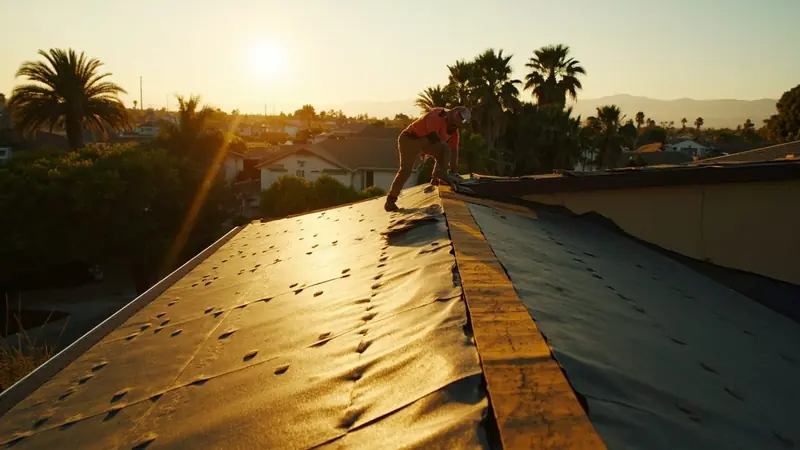
We check the attic for the intake versus exhaust ventilation balance, since an unbalanced attic will undercut a new roof the same way it undercut the old one. We walk the roof and count how many layers of old material are already there. We look at lifted tabs, granule loss, and any storm displacement to separate what is a repair from what needs full replacement.
We write the job into a quote that states what gets removed, what stays, and what the deck looks like once it is exposed. We note where that work lines up with common financing paths, such as manufacturer financing offers or PACE financing programs, before you commit to one.
What decides whether this stays a repair or becomes a full replacement, and how much you need to finance, is how many layers of old roofing have to come off and get hauled away. One layer coming off is a smaller job than stripping two or three down to bare decking.
Most residential jobs land on an architectural laminated shingle. These are heavier than a three tab shingle because two layers are glued together. They carry a wind rating commonly stated in the 110 to 130 mph range, but only when the specified nailing pattern and starter strip are used. That heavier, longer lived product is often where manufacturer financing offers apply directly. Home improvement loans, home equity loans, and FHA 203k loans tend to cover any tier of material, since they are based on the total work rather than one product line.
We explain reading a roofing proposal line by line in more detail in our resources.
The roof financing visit, step by step
On site assessment
We check the attic ventilation balance, count the existing layers, and look at tabs and granule loss to find where the roof is failing. You walk the yard with us while we point out lifted courses or exposed decking from the ground. By the time we are done, we can tell you whether this is a repair or a full tear off. The written quote in your hands states the layer count and work that any financing option will need to match.
Approval and tear off
You approve the written quote before any material comes off the roof. Once approved, the work area gets isolated first, with gutters and downspouts along that section detached and ground level items cleared. Tear off removes the layer count stated in the quote down to the decking. Any boards found soft or delaminated get set aside for you to see before replacement shingles, underlayment, and flashing go on in the agreed material.
Closing check
Before we leave, we recheck the intake versus exhaust ventilation balance, confirming the soffit intake net free area at least equals the exhaust net free area at the ridge. We show you the vent count and the finished roof line, along with the layer and disposal count that matched the financed work in the quote.
Do I need a permit to reshingle my roof in Ontario?
A full reshingle in Ontario usually needs a permit. The City of Ontario Building Department reviews the job against the California Residential Code before work starts. That permit record is often what a lender or a program wants to see before releasing funds, including FHA 203k loans and most PACE financing programs.
A common shortcut is layering a new roof over the old one to avoid the cost of removal. That hides deck damage that would otherwise show up during tear off. Some lenders and manufacturer financing programs also ask for a full tear off, so a layover can narrow your options.
Another shortcut is skipping the permit on a low slope addition tied into the main roof, treating it as maintenance rather than replacement. That leaves no inspection record, so a home equity loan or a home improvement loan application has nothing to point to if the lender asks for proof the work was done to code.
For help with the job itself, read about roof replacement.
The CSLB License Lookup publishes the rules that govern work like this in your area.
What working with us on financing looks like
Today or a booked visit
On the call we ask whether shingles are already on the ground and whether the deck underneath is exposed to weather right now. An exposed deck or an active leak usually moves you to someone coming out the same day. A loose tab with no water intrusion can wait for a scheduled visit, which gives you more time to compare financing options before the job is locked in.
What the tear off disturbs
A full tear off disturbs the yard and driveway for the length of the job, since material comes off the roof and gets staged for haul away. Clear cars, patio furniture, and anything breakable from under the eaves before we start. Downspouts and gutters along the work side get detached and reset, and any satellite or solar mounts in the area get noted before removal begins.
What decides how much you finance
How many layers of old roofing come off first sets the size of the job, since more material to remove means more labor and disposal. Deck condition once that material is off can add to the job if boards need replacing. Pitch, roof cut up complexity, and whether we correct the ventilation balance found during the visit all change the size of the job next. You see the written quote and approve it before anything comes off.
What you see before work starts
We walk the roof problem with you on the ground or show it to you from a photo taken during the assessment. You see the material options side by side, including the architectural laminated shingle tier most residential jobs land on. We ask for a go ahead before any tear off begins, and if old decking or flashing comes out damaged, we set it aside so you can see it before it leaves the property.
Roof Financing Options Explained Questions From Ontario Homeowners
Yes, an unbalanced attic shortens the life of a new roof the same way it shortened the old one. When exhaust at the ridge exceeds intake at the soffit, the ridge pulls conditioned air out of the house, and moisture lands on the deck. We check that soffit intake net free area at least matches the ridge exhaust net free area before work starts. Recheck it before we leave, so the layer count and material going on get the service life they are rated for.
The on site visit decides it, based on what the roof shows once we walk it. We count the existing layers, check tabs and granule loss, and look at deck condition once material comes off, since those findings separate a repair from a full tear off. That finding goes into the written quote you approve before anything comes off the roof. For a full reshingle, the City of Ontario Building Department still reviews the permit against the California Residential Code once the job is set.
Why Ontario's roof ages change what gets financed
Ontario carries a wide mix of roof ages, and each era changes what a quote has to cover. Houses from the 1945 to 1970s period often carry worn roofs that need a full strip. Homes from the 1980s and 1990s commonly have tile with underlayment reaching the end of its life, which means the tile gets reused but the layer underneath still has to come off. Fall and winter wind events move faster than most owners expect, so a roof that looked fine in summer can lose shingles the same week a financing decision has to get made.
Ontario's hot summers and strong Santa Ana winds put real strain on roofs, driving many repair and replacement costs. That matters most where a low slope section ties into a main roof over an addition, since poor drainage there backs water up under flashing rather than foundation movement cracking the deck. Planning that tie in correctly, instead of patching around it, is often the difference between a quote that holds and one that grows once the crew opens the roof.
Roofing Services Near Ontario
Still deciding what your Ontario home needs? Call (909) 330-4661 and we will talk it through before anyone books a visit.
Address:
Ontario Roofing, 4335 E Lowell St, Suite G
More Roofing Guides for Ontario Homeowners
- Roof Replacement Cost Guide 2026
- Metal vs. Shingle Roofing
- How Long Does a Roof Last
- Signs You Need a New Roof
- How to Choose a Roofing Contractor
- Reading a Roofing Proposal Line by Line
- Energy-Efficient Roofing Guide
- Roof Ventilation Basics
- DIY vs. Professional Roof Repair
- Understanding Roofing Estimates
- Insurance Claim Guide for Roof Damage
- TPO vs. EPDM, Which Flat Roof Is Best
- Roof Inspection Checklist
- Storm Season Roof Prep Guide
- All roofing guides
- Wind Damage Roof Repair
- Roof Replacement
- Storm Damage Roof Repair
Clearing debris out of the gutters while standing on level ground is something you can check yourself. That stops at the roof edge, since walking the slope or lifting a tab to look underneath needs fall protection. Anything past that, including judging deck condition or counting layers, belongs to the visit.
Have the approximate age of the roof and when the shingles came loose or the leak started. Note whether you already have a written quote from another visit, and whether you are leaning toward a specific option, such as PACE financing programs or a home equity loan, so we can talk work against that plan.