
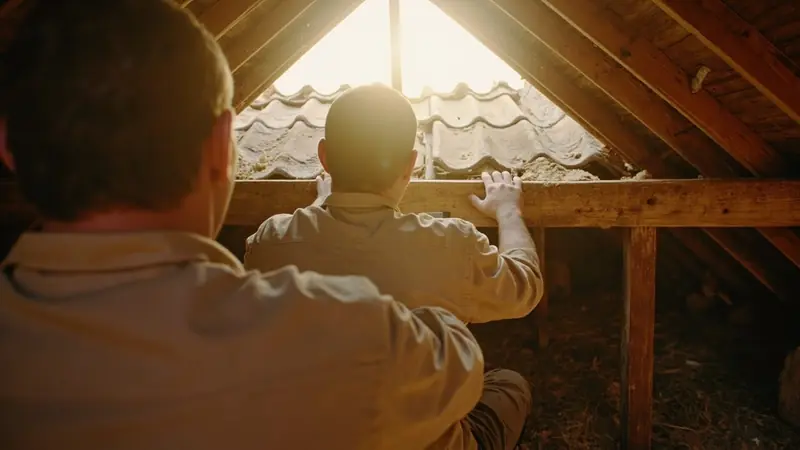
What a roof inspection looks for in Ontario homes
A ceiling stain with no new rain, or a tile roof that still looks even but drips during the first real storm, points to moisture already sitting under the covering instead of on top of it. Roof inspection services look for that moisture in the attic, before it ever reaches the ceiling. That is true whether the roof is tile, shingle, or a low slope section tucked over an addition.
Soffit vents that have been painted shut or packed with insulation block the fresh air a roof needs underneath it. Warm, moist house air keeps rising to the ridge instead of moving through, with nowhere cool to land. Nail shanks in the attic sweat through the winter months, the sheathing under them starts to delaminate, and the covering can cup from underneath while the outside still looks sound.
That is one of the clearest signs of roof damage a surface walk never finds, since nothing on the tile or shingle itself has changed yet. Most of this area's rain lands in a short winter stretch, and that is when a felt problem that has been building all year finally shows itself.
On Ontario's 1980s and 1990s tile tracts, this shows up first as a felt underlayment problem rather than a tile problem. The felt sitting under the tile has spent years taking attic heat, and it cracks and shrinks while the tile overhead stays put and looks fine from the street. The tile keeps holding its shape. The felt underneath it does not, and the first heavy winter rain finds the gap the felt left behind. An attic inspection at this stage catches it before the tile ever needs to come off, since the moisture reading comes from the wood.
A stain that stays dry and the same size is worth watching rather than panicking over. Once it feels damp to the touch or starts spreading toward the next rafter, the sheathing above it is already wet, and another storm lets that wet section travel further before it ever shows twice in the same spot. If the stain keeps spreading or the ceiling feels soft, a roof leak inspection should happen before the next storm finds the same gap again, not after it already has.
If you are weighing roof maintenance programs instead, that page covers what the work involves.
Find the sign you have, then read across to see how soon to call.
| Symptom or first sign | What is already happening | What it becomes if ignored | When to call |
|---|---|---|---|
| Blocked soffit intake | Attic humidity climbs and the nails sweat all winter | The sheathing delaminates and the shingles cup from underneath with nothing wrong on the surface | Call this week |
| A pinhole at a flat roof seam | Water tracks sideways between the membrane and the insulation | A wet board loses its insulating value | Call this week |
| Missing kickout flashing where a roof meets a wall | Water runs behind the siding instead of onto the shingles | The wall sheathing rots with no stain on the roof at all | Call this week |
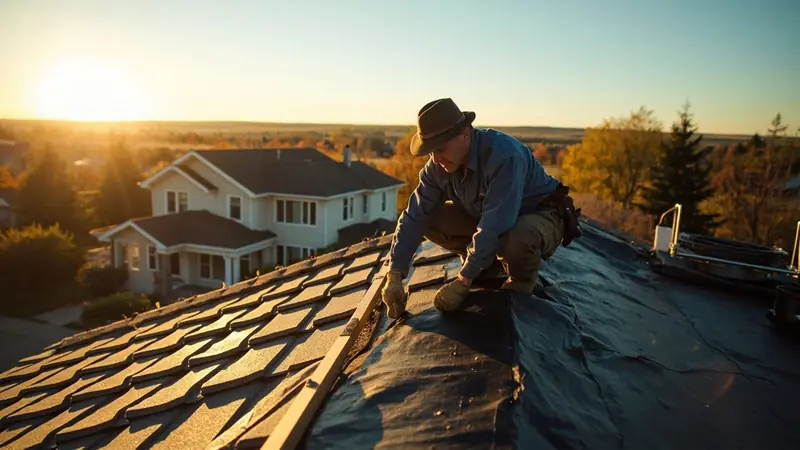
What happens during a roof inspection visit
A roof inspection visit starts in the attic and works outward to the field of the covering, since that is the order these roofs fail in.
- We start with an attic inspection, checking nail shanks and sheathing for staining or daylight at the penetrations.
- We check soffit intake against ridge exhaust, since a blocked soffit is what starts the sweating nails.
- We walk the covering and check the flashing, the boots, and the valleys, the points water gets in first.
- We check the field of the tile or shingle for cracked pieces, lifted tabs, and granule loss.
- We write up what we found with photos and hand you a roof certification letter if the roof passes.
The attic light and nail inspection is the reading that decides what happens next. Clean nail shanks and no staining on the sheathing mean the roof passes as is. Rusted nail tips and dark rings around them mean moist air has been condensing on that wood all winter, and the sheathing underneath has likely started to delaminate.
Where that reading comes back bad on an older covering, the next call is between a repair at the vents and flashing or a full replacement. Attic heat and years on the roof are what push that decision toward replacement, and architectural laminated shingle is the option most homes here land on once a tear off is already needed.
It carries more weight and a longer expected life than a three tab covering. Attic heat here pushes that decision toward replacement sooner on tile roofs than on shingle roofs with better ventilation already in place.
Homes with intact soffit vents and dry nail shanks usually only need a repair at the flashing. That difference between a repair and a replacement is exactly what the inspection is built to catch before it reaches the rest of the roof.
A roof assessment at this stage also flags whether flashing, boots, and ventilation get replaced with the new covering or reused, which is what decides how big that repair gets. Once an inspection turns up nothing but normal wear, roof maintenance programs track the same attic readings year over year instead of waiting for the next stain to appear.
Our guide to roof inspection checklist covers the choices in plain terms.
Pick the two options that fit your home, then ask which one makes sense for it.
| Option | The numbers a buyer weighs | Best suited to |
|---|---|---|
| Architectural laminated shingle | Two laminated layers that are glued together so it is heavier and thicker than three tab | Most steep slope roofs on a house |
| Impact rated shingle | Graded by a steel ball impact test where Class 4 is the top step | Hail country and exposed roofs |
| Standing seam metal | Fasteners hidden under the seam, panels clipped so they can expand and contract with temperature | Roofs meant to be kept for decades |
Roof inspection visit steps
On site assessment
We start with an attic inspection, checking nail shanks and the sheathing for staining or daylight at the penetrations, since that tells us more than the tile does. From there we walk the covering itself, checking the flashing, the valleys, and the field for cracked tile or lifted shingle tabs. You get a plain answer on the spot about what we found and whether it is a repair, an aging underlayment issue, or a covering near the end of its life. The written quote, if any work is recommended, comes before we leave the driveway.
Repair and approval
If the attic check turns up a problem, flashing and boot repairs come first, since those are the points water gets in at. A section of underlayment or decking gets opened only where the readings say it needs to. We stop at that point and show you the open section before anything gets replaced. Once you approve what is in the written quote, the repair or the covering work goes ahead, and ventilation gets corrected at the same time if the soffit intake was the problem.
Final check and letter
Before we leave, the attic gets a second look, checking that the nail shanks are dry and the staining is gone where work was done. Clean shanks and no fresh moisture at the sheathing is what a passing roof shows. If the roof passes, you get a roof certification letter stating what was checked and what it found, which is the document most lenders and buyers ask for after a pre-purchase roof inspection. That letter also notes the ventilation balance at the soffit and ridge, since that reading is what decides whether the roof holds up through the next winter.
Permits and shortcuts that catch up with roof work here
A full tear off or any structural repair under the California Residential Code typically needs a permit in Ontario. A straightforward underlayment or flashing repair on an otherwise sound roof usually does not. The City of Ontario Building Department handles the permit and sets when the permitted work gets inspected.
Checking only the tile from a ladder and skipping the attic side passes a roof that is already leaking underneath on these 1980s and 1990s tracts, since the felt failure does not show on the surface.
Resetting a handful of broken tiles without lifting them to check the felt underneath covers one symptom while the underlayment keeps failing across the rest of the field. Caulking a flashing seam instead of replacing it buys a season at most, since the felt or decking behind it is usually already compromised by the time the seam shows a stain.
Painting over a soffit vent to match the trim blocks the exact airflow that keeps nails from sweating in the first place, and that one gets found from inside the attic. A quick visual from the curb misses all of this, since the covering on top is designed to look intact long after the layer under it has failed.
None of these shortcuts show up as a problem until the next heavy rain tests the roof directly, and by then the repair covers more than the original spot. A permit inspector checking a tear off at the decking stage catches a shortcut like this immediately, since the wet or delaminated section is sitting in plain view once the old covering is off.
Once an inspection turns up nothing but normal wear, roof maintenance programs track the same attic readings year over year instead of waiting for the next stain to appear.
For storm resilience, the IBHS FORTIFIED standard is the playbook. Several of its upgrades cost little during a re-roof.
What the inspection visit involves
Today call or scheduled visit
On the call we ask whether you are seeing active moisture right now or lining up a pre-purchase roof inspection ahead of a closing date. A stain that is damp or growing, or an escrow deadline a few days out, usually means someone comes out today. A routine annual roof inspection with no deadline and no active leak gets scheduled for a day that works for you. Either way the visit covers the same ground once we are there.
What to clear before we come
An inspection means time on the roof and time in the attic, nothing opened inside the walls or floors. Move stored boxes away from the attic hatch and open a clear path, because the inspection begins there. Keep pets and kids clear of the yard where the ladder goes up. We bring our own ladder and gear, so nothing from the garage needs to come out for us.
Job size factors
Most inspections end with either a short repair at one spot or a recommendation to replace the covering, and what moves between the two is what the attic check finds. Keeping the existing flashing, boots, and ventilation reuses what is already there, while replacing them with the covering closes more gaps but opens more of the roof. You see the finding in writing and approve the quote before anything starts.
What you see during the visit
We show you the attic findings where they are, meaning the actual stained nail or the soft spot in the sheathing, not just a description after the fact. If the covering itself needs a look, we walk you through what the tabs or tile are doing and what the options are. Nothing gets opened or replaced without you seeing it first and saying go ahead.
Roof Inspection Services Questions From Ontario Homeowners
A roofing contractor who checks the attic before touching the covering can inspect your roof. The attic light and nail inspection is the reading that matters, since rusted nail tips and dark staining on the sheathing show moisture before it reaches the ceiling. A contractor who only walks the tile or shingle from a ladder misses that reading entirely. Ask whether the inspection includes the attic side, the flashing, the valleys, and a written report, since that is what tells you whether the roof passes or needs repair.
Roof size and attic findings decide how long the visit takes. A simple attic check with clean nail shanks and dry sheathing moves fast. Finding rusted nail tips, staining, or a soft spot in the sheathing means more time walking the covering and checking flashing, boots, and valleys before the full picture is clear. A low slope section needing an infrared scan after sunset adds more time than a straightforward tile or shingle check. The visit ends once findings are written up and you have a plain answer on what was found.
Dark rings and rust at the nail tips inside the attic fail a roof inspection. A soffit intake smaller than the ridge exhaust fails the ventilation balance check, since it pulls conditioned air out of the house and pushes moisture into the deck. A spongy or springy feel underfoot between rafters fails the deck deflection check, since the sheathing has already rotted. Cracked tabs that break instead of flexing, with granules coming off, fail the shingle check.
A curb walk checking only the tile or shingle misses the felt and decking underneath. That is where the real damage starts. Ask whether the visit includes an attic light and nail inspection, checking for condensation marks on the nails and sheathing, since that reading tells you whether the roof passes. A written report with photos, not a verbal opinion from the curb, separates a thorough inspection from one that only checks the surface.
A ceiling stain usually points to trapped moisture, not always an active leak. The attic light and nail inspection separates the two, since rust marks on the nails and staining on the wood show condensation building from blocked ventilation rather than water entering through the covering. A stain holding steady at one size can be monitored. Once dampness returns or the mark grows toward another rafter, the wood above it has already taken on water, and that calls for a check before the next rain reaches the same spot.
Yes, blocked soffit vents trap warm air that condenses on the nails without any leak. When the soffit opening is painted over or filled with insulation, the air a roof needs to move through stops at the ridge, and moisture has no path out. Over a winter, that moisture sits on the nail shanks and works into the sheathing while the covering on top stays dry. The attic light and nail inspection catches this early, since rusted nail tips and dark rings on the wood show up long before any leak would.
Wind that lifts a tab or flashing edge after the visit changes what the next check finds. A passing result reflects conditions at the time of the visit, when the nail shanks were clean and the sheathing showed no staining. If wind afterward lifts a shingle tab or works a flashing seam loose, the valleys, boots, and flashing, the points water enters first, need a new look. That earlier attic reading does not cover damage from a wind event that happens after it, so a passed roof can still need a fresh check once the covering has moved.
Why attic heat changes roof inspections in Ontario
Ontario's postwar tracts from the 1980s and 1990s put concrete tile over a felt underlayment. That felt is what ages out first while the tile above it keeps its shape for decades. Years of attic heat dry the felt until it cracks, and a glance from the street or even a walk across the tile never shows it. Earlier housing stock in the city, built with wood framing on raised floors, carries asphalt or composition coverings that show wear on the surface instead, which is an easier call from the ground. Newer subdivisions built since the 2000s use concrete tile again, on slab foundations with better attic ventilation built in from the start, though a blocked vent still causes the same sweating nail problem regardless of the build year. Split level additions from past decades sometimes carry a low slope section over a porch or garage. This section gets an infrared roof inspection after sunset instead of the tile check, since heat retention in wet insulation is what finds the wet spot there.
Permitted roof work gets inspected at the decking stage, once the old covering comes off and before new underlayment goes down, since that is the only point the sheathing is fully visible. The attic inspection finding from before the permit was pulled carries into that stage. A roof with rusted nail tips and staining already flagged likely needs extra decking addressed before the new covering goes on. That sequence matters most on the city's older tracts, where the decking under failed felt has had the longest time to take on moisture before anyone opens it up. An inspection finding that already named a wet section gives the permitted work a head start, since the extent of the problem is known going in rather than found mid tear off.
Roof Inspection Service Across Ontario and Nearby Towns
Roof inspection service calls reach us from all over the Ontario area, including these towns.
Roofing Services Near Ontario
Need roof inspection service in Ontario? We cover the city and the nearby towns on the map. Call (909) 330-4661 to check your address.
Address:
Ontario Roofing, 4335 E Lowell St, Suite G
More Residential Roofing Services in Ontario
From the ground, zoom a phone camera on the tile or shingle field and look for cracked or slipped pieces and dark patches where granules are missing. That tells you whether anything looks obviously wrong on the surface. It does not tell you anything about the felt or the decking underneath, which is where this problem starts. Checking the attic side, the flashing, and the nail shanks belongs to the visit.
Know when the stain or the cupping showed up and whether it followed a storm or a dry spell. If you are buying or selling, have the closing date on hand so we know whether this is a pre-purchase roof inspection on a deadline. The rough age of the roof, if you know it, and which side of the house the attic hatch is on both help.