

What roofs are on Ontario homes?
Ontario is known first for its citrus ranch history, and that past still shows in the roof lines downtown. The city carries eight historic districts with more than 400 contributing homes, most of them Craftsman, Period Revival and Prairie style frame houses built in the 1910s and 1920s.
Homes built from 1945 through the 1970s make up a large share of Ontario's postwar tracts, with low pitch gable roofs over slab foundations. Many of those original roofs have simply worn out from decades of summer heat. Homes built in the 1980s and 1990s often paired concrete tile with stucco exteriors.
Each fall, Santa Ana conditions send dry wind gusts down from the foothills, and that wind is usually what first lifts a shingle tab along a rake or ridge line. The rainy season that follows, concentrated from November into March, is what turns a lifted tab into a leak once water gets underneath it.
Ontario's hot summers make roofing materials expand and contract, which can loosen nails and seams over time. That is good below the slab, but it means storm water moves quickly off a roof rather than soaking in, so a clogged valley or a blocked scupper backs up fast during a hard rain.
That seasonal split matters for timing a project.
How a roofing job runs in Ontario
A visit starts with a plain look at what is wrong, before any work gets proposed. We point to the lifted tab, the cracked boot or the soft spot in the decking and show it to you directly, instead of describing it from the ground. On a tile roof from the 1980s or 1990s, the tile itself can still look fine even after the underlayment under it has failed, so we lift a few tiles to check that layer before we talk about what the job needs.
That check is also how we answer the upsell worry. We tell you what we found and what it means before we recommend anything, so a section that only needs new underlayment is not quoted as a full tile replacement, and a roof with one bad valley is not quoted as a tear off. Once the finding is clear, we lay out the real options, a targeted repair or a full replacement, and what each one involves in terms of what has to come off and what stays.
Nothing gets opened further until you say go ahead. If a flat section behind a parapet wall is part of the job, we show you the ponding or the soft deck before we cut into it, since that is where a quote can change once the covering comes off. You decide at each point, not after the work is already done, and that holds whether the job is one valley or the whole roof.
The same walkthrough applies after a storm. If wind has pulled courses loose along a rake or ridge, we check the decking underneath before anything gets covered back up. A soft spot there changes the size of the repair. You see what we see before a decision gets made, on a tile roof, a shingle roof or a flat section alike.
If you are weighing emergency roof tarping for a Ontario home, that page covers what the work involves.
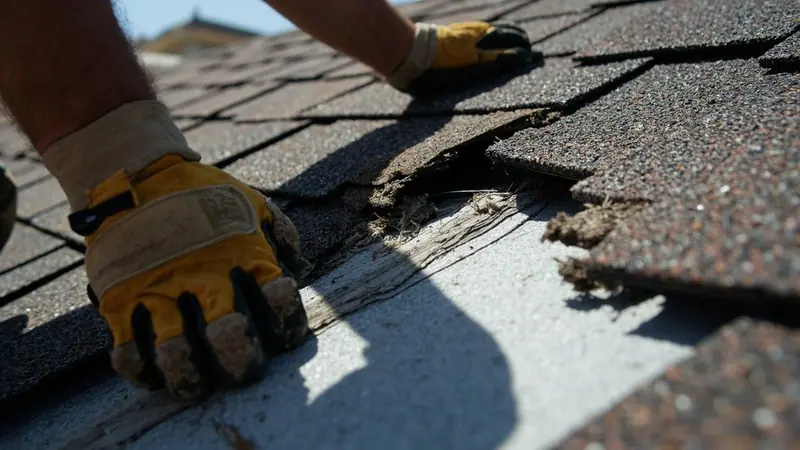
Checking the rake edge
Santa Ana wind events push the hardest gusts along a roof's rakes, hips and ridges, where uplift runs highest. That is the first place we look after a wind event, since a lifted tab there is what starts the damage that follows. Catching it before the next winter storm arrives usually means a smaller repair instead of a section that has to be opened up and redone.
Walking the deck
Before we talk about shingles, we walk the roof surface itself, tied off, to feel for give between the rafters. That walk is roof leak detection in practice, since a deck that flexes underfoot means the sheathing has already delaminated or rotted below the covering. That single finding is what decides whether the job is a repair or a full tear off, and you see the soft spot marked out before we talk about next steps.
City permit review
In Ontario, most reroofing jobs require a permit. The City of Ontario Building Department inspects and approves that work. Knowing that going in means you know before work starts whether a permit is part of the job and what stage gets inspected, instead of finding out partway through a tear off.
Clay tile and parapets
Armsley Square, laid out in 1924, pairs clay tile slopes with flat sections tucked behind parapet walls, a Spanish revival detail common on that block. Camphor trees along the parkway drop leaves into the scuppers and valleys there every fall, and a blocked scupper on a flat section backs up fast once the rain starts. That is why we check the parapet drains and valleys on those homes before the rainy season, not just the tile field.
Roofing work we handle for Ontario homes
A repair fixes one spot, a lifted tab, a cracked boot or a clogged valley, without touching the rest of the roof. A replacement or new install comes up once the deck itself is in question, or once a tile or shingle roof has aged past the point where patching makes sense, and that work gets scheduled around dry weather rather than squeezed in.
An emergency is different again, because water is already inside the house and the priority shifts to stopping it before anything else gets decided. Timing separates the three as much as the work itself does. A repair can often wait for a dry stretch, a replacement gets planned around the season, and an emergency does not wait for either one. Each establishes its own timeline on an Ontario home.
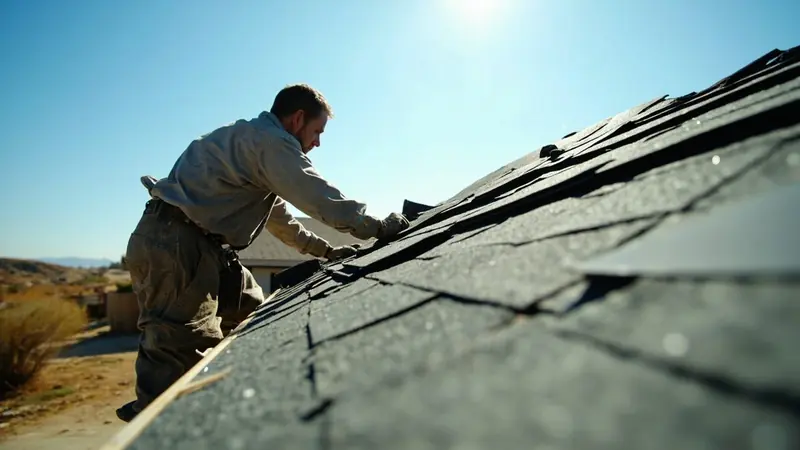
Shingle and tile roof repair
This covers the one spot jobs: a lifted tab along a rake, a pipe boot that has cracked and let water track down into the attic insulation, or a valley packed with debris backing water up under the shingles. On a 1980s or 1990s tract home with concrete tile, the tile itself usually lifts off clean so we can check the underlayment under it before deciding whether that one section needs new felt or just a reset.
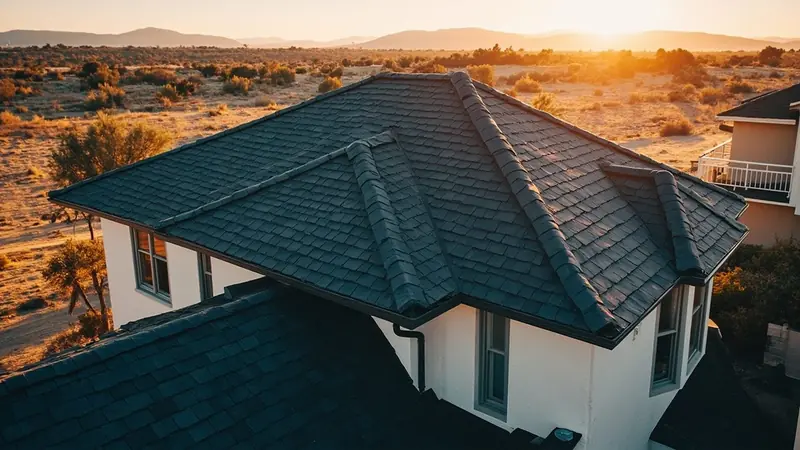
Full roof replacement and tear off
A replacement gets scheduled once the underlayment under a tile roof has reached the end of what it can do, or once a shingle roof has aged to where tabs crack and shed granules when lifted instead of flexing. For shingle replacements we install architectural laminated shingles, two layers glued together rather than the single layer in a three tab shingle, with wind ratings that only hold with the specified nailing pattern and starter strip. On a tract home with several layers already on the deck, a full tear off also means hauling off what is already up there before anything new goes down.
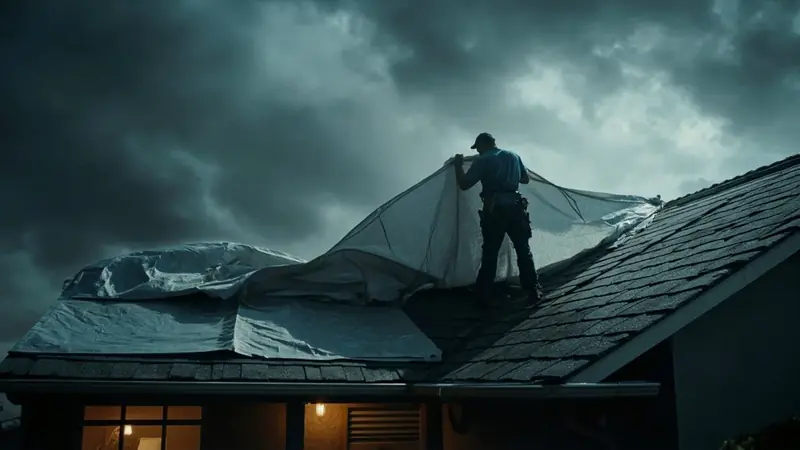
Storm and leak emergencies
When wind has opened a section of roof or water is coming through a ceiling, shut off the circuit near the leak at the panel before anyone goes near a fixture, and set a bucket under the drip so the water has one place to go. On arrival, our top priority is examining the decking beneath the opened area for soft or saturated spots. That condition determines how much material must come off before we reseal the roof. Securing the opening comes before any talk of a full replacement.
What We Fix in Ontario
Start with the job you need. Each page explains how we handle it for Ontario homes and businesses.
What roofing problems do Ontario homes have?
Ontario homes mostly deal with wind damage, aging tile underlayment and clogged drainage, and all three get worse once the rainy season starts. A lifted shingle tab looks small from the ground, but wind works under the course above it next, and a full strip can peel off in the next storm and leave bare decking taking rain directly.
That progression, one tab to one course to bare decking, is the point where calling beats waiting. Storm displacement after a wind event shows up as shingles sitting in the yard, or as bruising spread across the field that only shows up once someone reads the shingle mat closely, not just a few missing courses along one rake. These signs show roof damage that prompts the call.
The CSLB License Lookup publishes the rules that govern work like this in your area.
Wind lifted shingle tabs
Fall and winter wind events are strong enough to lift a shingle tab along a rake or ridge, and a lifted tab is a sign that section has lost its seal. Left alone through the next rain, the course above it loses its grip too. A homeowner who hears shingles scraping the roof at night, or finds one in the yard the next morning, is looking at this same wind pattern starting on their own roof.
Aging tile underlayment
Homes built in the 1980s and 1990s carry concrete tile over stucco walls, and on many of those roofs the underlayment beneath the tile is reaching the end of what it can do, even while the tile itself still looks fine from the curb. Roof leaking after rain, with no wind or storm involved, usually points to this kind of underlayment failure rather than a broken tile.
Roof drainage backup
Storm water off Ontario roofs runs into city storm drains that feed concrete lined channels the San Bernardino County Flood Control District maintains, and a roof that cannot shed water fast enough backs that same water up at the valley or the scupper first. A flat section behind a parapet wall that still shows standing water two days after rain has a drainage problem working at the seams underneath it, not just a surface puddle.
Clogged valleys and gutters
Leaves and debris that collect in a valley or a gutter hold water against the shingles instead of letting it drain off. That standing moisture is what finally rots the fascia and the first course of decking at the edge. Owners who put off clearing a valley until spring usually find out during the first hard rain instead, once water has already backed up under the drip edge, the metal edge along the roof line.
What the first visit includes
The first stop on site is usually the attic hatch, since checking the underside of the decking there for staining or daylight points us toward the roof before anyone sets foot on it. Knowing when the problem started, what the roof looked like the last time anyone checked it, and roughly how old the covering is all help the visit move faster. Clear access to the attic hatch and to any area under a known stain, so nothing has to wait on moving storage boxes once we are there.
After severe weather, FEMA's guidance on documentation makes the difference in how smoothly a claim goes.
Today or a booked visit
We ask two things on the phone, whether water is actively dripping inside the house right now, and how long the roof has been losing shingles or tabs. Active dripping inside typically moves a visit up within hours. A lifted tab or a missing shingle with no leak yet usually waits for the next open slot on the calendar instead. Either answer tells us what to load on the truck before we leave.
Clearing the way for arrival
Clear the area under any known stain and make sure the attic hatch is easy to reach, since that is usually the first thing we look at. When we arrive, we walk the problem with you first, pointing out what we see on the ceiling or in the yard before anyone sets a ladder down, and you describe what changed and when it started before any plan gets made. Moving anything stored near the hatch ahead of time saves a few minutes at the start of the visit.
The reading before we leave
Before we leave, we check decking moisture with a pin meter at the spot we worked on and show you the number on the display. It should land under 15 percent to call that section dry. A higher number there means moisture is still getting in, and we track that down before closing out the visit. We take this reading on any repair that opens up the decking, not only on full replacements.
How a call turns into finished work
Demand follows the weather here. Calls pick up in fall as people get ready for the rainy season or deal with Santa Ana wind damage, peak with leak calls once winter storms start, and most full replacements get scheduled in spring and summer when the deck can stay open and dry while work is underway. The first visit settles whether the job is a repair or a replacement, and how many old layers have to come off decides how long the tear off itself runs. On a narrow lot near Euclid Avenue, getting a dump trailer close to the house can also shape when the crew can start.
Checking intake and exhaust balance
Before we talk about the covering, we check whether the soffit intake has as much net free area as the ridge vent. A ridge pulling harder than the soffit feeds it is what drags conditioned air out of the house and moisture into the deck. That comparison rules out an attic driven failure before we look at the shingles or tile themselves.
Diagnosis and the estimate
Once the cause is confirmed, we put that into a roof replacement estimate naming what has to be opened to reach it, and whether the job is a repair at one spot or a full replacement across the roof. Work on the roof itself starts once you approve that estimate, and the job stays fixed to what it names rather than changing once the tear off is underway.
Inspection before closing up
The decking stays open until the moisture check we take before leaving passes. On permitted work, the inspection that applies happens before the final course or cap goes down, since covering it up first means pulling it back open. Once that check and that inspection are done, we close up the ridge or cap and clear the site.
What are the roofing requirements in Ontario?
Roofing work in Ontario falls under the California Residential Code, the code family that sets the baseline for frame construction across the state. A full tear off or a new roof covering usually needs a permit, while a like for like repair on a small section, such as resetting a few tiles or patching one valley, usually does not rise to that level. Where a job sits on that line is a judgment call, and the office that reviews the application has the final say on it.
Inspection matters most on a full replacement, since that is when the decking is exposed and anything found underneath, a soft spot, old nail staining, or a layer that should have come off years ago, has to be addressed before new material goes down. A roof that is only getting a few tiles reset is a smaller job than one going down to bare decking, and the permit review usually reflects that difference.
Permit details are on the City of Ontario Building Department website.
Reading the shingle mat
On a shingle roof, we lift a tab at the corner in mild weather and watch whether it flexes back or cracks. If it cracks and granules come off in your hand, the asphalt has aged out at that spot even if the roof looks fine from the ground. That reading, more than the roof's age on paper, is what tells us whether a section can be patched or needs to come off.
How many layers come off
The single biggest factor in sizing a reroof is how many layers of old roofing already sit on the deck. One layer comes off fast. Two or three layers, common on older houses reroofed over the top instead of torn off, take longer to strip and haul, and they hide the deck condition until they are gone. That layer count also applies to a quote for just a lifted tab, since reaching it means working through whatever is already stacked up there.
What stretches a tear off
A reroof runs longer whenever the deck underneath needs boards replaced, since that work has to happen before anything new goes down, and whenever a dump trailer cannot get close to the house. Good work reads dry on the pin meter afterward and lies flat without a ridge of exposed nail heads along the cap. Those two things, a dry deck and a flat cap, are what to check once the crew leaves.
Wildfire exposure along the foothills
Homes along the foothill edge of the metro sit closer to the wildfire risk the city's hazard list names. That exposure is why covering material and any venting at the roof edge gets a second look on those houses. It does not change the permit process, but it does change what we recommend for an open vent or an exposed eave on that side of the metro.
Roofing Questions From Ontario Homeowners
The decision rests on the underlayment under the tile, not how the tile looks from the street. Tile from that era can look fine while the felt beneath it has worn through. Lifting a few tiles shows whether only a section needs new underlayment or whether the whole field has reached that point. A single failed valley usually points to a repair. Underlayment worn out across the roof points to a full tear off. The tile itself often gets reused once the layer beneath it is replaced.
Move everyone away from the area under the tree first, since the deck may be compromised. Shut off the circuit near any spot where water is entering before anyone goes near a fixture, and set a container under the drip. Do not climb onto the roof or try to move the tree yourself. Photograph the damage from the ground if it is safe to do so. A visit checks the decking under the opening before any patch or tarp decision gets made, since a soft spot there changes what has to come off.
Calling makes sense once a stain shows up, since water has already reached the ceiling from somewhere above it. A stain with no wind event usually points to worn underlayment rather than a storm opening, but the water is inside either way. Waiting lets moisture travel along framing and into insulation before anyone looks at the roof. A visit starts by looking up at the sheathing from the attic hatch with a flashlight, checking for light coming through or dark staining, then takes a moisture reading at that spot to see how far the water has traveled.
An inspection near Chaffey High School starts with a walkthrough of the lifted tab, stain or soft spot you noticed. On homes in that part of the city, the deck gets walked tied off to feel for give between rafters. A bright light checks the attic side for staining or daylight at penetrations. On a tile roof, a few tiles get lifted to check the underlayment underneath. Findings get shown to you directly, and a repair or replacement gets laid out before anything is opened further.
Wind gusts can work a nail loose over repeated cycles along a rake or ridge. Near Ontario Mills, homes from the newer tracts carry architectural shingles with a specified nailing pattern, and a nail that backs out there breaks the shingle's seal at that spot. The attic side often shows it first, as a rusted nail tip with a dark ring where moist air has condensed on it through the winter. A visit checks the nail shanks from inside before looking at the shingle field.
Attic mold usually traces back to condensation rather than a roof leak. Near Westwind Park, the soffit and ridge vents are the first thing to check, since more exhaust than intake drags conditioned air and moisture into the deck all winter, and that moisture is what grows mold on the sheathing. A bright light held low in the attic shows dark staining around nail shanks before mold spreads further. Balancing intake and exhaust at the vents addresses the cause instead of just the surface where mold already shows.
Scheduling a check before the rainy season makes sense for homes near Vineyard Park. Fall wind events loosen shingle tabs before the rain that follows turns that lift into a leak. A visit walks the deck tied off to feel for give, checks the attic side for staining, and lifts a tab to see whether it flexes or cracks. Catching a loose tab or a clogged valley before November rain starts usually means a smaller repair than waiting until water is already coming through the ceiling.
Roofing Services Near Ontario
Need a roofer in Ontario? The map shows the area we cover. Call (909) 330-4661 and we can tell you when someone can be there.
Address:
Ontario Roofing, 4335 E Lowell St, Suite G
Looking in the attic with a flashlight for staining or daylight around a pipe or vent is something you can do yourself, since it only takes standing at the hatch. Stop there. Walking the roof itself, lifting a tab, resetting a tile or sealing a flashing joint takes fall protection and belongs to the visit, along with any work on a wet or storm damaged surface.